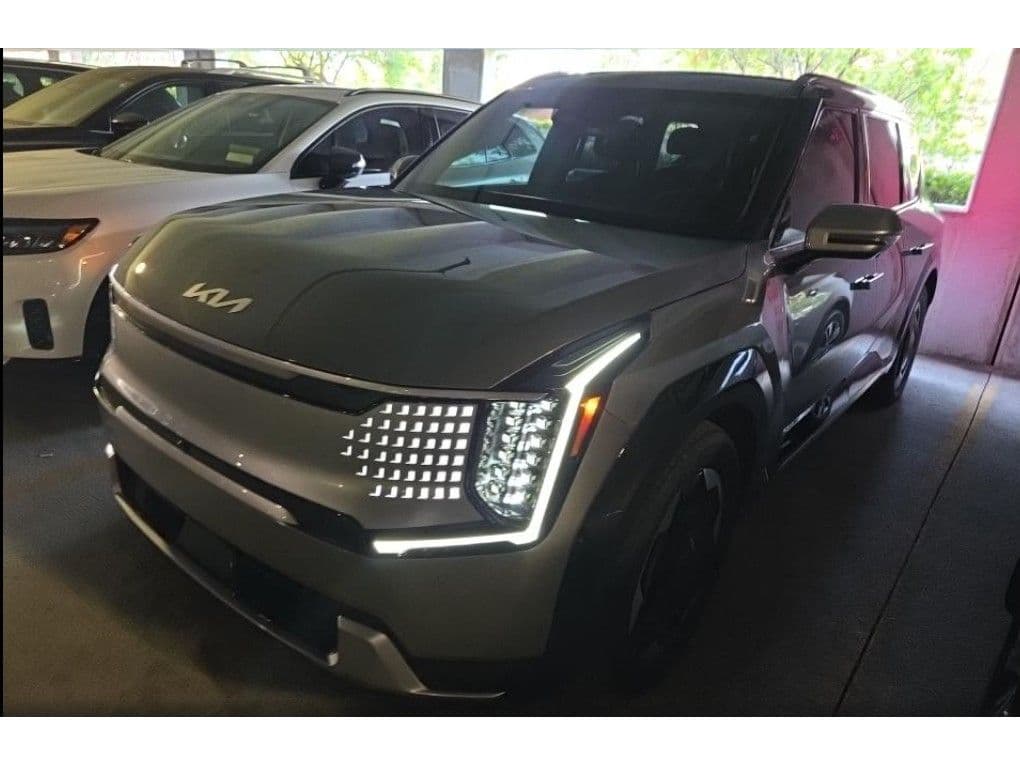
You don’t buy a Kia EV9 because you love frugality. You buy it because you want a three-row electric living room that happens to move. Still, the running-cost story matters, especially when you’re cross-shopping gas SUVs. So what’s the real Kia EV9 cost per mile to drive in 2026?
Snapshot: EV9 cost per mile
Kia EV9 cost per mile: quick overview
Typical 2026 Kia EV9 cost-per-mile ranges (U.S.)
Those numbers are averages, not commandments. Your EV9 cost per mile depends on three main levers: how efficient your configuration is, what you pay per kWh, and how heavy your right foot is. Let’s break each one down and then build back up to a realistic range for your situation.
How efficient is the Kia EV9, really?
The EV9 is a big, boxy, nearly 6,000‑pound SUV, yet its efficiency isn’t bad for the class. The EPA and real-world road tests put most trims around 2.4–2.8 miles per kWh in mixed driving, with the most efficient rear‑wheel‑drive trims touching about 2.9–3.0 mi/kWh in gentle use.
Typical Kia EV9 efficiency by configuration
These are reasonable real‑world planning numbers, not hero runs for YouTube.
Light RWD (Standard battery)
~2.9–3.1 mi/kWh
Lightest EV9, rear‑drive, best aero. Think suburban commuting at legal-ish speeds in mild weather.
Light Long Range RWD
~2.7–2.9 mi/kWh
Bigger battery, still rear‑drive. A sweet spot for road‑trip range and efficiency.
AWD trims (Wind, Land, GT-Line)
~2.3–2.7 mi/kWh
Dual motors, more weight, often bigger wheels. Efficiency drops but traction and pace go up.
Battery vs wall efficiency
Home charging: Kia EV9 cost per mile
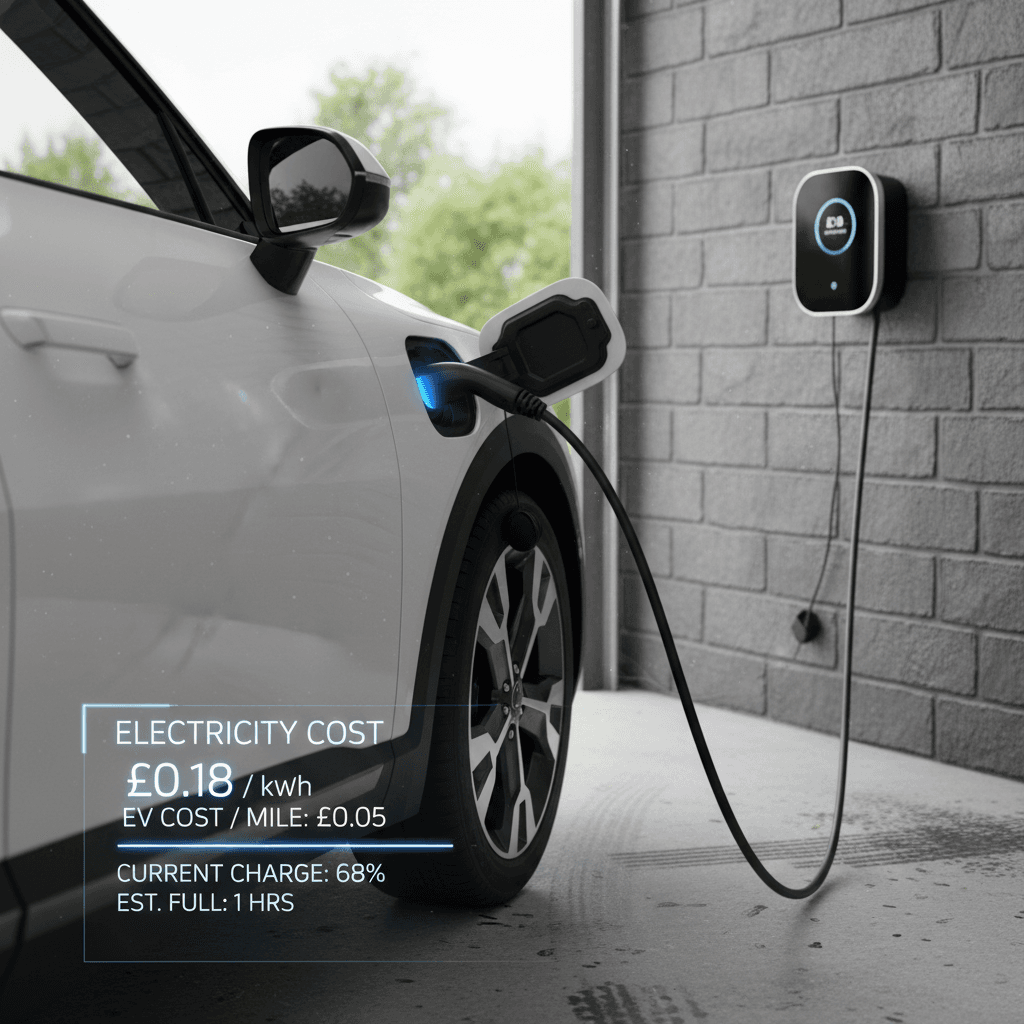
Most EV9 owners will do the bulk of their charging at home. In 2025–2026 the U.S. residential average sits around $0.17–$0.19 per kWh, with cheaper power in some states and eye‑watering rates in others. We’ll use $0.18/kWh as a realistic national reference point, then look at cheap and expensive electricity scenarios.
Kia EV9 home charging cost per mile (2026)
Estimated cost per mile including ~12% charging losses from wall to battery.
| Scenario | mi/kWh (at wheels) | kWh/100 mi (at wall) | Electricity price | Cost per mile |
|---|---|---|---|---|
| Efficient driver, RWD, cheap power | 3.0 | 37.9 | $0.12/kWh | $0.045/mi |
| Typical suburban mix, LR RWD, average power | 2.8 | 40.3 | $0.18/kWh | $0.073/mi |
| Typical AWD driver, average power | 2.5 | 45.1 | $0.18/kWh | $0.081/mi |
| Fast highway cruising, AWD, average power | 2.2 | 51.3 | $0.18/kWh | $0.092/mi |
| Urban stop‑and‑go, high‑rate market | 2.5 | 45.1 | $0.25/kWh | $0.113/mi |
Use these as planning numbers; your actual rate and driving style will move the needle.
Run the tape and you land in a pretty tight band: for most households in the U.S., home‑charged Kia EV9 cost per mile falls around $0.07–$0.11. If you enjoy cheap off‑peak rates and drive smoothly, you can drop close to five cents a mile. If you live in a high‑cost electricity market and hammer the left lane, you’ll creep into the low‑teens per mile, but still generally under a thirsty gas SUV.
Leverage off‑peak rates
Public fast charging: what each mile costs
DC fast charging is the EV9’s road‑trip superpower, but it’s also where electric driving starts to feel more like paying gas prices, especially if you use it as your primary “fueling” source.
Typical DC fast pricing in 2025–2026
- Most major networks now land in the $0.35–$0.55/kWh range before memberships.
- Discount plans often shave around $0.08–$0.10/kWh if you pay a small monthly fee.
- Some regional utilities and highway programs still offer promotional or off‑peak discounts.
What that means for the EV9
- At 2.5 mi/kWh and $0.40/kWh, you’re around $0.16/mi.
- At 2.3 mi/kWh and $0.50/kWh, it’s more like $0.22/mi.
- Hyper‑efficient driving and cheaper rates can bring you down to ~$0.13/mi.
Fast charging lives in the upper band
Kia EV9 vs gas three-row SUV: cost per mile
This is where the EV9 starts to look less like an indulgence and more like a rational financial decision. A gas‑powered three‑row family bus, think Telluride, Palisade, Tahoe, typically lives in the 18–22 mpg real‑world neighborhood. Pair that with 2026 gas prices and the EV9’s advantage shows up plainly.
Cost per mile: Kia EV9 vs typical gas three‑row SUV
Assumes 2026 U.S. averages: $0.18/kWh home electricity, $0.45/kWh DC fast charging, and $3.50/gal gasoline.
| Vehicle & fueling | Assumed efficiency | Energy price | Cost per mile |
|---|---|---|---|
| Kia EV9 (mostly home charging) | 2.7 mi/kWh | $0.18/kWh | $0.075/mi |
| Kia EV9 (heavy DC fast use) | 2.4 mi/kWh | $0.45/kWh | $0.188/mi |
| Gas SUV (22 mpg, cheap gas) | 22 mpg | $3.25/gal | $0.148/mi |
| Gas SUV (20 mpg, avg gas) | 20 mpg | $3.50/gal | $0.175/mi |
| Gas SUV (18 mpg, expensive gas) | 18 mpg | $4.00/gal | $0.222/mi |
The more you drive, the more stark the gap becomes, especially if you mostly charge at home.
If you’re an average‑mileage family using mostly home charging, the EV9 can easily undercut a comparable gas SUV by 7–11 cents per mile. At 15,000 miles a year, that’s $1,000–$1,600 in annual fuel savings. Even if you lean heavily on DC fast charging, you’re often in the same ballpark as gas, without the oil changes or transmission drama.
Where the EV9 really wins
Weather, speed and load: how they change cost per mile
EPA stickers and spreadsheet averages are one thing; real life with kids, bikes, and winter boots is another. Three factors move your Kia EV9 cost per mile the most: climate, speed, and how much junk you’re hauling through the air.
How real‑world conditions affect EV9 cost per mile
Same electricity price, different driving reality.
Cold weather
Below freezing, the EV9 will spend extra energy heating the cabin and battery. Expect 15–30% higher kWh per mile on short trips, especially with seat and wheel heaters blazing.
High highway speeds
Aerodynamic drag rises with the square of speed. Bump from 70 to 80 mph and you can see efficiency fall from, say, 2.7 to 2.2 mi/kWh, pushing your cost per mile up by roughly 20–25%.
Weight & roof junk
Passengers aren’t free. A full cabin, cargo, and roof box can easily add another 5–10% to your energy use, especially in stop‑start driving and crosswinds.
Worst‑case cocktail
How to calculate your personal Kia EV9 cost per mile
The nice thing about electricity is that the math is simple and brutally honest. With two numbers, your energy price and your EV9’s real‑world efficiency, you can dial in your own cost per mile to drive a Kia EV9 in just a minute or two.
Step‑by‑step: your EV9 cost per mile
1. Find your true electricity price
Look at your latest utility bill and divide the total electric charges by the total kWh used. That gives you an all‑in <strong>$/kWh</strong>, including fees and riders, not just the energy line item.
2. Grab your EV9’s mi/kWh number
Reset your trip computer and drive normally for at least a week. Note the <strong>miles per kWh</strong> figure. If you do a lot of highway, capture a separate highway‑only number.
3. Adjust for charging losses
Multiply your mi/kWh by <strong>0.88</strong> to account for ~12% losses from the wall to the battery. So 2.8 mi/kWh on the dash becomes about 2.46 mi/kWh at the plug.
4. Use the simple formula
Your personal cost per mile is: <br><br><strong>Cost per mile = Electricity price ($/kWh) ÷ Effective mi/kWh</strong> <br><br>Example: $0.16 ÷ 2.5 mi/kWh = <strong>$0.064 per mile</strong>.
5. Repeat for DC fast charging
Use the per‑kWh rate shown in your charging app, plug it into the same formula, and maybe knock your mi/kWh down a bit if you’re doing 75–80 mph.
6. Compare to your current gas SUV
Take your SUV’s real‑world mpg, divide the local gas price by that, and compare directly. Example: $3.80/gal ÷ 20 mpg = <strong>$0.19/mi</strong>. That’s your baseline to beat.
Shortcut for back‑of‑napkin math
Why a used Kia EV9 can be even cheaper per mile
Cost per mile isn’t just energy. It’s also depreciation, the silent budget killer in big, expensive SUVs. This is where a well‑chosen used Kia EV9 quietly becomes the smart‑money move.
Depreciation: the hidden half of cost per mile
New three‑row SUVs, gas or electric, shed value quickly. With the EV9, the first 2–3 years soak up a big chunk of the sticker. Buy after that initial drop and your depreciation per mile can fall dramatically, even though the driving experience feels nearly identical.
Why buying used through Recharged helps
At Recharged, every used EV9 comes with a Recharged Score Report that includes verified battery health diagnostics and fair‑market pricing. That means you’re not guessing about the most expensive component in the car, and you’re not overpaying up front, two huge levers on long‑term cost per mile.
You can finance, trade‑in, sell, or consign your current vehicle, then have your EV9 delivered nationwide, all with EV‑specialist support.
When used makes the most sense
FAQ: Kia EV9 cost per mile to drive
Frequently asked questions about Kia EV9 cost per mile
Bottom line: what you should expect to pay per mile
The Kia EV9 will never be a hyper‑miler’s darling; it’s a rolling family room with the aero profile of a modernist apartment complex. But judged on its own terms, and especially against similarly sized gas SUVs, its cost per mile is quietly impressive. Charge mostly at home and drive like a grown‑up and you’re looking at roughly 7–11 cents per mile. Even when you lean on DC fast charging, you’re playing in the same league as gas, with less maintenance and fewer tailpipe fumes.
If you want to push those numbers even lower, the biggest levers aren’t obscure: get reliable home charging, pay attention to your electricity plan, keep highway speeds reasonable, and consider letting someone else eat the first few years of depreciation by choosing a used Kia EV9. With a Recharged Score battery health report and fair pricing baked in, you can enjoy a near‑luxury three‑row EV at a cost per mile that would make a gas‑SUV owner quietly jealous.