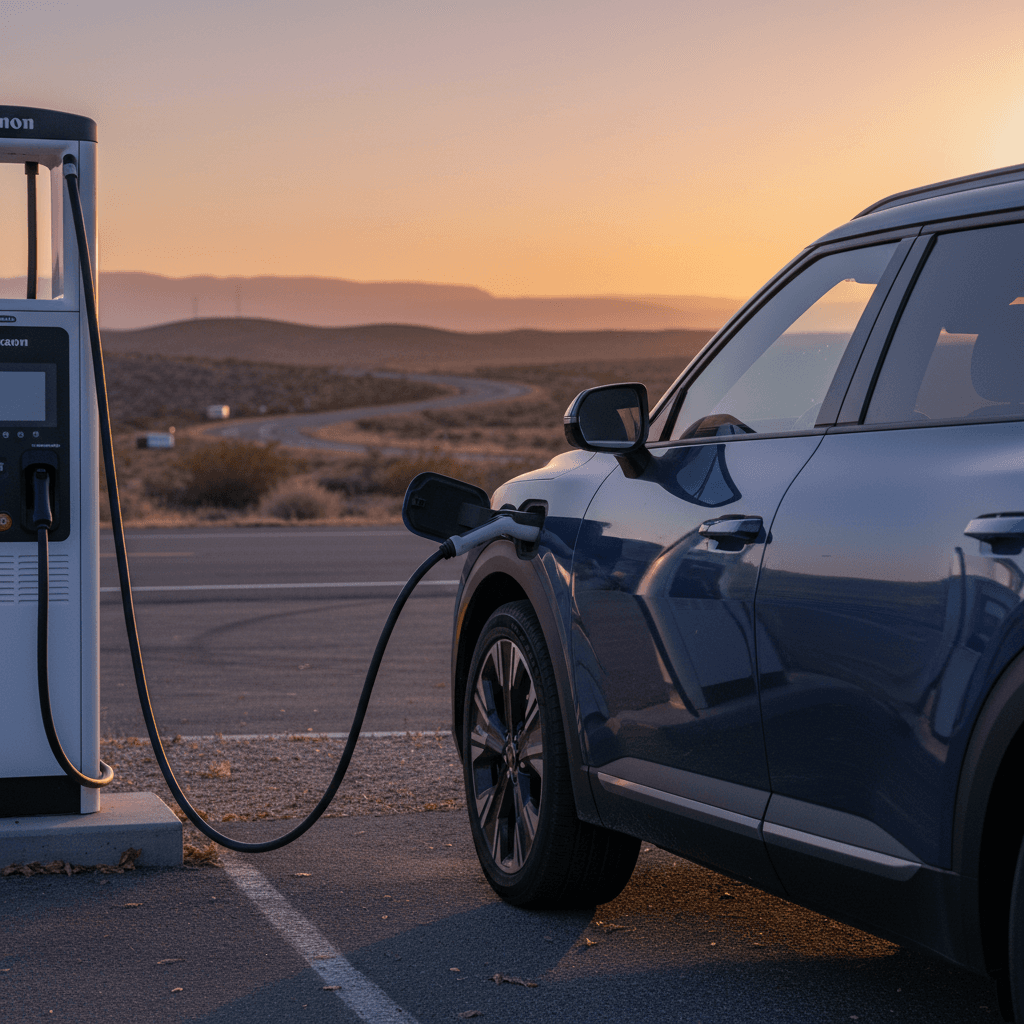
If you’re shopping for or already driving a Kia EV9, charging speed is almost as important as range. This guide breaks down real‑world Kia EV9 charging speeds, at home and on DC fast chargers, so you know exactly what to expect when you plug in, how long 10–80% actually takes, and how to charge in a way that keeps your battery healthy for the long haul.
At a glance
Kia EV9 charging basics: hardware, battery and connectors
Core Kia EV9 charging specs
U.S.‑spec Kia EV9s launched with a large battery pack around 99.8 kWh gross (usable capacity is slightly lower) and an 800‑volt electrical architecture shared with the EV6. That hardware underpins both quick DC fast charging on the highway and solid Level 2 performance at home.
- Onboard AC charger: 10.9–11 kW, which is the maximum the EV9 can accept from a Level 2 home or destination charger.
- DC fast‑charging peak: roughly 210–230 kW on a 350 kW station, with a flat charging curve that holds high power well into the mid‑state‑of‑charge range.
- Charge ports: Early U.S. EV9s use a CCS1 DC/Type 2 AC inlet; Kia is transitioning to the NACS (Tesla‑style) port on new builds, with adapters bridging the gap during the transition.
- Preconditioning: Built‑in battery preconditioning automatically warms or cools the pack when you navigate to a DC fast charger in the car’s navigation system, which helps you hit the fastest possible speeds.
Tip: battery size matters for time, not power
Kia EV9 home charging speeds: Level 1 vs Level 2
Most EV9 owners will do the bulk of their charging at home. The EV9 will technically charge from any common outlet, but your experience changes dramatically depending on whether you use the included Level 1 cord or a dedicated Level 2 charger.
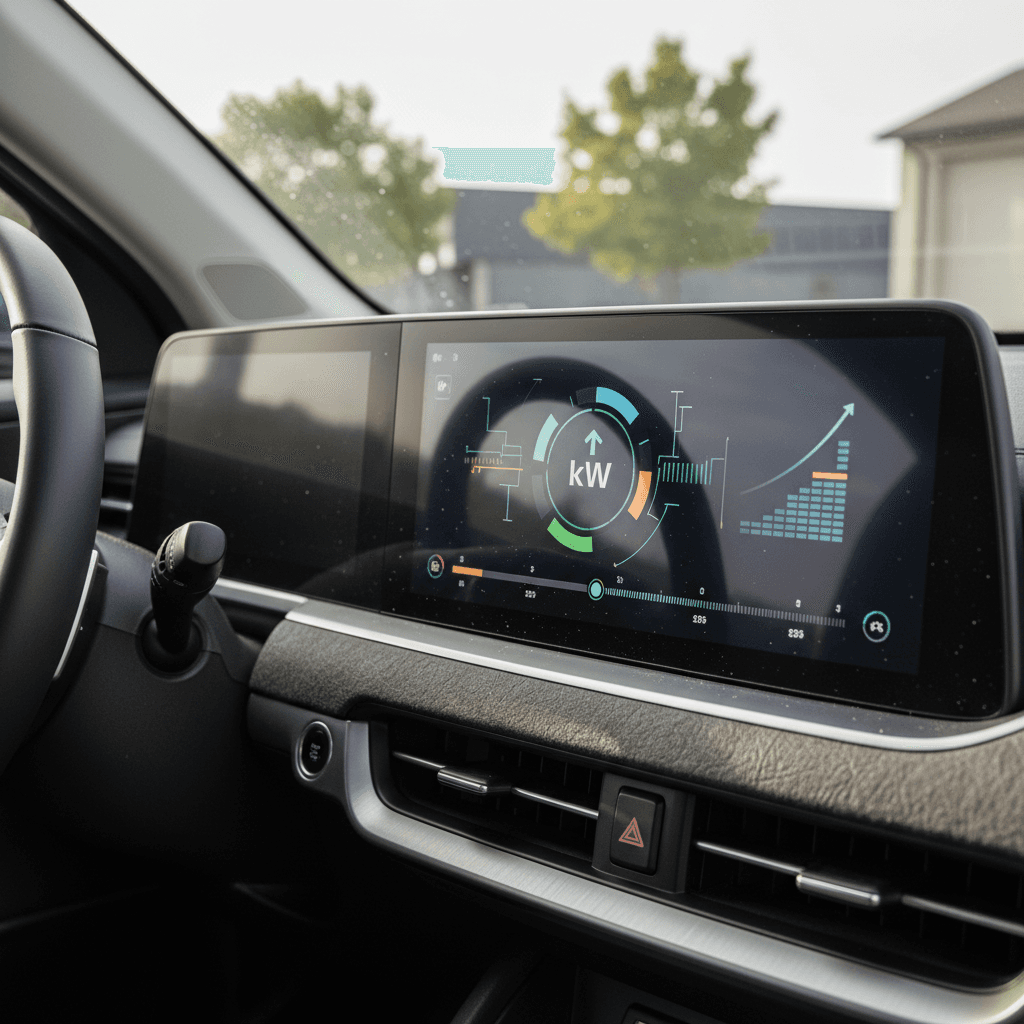
Home charging options for the Kia EV9
How long it really takes from a typical daily state of charge
Level 1 (120V wall outlet)
Best for: Emergencies, very low daily mileage.
- Power: ~1–1.4 kW (with the included 120V cord)
- Adds: ~3–5 miles of range per hour
- 20–80% on big pack: 2+ days
Use only if you can’t install Level 2 yet, great as a backup but painfully slow for a three‑row SUV.
Level 2 (240V, 32–40A)
Best for: Most EV9 owners, typical suburban homes.
- Charger: 32–40A wallbox or plug‑in unit
- Power to car: ~7–9.6 kW
- 20–80%: roughly 7–10 hours
Plenty for overnight charging if you drive under ~100 miles per day.
Level 2 (240V, 48A)
Best for: Heavy drivers, frequent towing, multiple EVs.
- Charger: 48A, 60A breaker
- Power to car: full ~10.9–11 kW
- Empty–100%: ~7–9 hours (battery size dependent)
Maxes out the EV9’s onboard AC charger for the shortest possible home charging times.
Don’t confuse breaker size with charging speed
For most households, a 40–48 amp Level 2 charger hits the sweet spot for the EV9. It gives you fully replenished range by morning even after a long day of errands or commuting. On a 48‑amp unit, expect something like a 20–80% top‑up in the 5–7 hour range and a deep 10–100% charge overnight.
Set up your EV9 for efficient home charging
1. Confirm your panel capacity
Have a licensed electrician confirm that your service panel and wiring can support a 40–60A 240V circuit. Large EVs like the EV9 pull sustained current for hours, so shortcuts aren’t worth the risk.
2. Choose a 40A or 48A Level 2 charger
Look for a 9.6–11 kW unit with good app controls and, ideally, load sharing if you plan to add a second EV. Popular brands include Emporia, ChargePoint and others that work well with 11 kW onboard chargers.
3. Match the car’s charge limit to the wallbox
In the EV9’s settings, make sure the maximum AC current is set correctly. Owners sometimes discover the car is limited to ~6–7 kW because a software setting or prior owner dialed it back.
4. Use scheduled charging for off‑peak rates
Many utilities offer cheaper overnight electricity. Set a schedule in the EV9 or your charger so it finishes charging before you leave while staying within low‑cost time windows.
5. Set an 80–90% daily charge limit
For daily use, an 80–90% target is a good balance between range and battery longevity. You can bump it to 100% the night before a trip or if you know you need maximum range.
Kia EV9 DC fast charging: 10–80% times explained
On paper, the EV9 is one of the quickest‑charging three‑row EVs on sale today. Thanks to its 800‑volt system and robust cooling, Kia quotes 10–80% in about 20–25 minutes on a 350 kW DC fast charger. Independent testing has consistently landed in the low‑20‑minute range when conditions cooperate.
Typical Kia EV9 DC fast‑charging times
Approximate times under good conditions; actual results vary with temperature, charger quality and starting state of charge.
| Scenario | Charger type | Start–end SOC | Approx. time | Notes |
|---|---|---|---|---|
| Road trip top‑up | 350 kW DC | 10–80% | ~22–26 min | Peak around 220–230 kW, very flat curve through the mid‑range. |
| Road trip top‑up | 150 kW DC | 10–80% | ~35–45 min | Power limited by the station, not the car. |
| Short stop | 350 kW DC | 20–60% | ~12–16 min | Often the sweet spot for time‑versus‑range on highways. |
| Near full | Any DC | 80–90% | ~8–12 min | Charging slows sharply past 80% to protect the battery. |
| Topping all the way up | Any DC | 90–100% | ~15–20+ min | Inefficient; better done at home on Level 2 unless you truly need it. |
Think of these as best‑case estimates for planning, not guarantees. Always allow a little buffer on long trips.
Why manufacturers quote 10–80%, not 0–100%
How to get the fastest possible DC session
- Arrive warm and low. The ideal recipe is arriving at the station with the battery between about 10–20% after sustained highway driving.
- Use built‑in navigation. Set the charger as a destination in the EV9’s nav so battery preconditioning can do its job on the way there.
- Pick the strongest stall. If you have a choice, use a 350 kW labeled stall and avoid sharing cabinets when possible.
- Stop around 70–80%. For road trips, it’s usually faster overall to unplug early and drive to the next charger sooner.
Situations that slow your charge
- Cold weather: A cold battery can slash initial charging power. In winter, the first few minutes may ramp from 60–80 kW before climbing toward 200+ kW.
- Weak or faulty stations: Many 350 kW cabinets rarely hit rated power, or they derate when multiple cars are plugged in.
- High starting SOC: Plugging in at 40–50% instead of 10–20% can chop the top off the fastest part of the charging curve.
- Battery protection: If the pack is very hot from driving or towing, the BMS may limit power to cool things down.
Charging curve, winter driving and road-trip planning
The EV9’s charging curve is one of its biggest advantages. Real‑world tests show it holding well north of 180 kW through a broad chunk of the session, which translates into strong miles‑per‑minute numbers for such a heavy, boxy SUV.
EV9 as a road‑trip SUV
Planning efficient EV9 road trips
Aim for 10–70% or 15–75% hops
You’ll usually make the best time by arriving around 10–20% and leaving in the 70–80% range instead of nursing the pack from 80–100% at low power.
Shorten stops in winter
Cold weather reduces both range and charging speeds. Plan more frequent, slightly shorter DC sessions so the battery stays in a temperature window where it can accept higher power.
Leverage in‑car route planning
The EV9’s navigation and most third‑party apps can build routes that hit compatible high‑power chargers and estimate arrival SOC. This prevents over‑charging or arriving too low for comfort.
Watch charger reliability patterns
Not all DC networks are equal. Pay attention to user reviews in PlugShare or similar apps, and favor sites with multiple high‑power stalls and recent positive check‑ins.
Adjust for towing or heavy loads
If you’re towing near the EV9’s rated capacity, your consumption can double. That means shorter legs between chargers and more time per stop, build that into your schedule.
Winter charging reality check
Tesla Supercharger access and NACS adapters for the EV9
In North America, access to Tesla’s Supercharger network is a big deal for any long‑range EV. Kia is transitioning the EV9 from CCS to the North American Charging Standard (NACS) connector and supporting owners of early CCS‑port EV9s with NACS‑to‑CCS adapters.
What Tesla Supercharger access means for EV9 owners
How the charging experience changes as NACS rolls out
For early CCS‑port EV9s
- Use CCS DC fast chargers as you do today.
- NACS‑to‑CCS1 adapters from Kia expand access to many Supercharger sites.
- Speed is limited by the EV9’s own charging hardware, not Tesla’s cabinet rating.
- Some sites may remain Tesla‑only, depending on local agreements and hardware.
For future NACS‑port EV9s
- Plug directly into Superchargers without an adapter.
- Still retain access to CCS via a separate adapter where available.
- Route planning becomes easier with dense, generally reliable Supercharger coverage.
- Charging speeds on compatible V3/V4 stalls should be similar to what you see on third‑party 350 kW chargers.
Check plug type before you go
Recommended home chargers and in-car settings
Because the EV9 has an 11 kW onboard AC charger, it can fully take advantage of a higher‑amp Level 2 unit. Picking the right hardware and dialing in the EV9’s software settings will save you both time and money.
How to pick a home charger for your EV9
Match hardware to your driving pattern and electrical service
Light‑to‑moderate drivers
If you average under 40–50 miles per day, a 32–40A Level 2 charger is usually enough.
- Lower installation cost on smaller breaker.
- Overnight refills from 30–80% are easy.
- Good fit for apartment garages with limited capacity.
Heavy commuters & families
For 70+ mile days, school runs and weekend travel, a 48A Level 2 wallbox matched to the EV9’s 11 kW limit is ideal.
- Maximizes overnight charging window.
- Great if you sometimes arrive home near empty.
- Future‑proofs for a second EV with load‑sharing wallboxes.
When to involve your utility
Some utilities offer rebates or special EV rates if you install a qualifying charger or enroll in off‑peak programs.
- Ask about installation credits and time‑of‑use plans.
- Confirm any required Wi‑Fi or load control features.
- These incentives can offset a big chunk of hardware and electrician costs.
Key EV9 charging settings to verify
- Maximum AC current: Ensure the car isn’t artificially capped (for example at 24A) from a prior setting or software update if your wallbox and wiring support more.
- Charge limit: Set 80–90% for daily use and bump it to 100% only before longer trips.
- Charge schedules: Use the EV menu to align with your utility’s cheap‑rate window.
- Location‑based limits: The EV9 can remember different settings for home vs public chargers, handy if your home circuit is lower‑amp.
How Recharged can help with setup
If you’re buying a used EV9 through Recharged, our EV specialists can walk you through charger sizing, panel capacity questions, and local incentive research as part of your purchase. Every EV9 we list includes a Recharged Score report with verified battery health, so you’re not guessing about how that pack has been treated before you plan your charging routine.
Battery health: how often to fast charge and charge to 100%
The EV9’s large pack and sophisticated thermal management are designed for years of use, but your charging habits still matter. A few simple rules of thumb will help you preserve range over the long term while still enjoying fast charging when you need it.
- Use Level 2 at home as your default. DC fast charging is fine for trips, but it’s gentler on the pack to rely on lower‑power overnight charging for daily driving.
- Live between 20–80% when you can. Occasional dips below 10% or tops to 100% won’t kill the battery, but staying mostly in the middle is ideal for lithium‑ion chemistry.
- Save 100% charges for trips. If you need the full rated range, charge to 100% shortly before departure and get back into the mid‑range soon after you hit the highway.
- Don’t panic about occasional high‑power sessions. The EV9’s BMS is constantly managing temperature and voltage. Occasional 200+ kW blasts on road trips are within its design envelope.
- Monitor long‑term health. Watch how your estimated range at a given state of charge changes over time. On a used EV9, a battery health report, like the Recharged Score, gives you a clearer picture than range estimates alone.
Avoid “set‑and‑forget” 100% charging
Kia EV9 charging specs: quick-reference tables
Kia EV9 AC charging summary
Approximate home charging times on common setups for the larger battery pack.
| Charger type | Circuit / amps | Power to EV9 | Approx. miles added per hour | 10–80% time (big pack) |
|---|---|---|---|---|
| Level 1 (included cord) | 120V / 12A | ~1.2 kW | ~3–5 mi/hr | > 36 hours |
| Level 2 (hard‑wired) | 240V / 32A | ~7.0 kW | ~20–25 mi/hr | ~10–12 hours |
| Level 2 (hard‑wired) | 240V / 40A | ~9.6 kW | ~25–30 mi/hr | ~8–10 hours |
| Level 2 (hard‑wired) | 240V / 48A | ~10.9–11 kW | ~30–35 mi/hr | ~7–9 hours |
Times are rounded estimates; actual results depend on temperature, wiring, and household load.
Kia EV9 DC fast‑charging summary
How long typical highway stops take from various starting points.
| Start SOC | End SOC | 350 kW station | 150 kW station | Comments |
|---|---|---|---|---|
| 10% | 60% | ~12–15 min | ~20–25 min | Efficient short stop with strong kW most of the way. |
| 10% | 80% | ~22–26 min | ~35–45 min | Factory‑quoted scenario and common real‑world test basis. |
| 20% | 70% | ~15–20 min | ~25–30 min | Great trade‑off between time and added range. |
| 40% | 80% | ~15–20 min | ~25–35 min | Slower because you miss the very fastest part of the curve. |
| >80% | 100% | ~25–35 min | ~30–40+ min | Best avoided on DC unless you truly need every mile. |
Use these numbers as rough planning tools; always give yourself extra time in winter or at busy sites.
Kia EV9 charging speed FAQ
Frequently asked questions about Kia EV9 charging speeds
The Kia EV9 combines a big, family‑friendly cabin with legitimately strong charging performance, both at home and on the highway. Understand its 11 kW AC limit, plan around its 10–80% DC sweet spot, and use smart settings like scheduled charging and preconditioning, and you’ll spend more time driving and less time waiting. Whether you’re cross‑shopping the EV9 or hunting for a well‑priced used example, pairing this Kia EV9 charging speed guide with a solid battery health report, like the Recharged Score, turns fast‑charging theory into everyday confidence.