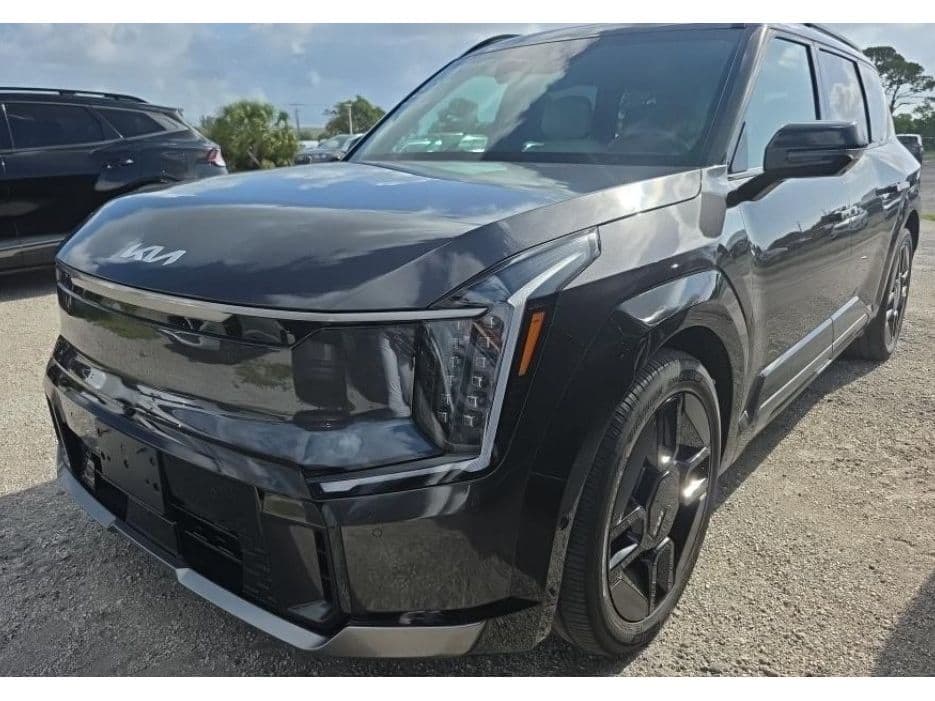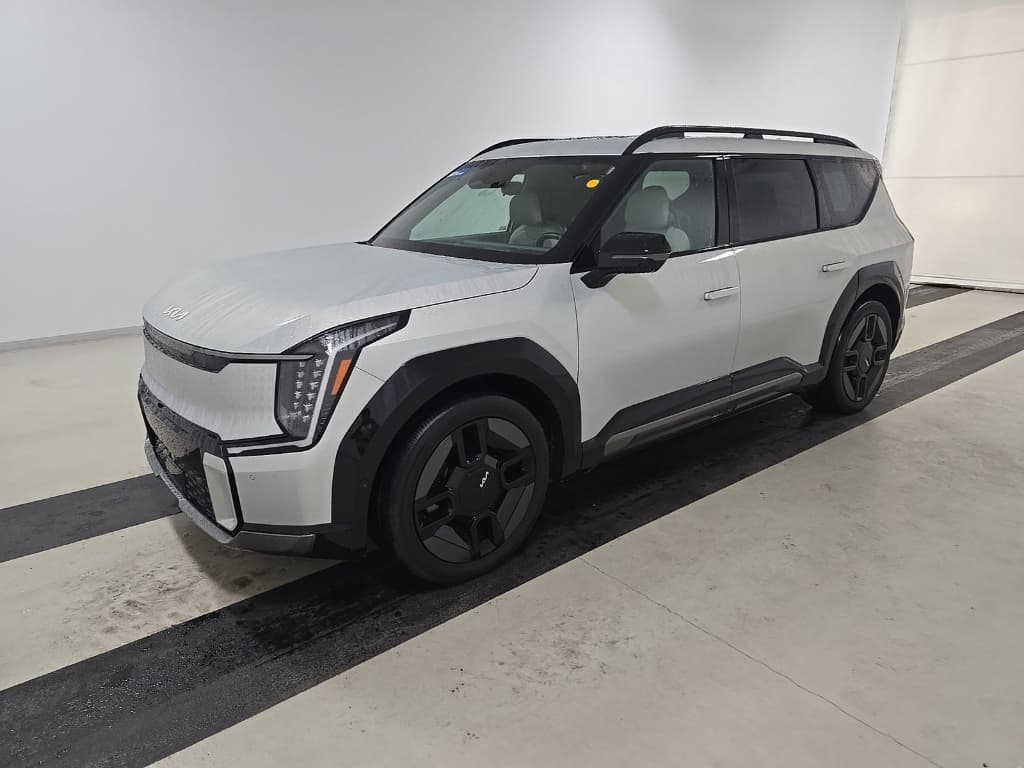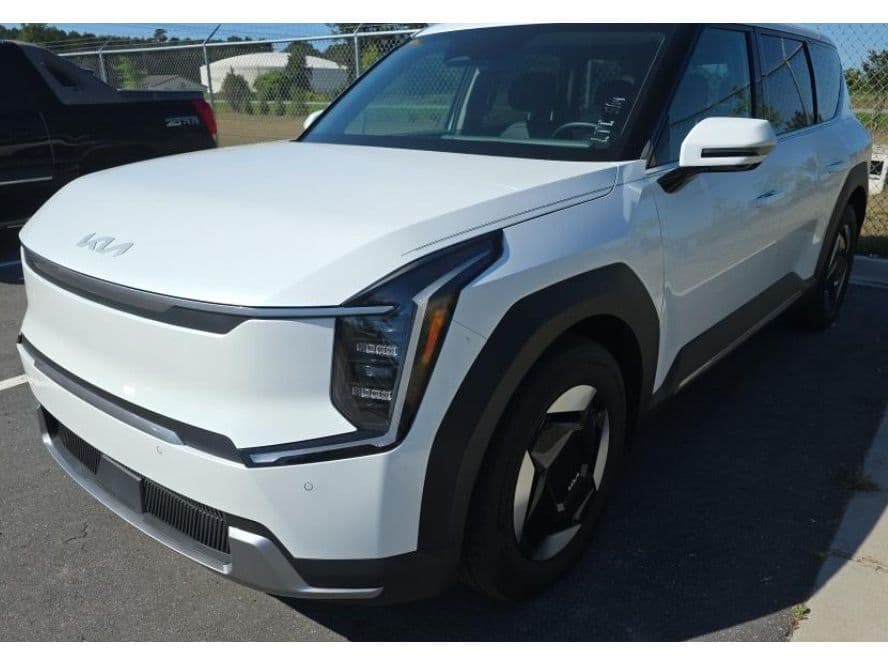
If you’re eyeing a Kia EV9, or already own one, the big money question is simple: what does it actually cost per mile to charge? Massive three-row SUV, big battery, big family… does that mean big electricity bills? Let’s unpack the math using real 2025–2026 U.S. electricity prices and the EV9’s actual efficiency so you can see what you’ll pay at home, at DC fast chargers, and how it stacks up against a gas SUV.
Key takeaway up front
Kia EV9 charging cost per mile: the basics
Cost per mile for any EV is just a mashup of three things: 1. How much energy the car uses per mile (efficiency, usually in kWh per 100 miles). 2. What you pay per kWh (home electricity vs. public charging). 3. How and where you actually drive (speed, weather, passengers, cargo).
- Most U.S. EV9 trims land around 34–38 kWh/100 miles on the EPA cycle, depending on battery and drivetrain.
- Average residential electricity in early 2026 is roughly $0.17 per kWh nationally, with big swings by state.
- DC fast charging networks often run $0.35–$0.60 per kWh, plus idle fees if you linger.
We’ll use these numbers to build a realistic range of cents per mile scenarios for the EV9, then compare those to a similar gas SUV.
Kia EV9 efficiency numbers that drive cost per mile
Kia offers the EV9 with two main battery packs and multiple powertrains. Exact EPA figures vary slightly by trim and wheels, but for cost-per-mile math we can use solid ballpark numbers that match the current spec sheets and road tests.
Approximate Kia EV9 efficiency by trim (U.S.)
Representative EPA-style energy use figures for common EV9 configurations. Your real-world results will vary with speed, temperature, and load.
| Trim example | Battery (usable kWh) | Drive | EPA-style energy use (kWh/100 mi) | Implied efficiency (mi/kWh) |
|---|---|---|---|---|
| Light RWD (Standard battery) | ~76 kWh | RWD | ~34 | ~2.9 mi/kWh |
| Wind/Light Long Range RWD | ~99.8 kWh | RWD | ~33–34 | ~3.0 mi/kWh |
| Land AWD (Long Range) | ~99.8 kWh | AWD | ~35–37 | ~2.7–2.9 mi/kWh |
| Highly optioned AWD on big wheels | ~99.8 kWh | AWD | ~38–40 | ~2.5–2.6 mi/kWh |
Higher kWh/100 miles means higher electricity cost per mile.
Why real-world EV9 numbers run higher
For our main calculations, we’ll use a realistic everyday average of 35 kWh/100 miles (that’s 0.35 kWh per mile or about 2.9 mi/kWh) for a typical Long Range EV9 used as a family hauler.
Home charging: EV9 cost per mile in the real world
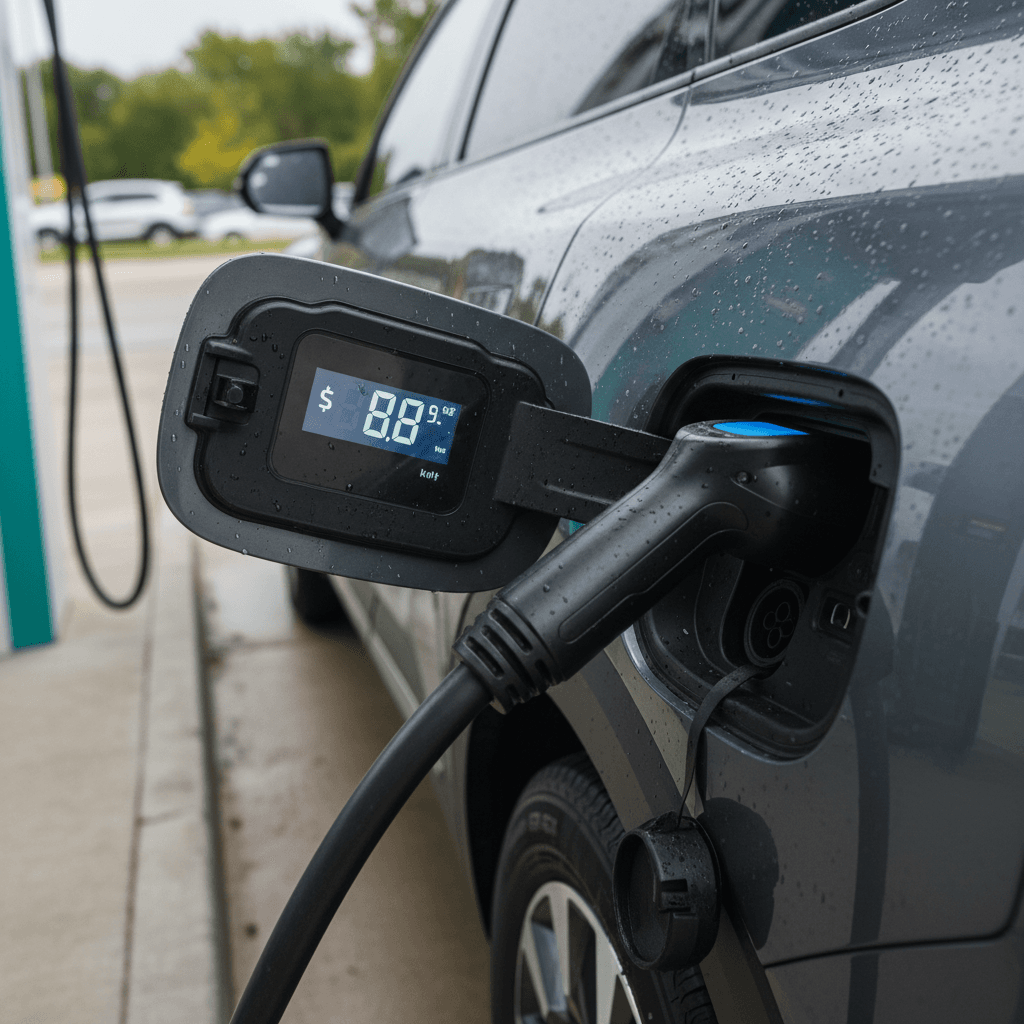
Home is where the Kia EV9 earns its keep. Residential electricity is almost always cheaper than public DC fast charging, and you’re not paying for convenience margins, credit card fees, or station overhead.
Typical U.S. home electricity and EV9 cost per mile
Here’s the simple formula you can use for any EV9 trim:
Cost per mile = (kWh per mile) × (electricity price per kWh)
Using our 0.35 kWh/mile reference:
- At $0.15/kWh (many off-peak plans): 0.35 × 0.15 ≈ $0.052 per mile (5.2 cents).
- At $0.17/kWh (near national average): 0.35 × 0.17 ≈ $0.060 per mile (6.0 cents).
- At $0.22/kWh (common in high-cost states): 0.35 × 0.22 ≈ $0.077 per mile (7.7 cents).
Lower-cost power states
If you’re in places with cheap electricity (parts of the South, Midwest, or Pacific Northwest), you may see home rates under $0.14/kWh. That can push your Kia EV9’s cost down toward 4–5 cents per mile, especially if you drive gently and stay off the interstate.
High-cost power states
In California, New England, and other high-rate markets, $0.25–$0.35/kWh isn’t unusual on standard tariffs. The same EV9 then costs closer to 9–12 cents per mile if you don’t use time-of-use discounts.
Use time-of-use to bend the curve
Public DC fast charging cost per mile
The EV9 is built for road trips, which means you will eventually be living at a DC fast charger, nursing a coffee while 400 volts pour into your minivan-shaped future. The cost equation changes here because you’re paying for speed and infrastructure, not just electrons.
Most major U.S. DC fast networks now bill per kWh in states that allow it, and typical posted rates in 2025–2026 look roughly like this:
Typical DC fast charging price ranges
Representative per-kWh pricing for major U.S. DC fast charging networks as of 2025–2026.
| Charger type | Example price per kWh | What it means for EV9 (0.35 kWh/mi) |
|---|---|---|
| Member rate on big networks | $0.30–$0.40 | ≈ $0.105–$0.14 per mile |
| Non-member walk-up rate | $0.40–$0.60 | ≈ $0.14–$0.21 per mile |
| Hotel / destination DC promo | $0.20–$0.30 | ≈ $0.07–$0.105 per mile |
| Free workplace / promo charging | $0.00 | Only your time; cost per mile is effectively $0 |
Actual prices vary by region, membership plan, and time of day.
If we again use 0.35 kWh per mile for a typical EV9 on the highway: - At $0.30/kWh: 0.35 × 0.30 ≈ $0.105 per mile. - At $0.45/kWh: 0.35 × 0.45 ≈ $0.158 per mile. - At $0.60/kWh: 0.35 × 0.60 ≈ $0.21 per mile. Those numbers overlap with what a lot of owners see on big 350 kW stations along interstates once fees and taxes are factored in.
Beware of idle and session fees
Kia EV9 vs gas SUV: cost per mile comparison
If you’re coming out of a Telluride, Tahoe, or Highlander, the comparison that matters isn’t EV9 vs another EV. It’s EV9 electricity per mile vs. gasoline per mile in a comparable three-row.
Electric vs gasoline: what 15,000 miles per year looks like
Kia EV9 home charging vs a 20–22 mpg gas SUV at $3.50–$4.00/gal.
Kia EV9 – mostly home charging
Assumptions:
- 0.35 kWh/mi
- $0.17/kWh average
Cost per mile: ≈ $0.06
15k miles/year: ≈ $900
Gas SUV (realistic city/highway mix)
Assumptions:
- 21 mpg combined
- $3.75/gal average gas
Cost per mile: ≈ $0.18
15k miles/year: ≈ $2,700
Annual difference
Even without fancy off-peak rates, the EV9 can save around:
- $1,600–$2,000 per year vs a similar gas SUV,
- assuming you charge mostly at home and only road-trip a few times a year.
Big family, big miles, big savings
How battery size and trim change your cost
Within the EV9 lineup, your trim choice moves the cost-per-mile needle more than you’d think. Same body, same face, very different appetite for energy once you add weight, power, and wheel area.
Trim and option choices that influence EV9 cost per mile
1. Standard vs Long Range battery
The smaller standard pack EV9 can be slightly more efficient in city use because it carries less weight. But the Long Range pack lets you stretch road-trip legs and reduce how often you pay DC fast charging prices, often more important for long-term costs.
2. RWD vs AWD
Rear-wheel-drive EV9s generally use <strong>less energy per mile</strong> than all-wheel-drive versions. If you don’t need AWD for snow or towing, RWD can shave a few kWh/100 miles and trim a cent or two per mile off your daily driving.
3. Wheel size and tire choice
Big 21–22" wheels and stickier tires look great, but they add rolling resistance and aerodynamic drag. Expect <strong>3–10% higher energy use</strong> vs smaller wheels, enough to matter if you drive a lot of highway miles.
4. Towing and roof accessories
Hook up a trailer or slap a cargo box or bikes on top and your EV9 turns into a rolling brick. Energy use can spike to <strong>50+ kWh/100 miles</strong> at highway speeds when towing a sizeable camper, more than doubling your cost per mile.
Don’t obsess over the last decimal place
7 ways to lower your Kia EV9 charging cost per mile
Once you understand the math, the game becomes simple: use fewer kWh per mile, and pay less per kWh. Here’s how to do both without turning your EV9 into a science project.
Practical ways to cut EV9 cost per mile
1. Prioritize Level 2 home charging
Install or use a <strong>Level 2 charger</strong> at home so 80–90% of your miles come from residential electricity, not marked-up DC fast charging. Even basic 32–40 A home units are enough to fully recharge an EV9 overnight.
2. Enroll in time-of-use or EV-specific rates
Ask your utility about EV or time-of-use plans that offer cheaper overnight power. Charging when demand is low can knock your price down by several cents per kWh, easy savings if your EV9 is sitting in the driveway anyway.
3. Cruise at realistic highway speeds
That big, flat EV9 nose is a parachute at 80 mph. Dropping from 78 mph to 68–70 mph can shave <strong>10–20% off energy use</strong>, especially in winter, directly lowering your cost per mile on road trips.
4. Precondition while plugged in
Use the Kia Connect app or in-car settings to preheat or precool the cabin while you’re still plugged in. That way the energy for peak HVAC draw comes from the wall, not the battery, keeping your driving efficiency higher.
5. Travel light and tidy
Remove roof racks and cargo boxes when you’re not using them, and don’t treat the cargo area like permanent storage. Less weight and drag mean fewer kWh burned to move the same distance.
6. Plan fast-charging stops intelligently
On road trips, aim to arrive at DC fast chargers around <strong>10–20%</strong> and unplug around <strong>70–80%</strong>. The EV9’s charging curve is fastest in that window, so you pay highway prices for fewer slow kWh at the top of the pack.
7. Keep tires properly inflated
Underinflated tires can quietly add several kWh/100 miles. Check pressures monthly and before long trips. It’s low-effort, high-impact efficiency maintenance on a vehicle that can weigh well over three tons loaded.
Buying a used Kia EV9? Cost-per-mile questions to ask
If you’re shopping the used market, exactly where Recharged specializes, the EV9’s size and price can make you understandably cautious. The good news: electricity cost per mile is only one piece of the total picture, and it’s usually a bright spot compared with gas.
Key cost-per-mile factors when evaluating a used EV9
Look beyond the sticker to understand real running costs.
1. Battery health & usable range
A healthy battery means you can stay in that efficient 10–80% zone and avoid extra fast-charging stops, directly reducing your cost per mile. Every EV sold through Recharged includes a Recharged Score Report with verified battery health, so you know the pack you’re paying for is the pack you’re getting.
2. Home charging readiness
Ask whether the previous owner mostly charged at home or relied on DC fast charging. Heavy DCFC use doesn’t automatically ruin a modern pack, but a car that lived on fast chargers may have more battery wear and higher lifetime energy costs. Also factor in what it will cost you to install or upgrade a home Level 2 charger if you haven’t already.
3. Your local electricity landscape
Before you fixate on national averages, plug your own utility’s rates into the cost-per-mile formula. Recharged’s EV specialists can help you estimate monthly energy costs for a specific used EV9 based on your ZIP code and driving pattern.
4. Financing, trade-in, and total cost of ownership
Electricity is only one slice of ownership cost. Recharged can bundle financing, trade-in, and nationwide delivery while helping you compare an EV9’s charging and maintenance savings against your current gas vehicle. That way, “cost per mile” isn’t just a number, it’s a full budget picture.
Bring data to the test drive
Kia EV9 charging cost per mile: FAQ
Frequently asked questions about Kia EV9 charging cost per mile
Bottom line: what your Kia EV9 really costs per mile
The Kia EV9 is not a hyper-efficient aero blob; it’s a rolling penthouse with a battery the size of a small power station. Yet even with that reality, when you charge mostly at home your electricity cost per mile usually lands in the 5–9 cent range. Lean hard on public DC fast charging and that can double, but you’re still generally under what a thirsty gas three-row spends on fuel.
In other words: the EV9’s size and comfort don’t automatically mean ruinous running costs. Get your home charging sorted, pay attention to your utility rates, and treat fast chargers as road-trip tools rather than daily lifelines, and you’ll keep cost per mile firmly on your side.
If you’re considering a used Kia EV9, platforms like Recharged can help you go deeper than the window sticker, pairing battery-health diagnostics, fair market pricing, financing, trade-in options, and nationwide delivery with expert guidance on what your EV9 will actually cost to run in your ZIP code. That way, when you sign for a three-row electric flagship, you already know what every mile is going to cost you.