If you’re looking at a Kia EV9, or thinking about buying one used, the big question is obvious: how long will the EV9 battery actually last? The pack is the most expensive component in the vehicle, and it determines not just range, but long‑term ownership costs and resale value.
EV9 battery life in one paragraph
Kia EV9 battery lifespan: the short answer
- The Kia EV9 uses a large lithium‑ion pack (76 kWh or ~100 kWh gross) built on Hyundai–Kia’s proven E‑GMP platform.
- Kia typically backs its EV batteries with 8–10 years and around 100,000 miles (or more) of capacity coverage, usually down to 70% of original capacity.
- Industry and fleet data on modern EVs suggest 20+ years of usable life for well‑managed packs, even if they’re out of warranty long before that.
- How you charge, drive, and store the EV9 can easily swing long‑term range by 10–20% over the life of the vehicle.
Rule of thumb
What kind of battery does the Kia EV9 use?
Understanding what’s under the floor helps make sense of Kia EV9 battery lifespan. The EV9 shares its core battery technology with the EV6 and other Hyundai–Kia E‑GMP models, which already have several years of real‑world data behind them.
Kia EV9 battery options at a glance
Pack sizes, chemistry, and what they mean for lifespan
Battery sizes
- Standard pack: ~76 kWh gross (typically rear‑wheel drive base trims).
- Long‑range pack: ~100 kWh gross, ~96 kWh usable on many AWD trims.
Both use the same basic cell chemistry and thermal management, so lifespan drivers are similar.
Chemistry & platform
- Chemistry: Nickel‑manganese‑cobalt (NMC) lithium‑ion cells supplied by SK On.
- Platform: E‑GMP 800‑volt architecture for efficient DC fast charging and robust thermal control.
- Implication: Modern, energy‑dense cells with active cooling, strong ingredients for long life.
Why 800 volts matters
Kia EV9 battery warranty: years, miles, and capacity
Warranty is your clearest hard promise about minimum battery lifespan. Kia’s exact terms can vary slightly by market and model year, but across its modern EV lineup the pattern is consistent: long coverage until capacity falls below about 70% of original.
Typical Kia EV high‑voltage battery warranty terms (EV9 included)
Always check your specific model year and region, but this reflects how Kia structures EV battery coverage in North America and many other markets.
| Item | Typical Coverage | What It Means |
|---|---|---|
| High‑voltage battery duration | 8–10 years from in‑service date | You’re covered for defects or premature degradation for most of a vehicle’s first decade. |
| High‑voltage battery mileage | 100,000–150,000 miles | Once you pass the mileage limit, capacity loss is on you unless there’s a clear defect. |
| Capacity threshold | ~70% of original capacity | If usable capacity drops below ~70% within the time/mileage window, Kia may repair or replace the pack. |
| Transferability | Usually transferable to subsequent owners | A used EV9 may still have years of battery warranty remaining, valuable if you’re buying pre‑owned. |
Battery warranties aren’t predictions of when a pack will fail, they’re a conservative floor that most packs comfortably exceed.
Check your specific EV9 paperwork
Real-world Kia EV9 battery lifespan: years and miles
The EV9 is still a relatively new model, so we don’t have 15‑year case studies yet. But we do have three powerful clues: long‑term data from earlier Kia EVs, lab research on modern lithium‑ion cells, and early owner experiences on the shared E‑GMP platform.
What current data suggests about EV9 battery life
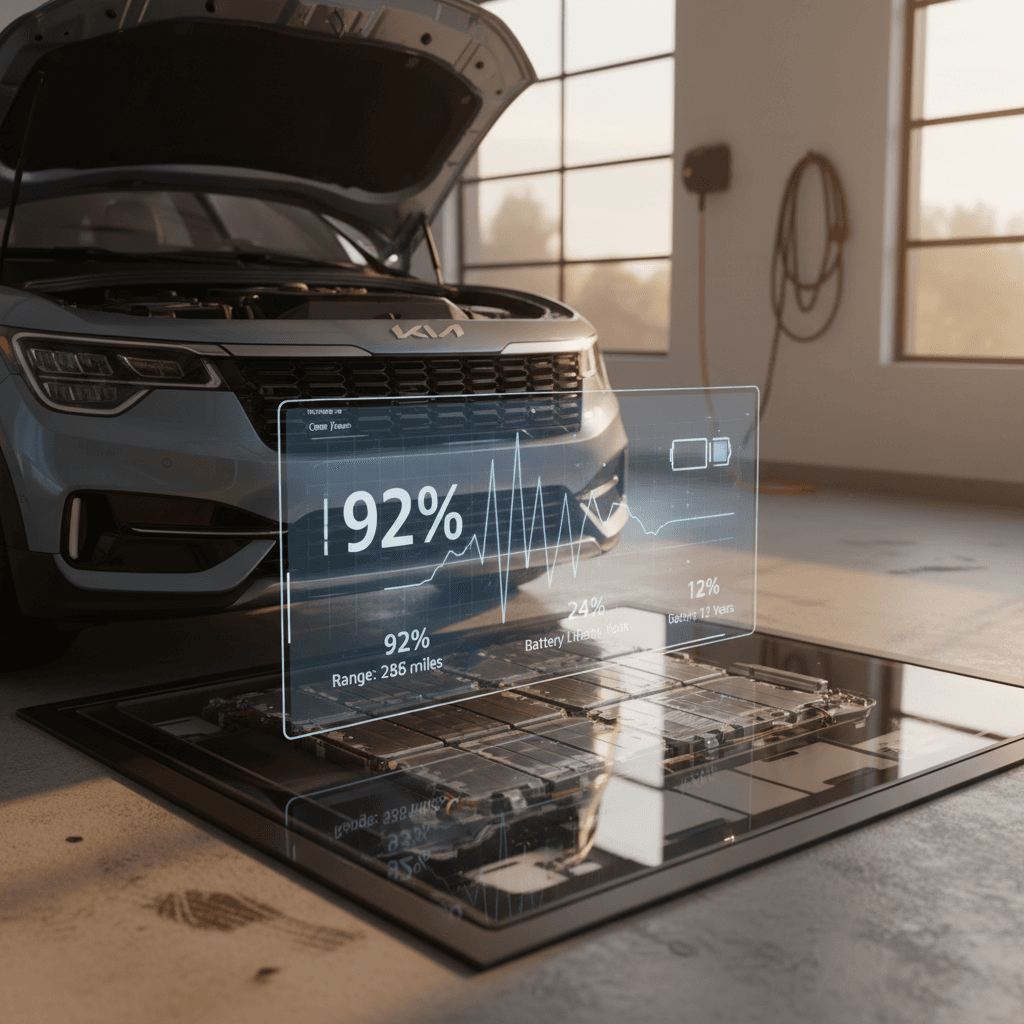
In practical terms, that means a Long Range AWD EV9 that starts around 280 miles of EPA combined range could reasonably still deliver 220–250 miles after 8–10 years, assuming a typical 10–20% capacity loss and similar driving conditions. For most families, that still covers commuting and regional trips comfortably.
Why you rarely see mass pack failures
What actually shortens or extends EV9 battery life?
Every lithium‑ion pack ages, but how fast it ages is largely up to how it’s used. The EV9’s thermal management and software do a lot behind the scenes, yet your habits are still the difference between “normal” and “accelerated” degradation.
Key factors affecting Kia EV9 battery lifespan
The big levers you control (and the ones you don’t)
Temperature
- Frequent exposure to extreme heat (e.g., baking in sun in hot climates) accelerates chemical aging.
- Cold mainly hits temporary performance, not long‑term health, but rapid DC fast charging on a very cold pack can add stress.
Charging style
- Constant DC fast charging is tougher on cells than Level 2 charging.
- Regularly charging to 100% and letting the car sit full is harder on the pack than stopping around 70–80% for daily use.
Depth of discharge
- Running the battery down to single digits all the time increases wear.
- Living mostly between ~20–80% is much gentler long‑term.
Driving patterns
- Hard acceleration and high sustained highway speeds generate more heat and stress than smoother, moderate driving.
- Occasional spirited use is fine; constant full‑throttle isn’t ideal for efficiency or longevity.
Time & storage
- All batteries slowly age just from time, even if parked.
- Long storage at 100% or at very low state of charge accelerates that calendar aging.
Software & updates
- OEM updates may tweak usable capacity limits or thermal strategies.
- This can sometimes reduce displayed range slightly to protect long‑term health.
The worst‑case combo for any EV battery
Best daily charging habits to protect your EV9 battery
If you remember nothing else about Kia EV9 battery lifespan, remember this: daily charging habits matter more than occasional road‑trip abuse. The pack is designed to survive some hard use; what it hates is relentless stress, day after day.
Daily habits that maximize EV9 battery life
1. Set a sane daily charge limit
For everyday driving, set your EV9’s charge limit around <strong>70–80%</strong>. Only go to 100% right before longer trips. Avoid letting the car sit at 100% for hours or days if you don’t need the range.
2. Favor Level 2 over DC fast charging
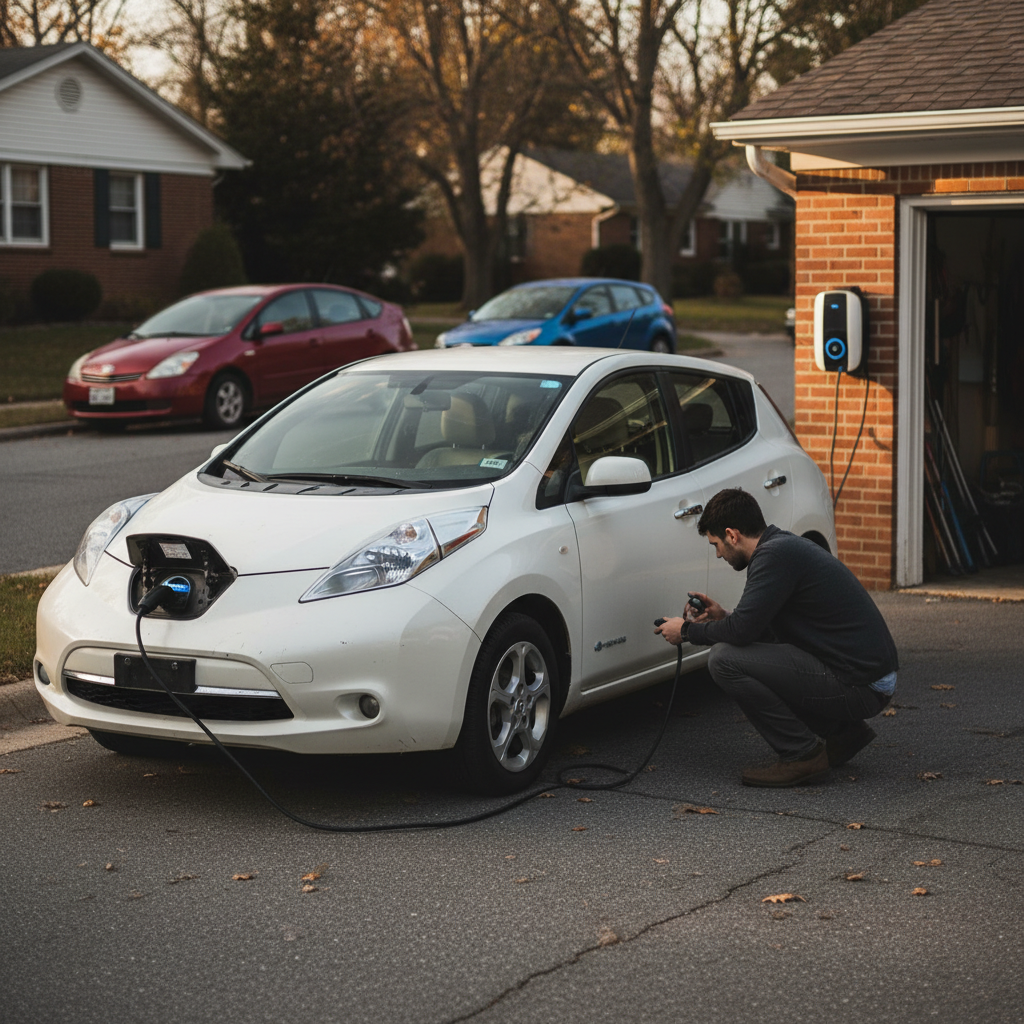
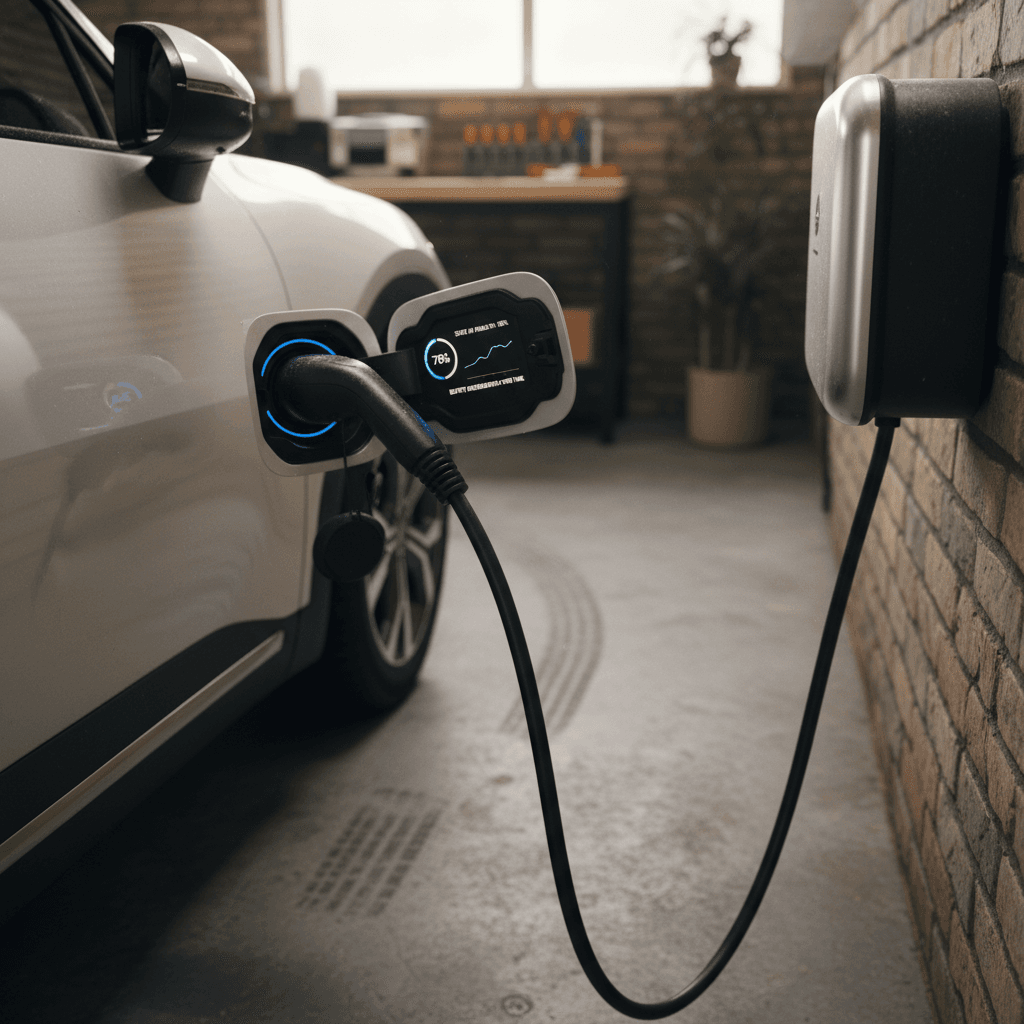
Use a home or workplace Level 2 charger as your primary fuel source. Treat DC fast charging as an occasional tool for road trips or urgent top‑ups, not your daily routine.
3. Avoid habitually running near 0%
It’s fine to dip into single digits now and then, but don’t make a habit of arriving home at 1–3% every night. Try to plug in somewhere around <strong>15–25%</strong> when practical.
4. Think about where you park
In hot climates, shaded or indoor parking helps keep the pack cooler, especially when the car is sitting at higher states of charge. In cold weather, a garage reduces how hard the car has to work to condition the battery.
5. Schedule charging to finish near departure
Most EVs let you schedule charging so it finishes close to when you leave. That way the pack spends less time sitting at high state of charge, which is easier on long‑term health.
6. Keep software reasonably current
Battery and thermal management updates can improve both longevity and drivability. When Kia pushes a well‑documented OTA update focused on EV systems, it’s usually worth installing.
Home charging and used EV value
Fast charging and road trips: how hard is it on the EV9 battery?
Kia did not build the EV9 to be a slow‑charging city appliance. The 800‑volt system is engineered for high‑power DC fast charging, and for most owners, road trips with fast charging won’t destroy the pack, as long as daily use stays gentle.
What Kia and research suggest
- Kia has publicly noted that heavy DC fast charging can trim roughly around 10% of potential battery life over an 8‑year span compared with mostly Level 2 use.
- That sounds scary, but remember: the baseline is already quite long. Losing 10% of a very long lifespan is not catastrophic for most owners.
- Modern thermal management reduces the worst overheating risks we saw in early‑generation EVs.
How to road‑trip smart
- Precondition the battery if the EV9 offers that feature before a fast‑charge stop in cold weather.
- On road trips, try to charge between 10–70% where charging speeds are highest, instead of sitting from 70–100%.
- Back home, switch right back to your Level 2 routine and lower charge limit.
Design intent matters
Evaluating battery health on a used Kia EV9
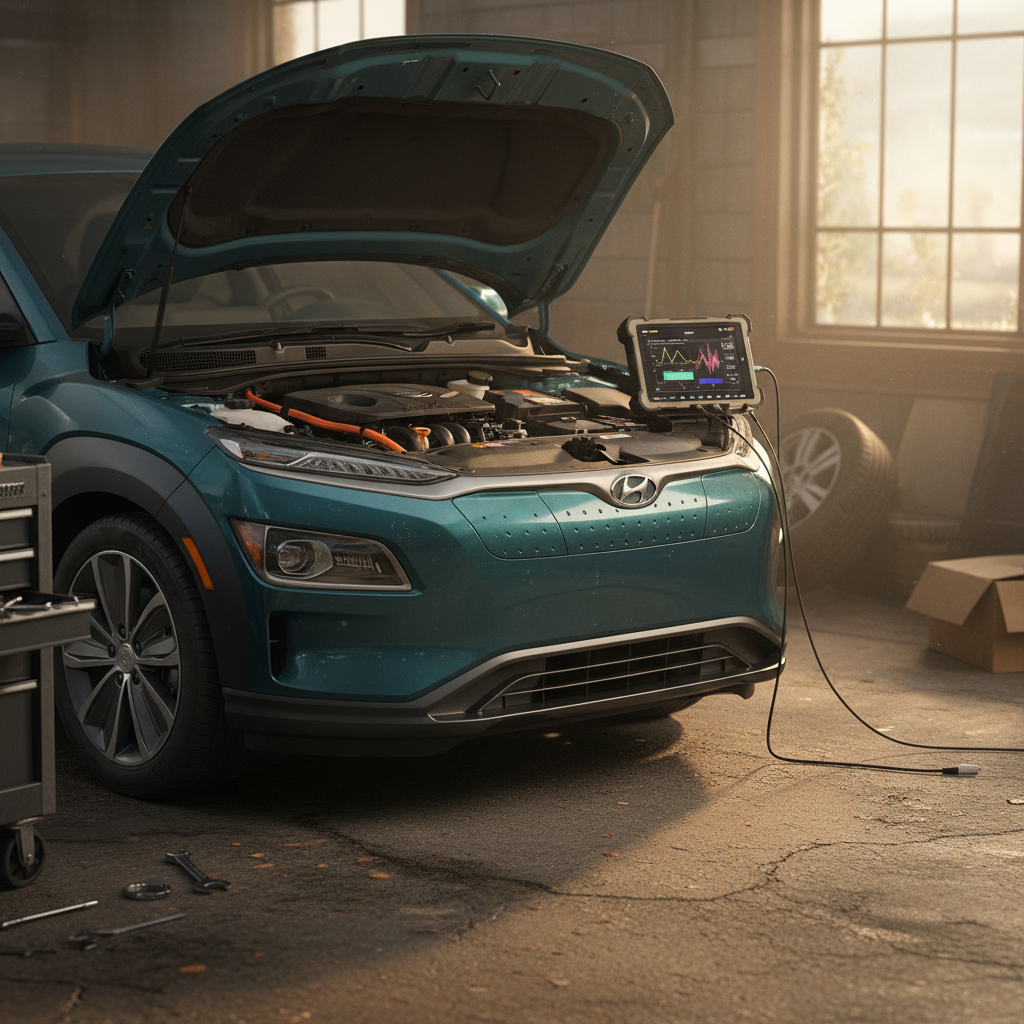
Because the EV9 is new, almost every used example on the market today is still under battery warranty. That’s good news, but warranty alone doesn’t tell you how the pack has been treated. If you’re buying used, especially from out of state, it pays to dig a bit deeper into real battery health.
How to sanity‑check a used EV9 battery
From quick checks to deeper diagnostics
1. Compare SOC to rated range
2. Check the trip efficiency history
3. Ask for service history
4. Confirm remaining warranty
5. Use third‑party diagnostics (carefully)
6. Get a professional battery report
Buying a used EV9 remotely
Parking, storage, and phantom drain in the EV9
Early EV9 owners have reported something every modern EV driver encounters: phantom drain, the gradual loss of state of charge while the car sits parked. Some loss is normal; software features, connectivity, and 12‑volt battery management all draw power even when you’re not driving.
- A few percent over several days is typical and not harmful to long‑term battery health.
- Higher losses, such as several percent per day, can indicate software bugs, aggressive connectivity settings, or accessory issues and may warrant a dealer visit or software update.
- From a lifespan standpoint, the main risk is leaving the car parked for weeks at a very low state of charge, which can stress cells and, in extreme cases, risk deep discharge.
Best practices for parking and long‑term storage
1. Don’t store it near empty
If you’re parking the EV9 at an airport or vacation home for more than a few days, leave it around <strong>40–60%</strong> state of charge. That gives room for normal phantom drain without approaching 0%.
2. Avoid long‑term storage at 100%
Just like daily use, batteries don’t love sitting full for weeks. If you’re storing the EV9 for a month or more, aim for mid‑pack, not a fresh 100% charge.
3. Tweak connectivity settings
If you’re seeing higher‑than‑expected drain while parked, consider reducing how often you ping the car with the app and turning off always‑on features that keep systems awake unnecessarily.
4. In extreme temps, favor a garage
A simple garage, heated or not, buffers the worst heat and cold, making life easier for the pack, especially during long idle periods.
Cold weather and “sudden” range loss
Kia EV9 battery lifespan: FAQ
Frequently asked questions about Kia EV9 battery life
Key takeaways and when a used EV9 makes sense
The Kia EV9’s battery pack is large, modern, and backed by a substantial warranty. If you avoid the worst charging and storage habits, you should reasonably expect a decade or more of family‑SUV usability before range loss starts to seriously constrain how you use the vehicle, and likely 15–20 years of total service life.
- Kia’s warranty (typically 8–10 years and ~100,000–150,000 miles to ~70% capacity) reflects confidence that the EV9’s pack will age gracefully under normal use.
- Your habits, charge limits, fast‑charging frequency, parking environment, and storage state of charge, can easily swing long‑term capacity by 10–20%.
- Fast charging and road trips are fine in moderation; just pair them with gentle daily Level 2 charging and reasonable SOC limits.
- On the used market, verified battery health and remaining warranty are far more important than model year alone.
Where Recharged fits in
Ready to find your next EV?
Browse VehiclesIn other words, you don’t need to fear the EV9’s battery, just respect it. Choose smart charging habits, pay attention to how the car behaves over time, and if you’re buying used, insist on clear, data‑backed insight into battery health. Do that, and the EV9’s pack should outlast most owners’ appetite for the vehicle itself.