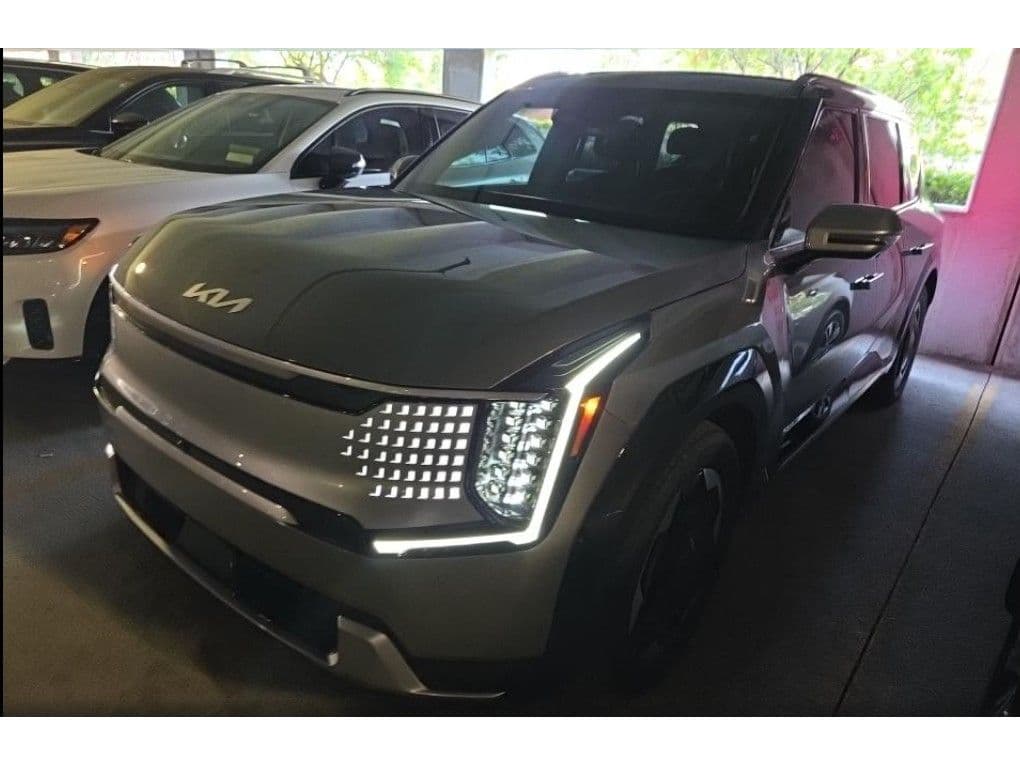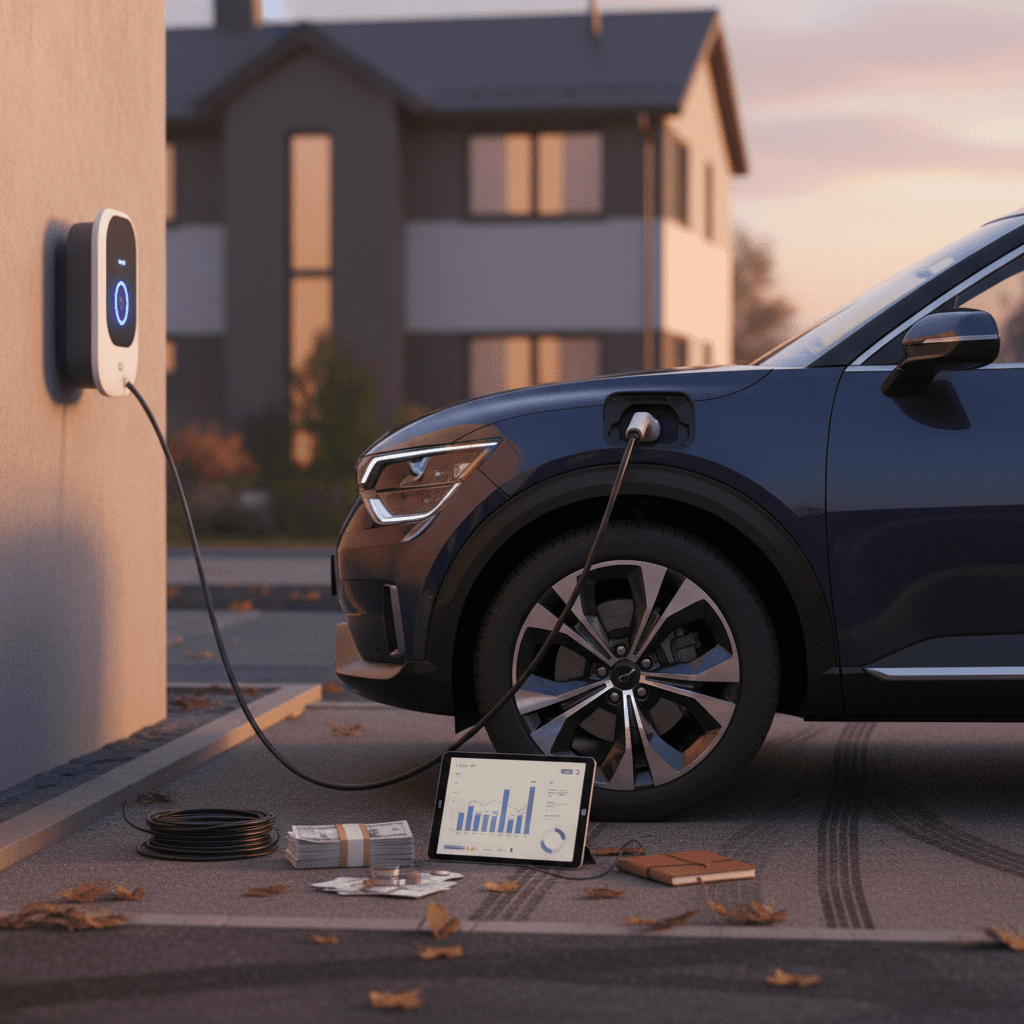
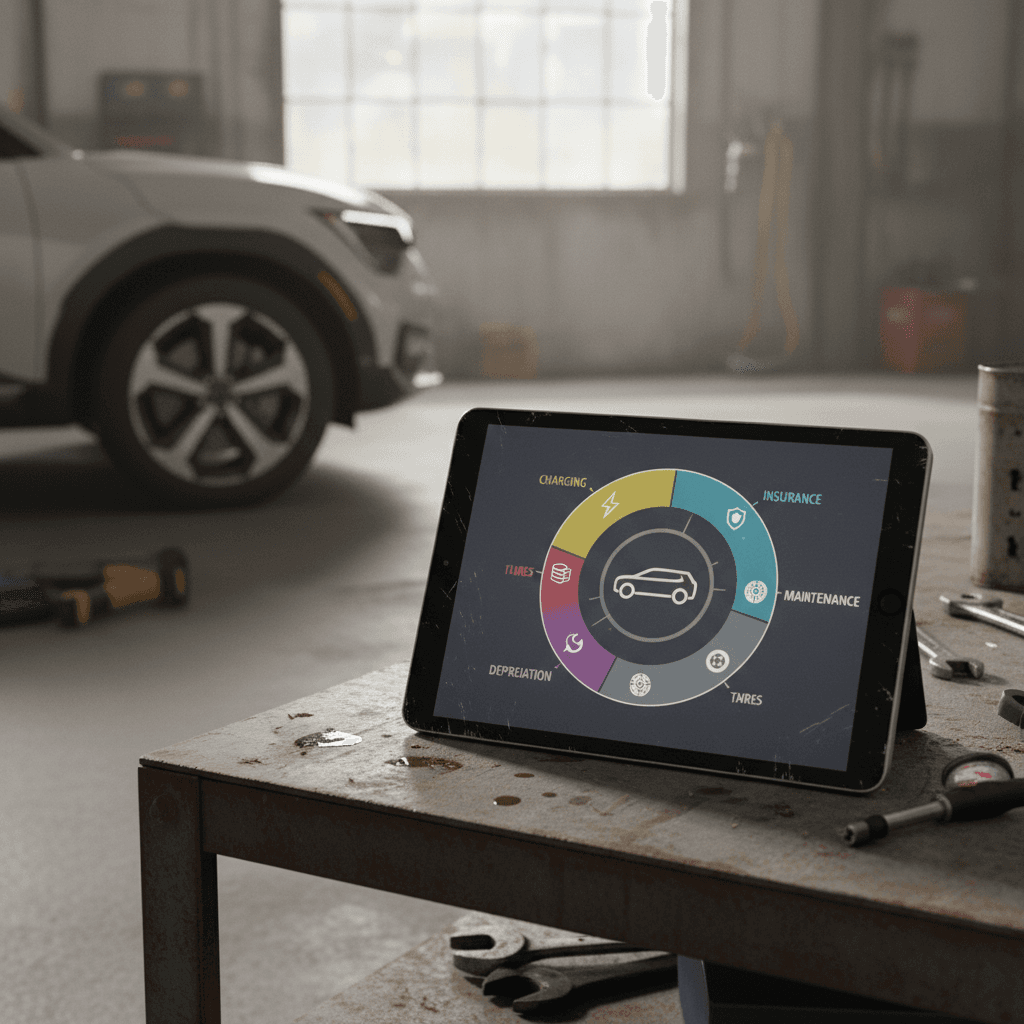
You don’t buy a Kia EV9 because you’re shy. It’s a three-row electric cruise ship. The real question is: how much does it cost to own a Kia EV9 per year once the honeymoon is over? Between electricity, insurance, maintenance, tires and depreciation, the bills add up quickly, especially in the U.S., where energy and insurance costs have climbed in 2024–2026.
Short answer
Kia EV9 ownership cost: quick overview
Typical yearly costs for a Kia EV9 (U.S.)
Those ranges are broad because your ZIP code and driving habits matter as much as the car itself. To make the math useful, we’ll spell out our assumptions, then walk through each cost bucket so you can adjust for your situation.
Key assumptions: mileage, trim and electricity
- Mileage: 10,000–15,000 miles per year. We’ll use 12,000 miles as the baseline, which is close to a typical American commute plus travel.
- Efficiency: For the long‑range AWD EV9, the EPA rates efficiency around 41 kWh/100 miles (about 2.4–2.6 mi/kWh) in mixed driving, owners often report similar numbers in real life.
- Battery size: Most U.S. EV9s on the road are the bigger‑battery trims (around 99.8 kWh usable), which matters more for range than for yearly cost, but we’ll flag where it changes the math.
- Electricity price: National residential electricity has climbed into the mid‑teens to high‑teens cents per kWh. We’ll use $0.17/kWh as a reasonable 2025–2026 U.S. average and show a cheaper‑power and pricey‑power case.
- Usage mix: 80–90% home charging, 10–20% DC fast charging on road trips. Public fast charging is much more expensive per kWh than your wall outlet.
- Vehicle age: A lot of the numbers below assume a current‑generation EV9 that’s either new or only a few years old. Buying a used EV9 changes depreciation, sometimes dramatically.
Your numbers may be higher in high‑cost states
Annual electricity cost to drive a Kia EV9
Let’s start with the big EV advantage: fuel. Even though the EV9 is a tall, heavy brick of a family hauler, electrons are still cheaper than gasoline in most of the U.S.
Step 1: Estimate kWh used per year
Using 41 kWh/100 miles as a realistic EV9 efficiency number in mixed driving:
- At 12,000 miles/year: 12,000 ÷ 100 × 41 ≈ 4,920 kWh/year drawn from the battery.
- Include charging losses (≈10–15%): from the wall you might purchase about 5,400–5,700 kWh/year to cover that driving.
Step 2: Multiply by your power rate
Annual electricity cost examples for the Kia EV9
Home‑charging‑heavy usage (about 90% home, 10% public fast charge), 12,000 miles/year.
| Scenario | kWh from wall/year | Price per kWh | Estimated yearly cost |
|---|---|---|---|
| Low‑cost power (e.g., some Midwest/South) | 5,400 | $0.13 | ≈ $700 |
| Average U.S. power cost | 5,400 | $0.17 | ≈ $920 |
| High‑cost power (e.g., CA, Northeast) | 5,400 | $0.25 | ≈ $1,350 |
Adjust the kWh price to match your actual utility bill or time‑of‑use EV rate.
If you rely heavily on DC fast charging at highway rates (often equivalent to $0.40–$0.55/kWh), you can easily double those figures on a road‑trip‑heavy year.
How this compares to a gas SUV
Kia EV9 insurance costs per year
Here’s the sticker shock many new EV9 buyers discover: insuring a big, expensive, new‑to‑market EV often costs significantly more than their old crossover. Insurers are still learning how to price these vehicles, and repair parts and labor for large EVs aren’t cheap.
Typical annual premiums for a new EV9
Online insurance estimators and rate surveys for a 2024–2025 Kia EV9 suggest $2,400–$3,200 per year for full‑coverage policies for a clean‑record driver in many states, with outliers well below and well above that band. That’s $200–$265 per month territory.
- In lower‑cost states with good credit, no claims and modest limits, you might see quotes in the $1,600–$2,000/year range.
- In dense urban areas or coastal states with higher repair costs, or if you have young drivers on the policy, seeing $3,500–$4,000+/year is not unusual for a new, high‑MSRP EV9.
- Older EV9s that have already depreciated and owners who are comfortable raising deductibles can often shave hundreds off the annual bill.
Don’t guess, quote before you buy
Maintenance and repairs for the EV9
This is where the EV powertrain earns its keep. There’s no engine oil, spark plugs or transmission fluid to change, and regenerative braking lightens the load on pads and rotors. That doesn’t mean the EV9 is free to run, but most of the cost is routine inspections and tires.
Typical yearly maintenance items on a Kia EV9
Actual schedule varies by mileage and climate, but the big categories are predictable.
Scheduled inspections
Fluids & filters
Repairs & surprises
A good working number for routine maintenance plus a modest repair cushion on a relatively young EV9 is around $400–$600 per year, excluding tires. Older, high‑mileage examples may creep above that as suspension and body hardware age.
Tires, parking and other running costs
The EV9 is heavy, powerful and often wears big 20–21 inch tires. That’s a recipe for healthy tire bills, especially if you lean on the instant torque or drive in hot climates.
Tires: the hidden EV tax
A quality set of EV‑rated all‑season tires for a Kia EV9 can easily run $1,200–$1,800 installed, depending on brand and wheel size. Many owners see replacement intervals in the 25,000–40,000‑mile range, strongly influenced by driving style.
- If you replace tires every 30,000 miles and drive 12,000 miles/year, that’s a new set every 2.5 years, roughly $480–$720 per year averaged.
- Rotate on schedule and keep pressures up and you’ll extend life and keep efficiency up, saving a bit on electricity too.
Parking, tolls and other line items
These are highly location‑dependent, but worth acknowledging in your personal budget:
- Urban parking or resident permits: $0–$1,500/year.
- Tolls and congestion pricing where applicable: $0–$1,000+/year.
- Occasional paid public charging or idle fees when you overstay a DC fast charger.
Public charging etiquette saves money
Taxes, fees and registration
States and municipalities are still figuring out how to tax EVs fairly. Many have added flat annual EV fees or slightly higher registration to make up for lost gas‑tax revenue.
- Annual registration and EV fees can range from $100 to $400+ per year, depending on state and vehicle value.
- Some states base registration fees partly on the car’s original MSRP, so a high‑trim EV9 can be more expensive to register than a modest compact EV.
- You may also have local property or excise taxes on vehicles; those typically scale with the car’s value, which again makes buying used attractive.
Depreciation: how fast does an EV9 lose value?
Depreciation is the silent killer in any new‑car budget, and it’s especially sharp with high‑MSRP EVs while the market is still finding its equilibrium. The EV9 is new enough that we don’t have ten years of data, but we can make reasonable estimates based on similar three‑row EVs and early resale listings.
New EV9 depreciation ballpark
Depending on trim and incentives, many new EV9s transact in the $60,000–$80,000 range. First‑owner depreciation might look something like this in today’s market:
Illustrative depreciation curve for a new Kia EV9
Actual numbers depend on incentives, mileage, condition, color and market swings. This is a directional example, not a guarantee.
| Ownership year | Estimated value drop that year | Running total drop vs. purchase | Notes |
|---|---|---|---|
| Year 1 | $8,000–$12,000 | $8,000–$12,000 | Initial hit as the EV9 becomes a used vehicle. |
| Year 2 | $5,000–$7,000 | $13,000–$19,000 | Market adjusts to supply of used three‑row EVs. |
| Year 3 | $4,000–$6,000 | $17,000–$25,000 | Softening continues as newer tech arrives. |
| Years 4–5 (each) | $3,000–$5,000/year | $23,000–$35,000 | Rate of decline generally slows, but big market moves are possible. |
This is why buying gently used can slash your annual cost of ownership.
Spread over five years, that’s a very rough $3,000–$7,000 per year disappearing in depreciation for a new EV9, depending how hard the early years bite and where the market goes.
Where used EV9s shine
Sample annual cost scenarios
Let’s put all of this together into a few realistic ownership profiles. These are illustrations, not promises, but they give you a sense of where your own numbers might land.
Scenario 1: Suburban commuter, new EV9
Profile: 12,000 miles/year, mostly home charging at $0.17/kWh, long‑range AWD, clean driving record in a mid‑cost state.
- Electricity: ≈ $900/year
- Insurance: ≈ $2,400/year
- Maintenance (ex‑tires): ≈ $500/year
- Tires averaged: ≈ $600/year
- Registration/fees: ≈ $250/year
- Depreciation (new): ≈ $4,000/year
Estimated total: about $8,650 per year in ownership costs, not counting financing interest.
Scenario 2: Used EV9 buyer in a cheaper‑power state
Profile: 10,000 miles/year, mostly home charging at $0.13/kWh, 3‑ to 4‑year‑old long‑range EV9 bought used, moderate insurance costs.
- Electricity: ≈ $650/year
- Insurance: ≈ $1,800/year
- Maintenance (ex‑tires): ≈ $550/year
- Tires averaged: ≈ $500/year
- Registration/fees: ≈ $200/year
- Depreciation (used): ≈ $2,000–$2,500/year
Estimated total: roughly $6,200–$6,700 per year.
High‑cost scenario: know your risk
How buying used changes EV9 cost of ownership
Because depreciation and insurance dominate the yearly cost picture, buying a used EV9 can be the difference between “aspirational splurge” and “rational family hauler.” The key is knowing what you’re getting, especially around battery health and prior use.
Why a used Kia EV9 can be cheaper to own
Same road presence, calmer line items.
Lower depreciation drag
Insurance may soften
Battery transparency with Recharged
If you’re cross‑shopping a new EV9 at $70,000 with a lightly used one in the $50,000s, the annual savings in depreciation and insurance alone can easily hit $2,500–$4,000 per year while you still get the same basic experience: big, quiet, fast and unapologetically squared‑off.
Ways to lower your Kia EV9 ownership costs
Practical levers to pull down your yearly EV9 costs
1. Optimize when and where you charge
If your utility offers off‑peak or EV‑specific rates, schedule charging for cheap hours. Avoid using DC fast charging as your daily habit, it’s convenient but can cost 2–3x more per mile than home charging.
2. Right‑size your trim and options
That fully loaded GT‑Line with every package is tempting, but a mid‑trim EV9 with the big battery and fewer luxury options may depreciate less rapidly and cost less to insure.
3. Shop insurance like it’s another car payment
Get quotes from multiple carriers with the exact same coverage limits and deductibles. Small changes, raising a deductible, adjusting mileage, bundling home and auto, can shave hundreds per year.
4. Treat tires like a utility bill
Rotate them on schedule, keep them properly inflated and avoid unnecessary launches from every light. Think of a tire fund, $40–$60/month set aside, so the eventual bill doesn’t hurt.
5. Consider buying certified used
A well‑screened used EV9 with documented service history, clean title and a battery‑health report from a marketplace like <strong>Recharged</strong> can lop years of depreciation off your balance sheet.
6. Use software and OTA updates
Stay current on Kia’s software updates and feature improvements. Some updates improve efficiency or fix bugs that would otherwise cause nuisance trips back to the dealer.
Kia EV9 ownership cost FAQ
Frequently asked questions about Kia EV9 yearly costs
Bottom line: is the Kia EV9 expensive to own?
Viewed strictly as a transportation appliance, the Kia EV9 is not cheap to own. Between a high purchase price, strong depreciation in the early years and elevated insurance, its annual costs live closer to luxury SUVs than economy crossovers. But if you need a quiet, three‑row electric family bus that trades gas‑station fumes for electrons, the EV9 makes its case not with penny‑pinching but with everyday livability and lower fueling and maintenance hassle.
Where you can absolutely swing the math in your favor is how you buy and run it. Charge at home on off‑peak rates, rotate and protect those expensive tires, get serious about insurance shopping and, most of all, consider a well‑vetted used EV9 instead of a showroom‑fresh one. Marketplaces like Recharged pair used EV9s with a Recharged Score Report that verifies battery health, pricing and condition, so you can enjoy the big‑EV9 experience while keeping your yearly ownership costs in a much more humane range.