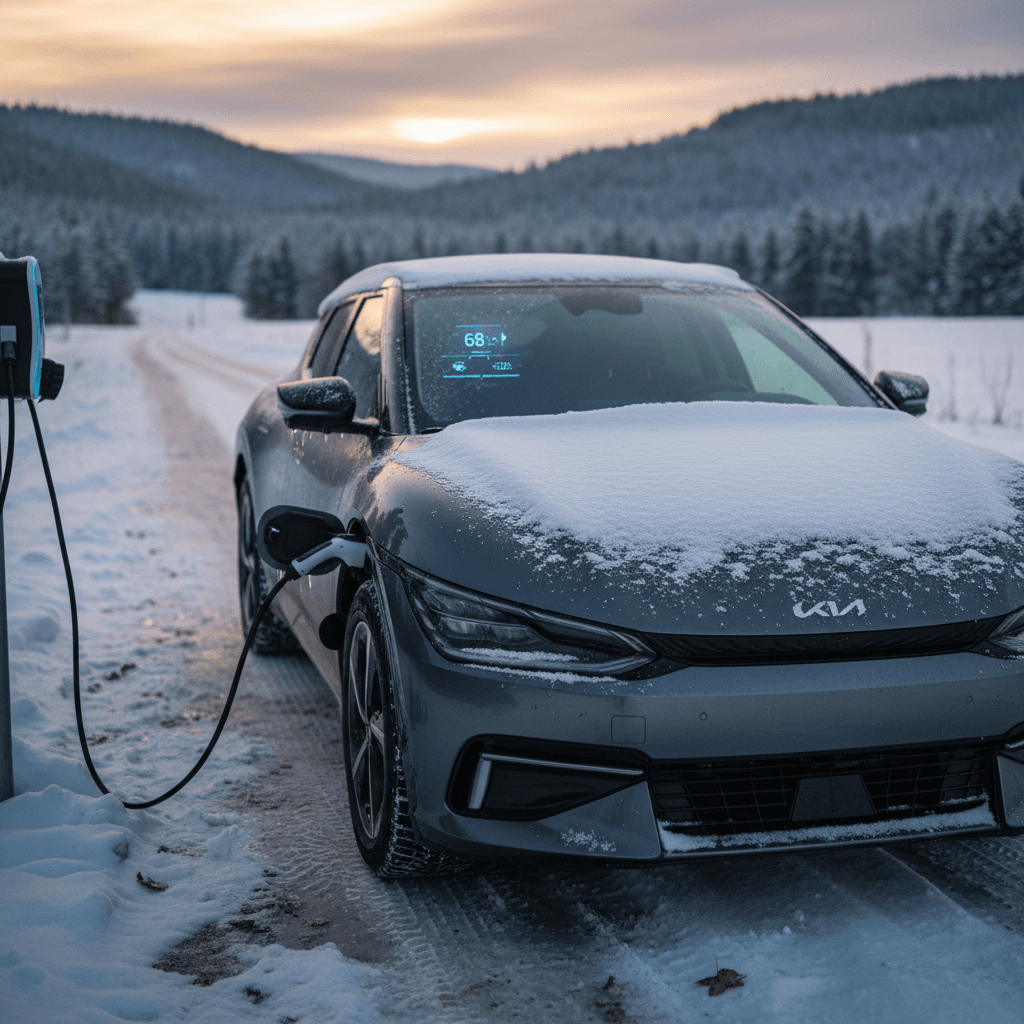
If you live where winter actually feels like winter, you’re smart to ask about the Kia EV6 winter range loss percentage. The EV6 is one of the more efficient electric crossovers on the market, but no EV is immune to cold temps, snow, and cabin heat. The good news: once you know what kind of loss is normal, and how to drive around it, you can plan confidently instead of guessing at the dash.
Cold-weather reality check
Kia EV6 winter range loss: quick overview
Kia EV6 winter range at a glance
Those percentages may not match your exact experience, and that’s okay. Winter range is highly personal. Your climate, driving style, tire choice, and how often you make short vs. long trips all move the needle. But this gives you a realistic, experience-based starting point for planning with a Kia EV6.
How much winter range loss to expect in a Kia EV6
Let’s translate Kia EV6 winter range loss percentage into miles you can actually picture. We’ll use the popular rear‑wheel‑drive EV6 with the larger battery (around 310 miles EPA rated range) as our baseline, then show what happens as the temperature and your driving pattern change.
Kia EV6 long-range winter range: ballpark examples
Approximate real-world ranges for a rear‑wheel‑drive long‑range Kia EV6 starting from about 310 miles EPA rated range. Your numbers will vary, but the percentages give you a solid planning framework.
| Conditions | Typical loss % | Approx. usable range | What it feels like day to day |
|---|---|---|---|
| Cool fall (45–55°F), mixed driving | 10–15% | 260–280 mi | Basically normal; you just won’t quite hit the EPA sticker |
| Mild winter (30–40°F), mostly highway | 20–25% | 230–250 mi | You notice the drop but road trips still feel easy |
| Cold winter (10–30°F), mostly highway | 25–30% | 210–230 mi | You plan your fast‑charge stops instead of winging it |
| Cold winter (10–30°F), mostly short city trips | 30–40% | 180–215 mi | Heater and short hops eat range; preconditioning helps a lot |
| Deep cold (below 0°F), short trips, no preconditioning | 40%+ | <180 mi | Worst‑case scenario; still usable but you charge more often |
Use this as a planning tool, not a promise. Local conditions and driving style can swing results either way.
EPA ratings vs. winter reality
6 key factors that affect Kia EV6 winter range
That headline number, “30% winter loss”, is only half the story. Two EV6 owners in the same city can see very different results because of how and where they drive. Here are the big levers that move your EV6 winter range loss percentage up or down.
- Trip length: Short, stop‑and‑go trips hurt the most. The car has to warm the cabin and battery over and over, and you never settle into efficient cruising.
- Outside temperature: Below freezing, the battery’s chemistry gets sluggish. The colder it is, the more energy goes to keeping the pack and cabin warm instead of turning the wheels.
- Speed and driving style: Aerodynamic drag increases sharply with speed. 75–80 mph winter driving with a warm cabin is the fast track to bigger losses.
- Heat pump and HVAC settings: A heat pump EV6 is more efficient in the cold than one without. Cranking the cabin to 75°F vs. using seat and steering‑wheel heaters can be the difference between 20% and 30% loss.
- Tires and wheels: Big 20–21 inch wheels and aggressive winter tires look great and grip well, but they add rolling resistance. That can cost another 5–10% on top of the weather hit.
- Preconditioning and charging habits: If you warm the battery and cabin while plugged in, much of that energy comes from the grid instead of your pack. Your displayed range may drop, but your usable on‑road range improves.
Think in “winter range mode”
EV6 trims, batteries, and the heat pump: why they matter in winter
Not every Kia EV6 is the same in winter. Battery size, drivetrain, wheels, and whether the car has a heat pump all change how much range you lose when it’s cold. The percentages stay in the same neighborhood, but your starting point, the EPA rating, is different.
How different Kia EV6 setups behave in winter
Same basic car, different winter personalities.
RWD long‑range (smaller wheels)
These are the winter heroes. A lighter, rear‑drive EV6 on 19‑inch wheels can start around 300+ miles EPA. A 25–30% winter hit still leaves you with a very usable 210–230 miles in real cold-weather driving.
AWD long‑range (bigger wheels)
All‑wheel drive and 20–21 inch wheels give better traction and looks, but eat efficiency. You start with fewer rated miles and see slightly higher winter loss, often ending up around 190–220 miles in deep winter highway use.
Heat pump vs. no heat pump
A heat pump uses energy more efficiently than traditional resistive heating. In sub‑freezing temps, that can easily be worth 5–10% better usable range compared with an otherwise similar EV6 without it.
Shopping for a used EV6?
Real-world scenarios: Kia EV6 winter range in everyday use
Numbers on a chart are one thing. Living with a Kia EV6 through January is another. Here’s how the typical winter range loss percentage plays out in three common day‑to‑day scenarios.
1. 25‑mile each‑way commute
You drive 50 miles a day on a mix of city streets and 55 mph highway, temps around 25°F, and you keep the cabin at 70°F.
- Typical loss: about 20–25%
- Winter range: roughly 220–240 miles
- Experience: Effortless. You charge every few days and hardly think about it.
2. 200‑mile winter road trip
You set out on a Saturday drive, mostly highway at 70 mph, temp hovering at 30°F with some wind and slush.
- Typical loss: about 25–30%
- Winter range: about 210–230 miles
- Experience: In a long‑range EV6, you can usually drive the distance on one full charge if you start warm. If the weather’s brutal, you might plan a short fast‑charge stop.
3. Short‑hop city errands
You run six 3–5 mile errands around town in 15°F weather, letting the car sit between stops.
- Typical loss: 30–40% or more
- Winter range: 180–210 miles on paper, but it feels like less because you’re hitting the “cold start” penalty over and over.
- Experience: This is where preheating and seat heaters shine. You’re fine, but you plug in more often than you expected.
The comforting pattern
9 ways to cut Kia EV6 winter range loss
You can’t negotiate with physics, but you can stack the deck in your favor. These strategies won’t magically erase winter losses, but together they can trim your Kia EV6 winter range loss percentage from the high‑30s down into the 20s for most driving.
Cold‑weather playbook for your Kia EV6
1. Precondition while plugged in
Use the Kia Connect app (or your in‑car departure timers) to warm the cabin and battery while the car is still charging. You’ll start with a warm pack and clear windows without burning through stored energy.
2. Rely on seat and wheel heaters
The EV6’s seat and steering‑wheel heaters use far less energy than blasting hot air. Keep the cabin a bit cooler, say 68°F, but run the seat and wheel on high. It’s surprisingly cozy and noticeably more efficient.
3. Dial back your speed
Dropping from 75 mph to 65 mph can be worth <strong>dozens of extra winter miles</strong> from the same charge, especially in headwinds or slushy conditions. It’s the single easiest way to tame range loss on the highway.
4. Use Eco mode when it’s nasty out
Eco mode smooths out throttle response and reins in HVAC aggression. In bad weather, that makes the car feel calmer and can shave a few percentage points off your consumption without making the EV6 feel sluggish.
5. Check tire pressures regularly
Cold air drops tire pressure. Running significantly under spec adds rolling resistance and nibble at efficiency. Check pressures at least once a month in winter and set them to the recommendation on the door jamb when the tires are cold.
6. Consider smaller wheels for winter
If your EV6 has big 20–21 inch wheels, a separate winter wheel‑and‑tire package in 19‑inch size can improve both grip and efficiency. Less weight and narrower rubber roll easier through snow and standing water.
7. Park indoors or out of the wind
A garage, heated or not, keeps the car and battery a bit warmer, cutting how hard the car has to work on startup. Even a wind‑sheltered spot can make a noticeable difference in how quickly the cabin and pack lose heat.
8. Plan your charging stops smarter
On road trips, aim to arrive at fast chargers with 10–20% state of charge, then leave around 60–70%, especially in the cold. That’s where DC fast chargers work most efficiently, and it keeps you out of the painfully slow top of the charge curve.
9. Use trip meters, not just the guess‑o‑meter
Reset a trip meter for winter and watch your average consumption (mi/kWh). Over a week or two, it gives you a much clearer picture of your true winter range than the constantly changing estimate on the dash.
Don’t chase 0% in winter
Fast charging a Kia EV6 in winter
Fast charging is where winter really shows its teeth. Cold batteries don’t like to accept high power, so charge sessions that take 18–20 minutes in mild weather can stretch noticeably longer in freezing temps unless the pack has been properly warmed.
How winter affects EV6 DC fast charging
These are broad patterns you’ll feel when you DC fast charge your EV6 in cold weather.
| Battery state | Mild weather (around 60°F) | Cold weather (around 20°F) | What you’ll notice |
|---|---|---|---|
| Arrive with a warm battery (after highway drive) | Near‑peak charge speeds; 10–80% in ~20–25 min | Slightly lower peak speeds; 10–80% more like ~25–35 min | Not bad, your coffee break is just a bit longer. |
| Arrive with a cold battery (short drive from home) | Decent speeds, ramping up quickly | Very slow at first; charger may hover at low kW before ramping | It feels “broken” for the first 5–10 minutes, then steadily improves. |
| Use preconditioning for DC fast charging (if available) | Battery already warm, you see strong speeds quickly | Still helps, but cold ambient temps may keep speeds below summer peak | Planning ahead pays off most when it’s brutally cold. |
Times and speeds vary by charger and state of charge, but the trend is consistent: warm battery = faster charge.
Arrive fast to charge fast
Buying a used Kia EV6? Winter questions to ask
If you’re shopping for a used EV6 in a cold‑weather state, winter performance isn’t a theoretical question, it’s your life from November to March. Here’s what to dig into so the car you buy matches the winter driving you actually do.
Used Kia EV6 winter‑ready checklist
1. Confirm battery size and drivetrain
Ask which battery pack the car has and whether it’s rear‑wheel or all‑wheel drive. A long‑range RWD EV6 will feel very different on winter road trips than a short‑range AWD model, even if both lose the same percentage in the cold.
2. Ask about the heat pump
A heat pump isn’t magic, but it <strong>does</strong> help in the cold. If you live in a northern climate and you’re choosing between otherwise similar EV6s, the one with the heat pump is the better bet for winter efficiency.
3. Review real energy consumption
If the seller can share recent winter consumption numbers (mi/kWh) or photos of the trip computer in cold weather, take them. They tell you more about real winter range than any brochure stat.
4. Inspect tires and wheels
Check how much tread is left, whether the car comes with winter tires, and what wheel size it wears. New winter rubber or a second wheel set has real value if you’re budgeting for a winter‑ready EV6.
5. Check for software updates and cabin features
Ensure the climate controls, heated seats, and steering‑wheel heat work properly. Updated software can improve charging behavior and energy management in cold temps.
6. Get a battery health report
Battery age and health affect <strong>every</strong> season, not just winter. A degraded pack means you’re starting with less capacity before the cold‑weather hit. With Recharged, every used EV6 comes with a <strong>Recharged Score battery health report</strong> so you know exactly what you’re buying.
How Recharged helps winter‑proof your choice
Kia EV6 winter range: FAQs
Frequently asked questions about Kia EV6 winter range loss
Bottom line on Kia EV6 winter range loss percentage
Cold weather will knock your Kia EV6’s range down, it does for every EV. But when you zoom out, the picture is a lot less scary than the internet horror stories. If you plan around roughly 20–35% winter range loss, use preconditioning, and take advantage of the EV6’s efficient heaters and strong fast‑charging, you end up with a comfortable, capable year‑round electric crossover.
If you’re shopping used, focus on the combination that fits your climate: battery size, drivetrain, wheels, heat pump, and battery health. At Recharged, every EV6 comes with a Recharged Score Report and EV‑specialist support, so you can choose the right car for your winters, not someone else’s spreadsheet. That’s how you turn winter range from a worry into just another line on your trip plan.