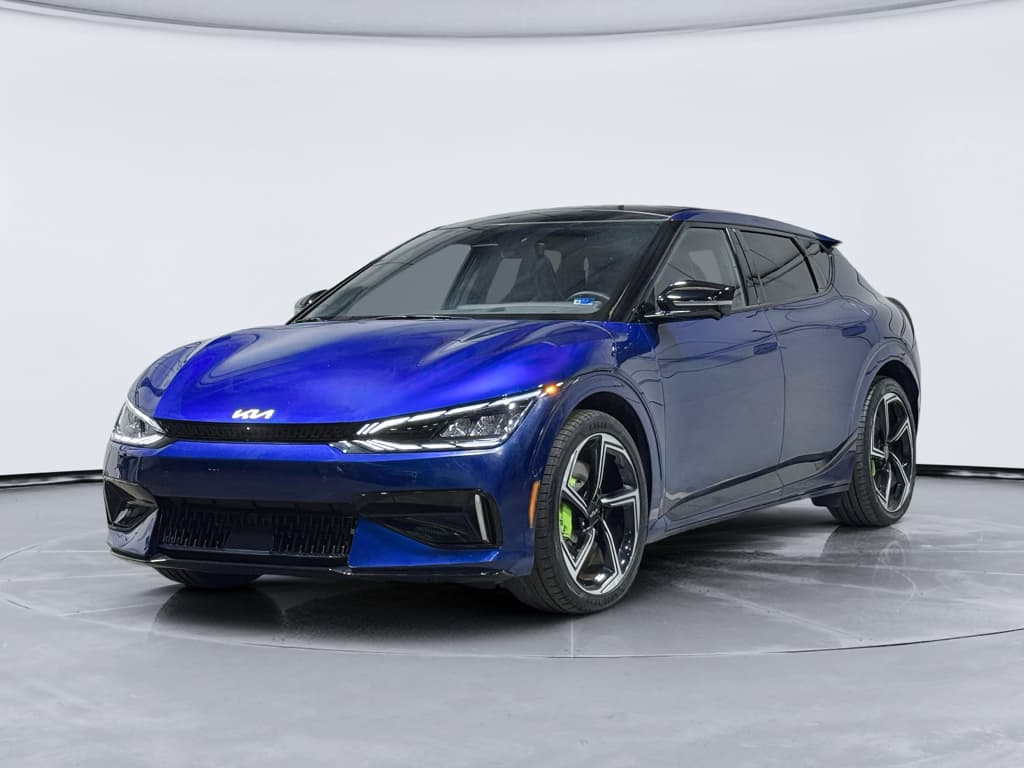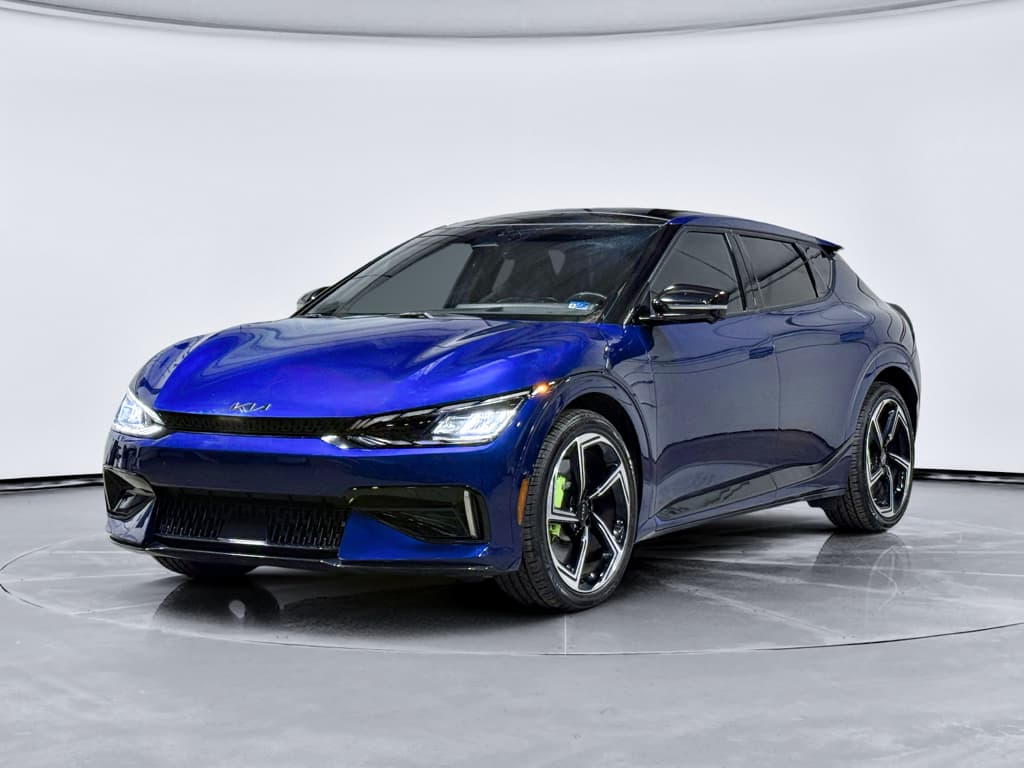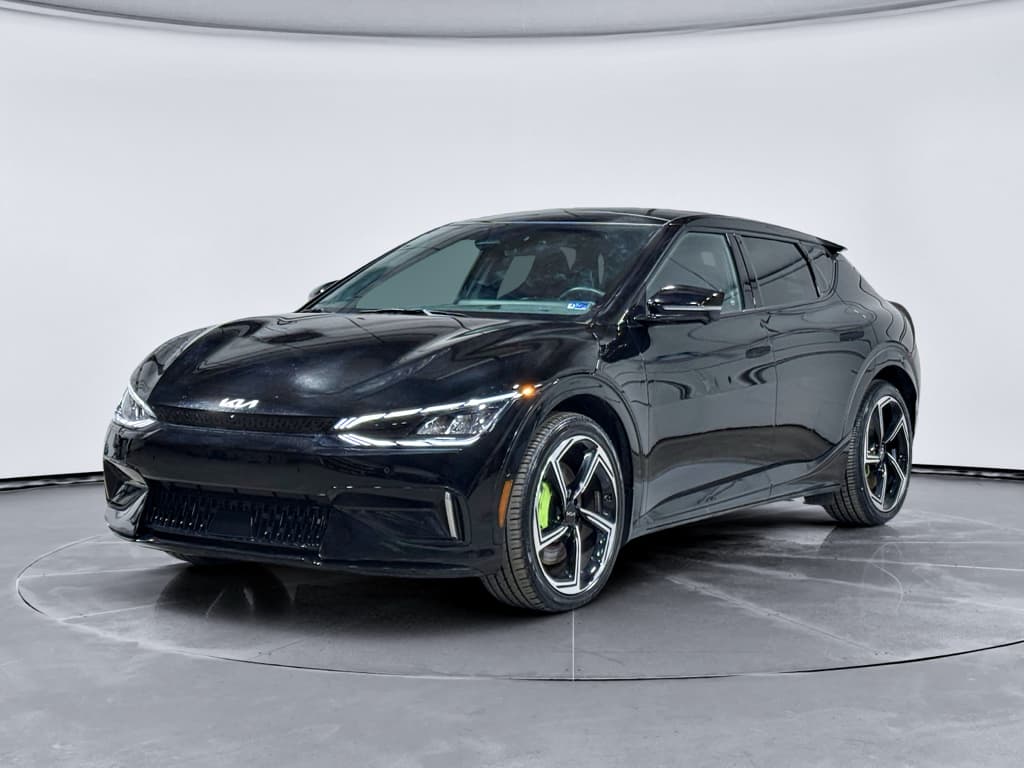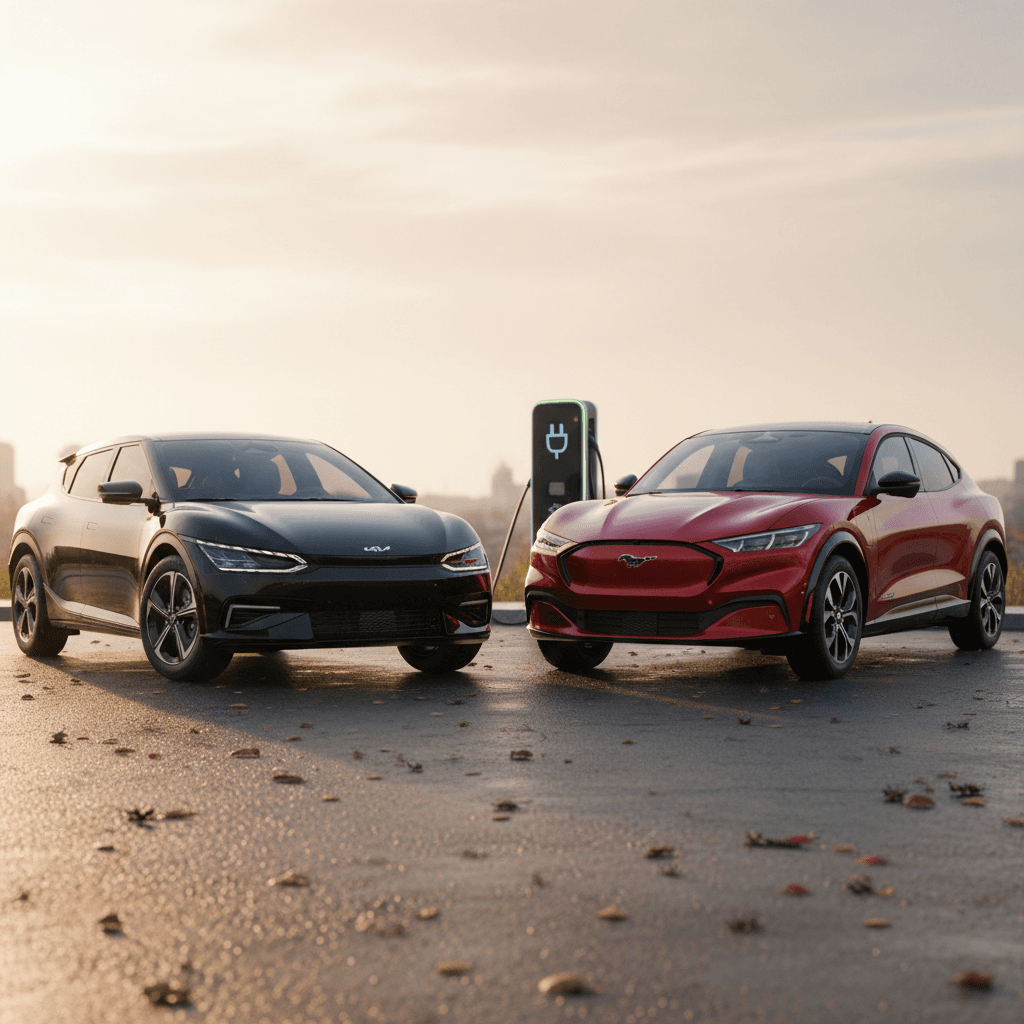
You’re not imagining it: the **Kia EV6 vs Ford Mustang Mach‑E** matchup is one of the most interesting in the EV world right now. Both are stylish, practical electric crossovers with strong performance and real‑world range, but they take very different approaches to design, driving feel, and ownership.
What this guide covers
Kia EV6 vs Mustang Mach‑E: quick overview
High‑level takeaway: both are great, but for different buyers
Think of this less as winner vs loser and more as which one fits your life better.
Kia EV6: efficiency & fast charging first
The Kia EV6 is built on an 800‑volt platform with extremely fast DC charging, sleek design, and a more efficiency‑oriented tune. It feels like a clean‑sheet EV.
- Excellent charging speeds and road‑trip usability
- Sporty yet comfortable ride, especially in non‑GT trims
- Interior packaging that feels more "EV‑native"
Ford Mustang Mach‑E: character & familiarity
The Mustang Mach‑E leans into emotional appeal, Mustang styling, strong acceleration, and a familiar Ford cabin.
- More traditional SUV shape and seating position
- Plenty of power in Premium and GT trims
- Ford dealer and service network familiarity
Bottom‑line verdict (short version)
Key specs comparison: Kia EV6 vs Ford Mustang Mach‑E
Core specs: 2024–2025 Kia EV6 vs Ford Mustang Mach‑E
Representative U.S. trims for everyday use, not track specials. Exact numbers vary by model year and wheel choice, but this gives you a realistic baseline.
| Spec | Kia EV6 (Long Range RWD) | Ford Mustang Mach‑E (Premium Ext‑Range RWD) |
|---|---|---|
| Usable battery (approx.) | 77.4 kWh | 91 kWh |
| EPA range (2024 MY) | Up to ~310 miles | Up to ~320 miles |
| Drivetrain options | RWD or AWD | RWD or AWD |
| 0–60 mph (non‑GT) | Mid‑6s (RWD) | Mid‑5s to mid‑6s |
| Max DC fast‑charge power | Up to ~240 kW | Typically ~150 kW (higher on latest GT) |
| On‑board AC charger | 10.9–11 kW | 11 kW |
| Tow rating (if equipped) | Up to 2,300 lbs (market‑dependent) | Not widely rated for towing in U.S. |
| Seating | 5 | 5 |
| EPA passenger volume | Compact/midsize crossover | Compact/midsize crossover |
Specs focus on mainstream long‑range trims rather than halo GT/GT Performance models.
Don’t obsess over one spec
Range and charging: which goes farther, which charges faster?
When shoppers ask **“Kia EV6 vs Ford Mustang Mach‑E, which is better?”**, they usually mean: which one will go farther on a charge *and* get me back on the road quicker. Both deliver real‑world ranges in the 240–320 mile window depending on trim, weather, and wheels.
- **Kia EV6 range:** most long‑range RWD trims land around the 300‑mile mark, with AWD versions somewhat lower, especially with larger wheels.
- **Mustang Mach‑E range:** extended‑range RWD Premium trims reach roughly 320 miles; AWD and performance variants trade some range for acceleration.
- **Cold weather:** both lose range in winter; the EV6’s heat pump (where equipped) softens the blow, but pre‑conditioning and charging habits matter more than the badge on the nose.
Charging reality check
Where the Kia EV6 wins
- 800‑volt architecture enables very high peak charge rates and a flatter charge curve.
- Owners consistently report quick 10–80% sessions when they find a healthy 150–350 kW DC fast charger.
- Excellent for road‑trippers who want short stops rather than long lunches.
Where the Mach‑E holds its own
- Later model years improved DC fast‑charge behavior compared with early cars.
- Bigger battery in extended‑range trims means more buffer for high‑speed driving.
- Ford’s BlueOval Charge Network integration makes it easier to find and activate chargers, especially on newer software.
Watch the real‑world charging network
Performance and driving feel
On paper, both of these crossovers are quick. In practice, they deliver **very different personalities**.
Driving character: which one feels better on the road?
A spec sheet can’t tell you if a car will make you smile. This gets closer.
Kia EV6: tidy and composed
- Non‑GT trims strike a sweet spot between firm control and everyday comfort.
- Steering feels light but precise; the car feels lower and more "planted" than its crossover stance suggests.
- The GT model is brutally quick, but for most people the **Wind or GT‑Line AWD** trims are the smart performance/comfort compromise.
Mustang Mach‑E: punchy and expressive
- Even mid‑level trims have strong, instant torque, especially in AWD form.
- GT and Rally trims bring genuinely sports‑car‑like acceleration and a more playful chassis.
- Body roll is well controlled, but the Mach‑E feels taller and more SUV‑like than the EV6.
Which is more fun?
Interior space, comfort, and practicality
Both models seat five, but they package that space differently. The EV6 looks like a sleek wagon; the Mach‑E is a more traditional upright crossover. That shapes how they feel from the driver’s seat and how easy they are to live with every day.
Kia EV6 practicality highlights
- Rear legroom is excellent thanks to a long wheelbase and flat floor.
- Cargo space is competitive but the sloping roofline can limit tall items vs a boxier SUV.
- Cabin design feels airy and minimalist, with clever storage under the center console.
Mustang Mach‑E practicality highlights
- More **traditional SUV seating position**, which some drivers find more comfortable for long drives.
- Hatch opening is tall and square, making it easier to load bulky items or dog crates.
- Front trunk (frunk) adds useful extra storage for charging cables or dirty gear.
If you haul kids or adults often
Tech, safety, and user experience
Every modern EV throws around buzzwords, over‑the‑air updates, driver assistance, giant touchscreens. What matters is **how these systems feel to use** when you’re tired, running late, or just trying to change the cabin temperature.
Infotainment & driver assistance
Both are feature‑rich; they just have different philosophies.
Screens & controls
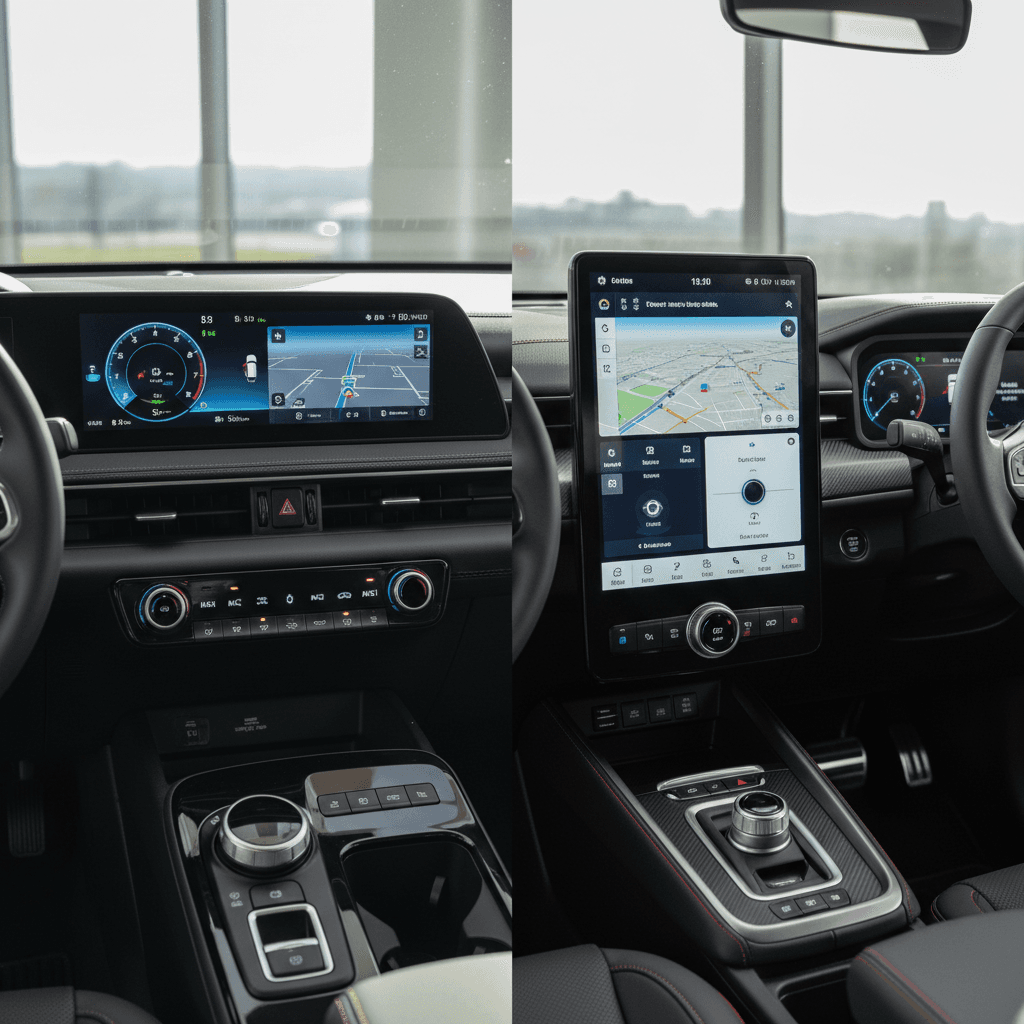
Kia EV6 uses twin curved 12.3‑inch displays with a hybrid touch/knob climate strip. It feels modern and EV‑specific, though the shared control strip can be confusing at first.
Ford UX
Mustang Mach‑E relies on a large vertical touchscreen with a rotary volume knob. It’s visually impressive, but burying some common functions in menus won’t be for everyone.
Safety & driver assist
Both offer advanced suites (Kia Drive Wise, Ford Co‑Pilot360) with adaptive cruise, lane centering, blind‑spot monitoring, and more. Highway assist behavior improves with each software generation, test them on your typical routes if you can.
Over‑the‑air updates matter
Reliability, service experience, and warranties
Electric powertrains have fewer moving parts than gasoline engines, but that doesn’t make every EV equally bulletproof. With the EV6 and Mach‑E you’re balancing **hardware robustness, software maturity, and dealer competence**.
Kia EV6 reliability snapshot
- Overall owner satisfaction is generally high, especially around driving experience and charging performance.
- There have been widely discussed issues with the ICCU (charging control unit) on some Hyundai/Kia EVs, leading to 12‑V or charging failures in a minority of vehicles.
- Kia backs the EV6 with a strong **battery warranty** and longer overall coverage than many mainstream brands, which helps on the used market.
Mustang Mach‑E reliability snapshot
- Early cars saw software bugs, 12‑V battery issues, and some high‑profile recalls; many were addressed via software updates and service campaigns.
- Ford’s dealer network is extensive, but EV expertise can vary store to store.
- Battery and electric‑drivetrain warranties are competitive, and Ford has improved service procedures as more Mach‑Es hit the road.
Used‑buyer warning
Charging networks and NACS access
The EV landscape in 2025–2026 is defined by one big shift: the move to Tesla’s **North American Charging Standard (NACS)**. That affects both the EV6 and Mach‑E story, especially if you road‑trip.
What matters for each model
1. Connector on the car
Newer EV6 and Mach‑E models are beginning to adopt **NACS ports** from the factory, while earlier cars use CCS. If you’re shopping used, check which you’re getting and whether an adapter is included.
2. Access to Tesla Superchargers
Ford has already rolled out access to many Superchargers for Mach‑E drivers via adapters and NACS integration. Kia is following the same industry trend, with newer EV6s shipping with NACS and earlier ones supported via adapters over time.
3. Non‑Tesla networks still matter
Electrify America, EVgo, and regional networks still handle a huge share of CCS fast charging. This is where the EV6’s 800‑V architecture helps when you find a well‑maintained high‑power station.
4. Home charging is the baseline
For both vehicles, **a 240‑V Level 2 charger at home** is the single biggest quality‑of‑life upgrade. It turns any EV into a "full tank every morning" experience.
How Recharged can help with charging readiness
Used‑market pricing and value
Because both the EV6 and Mach‑E have been on sale for several model years now, the used market is where a lot of the value lives. Depreciation on **new** EVs has been steep, which is frustrating for first owners but a big opportunity if you’re buying used.
Value considerations when buying used
Both can be great deals, if you know what to look for.
Purchase price vs equipment
On the used market, you’ll often find **similarly priced EV6 and Mach‑E examples** with very different equipment levels. A well‑spec’d EV6 Wind or GT‑Line may cost roughly what a lower‑trim Mach‑E Select does, and vice versa, depending on year and miles.
Battery health & fast‑charge history
Frequent DC fast charging can marginally affect long‑term battery health on any EV. A transparent **battery health report**, like the Recharged Score, gives you far more confidence than mileage alone.
Incentives and tax treatment
Depending on federal and state rules at purchase time, **used EV tax credits** or local rebates may apply. Buying through a platform that understands EV incentives can put real money back in your pocket.
Where Recharged fits in
Ready to find your next EV?
Browse VehiclesKia EV6 vs Mustang Mach‑E: which is better for you?
Match the EV to the way you live
You prioritize road‑tripping and fast charging
You regularly drive long highway distances and care about minimizing stop time.
You have or will have access to high‑power DC fast chargers along your routes.
You’re comfortable with a slightly more low‑slung, hatchback‑like crossover.
▶ In this case, the <strong>Kia EV6</strong>, especially long‑range RWD or AWD trims, is usually the better fit.
You want an EV with character and familiar SUV feel
You care about design, brand emotion, and that Mustang badge matters to you.
You prefer a higher driving position and a cabin that feels closer to a traditional SUV.
You mainly charge at home and use public DC fast charging occasionally, not weekly.
▶ Here, the <strong>Mustang Mach‑E</strong>, particularly Premium or GT trims, is likely to make you happier day to day.
You’re budget‑sensitive and buying used
You want maximum value per dollar and are open to either brand.
You care about battery health and warranty coverage more than 0–60 bragging rights.
You’re flexible on color and options and willing to shop across a wide region.
▶ The "better" choice is whichever individual car has the **cleanest history, healthiest battery, and strongest remaining warranty**. That might be an EV6 in one search area and a Mach‑E in another, this is where Recharged’s data‑driven approach really pays off.
You’re EV‑curious but anxious about the transition
You’re coming from a gasoline crossover and want the smoothest learning curve.
You care about having a strong dealer network and service support nearby.
You want clear guidance on home charging, incentives, and resale value.
▶ Either vehicle can work, but partnering with a specialist retailer like <strong>Recharged</strong> will matter more than the badge. A well‑vetted EV6 or Mach‑E with the right education will beat a random lot car every time.
So, **is the Kia EV6 or Ford Mustang Mach‑E better?** For pure charging performance and that clean‑sheet EV feel, the EV6 has the edge. For brand character, a more traditional SUV vibe, and an emotional connection to the Mustang name, the Mach‑E is compelling. In the used market, the smartest move is to compare individual cars, not just badges, looking closely at **battery health, software/recall history, and pricing**. That’s the lens Recharged uses to evaluate every EV it sells, so you can pick the car that actually fits your life rather than the one that just wins a spec‑sheet argument.