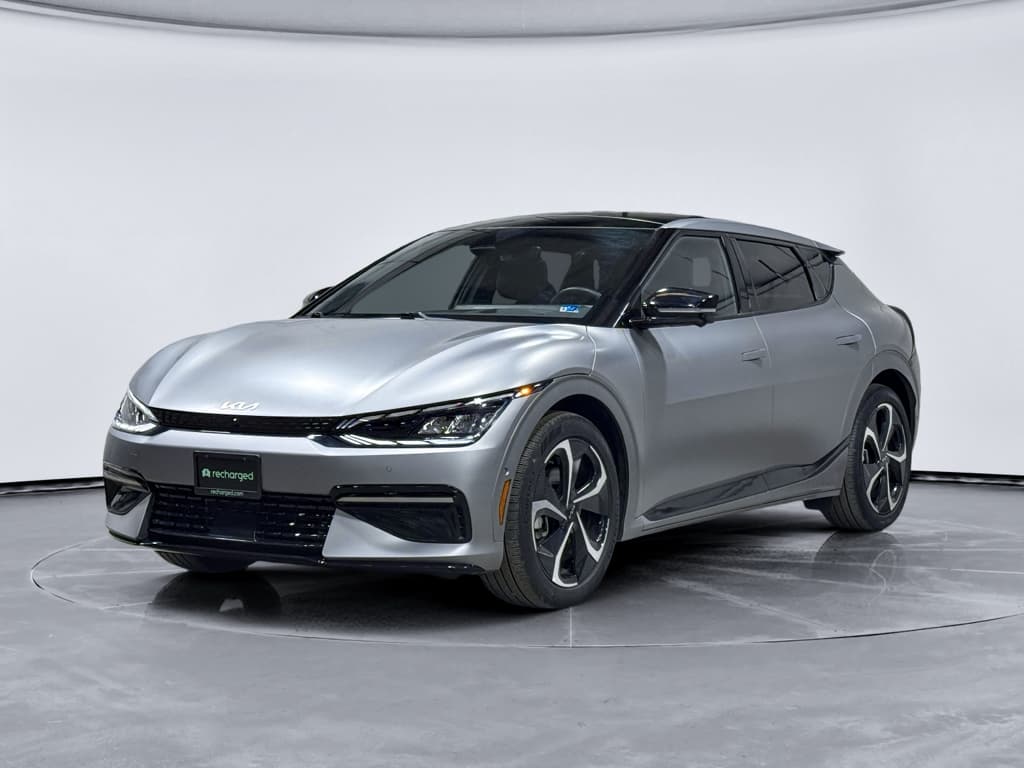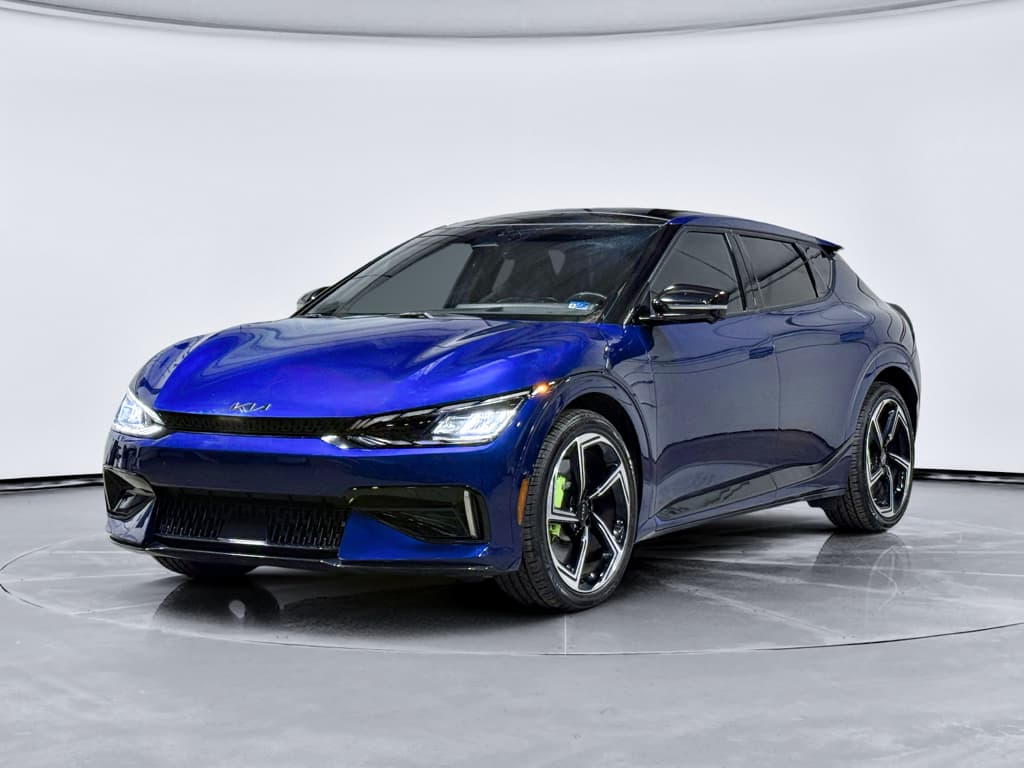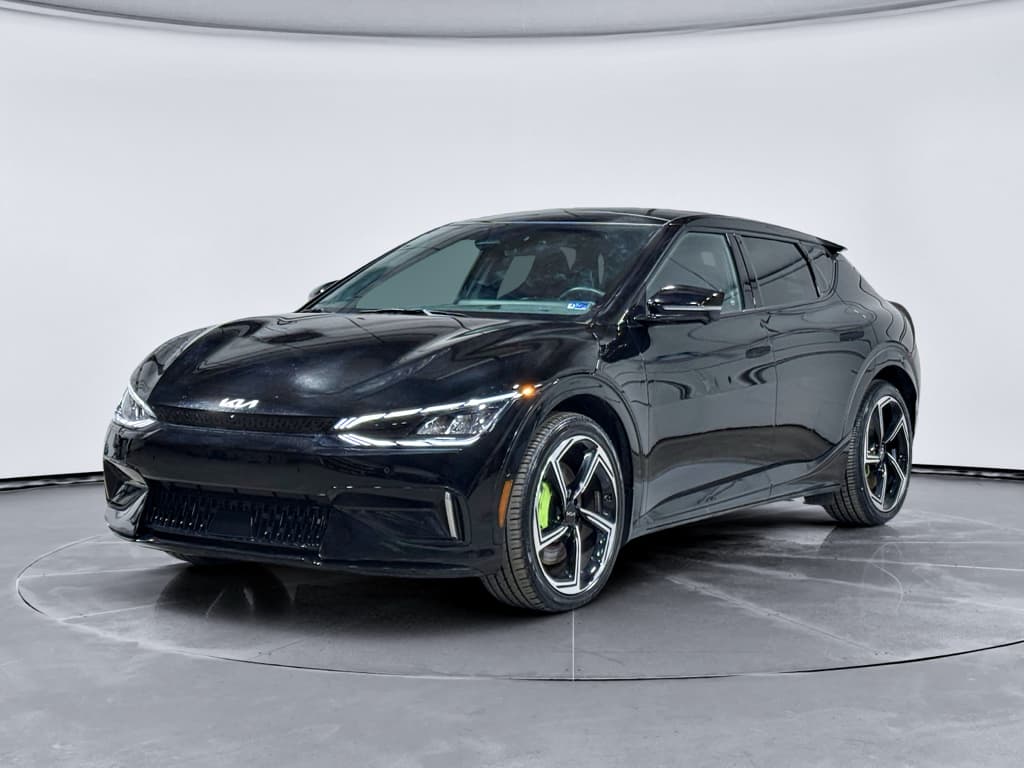
If you’re considering a Kia EV6, you’re probably asking a straightforward question: **how safe is it in a crash?** The phrase “Kia EV6 safety rating crash test” gets searched a lot because ratings from IIHS, Euro NCAP, and (soon) NHTSA tell you far more than a spec sheet ever will. This guide walks through those scores, what they actually mean for you day to day, and what to look for if you’re shopping for a new or used EV6.
Big-picture verdict
Kia EV6 safety overview
Launched for the 2022 model year on Hyundai Motor Group’s dedicated **E‑GMP** EV platform, the Kia EV6 was engineered from the ground up as an electric crossover rather than an adapted gas model. That matters for safety: the battery pack is packaged low in the floor, the structure is optimized around a rigid "safety cage," and crash loads are directed around the cabin rather than through it.
- Electric-only platform with a stiff passenger cell and generous crash structures
- Low center of gravity from the battery pack, improving stability and rollover resistance
- Standard advanced driver-assistance features on all trims
- Strong results from independent safety agencies in the U.S. and Europe
- A few newer-test nuances around **rear-seat protection** and **child-seat anchors** that shoppers should understand
Tip for spec-sheet shoppers
Crash test ratings at a glance
Kia EV6 crash-test highlights
In plain language, these numbers say the EV6 is fundamentally a **very safe vehicle**. It protects adults and kids well in a wide range of crash scenarios and offers robust crash-avoidance tech. Where you need to read the fine print is in **newer IIHS test updates for 2025–2026 models**, which introduce tougher criteria for rear-seat occupants and highlight some belt and LATCH‑anchor quirks.
IIHS crash tests: how the Kia EV6 performs
In the U.S., the **Insurance Institute for Highway Safety (IIHS)** is the most influential independent crash-test body. It doesn’t just rate how a vehicle performs when things go wrong; it also looks at how well it avoids crashes in the first place.
Early EV6 models: Top Safety Pick+ performance
For the 2022–2024 Kia EV6, IIHS testing produced what most shoppers want to see: **a full slate of “Good” crashworthiness scores** and strong crash-avoidance performance. That earned the EV6 a **Top Safety Pick+** (TSP+) award, the Institute’s highest honor at the time.
- Small overlap front (driver & passenger side): Good
- Moderate overlap front (original test): Good
- Side impact (original test): Good
- Roof strength & head restraints: Good
- Front crash prevention, vehicle-to-vehicle: typically Superior on 2022–2024 models
- Front crash prevention, pedestrian (daytime): Superior across 2022–2024 EV6 models
- Headlights: mostly Good, varying slightly by trim and equipment
What Top Safety Pick+ actually means
Updated tests: 2025–2026 EV6 and rear-seat concerns
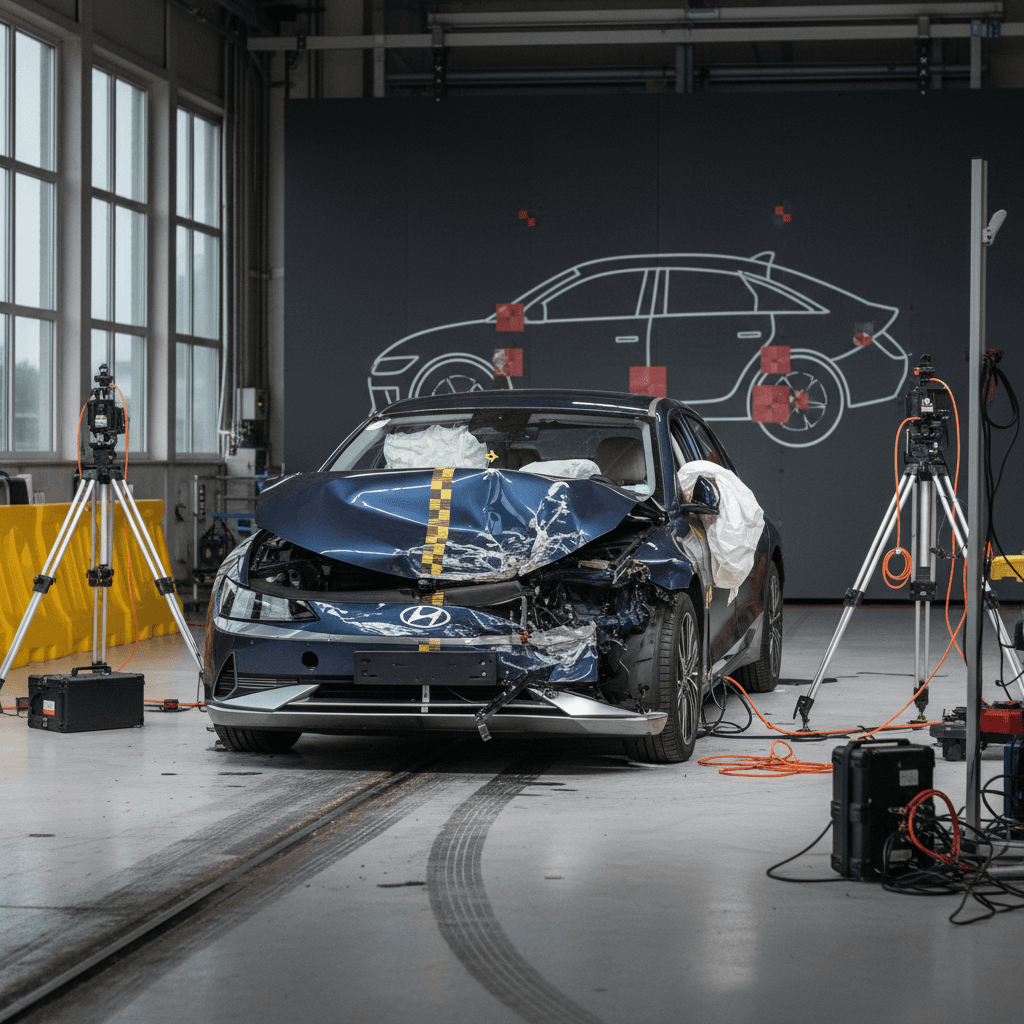
IIHS significantly tightened its standards starting in 2023–2024, especially with an updated **moderate overlap front test** that focuses on rear-seat occupant protection and updated evaluations of automatic emergency braking and headlights. Under these tougher protocols, the 2025 and 2026 Kia EV6 **no longer qualify for Top Safety Pick awards**, despite still being structurally sound.
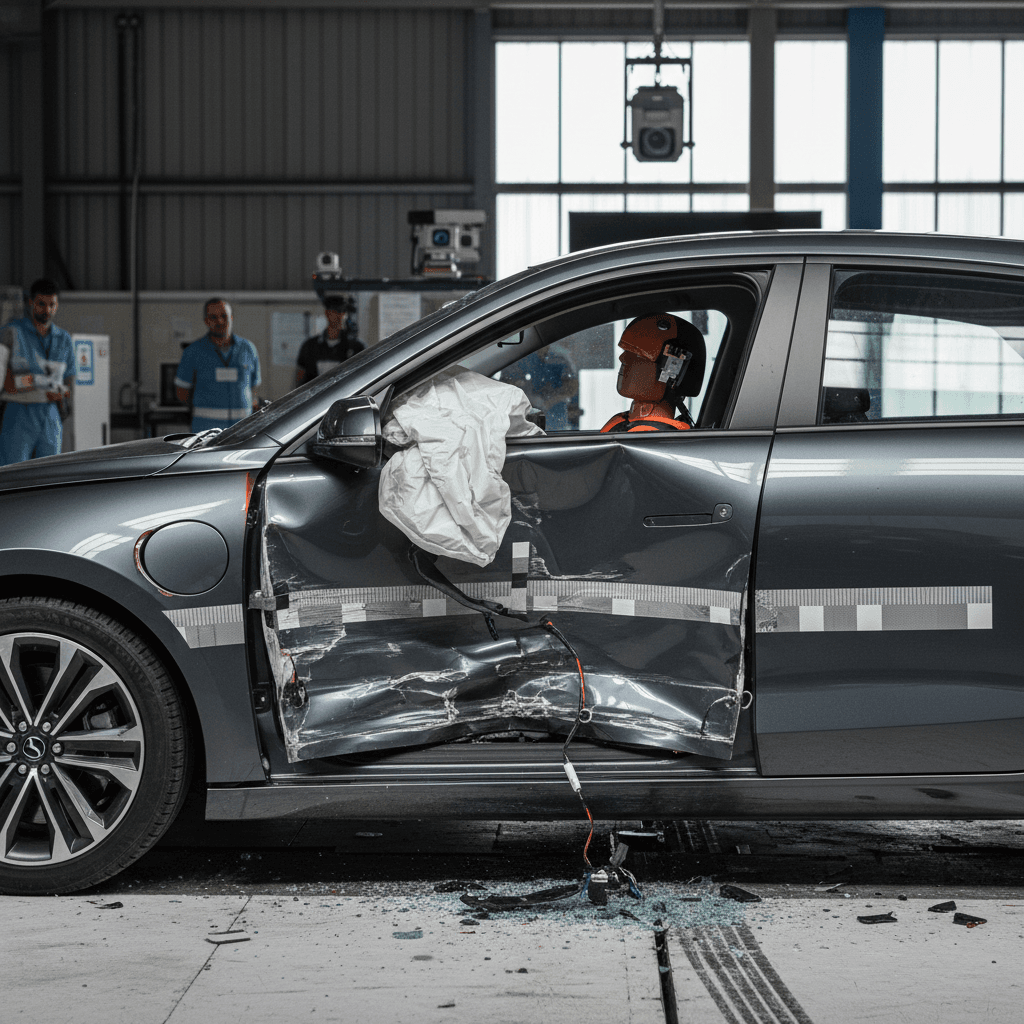
- Updated moderate overlap front test: **Marginal** rating for rear-seat protection due to shoulder and lap belt movement that could raise abdominal‑injury risk in a severe crash.
- Front crash prevention, vehicle-to-vehicle: AEB system performs well against another passenger car and a semitrailer but falls short in newer motorcycle tests, pulling its rating down from Superior to **Good/Acceptable** depending on trim and year.
- Headlights: Beam reach and curve illumination on some newer trims are **less impressive** than earlier models, earning lower sub‑scores and contributing to the loss of TSP/TSP+ status.
Should the new IIHS results scare you off?
Euro NCAP and other global safety ratings
In Europe, the Kia EV6 has also undergone **Euro NCAP** testing, which uses its own mix of crash and safety-assist evaluations. The EV6 earned a **5‑star overall rating**, with strong subscores that reinforce what we see from IIHS.
Kia EV6 Euro NCAP scores
Headline safety scores from Euro NCAP testing of the EV6.
| Category | Score | What it means |
|---|---|---|
| Adult Occupant | 90% | Very strong protection in frontal, side, and whiplash tests for adults in front and rear seats. |
| Child Occupant | 86% | Good performance with child dummies in various restraint and seating configurations. |
| Vulnerable Road Users | 64% | Solid pedestrian and cyclist impact protection, though front-end geometry prioritizes cabin safety first. |
| Safety Assist | 87% | Robust suite of driver-assistance features that help prevent or mitigate crashes. |
Scores may vary slightly depending on exact configuration, but they show a consistently strong safety performance.
The EV6 has also performed well in **KNCAP** (Korea) and has been promoted by Hyundai Motor Group as part of a family of E‑GMP vehicles, along with the Hyundai Ioniq 5 and Genesis GV60, that have taken top honors in multiple international safety programs.
Active safety & driver-assistance tech on the EV6
Crash tests tell you how the EV6 behaves when metal is already bending. Just as important is how well it **avoids getting into trouble** in the first place. Here, the EV6 brings a long list of standard and available driver-assistance systems, many bundled under Kia’s “Drive Wise” branding.
Core EV6 safety & crash-avoidance features
Most systems are standard across trims, with a few extras on higher-spec models.
Forward Collision-Avoidance Assist (FCA)
Lane Keeping & Lane Following Assist
Blind-Spot & Rear Cross-Traffic Avoidance
Smart Cruise Control
Surround View & Parking Assist
Driver Attention Warning
Realistic expectations for ADAS
Battery and high-voltage safety
With any EV, safety isn’t just about crumple zones and airbags. You also want to know whether the **battery pack and high-voltage components** are protected in a crash and managed safely the rest of the time.
Structural protection in a crash
- The EV6’s battery pack sits in a reinforced compartment within the floor, protected by crossmembers and a stiff subframe.
- Crash structures at the front and sides are designed to **absorb and redirect impact forces** away from the high-voltage components.
- Multiple pyrotechnic disconnects and relays are engineered to isolate the battery in severe crashes, reducing the risk of post‑impact electrical hazards.
Thermal and everyday battery safety
- Liquid cooling manages battery temperature under fast charging or spirited driving.
- Battery management software monitors cell voltages and temperatures, and can limit power if something is out of spec.
- To date, there’s **no widespread pattern of fire incidents** specific to the EV6 in major safety databases, a reassuring sign compared with some early EVs.
About platform-level safety
Recalls & real-world safety issues to know
No modern vehicle is recall‑free, and the EV6 is no exception. The key is understanding whether an issue is an **annoyance, a drivability concern, or a direct safety risk**, and whether the fix is straightforward.
- High-voltage battery or power electronics software recalls that can lead to reduced power or, in rare cases, risk of stalling. These are typically fixed with updated software and sometimes hardware inspections.
- Isolated security concerns, such as keyless-entry vulnerabilities shared across several Hyundai Motor Group EVs, which can raise theft risk but don’t affect crash performance.
- Typical running recalls common to all brands (e.g., warning labels, minor hardware updates) that have little real-world safety impact once addressed.
Used EV6? Check recall completion
Kia EV6 safety for families & child seats
If you have kids, rear-seat performance and child-seat friendliness matter at least as much as front-crash scores. The EV6 does well overall for child protection but, like many modern crossovers, asks you to pay attention to the fine details.
Family-focused EV6 safety details
What parents and caregivers should know before buckling up.
Strong child-occupant crash scores
LATCH anchor accessibility
Rear-seat belt fit for adults
Infant seats & boosters
Practical fit test
How the Kia EV6 compares to other EVs on safety
Safety is now table stakes in the EV segment. Models like the Tesla Model Y, Hyundai Ioniq 5, Ford Mustang Mach‑E, and Volkswagen ID.4 all aim for, and often achieve, strong ratings. The question isn’t whether the EV6 is safe in an absolute sense (it is), but whether it’s **competitive**.
Kia EV6 vs key EV rivals: safety snapshot
High-level safety comparison of popular compact electric crossovers.
| Model | Key U.S./EU ratings | Notable safety strengths | Key caveats |
|---|---|---|---|
| Kia EV6 | IIHS TSP+ on 2022–2024 models; 5★ Euro NCAP | Excellent crash structure; strong adult/child scores; robust ADAS feature set. | Newer IIHS tests flag rear-seat belt performance and some headlight trims. |
| Hyundai Ioniq 5 | Top IIHS and Euro NCAP ratings on many years | Shares E‑GMP platform; strong ADAS; good rear-seat space. | Subject to some of the same updated-test scrutiny as EV6 over time. |
| Tesla Model Y | Strong crash-test results; widely praised structure | Very low rollover risk; frequent OTA safety updates. | Driver-assistance behavior depends heavily on software; mixed IIHS headlight ratings by year. |
| Ford Mustang Mach‑E | Generally good crash scores & driver aids | Clear, intuitive controls; wide dealer network for fixes. | Some model years have mixed headlight or structure scores; check specific VIN. |
| VW ID.4 | Solid safety performance in U.S. and EU tests | Good occupant protection and standard ADAS even on lower trims. | Software UX quirks can affect ease of using safety features. |
Exact ratings vary by model year and trim; always verify the specific vehicle you’re considering.
Reading comparisons correctly
Used Kia EV6 safety checklist for buyers
If you’re looking at a used EV6, you inherit not just the original crash engineering but also how carefully the previous owner (and shops) treated the car. A few targeted checks go a long way.
Safety checks before you buy a used Kia EV6
1. Confirm crash-test generation
Start by confirming the **model year**. All U.S. EV6s ride on the same E‑GMP platform, but early 2022–2024 models carry the IIHS Top Safety Pick+ banner, while 2025+ models are evaluated under tougher, rear‑seat‑focused tests.
2. Run a VIN history & recall check
Use a vehicle-history report to look for any prior **structural damage or airbag deployments**. Then run the VIN through the NHTSA recall tool. At Recharged, this is baked into every Recharged Score so you can see open or completed safety campaigns at a glance.
3. Inspect airbags and seatbelts
Have a trusted shop, or a Recharged partner inspector, verify that **all airbags, seatbelts, and pretensioners** are original or correctly replaced. Avoid any EV6 with sloppy crash repairs or missing airbag indicators.
4. Test driver-assistance features
On a test drive, safely verify that features like **forward collision warning, lane-keeping, and adaptive cruise** behave as expected. Warning lights, error messages, or inconsistent operation are red flags.
5. Check tires, brakes, and alignment
Safety isn’t just electronics. Uneven tire wear, pulsating brakes, or a steering wheel that’s off-center may indicate past impacts or neglected maintenance that could compromise emergency maneuvers.
6. Review the battery health
A degraded pack won’t suddenly make the car unsafe, but it affects range and performance margins. Recharged’s **battery health diagnostics** and Recharged Score Report give you an objective look at how the pack has aged.
How Recharged de-risks used EV6 shopping
Ready to find your next EV?
Browse VehiclesFAQ: Kia EV6 safety rating & crash tests
Common questions about Kia EV6 safety
Bottom line: Is the Kia EV6 a safe choice?
Taken as a whole, the **Kia EV6 is one of the safer compact electric crossovers on the market**. Its crash structure has performed well across programs, its airbag and restraint systems have protected both adult and child occupants effectively in tests, and its driver-assistance suite is competitive with anything in the segment. The latest IIHS protocols remind us there’s no such thing as a perfect car, rear-seat belt geometry and headlight performance can still be improved, but they don’t change the EV6’s position as a fundamentally well‑engineered EV.
If you’re evaluating a specific EV6, especially a used one, focus on **model year, recall completion, crash history, and battery health**. That’s where a partner like Recharged can make the difference, combining transparent diagnostics, a clear Recharged Score Report, and EV‑specialist guidance. Do that, and you can enjoy the EV6’s blend of performance, range, and design with confidence in its safety credentials.