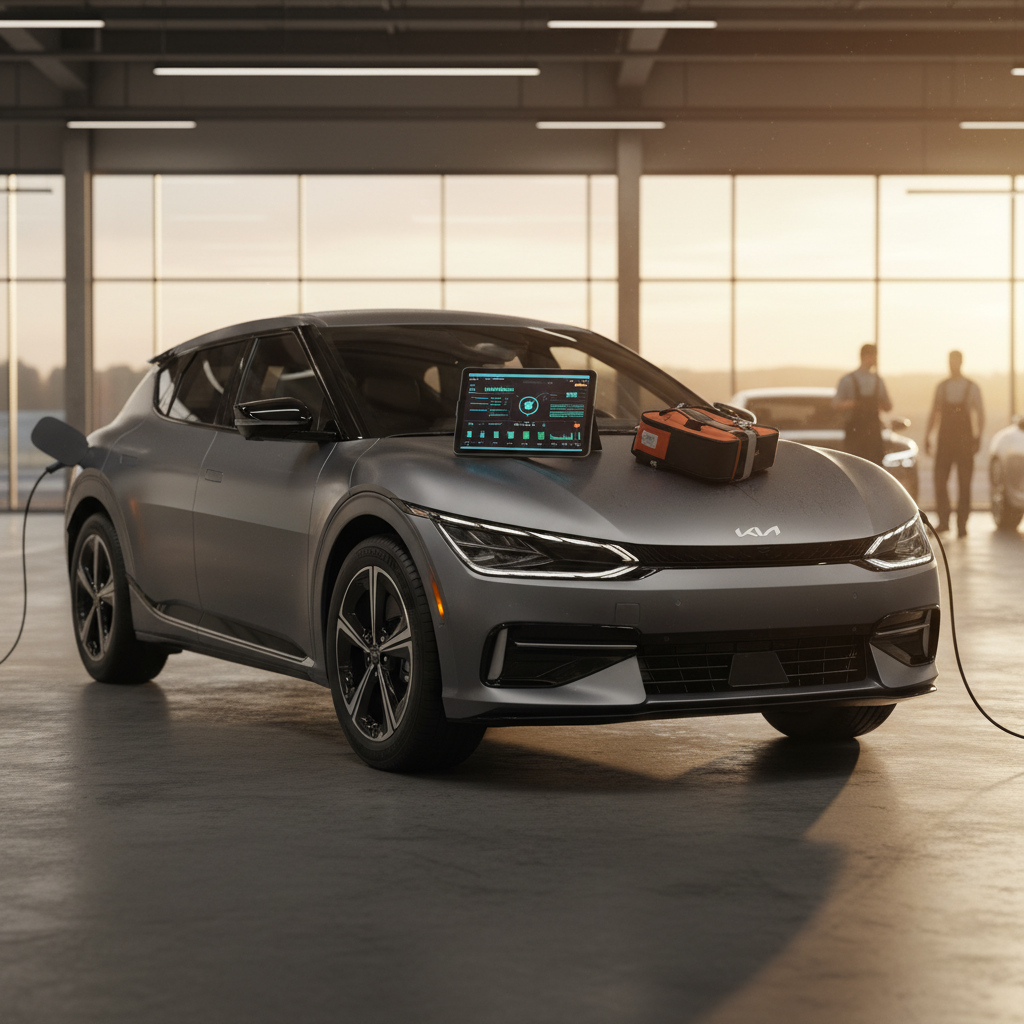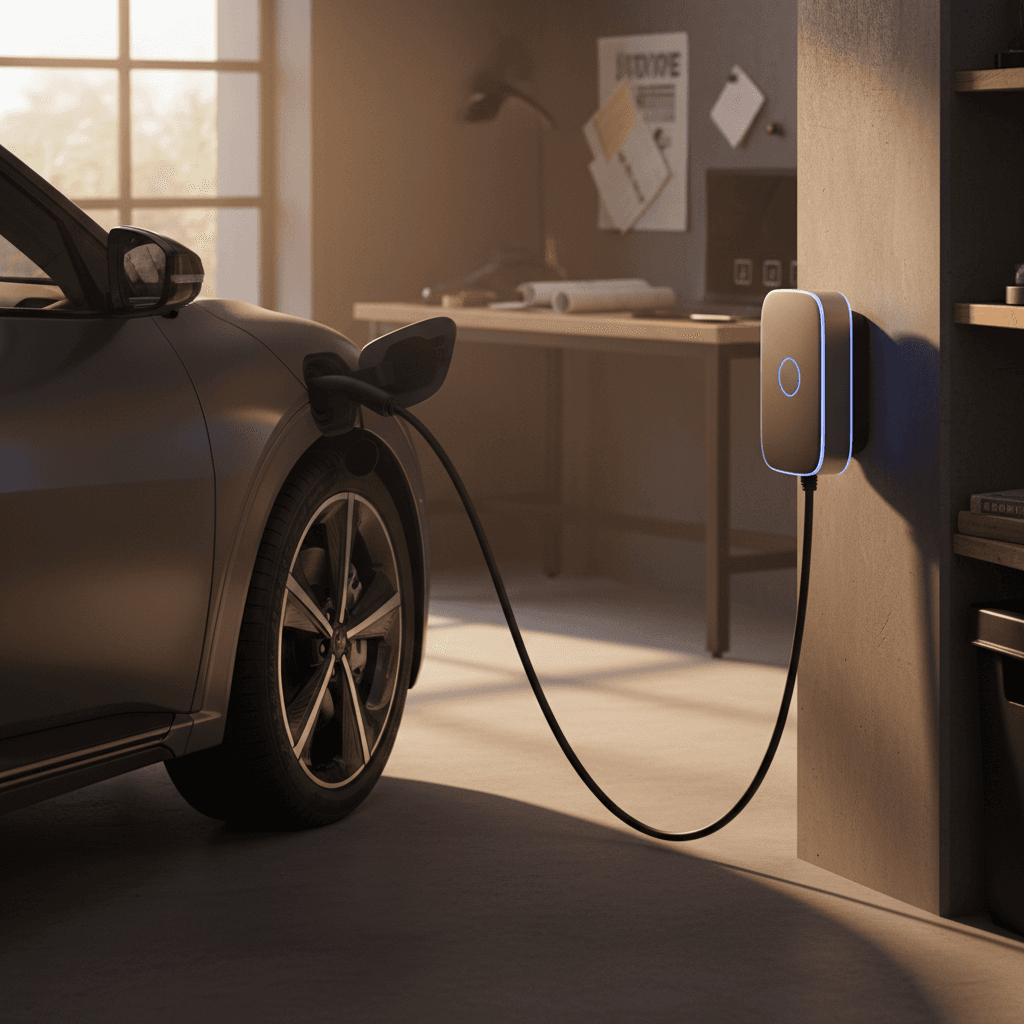
If you’ve bought, or are shopping for, a Kia EV6, the next big question is simple: what’s the best home charger to pair with it? A good Level 2 charger turns your EV6 into a car you simply plug in at night and forget, but the wrong one can waste money, trip breakers, or charge slower than you expected.
Quick answer
Why home charging matters for your Kia EV6
Public fast charging is great for road trips. Living on it day to day? That gets old fast, especially as more EVs compete for the same stations. A properly sized home Level 2 charger lets your Kia EV6 refuel while you sleep, usually going from a typical 20–30% evening state of charge back to 80% before breakfast.
- Convenience: Start every day with the range you need without planning around charging stops.
- Battery kindness: Regular Level 2 charging is gentler on your battery than constant DC fast charging.
- Cost control: You can time charging for off‑peak or overnight rates, and even pair it with home solar.
- Resale value: Future buyers will appreciate that your used EV6 has been charged mostly at home at sane speeds.
Recharged insight
Kia EV6 charging basics: how fast can it really charge?
Before you hunt for the best home charger for a Kia EV6, you need to know what the car itself can accept. The EV6 has an 11 kW onboard AC charger, which means that on home Level 2 it tops out around 48 amps at 240V. Anything bigger on the wall is wasted; the car is the bottleneck.
Kia EV6 home charging at a glance
A note on 2025+ EV6 models and NACS
How many amps do you actually need?
Amp ratings are where a lot of EV6 owners overspend. Because the EV6 can use up to about 48A on AC, it’s tempting to go straight for a 48‑amp wallbox and a 60‑amp circuit. That can be the right choice, but it’s not the only smart choice.
Common home charger sizes for a Kia EV6
How different charger and breaker sizes translate into real‑world EV6 charging speed.
| Charger setting | Typical breaker | Max power (240V) | Approx. EV6 charge time (10–80%) | Best for |
|---|---|---|---|---|
| 32A Level 2 | 40A | 7.7 kW | ~5–6 hours | Apartments, smaller panels, overnight top‑offs |
| 40A Level 2 | 50A | 9.6 kW | ~4–5 hours | Most single‑family homes, daily commuting |
| 48A Level 2 | 60A (hardwired) | 11.5 kW | ~3.5–4 hours | High mileage drivers, fast turnarounds, future‑proofing |
Remember: by code, continuous loads are usually limited to 80% of breaker rating.
Don’t out‑run your panel
For a typical U.S. driver putting 30–50 miles a day on a Kia EV6, a 32A or 40A charger is more than enough. You’ll still refill your daily driving in a few hours, quietly, while the house sleeps.
Plug-in vs. hardwired: what works best for EV6 owners?
Plug‑in (NEMA 14‑50 or 6‑50)
- Pros: Easier to replace the charger later, often lower install cost, can be removed if you move.
- Cons: Limited to about 40A output on a 50A circuit by code; outlet must be properly rated and mounted.
- Best fit: Renters, homeowners with existing 14‑50s, or anyone happy with 7–9.6 kW instead of the absolute maximum.
Hardwired
- Pros: Safest and cleanest installation, supports 48A output on a 60A circuit, no big plug hanging off the wall.
- Cons: Slightly higher upfront install cost; not easily moved; must be done by a qualified electrician.
- Best fit: Long‑term homes where you want the quickest possible AC charging and a tidy, permanent solution.
Future‑proofing tip
Kia EV6 best home charger picks by use case
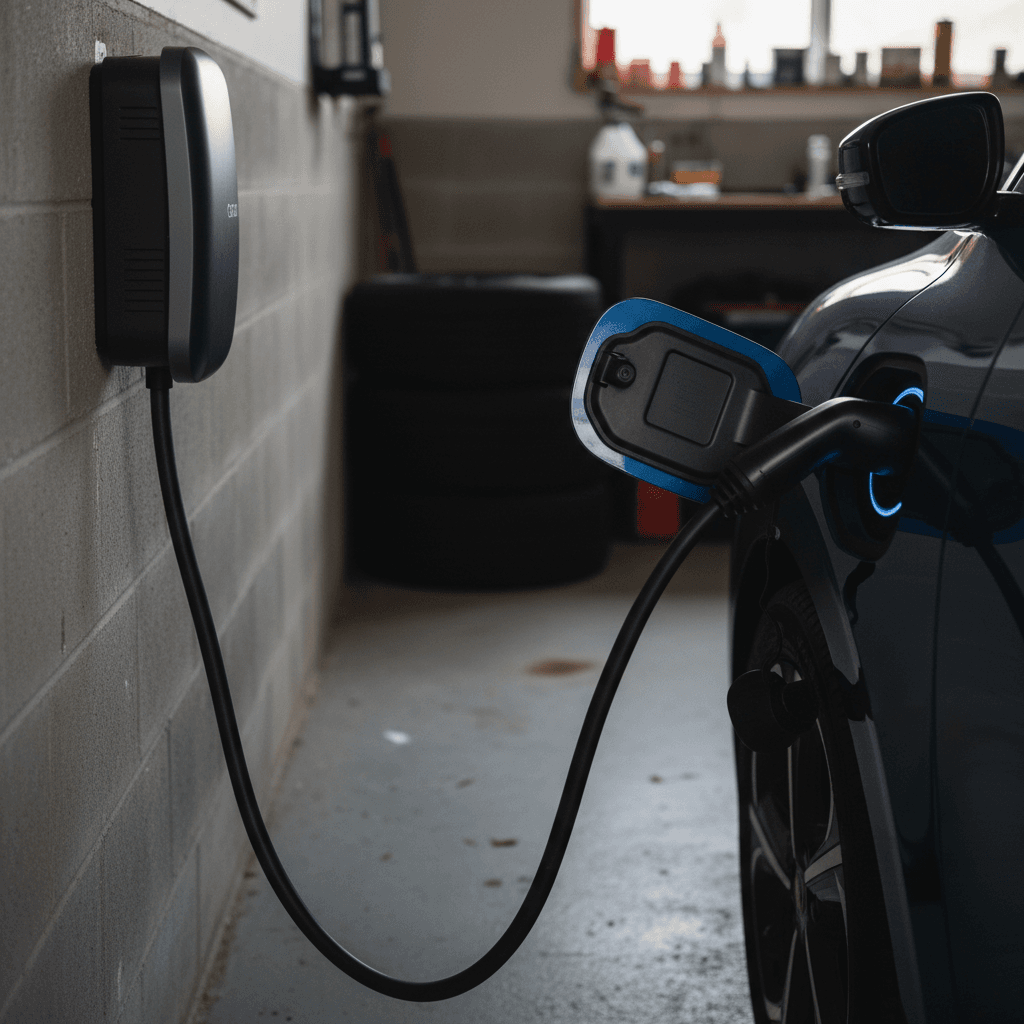
There’s no single “best” Kia EV6 home charger, but there are a few patterns that show up over and over in owner garages and expert recommendations. Below are example models and feature sets that tend to pair well with the EV6. Think of them as archetypes, even if you pick a different brand, aim for similar specs.
Home charger profiles that work well with a Kia EV6
Match your charger to your home, driving pattern, and budget.
Value pick: 32–40A plug‑in box
Who it’s for: Most suburban EV6 owners with a 50A circuit or the ability to add one.
- 32–40A output (7.7–9.6 kW)
- NEMA 14‑50 plug, 20–25 ft cable
- Simple app or no‑frills button controls
- Popular examples: Grizzl‑E Classic, Emporia 40A, Lectron 40A J1772
Delivers a full overnight charge without stressing your panel or budget.
Performance pick: 48A hardwired smart charger
Who it’s for: High‑mileage drivers, multi‑EV households, or anyone who wants the fastest AC charging the EV6 can use.
- Up to 48A on a 60A circuit
- Wi‑Fi app, scheduling, energy tracking
- Adjustable amperage if you later change homes or panels
- Popular examples: ChargePoint Home Flex, Emporia 48A, Wallbox Pulsar Plus 48A
Ideal if you regularly arrive low on battery and need a big refill by morning.
Smart‑home pick: energy‑aware charger
Who it’s for: Homeowners with solar or time‑of‑use electricity rates.
- Integrates with utility tariffs or home energy monitors
- Can automatically avoid peak prices
- Good matches: Emporia with home energy monitor, certain Wallbox and ChargePoint setups
If you’re trying to make your EV6 as cheap to run as possible, start here.
Good news for used EV6 buyers
Smart features that are worth paying for
Home chargers now behave more like appliances than dumb outlets, and that’s a good thing, as long as you don’t pay extra for features you’ll never touch. When you’re narrowing down the best home charger for your Kia EV6, these software details matter more than flashy LED rings.
Smart charger features that actually help EV6 owners
Scheduled charging
Let the EV6 or the charger start and stop sessions automatically when your rates are cheapest, typically late at night. This is the one feature almost every owner uses.
Adjustable amperage
Being able to dial a 48A charger down to 32A can save you from nuisance breaker trips in hot weather or when the house is running multiple big loads.
Usage tracking
Per‑session or per‑month kWh tracking tells you what your EV6 really costs to run. That’s handy for budgets, taxes, or reporting if you use it for work.
Multiple user profiles
If you share the charger with another EV, separate profiles make it easier to see who’s using what and schedule around each other.
Over‑the‑air updates
Reliable firmware updates keep the charger compatible with new vehicles and utilities. Choose brands with a track record, not mystery boxes with slick marketing.
Avoid app‑only essential controls
Installation, safety, and panel capacity
Level 2 charging isn’t a DIY extension‑cord project. You’re running a continuous, high‑current load for hours at a time. That demands a clean installation, properly sized wire, and a breaker that matches both your charger and your home’s capacity.
Panel planning for a Kia EV6 home charger
Use this as a talking sheet with your electrician, not a substitute for a load calculation.
| Home situation | Recommended charger | Typical circuit | Notes |
|---|---|---|---|
| Older 100A service, limited spare capacity | 32A Level 2 | 40A dedicated | Often no panel upgrade needed; keep other big loads staggered. |
| Modern 150–200A service, spare breaker space | 40A Level 2 | 50A dedicated | Sweet spot for most EV6 owners; balances speed and cost. |
| Newer or upgraded 200A+ service, planning multiple EVs | 48A smart charger | 60A dedicated | Consider future second EV circuit or load‑sharing hardware. |
Always have a licensed electrician verify your specific home’s capacity.
The EV6’s charging‑port stories
If you’re buying a used EV6 through Recharged, our Recharged Score Report and inspection notes can flag prior charging issues and software campaign status. That gives you a head start on choosing a sensible amperage limit for your home setup.
Tips to get the most from your EV6 home charger
- Mount the charger so the cable naturally reaches the EV6’s rear corner without being stretched or run over when you pull in nose‑first or back‑in.
- Use the EV6’s built‑in charge limit (for example 80%) for everyday use to leave some buffer for regen and keep the battery happier long‑term.
- If your utility offers time‑of‑use rates, schedule charging to start after the cheap window begins, not the moment you get home from work.
- Set a lower amperage during heat waves if your garage gets hot, this reduces stress on both the home wiring and the car’s port.
- Every few months, feel the outlet or hardwire junction area at the end of a charge session. It should be warm at most, never hot to the touch.
- Keep the cable off the floor when possible with hooks or a holster; that cuts down on trip hazards and prolongs the life of the connector.
Kia EV6 home charging FAQ
Frequently asked questions about the best home charger for a Kia EV6
The bottom line on the best Kia EV6 home charger
The best home charger for a Kia EV6 isn’t just the biggest number on the box. It’s the one that fits your electrical panel, your driveway, and your actual driving life. For many owners, that looks like a 32–40A Level 2 charger on a dedicated 240V circuit, mounted where the cable easily swings to the EV6’s charge port. If you routinely put big miles on the odometer or juggle multiple EVs, stepping up to a 48A hardwired smart charger on a 60A circuit is money well spent.
If you’re still shopping, Recharged can help you pair the right used EV6 with the right home charging plan, from estimating your daily needs to understanding local installation costs. And once that charger’s on the wall, the EV6 becomes what it was meant to be: a fast, refined electric hatchback that’s always ready to go when you are.