If you’re eyeing a 2023 Kia EV6, or already own one, it’s natural to worry about long‑term reliability. The 2023 EV6 is quick, efficient, and generally well‑reviewed, but real‑world owner data shows a handful of recurring 2023 Kia EV6 problems and fixes you should understand before you buy or head into the service lane.
Short answer
Quick take: 2023 Kia EV6 reliability overview
2023 Kia EV6 reliability at a glance
In survey data and owner forums, the 2023 EV6 isn’t a chronic problem child, but it isn’t flawless either. Issues are heavily skewed toward the electrical system and charging hardware, similar to its E‑GMP siblings (Hyundai Ioniq 5, Genesis GV60). The most disruptive failures trace back to the integrated charging control unit (ICCU), which manages both DC fast charging and the low‑voltage 12‑volt system.
What matters most for shoppers
The biggest 2023 Kia EV6 problems showing up now
Common 2023 EV6 problem areas
What owners and service bulletins highlight most often
1. ICCU failure & loss of power
2. AC/DC charging problems
3. 12‑volt battery drain
4. Software & infotainment bugs
Those are the themes that keep showing up in complaints, forums, and early reliability data. The rest of this guide breaks each one down, explains likely causes, and walks through practical fixes, plus what Kia should cover under warranty.
ICCU failure and loss of power
The Integrated Charging Control Unit (ICCU) is a critical module in the EV6. It manages onboard AC charging, interfaces with DC fast chargers, and also helps charge the 12‑volt system from the high‑voltage pack. When it fails, owners report sudden loss of propulsion, warning lights, and vehicles that won’t restart until towed.
- Sudden loss of motive power while driving, sometimes at highway speeds
- Multiple warning lights: electrical system, EV warning, “Check Electric Vehicle System”
- Car may not shift into Drive or Ready mode after stopping
- Dealer diagnostics pointing to ICCU faults or related low‑voltage errors
Why ICCU failures are a big deal
How Kia is addressing ICCU issues
Kia has issued a voluntary service campaign and subsequent recalls on certain 2022–2023 EV6 vehicles to update ICCU software and, in some cases, inspect or replace components. Dealers typically perform:
- ICCU software logic update to protect the unit under stress
- Inspection of ICCU wiring and connectors for heat damage
- Replacement of the ICCU assembly if fault codes or damage are found
- Clearing of related diagnostic trouble codes (DTCs) and road test
If you suspect ICCU trouble, do this first
1. Document symptoms
Note exactly what happened: speeds, warning messages, whether the car would restart, and any recent charging sessions. Screenshots of warnings and video are helpful.
2. Check for open recalls
Use your VIN on Kia’s official recall lookup or NHTSA’s recall tool to see if ICCU or electrical‑system campaigns apply to your 2023 EV6.
3. Request a full diagnostic
Ask the dealer to scan for ICCU‑related codes and check freeze‑frame data, not just clear lights. Mention any recall or service campaign IDs you found.
4. Confirm parts and timeline
ICCU parts can be back‑ordered. Get an estimated parts arrival date and ask about a loaner or rental coverage while your car is down.
Good news on ICCU fixes
AC and DC charging problems on the 2023 EV6
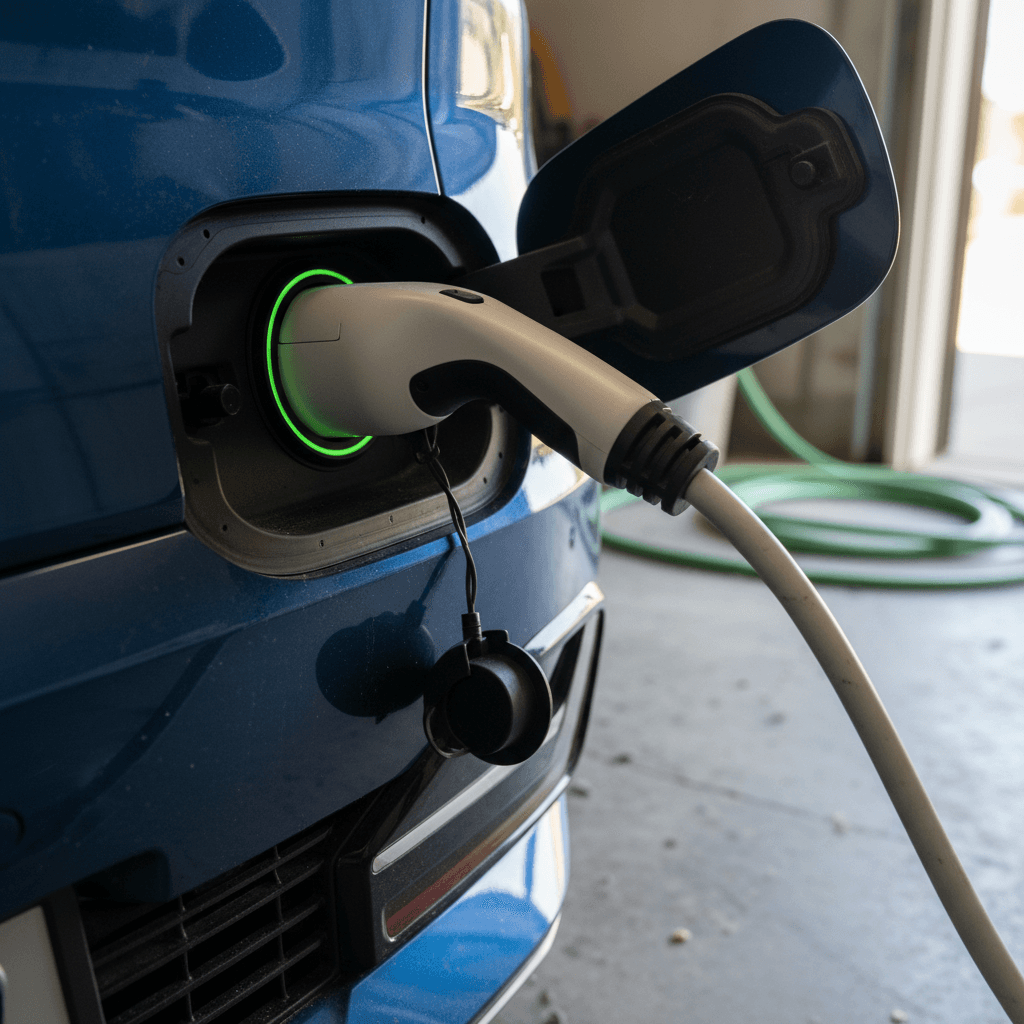
The second major bucket of complaints involves charging behavior. Some 2023 EV6 owners report Level 2 sessions that stop after 10–30 minutes, "Charging Error" messages, unusually hot charge ports, or public DC fast chargers that repeatedly fail to start a session.
Typical Level 2 home charging issues
- Charging starts normally, then stops after 10–30 minutes with no clear error on the charger
- Repeated “Charge Error” or “Charging Stopped” messages in the cluster or Kia Access app
- Charge port and/or EVSE handle feel very warm to the touch
- Charging seems stable only at reduced AC charging current (e.g., “Minimum” setting in the car)
Rule out the easy stuff first
Known causes and software fixes
Across owner reports and technical bulletins, most charging problems fall into one of three buckets:
Why your 2023 EV6 might keep stopping charge
1. Heat at the charge port
2. Weak or misconfigured home EVSE
3. Software logic bugs
Step‑by‑step to diagnose EV6 charging problems
1. Try a different charger
Charge at another Level 2 station or a reputable public charger. If the problem disappears, your home EVSE or wiring is suspect.
2. Lower the car’s AC current setting
In the EV6’s charging menu, reduce the AC charging rate (Normal → Reduced/Minimum). If that stabilizes charging, heat or wiring limits are likely involved.
3. Update vehicle software
Ask your Kia dealer to check for the latest EV6 software, including charging logic and ICCU updates. Some owners report dramatic improvement after updates.
4. Pull charger and car logs
Many smart chargers log error codes. Combined with the EV6’s DTCs, this helps the dealer see whether the vehicle or EVSE is actually at fault.
Public DC fast charging frustrations
12‑volt battery drain and no‑start situations
Even though the EV6 is fully electric, it still uses a conventional 12‑volt battery to power control modules, locks, and safety systems. On both early and later EV6s, owners have reported repeated 12‑volt failures, sometimes after the vehicle sits for a few days, sometimes after an ICCU‑related event.
- Car is completely dead in the morning: no lights, no unlock, no Ready mode
- Need to jump‑start from an external 12‑volt source to wake the vehicle
- Dealer replaces the 12‑volt battery, but the issue returns weeks or months later
- Complaints that the 12‑volt was not proactively upgraded even after repeat failures
Common root causes
- ICCU or DC‑DC converter not properly charging the 12‑volt battery
- Parasitic draw from telematics or accessories while parked
- Short local driving patterns that never fully recharge the 12‑volt system
- Older style lead‑acid battery struggling in extreme hot/cold climates
Typical dealer fixes
- Software update to charging and power management modules
- Load test and replacement of the 12‑volt battery under warranty
- Inspection for ICCU‑related electrical system recalls
- In some later cases, upgrade to a more robust AGM‑type 12‑volt battery
Owner tip: log every 12‑volt incident
Software bugs, infotainment glitches, and app issues
Like most modern EVs, the 2023 EV6 leans heavily on software for everything from charging and navigation to driver‑assist features. Owners regularly mention smaller but annoying issues that don’t strand the car but do hurt the experience:
- Center screen freezing or rebooting unexpectedly
- Wireless Apple CarPlay/Android Auto dropping connections
- Kia Connect app stuck showing the vehicle as "charging" when it isn’t
- Navigation map updates breaking live charger availability status
- Laggy response when switching drive modes or enabling i‑Pedal
Most software issues are fix‑able
Simple steps to clean up EV6 software issues
1. Check for OTA updates
In the EV6’s settings, look for any pending over‑the‑air updates. Install them when parked with good connectivity and battery charge.
2. Perform a soft reset
Use the system reset procedures in your owner’s manual to reboot the infotainment stack without disconnecting the 12‑volt battery.
3. Re‑add your phone
Delete and re‑pair your phone for CarPlay/Android Auto, and make sure both the app and phone OS are current.
4. Ask the dealer for a full software refresh
If glitches persist, request a full firmware update across infotainment, navigation, and EV control modules rather than a piecemeal fix.
High‑voltage battery health and range: any real issues?
The question every used‑EV buyer asks: Is the main battery pack holding up? So far, the answer for the 2023 EV6 is encouraging. There is no large‑scale pattern of premature high‑voltage battery failures or extreme early degradation. Most owner complaints about “range” trace back to driving style, climate, and software estimates rather than failing hardware.
- Typical real‑world range reports track reasonably close to EPA ratings in mild weather
- Cold‑weather range drops of 25–35% are common but expected for EVs
- No consistent wave of 2023 EV6 battery replacements under warranty has emerged
- Battery preconditioning (where equipped and updated) helps DC fast‑charge speeds in cold climates
Battery health is a relative bright spot
At Recharged, every EV goes through a standardized Recharged Score process that includes detailed battery‑health diagnostics, fast‑charge behavior checks, and real‑world range validation, so you don’t have to guess how a particular 2023 EV6 has aged.
Key recalls and service campaigns for the 2023 EV6
By spring 2026, several recalls and service campaigns have touched the 2022–2023 EV6 family. Exact coverage depends on build date and VIN, but these themes are worth checking on any 2023 you’re considering:
Major recall and campaign themes for 2023 Kia EV6
Always confirm recall status for a specific VIN using Kia or NHTSA tools.
| Issue area | What it addresses | Typical fix at dealer |
|---|---|---|
| ICCU / electrical system | Potential ICCU malfunction leading to loss of power or repeated warnings. | Software logic update, ICCU inspection, and replacement if faults or damage are found. |
| Charging logic / overheating | Level 2 charge interruptions and potential overheating at the charge port or internal charger. | Software update to reduce current or better manage thermal limits during AC charging. |
| ADAS / software behavior | Quirky lane‑keeping, warnings, or braking behavior in certain conditions. | ECU and ADAS software updates, calibration checks. |
| Navigation / telematics | Map or live charger‑status glitches after prior updates. | Navigation database and head‑unit firmware updates. |
Recall names and IDs vary; use this as a directional checklist, not legal documentation.
How to check recall status on a 2023 EV6
How to diagnose and fix common 2023 EV6 problems
Who should fix what? DIY vs. dealer vs. specialist
OK to handle yourself (with caution)
Soft resets of the infotainment system and head unit.
Updating Kia Connect app and re‑pairing your phone.
Adjusting AC charging current and schedules in the vehicle menus.
Testing on a different Level 2 charger to isolate EVSE vs. vehicle.
Keeping a simple jump pack on hand for the 12‑volt system.
Dealer service recommended
Any loss of motive power, even if it recovers after a restart.
Repeated 12‑volt battery failures or "Check Electric Vehicle System" warnings.
Persistent Level 2 charge interruptions after trying another charger.
ICCU‑related or high‑voltage DTCs stored in the vehicle.
Major software campaigns, recalls, and navigation firmware updates.
EV‑specialist or advanced diagnostics
Independent EV‑focused shop performing in‑depth ICCU and DC‑DC testing.
Third‑party high‑voltage battery health reports to benchmark degradation.
Pre‑purchase inspections that include thermal‑imaging of charge ports and under‑body components.
Detailed charging‑curve testing at multiple DC fast‑charge sites.
High‑voltage safety reminder
What repairs cost, and what Kia’s warranty should cover
The 2023 Kia EV6 carries strong factory coverage in the US: a 5‑year/60,000‑mile limited basic warranty and 10‑year/100,000‑mile powertrain and high‑voltage battery coverage (for original owners, with some variation for subsequent owners). Many of the big‑ticket 2023 EV6 issues fall under those umbrellas or specific recalls.
Typical cost ranges for common 2023 EV6 fixes (out of warranty)
Estimates only, labor and parts vary by region and dealer.
ICCU diagnosis & replacement
Potential cost: $2,000–$4,000+ out of warranty.
Often covered by recalls or electrical‑system warranty on a 2023 EV6, especially under 100,000 miles.
AC charging/charge‑port repair
Potential cost: $400–$1,500.
Ranges from simple wiring or EVSE replacement (owner cost) to onboard charger or inlet repairs (usually warranty if defective).
12‑volt battery replacement
Potential cost: $250–$450.
Lead‑acid batteries are cheaper; upgraded AGM batteries cost more but last longer. Repeated failures may be covered while under basic warranty.
Infotainment / software fixes
Potential cost: $0–$400.
Most software updates happen under warranty or as goodwill. Out‑of‑warranty head‑unit replacement can be significantly more.
Always tie complaints to warranty coverage
Used 2023 Kia EV6 buyer checklist
Shopping used is where knowing the 2023 Kia EV6 problems and fixes really pays off. The right inspection can separate a solid, trouble‑free EV6 from one that might spend weeks waiting on back‑ordered parts.
Pre‑purchase checklist for a used 2023 EV6
1. Scan for codes and recall history
Use a professional scan tool or have an EV‑savvy shop check for ICCU, charging, and ADAS fault codes. Confirm all recalls and campaigns are completed.
2. Inspect charging behavior
Test Level 2 charging from a reputable station for at least 30–45 minutes. Watch for interruptions, heat at the port, or abnormal noises from the onboard charger.
3. Evaluate 12‑volt health
Check service records for prior 12‑volt replacements. A single change is normal; repeated failures deserve deeper investigation of ICCU and DC‑DC operation.
4. Confirm battery health and range
Review battery‑health reports and actual range on a mixed‑driving test loop. Make sure the seller’s claims match what the car delivers in real conditions.
5. Exercise all software features
Test the infotainment system, CarPlay/Android Auto, Kia Connect, navigation, and driver‑assist functions. Look for freezes, error messages, or odd behavior.
6. Ask about charging habits
Frequent high‑power DC fast charging and near‑constant 100% charging aren’t deal‑breakers, but they can accelerate wear. Balanced charging habits are a plus.
How Recharged reduces the guesswork
Ready to find your next EV?
Browse VehiclesFAQ: 2023 Kia EV6 problems and fixes
Frequently asked questions about 2023 Kia EV6 problems
Bottom line: Is a 2023 Kia EV6 still a smart buy?
Taken in full, the 2023 Kia EV6 is **more solid than scary**. The big risks cluster around ICCU failures, charging behavior, and 12‑volt support, not around the main battery pack or basic build quality. If you verify recall work, test charging thoroughly, and get a credible battery‑health readout, a 2023 EV6 can be a quick, efficient, and fairly dependable EV.
Where shoppers run into trouble is underestimating how complex EV diagnostics can be. That’s why Recharged bakes battery testing, charging analysis, and recall verification into every Recharged Score Report, then backs it with EV‑specialist support, financing, trade‑in options, and nationwide delivery. However you shop, walk into your 2023 Kia EV6 purchase with open eyes, and the right data, and you’ll be well positioned to enjoy the strong parts of this platform while avoiding the known pitfalls.