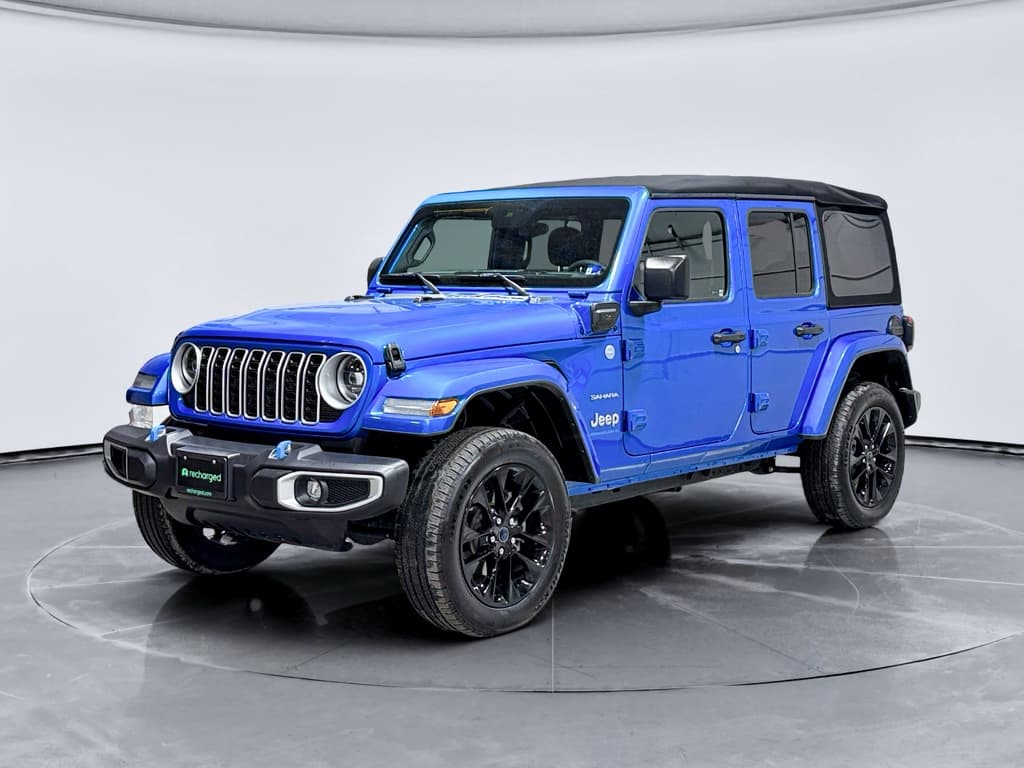
If you’re shopping for a three‑row family hauler, the Jeep Grand Cherokee and Rivian R1S probably live side by side in your browser tabs, even if they live on different planets philosophically. One is an old‑school gas SUV perfected over decades; the other is an all‑electric upstart on skateboards. When you zoom out beyond the window sticker, though, the real question is: what does a Jeep Grand Cherokee vs Rivian R1S total cost of ownership comparison look like over five years?
Gas vs electrons: 2026 snapshot
Why compare the Grand Cherokee and Rivian R1S?
On paper, it’s an odd couple. The Jeep Grand Cherokee spans from mid‑$40Ks into luxury territory with the Summit and plug‑in 4xe variants. The Rivian R1S is a premium, fully electric SUV that, optioned the way most buyers like, lives in the $80K–$95K bracket new. But in the real world, shoppers who’ve outgrown compact crossovers and want comfort, space, and some off‑road credibility often cross‑shop them, especially now that used R1S pricing is starting to drift into loaded‑Jeep money.
This guide isn’t about which one has nicer stitching or the better Spotify integration. It’s about money: fuel vs electricity, maintenance, insurance, tires, depreciation, and how your total cost of ownership shifts if you buy new vs used, gas vs electric.
Key assumptions and which trims we compare
- Mileage: 12,000 miles per year (U.S. average for many households).
- Ownership horizon: 5 years.
- Energy prices: gas at $3.50/gal blended over 5 years; home electricity at 17¢/kWh, with roughly 80% of Rivian charging done at home and 20% at public DC fast chargers at an effective 40¢/kWh.
- Location: a “typical” U.S. state, not California‑expensive, not Midwest‑cheap.
Trims and efficiency assumptions used in this comparison
Representative, not absolute. Your exact numbers will vary by engine, wheel size, climate, and driving style.
| Model | Assumed Configuration | Purchase Price (new) | Efficiency Assumption | Energy Cost per 100 miles (approx.) |
|---|---|---|---|---|
| Jeep Grand Cherokee | 2024 4WD V6, mid‑trim | $50,000 | 21 mpg combined | $16.70 |
| Rivian R1S | 2024 Dual Motor, Large Pack | $85,000 | ~2.3 mi/kWh (43 kWh/100 mi) | $8.00–$9.00 |
EPA ratings are rounded; real‑world range and economy will vary.
These are modeling assumptions, not gospel
Fuel vs electricity: where the big money moves
Energy is where EVs get their revenge for the higher sticker price. Using the assumptions above:
- Grand Cherokee fuel cost per mile: At 21 mpg and $3.50/gal, you’re around 16.7¢/mile. Over 12,000 miles a year, that’s about $2,004 annually or $10,020 over five years.
- Rivian R1S electricity cost per mile: At roughly 2.3 miles/kWh, you’ll use about 435 kWh per 1,000 miles, or ~5,220 kWh/year at 12,000 miles. With our 80/20 home/DC mix, your blended kWh price might land around 22–23¢, putting you near 9.5–10¢ per mile, about $1,140–$1,200 per year, or roughly $5,800 over five years.
Five‑year energy cost comparison
Home charging is where EVs really win
Maintenance and repairs: oil changes vs over-the-air updates
The traditional SUV ownership experience is sponsored by oil changes, transmission service, and brake jobs. The EV experience is mostly tires, cabin filters, and software updates that arrive like unsolicited Christmas presents.
Jeep Grand Cherokee maintenance
- Regular oil and filter changes.
- Transmission and coolant services over time.
- More moving parts: exhaust, fuel system, more complex drivetrain.
- Budget roughly $800–$900 per year on average once the free maintenance perks expire.
Rivian R1S maintenance
- No oil changes, no transmission fluid, no exhaust.
- Regenerative braking extends pad and rotor life.
- Over‑the‑air fixes for many software‑driven issues.
- Early owner reports suggest significantly lower routine maintenance, often a few hundred dollars a year, plus an occasional service visit.
Warranty cushions for the first years
Insurance, tires, and other running costs
Here’s where the EV halo dims a bit. The R1S is a heavy, powerful, premium SUV with a body made of low‑volume panels and lots of aluminum. Collision repairs are expensive, and insurers price that risk in. The Jeep is cheaper to buy, cheaper to fix, and far more familiar to your local body shop.
Typical annual running costs beyond fuel or electricity
Numbers will vary by driver profile, but these ranges capture what many owners report.
Insurance
Grand Cherokee: Many households see $1,600–$2,000/year for full coverage.
R1S: $2,000–$3,000/year isn’t unusual, sometimes more in high‑cost metro areas.
Tires
Grand Cherokee: Mainstream SUV tires, typically $800–$1,000 every 40–50K miles.
R1S: Heavy EV, big wheels. Budget $1,400+ per full set, more frequently if you drive aggressively.
Taxes & fees
Grand Cherokee: Conventional registration, sometimes reduced as it ages.
R1S: Higher vehicle value means higher annual taxes in many states; some states also add modest EV registration surcharges.
Sticker shock: EV collision repair
Depreciation and resale: where Rivian can sting
Depreciation is the silent killer of total cost of ownership, and it behaves differently for these two vehicles. Jeep has decades of data behind it; Rivian is a young brand in a fast‑moving segment.
- Grand Cherokee depreciation: Mainstream midsize SUVs tend to lose value steadily but predictably. Over five years, a $50,000 Jeep might give back ~50–55% of its value in depreciation, leaving you with a vehicle still easy to sell or trade.
- Rivian R1S depreciation: New‑EV prices and technology are evolving quickly. Early used‑market data suggests steeper early‑year drops as the market figures out long‑term demand and as new battery packs and features arrive. A well‑optioned $85,000 R1S could realistically shed 55–65% of its value in five years, depending on mileage, software updates, and Rivian’s brand trajectory.
Why buying used flips the script
5‑year total cost estimates: Jeep Grand Cherokee vs Rivian R1S
Let’s roll everything together for a five‑year, 60,000‑mile ownership window. These are ballpark figures for a typical U.S. driver, not a guaranteed quote.
Estimated 5‑year total cost of ownership (new purchase)
Rough comparative model for a mid‑trim Grand Cherokee vs a dual‑motor Rivian R1S, purchased new.
| Cost Category (5 years) | Jeep Grand Cherokee (gas) | Rivian R1S (EV) |
|---|---|---|
| Depreciation | -$26,000 | -$47,000 |
| Fuel / Electricity | -$10,020 | -$5,800 |
| Maintenance & Repairs (out of warranty) | -$4,000 | -$2,000 |
| Insurance | -$9,000 | -$12,500 |
| Tires | -$2,000 | -$3,000 |
| Taxes & Fees | -$3,500 | -$5,000 |
| Estimated 5‑year total | ≈ -$54,500 | ≈ -$75,300 |
All figures are approximate and rounded for clarity.
In plain language: if you buy both vehicles new and keep them five years, the Jeep Grand Cherokee is likely to be meaningfully cheaper to own overall, largely because you started $30K+ lower on the purchase price and its depreciation curve is shallower. The Rivian claws back several thousand dollars in energy and maintenance savings but not enough, at current prices, to offset its much higher capital cost.

How the math changes if you buy used
Here’s where things get interesting for a shopper who’s EV‑curious but budget‑conscious. The used market doesn’t treat these SUVs the same way.
Scenario A: Used Grand Cherokee
Suppose you buy a 3‑year‑old Grand Cherokee for $35,000. Over the next five years, it may still shed another $15,000 or so in value, burn $10,000 in fuel, and cost a bit more in maintenance as it ages.
Very roughly: you might be in for $40K–$45K all‑in over your five‑year horizon.
Scenario B: Used R1S
Now assume you find a well‑specced, 3‑year‑old R1S in the mid‑$50Ks on the used market. Depreciation from there might be closer to $20K over the next five years, giving you a $35K residual on a vehicle that started life around $90K.
With low maintenance and cheaper energy, your all‑in five‑year cost could fall into the same ballpark as that used Jeep, especially if you drive a lot and mostly charge at home.
Why a used Rivian can be a smart play
This is exactly where a platform like Recharged earns its keep. Every used EV we list comes with a Recharged Score Report that includes battery health diagnostics, verified mileage, and fair‑market pricing analysis, crucial data when you’re trying to forecast not just what an R1S costs today, but what it will still be worth in five years.
Which one is right for you? Scenario-based advice
Jeep Grand Cherokee vs Rivian R1S: who should buy what?
Think less in terms of badges, more in terms of your daily life.
You drive modest miles and value predictability
If you’re doing 8,000–12,000 miles a year, mostly in town and suburbs, and you like a conventional dealer network and a known quantity, the Grand Cherokee is economically rational. It’s cheaper to acquire, cheaper to insure, and it will do everything you ask with minimal drama.
You rack up miles and can charge at home
If you’re driving 15,000+ miles a year and can install a Level 2 charger, the Rivian R1S starts to look much smarter in total cost terms, especially bought used. Cheap electrons + low routine maintenance claw back thousands of dollars compared with feeding a V6 or V8.
You care deeply about emissions
Purely on tailpipe emissions, the R1S wins by default: it has none. If you can power it with reasonably clean electricity, your running emissions footprint is a fraction of a gas Jeep’s, regardless of cost calculus.
You want performance and tech theatre
The R1S will make a Grand Cherokee feel like a time capsule: instant torque, sophisticated driver‑assist tech, and a cabin that feels more Silicon Valley than suburban mall. If that experiential upside matters to you, its higher total cost might be acceptable.
Quick checklist: is an R1S the right financial move for you?
1. Can you reliably charge at home or work?
Without consistent Level 2 charging, you’ll lean on pricier DC fast charging and erode much of the Rivian’s operating‑cost advantage.
2. Do you drive at least 12,000–15,000 miles per year?
The more you drive, the more the EV’s energy and maintenance savings compound vs a gas SUV.
3. Are you comfortable with higher insurance and tire costs?
Budget realistically. A Rivian’s running costs aren’t just electrons; insurance and tires can be noticeably higher than a Jeep’s.
4. Are you open to buying used instead of new?
A used R1S with a healthy battery can dramatically improve your total cost picture compared with ordering a new one at full price.
5. Will you lose sleep over resale swings?
Rivian’s long‑term resale curve is still being written. If you need certainty, the Grand Cherokee’s depreciation is easier to model.
FAQ: Jeep Grand Cherokee vs Rivian R1S ownership costs
Frequently asked questions
Bottom line and next steps
When you run a sober Jeep Grand Cherokee vs Rivian R1S total cost of ownership comparison, the verdict isn’t that one is universally “cheaper”; it’s that each answers a different version of the same question. If you buy new and value predictable economics above all, the Grand Cherokee is the fiscally conservative choice. If you buy used, drive a lot, and can charge at home, a well‑priced R1S can end up surprisingly competitive, even before you factor in the quieter cabin, instant torque, and lack of tailpipe.
If you’re leaning electric, your next step should be to look at real vehicles, not just spreadsheets. On Recharged, you can browse used Rivian R1S listings, see each vehicle’s Recharged Score and battery health, explore financing, and even get an instant offer on your current car, all online, with EV specialists ready to talk you through the math for your specific situation. Numbers matter, but so does how a vehicle makes you feel every morning in the driveway; the trick is finding the one that does both.