If you’re staring at used EV listings and wondering **“is the VW ID.4 a good used car?”**, you’re not alone. On paper, it’s everything Americans say they want: an electric compact SUV with real back seats, a usable cargo area, and European road manners. On the used market, the ID.4 adds one more irresistible trait: **heavy depreciation**, which makes it look like a screaming deal next to a Tesla Model Y.
The short story
Bottom line: Is the VW ID.4 a good used car?
Why a used ID.4 is appealing
- Big discounts vs. new: Early‑year ID.4s have already shed a huge chunk of MSRP, so you’re buying after the steepest part of the curve.
- Real SUV practicality: Adult‑sized back seat, square cargo area, and an easygoing ride that doesn’t beat you up.
- Solid battery fundamentals: The shared VW MEB battery pack architecture has shown moderate degradation in long‑term testing.
- Comfort over chaos: Softer, quieter, and calmer than many rivals; it drives like a normal, well‑mannered crossover.
Why it can be a gamble
- Below‑average reliability: Particularly with early 2021–2023 builds, software and electrical gremlins are not a myth.
- Charging and electronics recalls: Several campaigns have addressed 12‑volt issues, camera/screen failures, and HV‑battery‑adjacent concerns.
- Infotainment quirks: Sluggish screens and touch‑slider controls that range from mildly annoying to infuriating.
- Not a road‑trip king: DC fast‑charging is fine, not stellar, and the smaller‑battery cars especially are better as commuter/urban family rigs.
So, **is the VW ID.4 a good used car?** For the right buyer, someone who values comfort over Tesla‑grade tech polish, does most miles around town, and is willing to buy **the right year, right trim, with verified battery health**, it can be one of the best value electric SUVs on the used market. For someone who wants zero drama, bulletproof electronics and constant road‑trip duty, it’s not the obvious first choice.
Quick take: Who the used ID.4 actually suits
Should you buy a used VW ID.4?
Three common buyer profiles and how well the ID.4 fits each.
City & Suburban Families
Great fit. If your life is daycare drop‑offs, Costco runs, and weekend soccer, a used ID.4 is in its element. It’s easy to drive, easy to park, and cheap to ‘fuel’ at home.
Priorities: comfort ride, rear seat space, predictable range, strong safety record.
High‑Mileage Commuters
Good fit if you get the big battery. With the 77 kWh pack, realistic range is usually enough for a hefty two‑way commute with margin.
Priorities: 82 kWh / 77 kWh usable pack, reliable DC fast‑charging, proven software history.
Road‑Trip Junkies
Mixed fit. You can road‑trip an ID.4, but charging speeds and network reliability lag Tesla, and early cars especially benefit from planning and patience.
Priorities: latest software, updated charging hardware, and realistic expectations.
If this is your first EV
VW ID.4 depreciation: Why used prices look so tempting
Depreciation snapshot for VW ID.4
The ID.4 has done that unfortunately common EV thing: **it fell off a cliff early in its life**, value‑wise. Between aggressive lease deals, fast‑moving EV tech, and a glut of off‑lease inventory, 2021–2023 ID.4s in 2026 often look shockingly cheap next to their original window stickers.
Very rough used ID.4 price tiers in 2026 (US)
These are directional ranges only; real‑world pricing varies with mileage, trim, incentives, and region.
| Model Year | Mileage Band | Typical Battery | What You’ll Often See |
|---|---|---|---|
| 2021 | 35k–60k miles | 77 kWh | Lowest prices; early‑build quirks more common; good deals if software/recalls sorted. |
| 2022 | 25k–45k miles | 77 kWh | Sweet spot for value vs. age; many off‑lease cars entering the market. |
| 2023 | 15k–35k miles | 62 or 82 kWh | Higher prices but improved build quality; still heavy first‑owner depreciation baked in. |
| 2024 | Under 25k miles | 82 kWh (new motor) | Pricier but benefit from newer hardware, more power, and incremental reliability updates. |
Why so many used‑car shoppers are suddenly ID.4‑curious.
Don’t buy on price alone
Reliability issues you can’t ignore
Let’s not sugar‑coat it: among modern EVs, the VW ID.4’s **headline reliability reputation is below average**, especially for 2021–2023 model years. Survey data and owner complaints point to a recurring theme, **the hardware is generally sound, the software is… moody.**
- Infotainment freezes and reboots, sometimes taking climate controls with it.
- Glitches with the digital cluster and backup camera going blank or laggy.
- 12‑volt electrical issues that can throw a party of warning lights or, in rare cases, leave the car unable to start.
- Door latch and window seal quirks on some early builds.
- Charging hiccups: cars refusing to initiate a DC fast‑charge session or dropping the charge mid‑session at certain stations.
Safety‑relevant recalls
What’s genuinely worrying
- Electronics instability: When the screen misbehaves, so do climate and some driving aids; that’s more than cosmetic.
- Charging reliability: A car that won’t talk nicely to public fast chargers will test your patience fast.
- Recall fatigue: Multiple dealer visits for software and wiring updates can turn ownership into a part‑time job if you’re unlucky.
What’s less scary than it sounds
- Core battery pack failures are rare relative to the volume of cars on the road; most high‑profile stories are outliers.
- Many gremlins improve with updates: Late‑2023+ software and module revisions smooth out a lot of rough edges.
- Warranty cushioning: Multiple major components remain under VW warranty on 2021+ cars in 2026, especially the HV battery.
How to sanity‑check reliability on a specific car
Battery and range: What to expect on a used ID.4
Underneath the software drama, the **ID.4’s battery chemistry and thermal management are fundamentally conservative**. Long‑term testing of VW’s 77 kWh MEB pack (shared with the ID.3 in Europe) shows modest degradation after high mileage, and VW backs the pack with an 8‑year / 100,000‑mile warranty to 70% capacity for US buyers.
Real‑world battery and range expectations
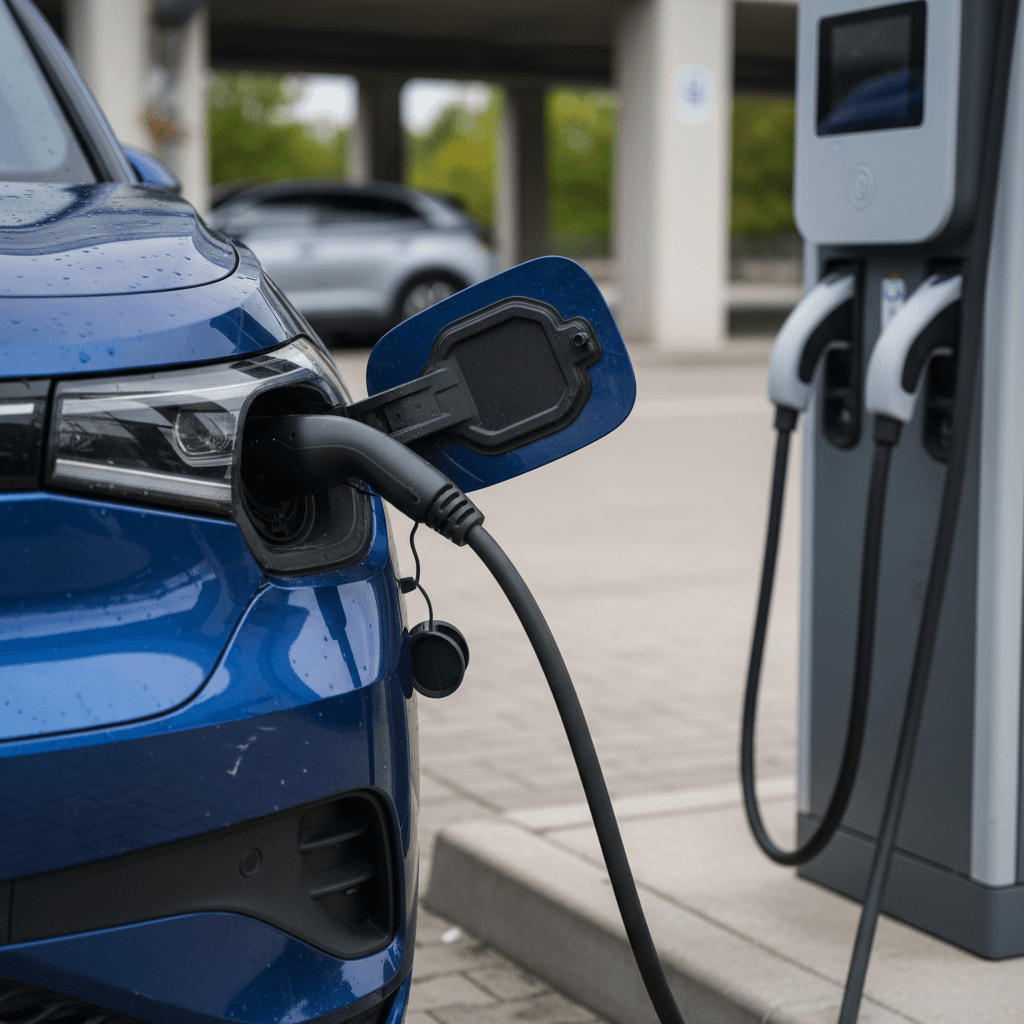
- **52/62 kWh pack (smaller battery)**: Better for short‑range urban use; expect usable real‑world range closer to a gas car with a small tank.
- **77 kWh usable / 82 kWh gross pack (larger battery)**: The one you want for commuting and flexible road‑trips; most US cars use this pack.
- DC fast‑charging: Peaks are respectable on paper, but real sessions often hover in the mid‑power band; not a 10‑to‑80% in 20 minutes hero.
- Home charging: On a quality 40‑amp Level 2 unit, you’ll usually refill a daily commute overnight without drama.
Cold‑weather reality check
Best and worst VW ID.4 model years to shop
Used VW ID.4 model‑year guide
If you have the luxury of choice, this is how to prioritize.
2021: Early adopter special
First US model year. Many owners have been happy, but this is also where most of the software and electronics horror stories live.
- Only buy with full recall history and updated software.
- Biggest discounts, but highest variability car‑to‑car.
2022–2023: Value sweet spot
Still inexpensive, but generally better build consistency and incremental software fixes.
- Shop 77 kWh cars for flexibility.
- Prioritize one‑owner, dealer‑maintained examples.
2024+: Best hardware
New APP 550 motor in many trims brings more power and efficiency, plus the benefit of several rounds of bug‑fixing behind it.
- Least risk, highest prices.
- Good choice if you want to keep the car 8–10 years.
Mileage vs. model year
Trim and option checklist: What matters, what doesn’t
High‑impact choices when buying a used ID.4
1. Battery size and drivetrain
Confirm whether you’re looking at the <strong>smaller battery</strong> (around 62 kWh gross) or the full‑fat <strong>82 kWh pack</strong>, and whether it’s RWD or AWD. For most US buyers, 82 kWh RWD hits the best balance of range, simplicity, and price.
2. Wheels and tires
Big 20–21" wheels look sharp but can ding range and ride comfort and cost more to replace. If comfort and efficiency matter more than stance, don’t be afraid of smaller wheels and taller sidewalls.
3. Driver‑assist package
Most ID.4s have a solid suite of active‑safety tech. Test adaptive cruise and lane‑keeping on your drive; they should feel confident, not confused. Glitches here can hint at sensor or software issues.
4. Interior materials & seats
Higher trims get nicer upholstery and more adjustment. Spend time in the driver’s seat, if you don’t like it after 20 minutes, you won’t like it after 20,000 miles.
5. Infotainment version
Later software builds boot faster and crash less. On the test drive, cycle through navigation, CarPlay/Android Auto, and climate controls. Sluggish or buggy behavior now will not suddenly improve because you put a ring on it.
Live with the interface for 10 minutes
Test drive and inspection checklist
Here’s how to turn a casual test drive into a **targeted ID.4 interrogation**, whether you’re shopping from a private seller, a dealer lot, or online with delivery.
Used VW ID.4 pre‑purchase checklist
1. Pull the full service and recall history
Ask for dealer service records plus any recall letters. You want to see completed campaigns for software, charging, and camera/infotainment updates, and no unresolved open recalls.
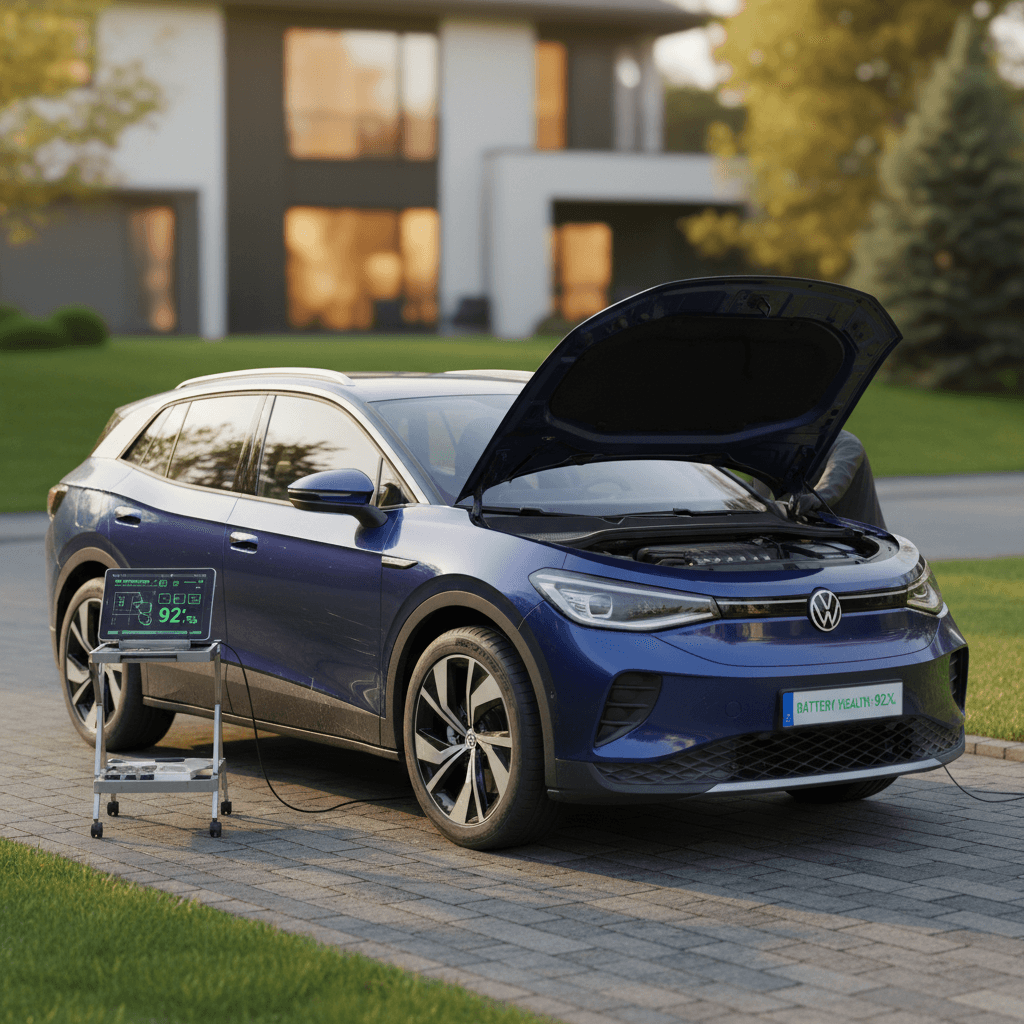
2. Verify high‑voltage battery health
Don’t guess from the dash range alone. With Recharged, every ID.4 gets a <strong>Recharged Score battery‑health diagnostic</strong> that measures usable capacity vs. factory spec. If you’re buying elsewhere, ask the seller for a recent battery report from a VW dealer or independent EV specialist.
3. Cold start the infotainment system
Start the car after it’s been sitting. Does the screen wake quickly? Any error messages? Spend a few minutes jumping between menus, maps, and smartphone mirroring. A car that glitches in a 10‑minute demo will not behave better in February at 6 a.m.
4. Test AC, heat, and defrost thoroughly
Because the ID.4 uses energy‑hungry resistive heat, you want HVAC working perfectly. Confirm that defrost, cabin heat, and seat/wheel heaters respond quickly, and that no odd smells or noises crop up.
5. Do a DC fast‑charge test if possible
If you can, stop at a DC fast charger and run a brief session. You’re checking that the car handshakes cleanly with the station and delivers power in the expected range, without session drops or error codes.
6. Listen for wind and seal noise
At highway speed, listen near the mirrors and door tops for whistles or excessive roar, which can indicate door‑seal or window‑regulator issues on some early cars.
Get everything in writing
Cost of ownership: Where the ID.4 shines (and doesn’t)
Where the ID.4 looks smart on paper
- Fuel savings: Home charging, especially on off‑peak rates, beats gasoline handily on cost per mile.
- Maintenance: No oil changes, timing belts, or transmission services. Brake wear is usually low thanks to regen.
- Insurance: Often in line with other compact SUVs, sometimes lower than premium‑branded EVs.
Where you should budget extra margin
- Out‑of‑warranty electronics fixes: Infotainment modules and sensor work aren’t cheap if they fall outside coverage.
- Tires: Heavier EV curb weight plus instant torque can eat soft compound tires faster than you expect.
- Depreciation if you’re the second flipper: Buy right and keep it; flipping again in 18 months just re‑introduces depreciation pain.
Smart play: Let the first owner pay the tuition
How Recharged reduces the used ID.4 risk
With a used VW ID.4, the question isn’t just "Is this a good model?" It’s "Is **this specific car** one of the good ones?" That’s exactly the gap Recharged is built to close.
Buying a used VW ID.4 through Recharged
How we stack the deck in your favor.
Recharged Score battery report
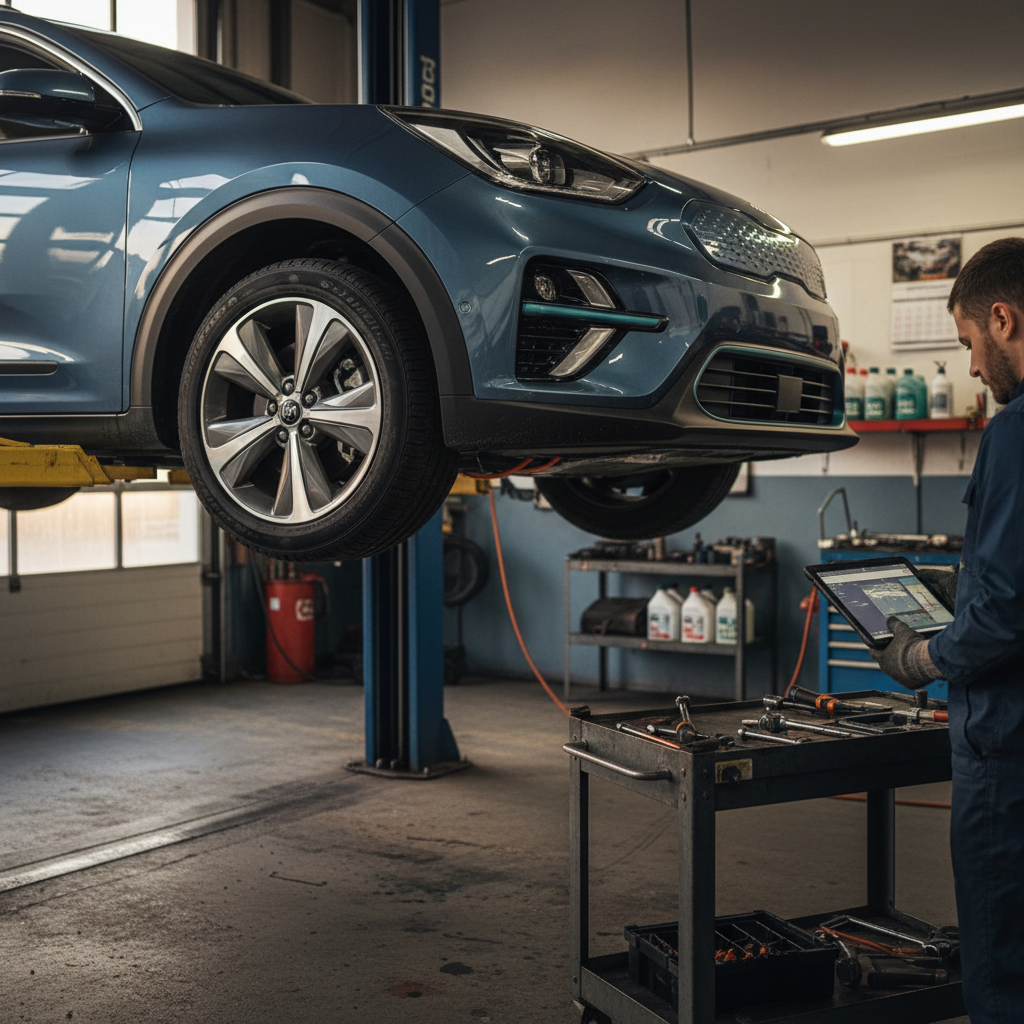
Problem‑focused inspection
Nationwide delivery & support
Ready to find your next EV?
Browse VehiclesIf you already own an EV or a gas car you’re ready to part with, Recharged can also help with **trade‑in or consignment**, so you’re not juggling private‑sale headaches while you’re trying to decode software versions and battery reports.
FAQ: Used VW ID.4
Frequently asked questions about the used VW ID.4
Verdict: When a used ID.4 is a smart buy
So, **is the VW ID.4 a good used car?** It can be, brilliantly so, if you deliberately sidestep its known land mines. A 2022–2023 big‑battery ID.4 with clean software and recall history, verified battery health, and no recurring electronics drama is a comfortable, quiet, and practical family EV that you can buy for far less than a comparable new crossover.
It is not, however, an appliance‑grade, set‑it‑and‑forget‑it machine. You’re trading Tesla‑level charging polish and Toyota‑ish reliability for **softer ride quality, a calmer cabin, and an aggressively discounted entry price**. If that calculus appeals to you, and you use tools like a Recharged Score battery‑health report to separate the keepers from the chaos, the used VW ID.4 belongs on your short list.
If you’d like to see real‑world ID.4 examples with battery health already verified, transparent pricing, and nationwide delivery, explore used VW ID.4 listings at Recharged or talk with an EV specialist who lives with these cars every day. The ID.4 doesn’t reward impulsive buys, but it absolutely rewards informed ones.