If you’re EV‑curious but not quite ready to go all‑electric, it’s natural to ask whether a used Toyota Prius Prime is worth buying. With plug‑in range, legendary Toyota efficiency, and strong resale value, the Prius Prime (now renamed the Prius Plug‑in Hybrid for 2025) sits in a sweet spot between traditional hybrids and full EVs. But as a used buy, the real questions are battery life, reliability, and what you actually get for the money.
Quick answer
Overview: Is a Used Prius Prime Worth It?
Prius Prime as a Used Buy: Pros and Cons at a Glance
Before you dive deep, here’s the 30‑second snapshot.
Key advantages
- Very low running costs if you can plug in regularly.
- Excellent hybrid efficiency even when the pack is empty.
- Long 10‑year/150,000‑mile Toyota hybrid battery warranty on newer models, transferable to subsequent owners.
- Top‑tier resale value compared with most plug‑in hybrids.
- Still uses gasoline, so no range anxiety on long trips.
Main drawbacks
- All‑electric range is modest by 2025 standards (roughly 22–44 miles depending on generation and trim).
- Battery capacity loss isn’t covered under warranty, only outright failures.
- Older (2017–2022) cars seat four, not five, which can be a deal‑breaker for some buyers.
- Some owners report nuisance issues with the 12‑volt battery and infotainment rather than the hybrid system itself.
If your daily commute fits within the car’s electric range and you can charge at home or work, a used Prius Prime can cover most weekday miles on electricity while giving you hybrid‑like efficiency on road trips. If you almost never plug in, you’re better off with a regular Prius, or, if you’re fully ready for electric, a used battery‑electric model with longer range.
Prius Prime Generations and What Changed
Toyota has sold two main generations of the Prius Prime as of early 2025, plus a name change:
Prius Prime / Prius Plug‑in Hybrid Generations
How the key specs changed across generations.
| Model years (U.S.) | Name | EPA EV range (approx.) | Battery size | Seats | Notable changes |
|---|---|---|---|---|---|
| 2017–2022 | Prius Prime | ~22–25 miles | 8.8 kWh lithium‑ion | 4 | First modern Prime; excellent efficiency, but only four seats and conservative styling. |
| 2023–2024 | Prius Prime | ~39–44 miles (trim‑dependent) | 13.6 kWh lithium‑ion | 5 | All‑new body, much quicker, longer EV range, more modern interior and tech. |
| 2025+ | Prius Plug‑in Hybrid | Similar to 2023–2024 | Carryover | 5 | Drops the "Prime" badge in North America; fundamentally the same plug‑in hardware. |
Use this to match the model you’re shopping to its real‑world capability.
Shopping tip
Battery Life and Electric Range on a Used Prius Prime
On any used plug‑in, the traction battery is the million‑dollar (or rather, several‑thousand‑dollar) question. The Prius Prime is helped by conservative tuning and a generous warranty, but you still need realistic expectations.
- 2017–2022 cars left the factory with about 22–25 miles of EPA EV range on a full charge.
- 2023+ models jumped to roughly 39–44 miles of rated EV range, depending on trim.
- Toyota’s lithium‑ion pack is actively managed and only uses a portion of its capacity, which helps slow degradation compared with fully cycling the pack.
- Owners who charge daily and rack up highway miles commonly report 10–25% loss of usable range by 100,000 miles. That means a healthy 2018 car might show ~17–20 miles instead of 22–25.
Important: what the battery warranty does, and doesn’t, cover
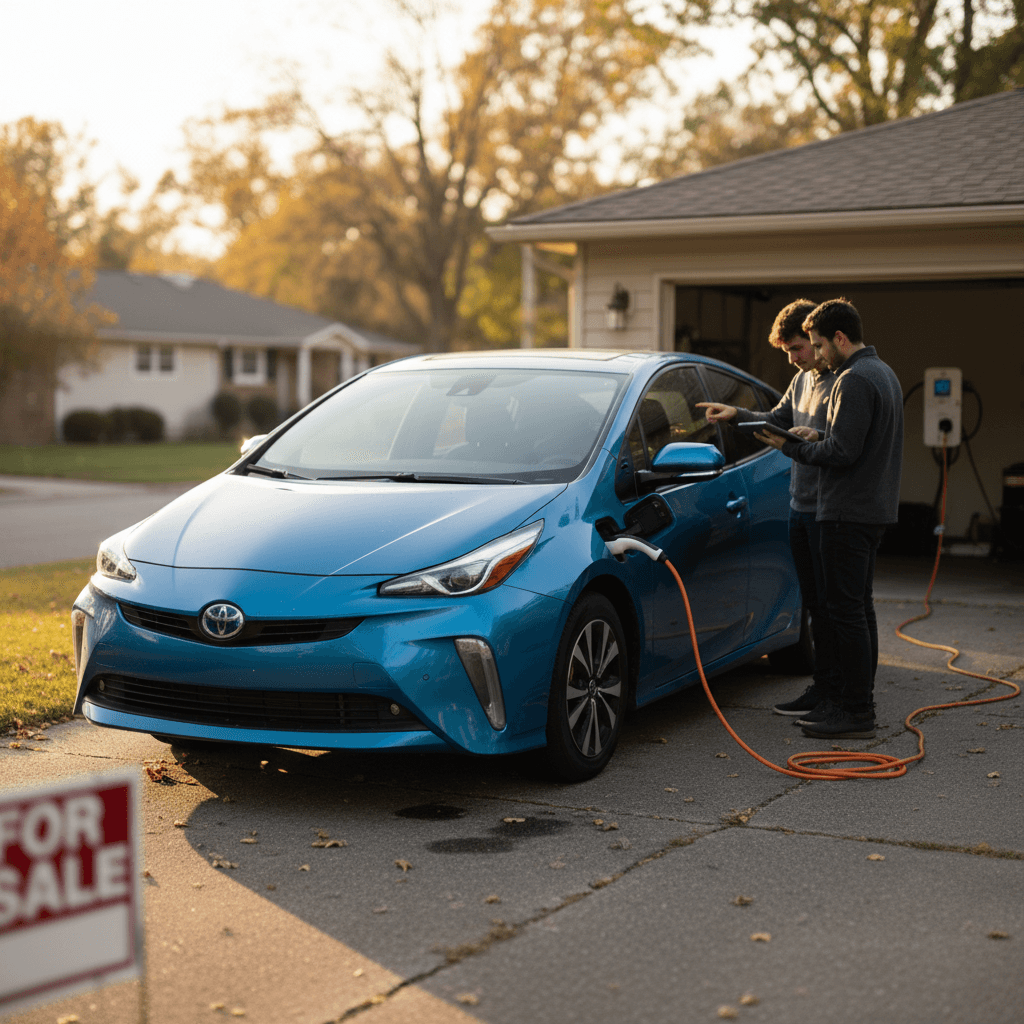
How to gauge real‑world range on a test drive
- Start with a full charge and reset the trip meter.
- Drive a familiar route at mixed speeds without heavy acceleration.
- Note how many miles you cover before the engine kicks on consistently.
- Compare that number to the model’s original EPA EV range.
You’re looking for consistency and whether the remaining range feels in line with the car’s age and mileage, not perfection.
Should you worry about replacement cost?
Out‑of‑warranty replacement of a Prius Prime traction battery is not cheap, it can run into the low five figures installed at a dealership. The good news is that relatively few Primes have needed full pack replacements so far, and strong resale values reflect that durability.
If you’re buying a high‑mileage car near the end of its hybrid warranty, negotiate price accordingly and assume you are taking on some battery risk.
Reliability and Known Issues
The Prius name is practically shorthand for reliability, and the Prime largely lives up to that reputation. The plug‑in hardware builds on Toyota’s mature hybrid system rather than reinventing it.
Common reliability themes on used Prius Prime
What tends to matter in the real world.
Hybrid system + engine
The core 1.8L or 2.0L hybrid powertrain has an excellent track record for longevity when maintained. Failures of the main traction battery are rare so far, especially within warranty.
12‑volt battery
One recurring complaint on newer Primes is the small 12‑volt battery going flat if the car sits for long periods or in cold weather. It’s annoying, but far cheaper to fix than a traction pack and usually handled under the basic warranty on newer cars.
Electronics & infotainment
Some owners report glitches in the big central screen on early cars, and the usual minor squeaks/rattles as mileage climbs. These are comfort annoyances more than mechanical red flags.
Don’t skip basic mechanical checks
In the plug‑in world, the Prius Prime’s track record looks downright boring, and that’s a compliment. The riskiest part of any PHEV is the battery, and Toyota’s conservative approach has kept real horror stories rare so far.
Depreciation and Total Cost of Ownership
What the market says about used Prius Prime value
From a total‑cost‑of‑ownership perspective, the Prius Prime is one of the safer bets in the plug‑in space. You pay a modest premium over a regular Prius on the used market, but you get the ability to run significant miles on electricity and you avoid the steep value cliff that has hit many early full EVs with short range or outdated fast‑charging tech.
Where you save
- Fuel: Short electric commutes can cut gasoline use dramatically.
- Maintenance: Like other hybrids, there’s no conventional automatic transmission, and brake wear is reduced thanks to regenerative braking.
- Depreciation: Stronger than average resale cushions you when it’s time to sell or trade.
Where costs can bite
- Out‑of‑warranty traction battery replacement is expensive, even though it’s uncommon.
- Some insurers still price plug‑ins a bit higher than comparable non‑plug‑in hybrids; always quote both.
- If you rarely plug in, you’re paying for technology you’re not using.
How a Used Prius Prime Compares to a Used EV
With used EV prices and battery‑only options improving, the Prius Prime competes less with new cars and more with used Leafs, Bolts, and early Model 3s. Whether it’s worth it depends a lot on your charging situation and driving pattern.
Used Prius Prime vs Used EV: Which Fits You?
High‑level comparison to clarify tradeoffs.
| Scenario | Used Prius Prime / Prius Plug‑in Hybrid | Used full EV |
|---|---|---|
| Apartment living with limited charging | Can fuel at gas stations; plugging in is optional but nice when available. | May be frustrating unless you have reliable overnight or workplace charging. |
| Long highway road trips | Gas engine eliminates range and charging‑stop planning. | Stops depend on fast‑charging availability and speed; older EVs can be slow. |
| Short daily commute (<25–40 miles) with home charging | Can cover most weekday miles on electricity, gas for weekends/road trips. | Great fit, if you can charge reliably and are comfortable going fully electric. |
| Warm vs cold climate | Hybrid efficiency cushions winter‑range drops; still starts and runs like a gas car. | Battery‑only range can drop sharply in cold weather; more planning required. |
Think about your daily use and where you’ll charge before picking a side.
When the Prius Prime shines
Which Prius Prime Years Are Worth Buying Used?
Not every used Prius Prime is equally compelling. Prices, equipment, and remaining warranty vary a lot by model year.
Best Bets by Budget and Use Case
Model‑year sweet spots for different kinds of buyers.
Value hunters
Target: 2018–2020 Prius Prime
- Often the best mix of price and remaining life.
- Expect some EV‑range loss but very low operating costs.
- Ideal if you’re fine with four seats and modest performance.
Range + performance
Target: 2023–2024 Prius Prime
- Much stronger acceleration and up to roughly 44 miles of EV range.
- More modern safety and infotainment tech.
- Higher prices but most of the 10‑year/150k hybrid warranty still ahead.
Risk‑averse buyers
Target: Low‑mileage cars regardless of year
- Prioritize service history, gentle use, and remaining hybrid warranty.
- Certified pre‑owned (CPO) examples can add peace of mind but at a premium.
- Have an independent inspection done, especially near the end of warranty.
High‑mileage outliers
Inspection Checklist for a Used Prius Prime
Beyond the usual used‑car due diligence, a plug‑in hybrid adds a few extra layers. Here’s a focused checklist you can follow, or hand to your mechanic.
Used Prius Prime / Prius Plug‑in Hybrid Inspection Checklist
1. Confirm remaining hybrid battery warranty
Use the in‑service date (first sale or lease) and mileage to confirm how much of the 10‑year/150,000‑mile hybrid battery coverage remains. Ask the seller for documentation rather than guessing.
2. Test home and public charging
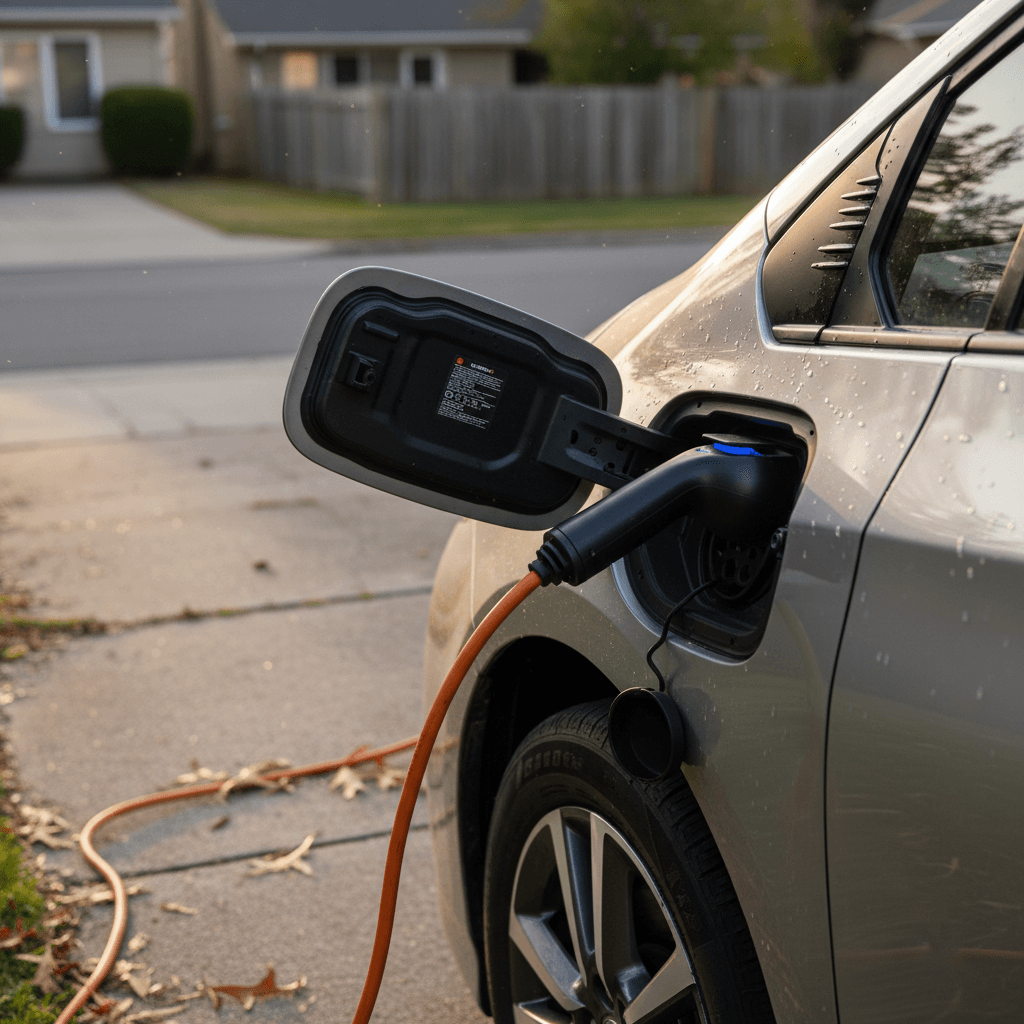
Verify that the included charging cable works on a standard 120‑volt outlet, and, if you can, try a Level 2 public charger. Charging should start reliably with no warning lights.
3. Measure practical EV range
On a full charge, drive a familiar loop and see how many miles you get before the gasoline engine becomes the primary power source. Compare this with the model’s original EPA EV rating to estimate degradation.
4. Scan for diagnostic codes
Have a shop or savvy friend plug in an OBD‑II scanner to check for stored trouble codes in the hybrid, battery, and charging systems, even if the dash shows no warning lights.
5. Inspect underbody and cooling systems
Look for rust on the underbody, especially in road‑salt states, and ensure the hybrid system’s coolant lines and radiators are leak‑free and undamaged.
6. Evaluate tires, brakes, and suspension
Regenerative braking reduces pad wear, but it doesn’t make the rest of the car immortal. Worn tires or tired dampers on a heavy plug‑in can make the car feel older than its odometer suggests.
Bring data to negotiations
How Recharged Fits In If You’re EV-Curious
If you’re cross‑shopping a used Prius Prime against a used full EV, what you really want is clarity: What’s the battery health, what’s a fair price, and how painful is it if you get this wrong? That’s exactly the puzzle Recharged is built to solve, starting on the full‑EV side of the market but increasingly relevant for shoppers looking at plug‑ins too.
Battery transparency
Every vehicle sold through Recharged comes with a Recharged Score Report that includes verified battery health, so you’re not guessing how much useful life is left in the pack. That matters even more with modern EVs, but the same principles apply when you’re thinking about plug‑ins like the Prius Prime.
Our diagnostics give you a data‑driven view of the battery rather than vague assurances, a big step up from a typical used‑car lot walk‑around.
End‑to‑end used EV support
Recharged focuses on used electric vehicles: financing, trade‑ins, instant offers or consignment, nationwide delivery, and EV‑specialist support from first question to final paperwork. Everything is digital, or you can visit our Experience Center in Richmond, VA if you prefer to kick the tires in person.
Even if you ultimately land on a Prius Prime from a local seller, talking with an EV‑specialist advisor can help you understand whether a full EV might actually fit your life better than you think.
FAQ: Buying a Used Toyota Prius Prime
Frequently Asked Questions
Bottom Line: Is a Used Prius Prime Right for You?
If you want to decarbonize your driving without overhauling your fueling habits, a used Toyota Prius Prime or Prius Plug‑in Hybrid is one of the lowest‑risk entries into electrification. The powertrain is proven, hybrid‑only efficiency is excellent, and depreciation has been kinder than it has to many early EVs. As long as you confirm remaining hybrid battery warranty, sanity‑check the real‑world EV range, and buy a car with clean history and sound mechanicals, it’s hard to call a good used Prime a bad bet.
If, on the other hand, you have strong home charging and are ready to skip gas stations almost entirely, a used full EV may actually deliver more upside, especially if you can see independently verified battery health before you buy. Whether you land on a Prius Prime or a battery‑electric model, approaching the decision with good data and a clear understanding of your own driving patterns is what really makes the purchase "worth it."