You’re not wrong to ask if the Mercedes EQS is worth buying in 2026. On one side you’ve got a stunning, S‑Class‑level luxury EV with huge range and a beautiful cabin. On the other, you’ve heard the horror stories: big depreciation, glitchy tech, scary repair bills. Let’s separate romance from reality so you don’t wind up with a six‑figure mistake on your driveway.
Sedan or SUV?
Who the Mercedes EQS Actually Suits in 2026
Great fit if you:
- Want top‑tier comfort and quiet more than track‑day handling.
- Do lots of highway miles and value 300+ miles of real‑world range.
- Can charge at home most nights.
- Plan to buy used and let someone else take the worst depreciation.
- Insist on a cabin that feels more like a private jet than a tech demo.
Poor fit if you:
- Hate touchscreens and complex driver‑assist systems.
- Can’t or won’t buy an extended warranty.
- Need rock‑solid reliability with minimal shop time.
- Are ultra‑sensitive to resale value and plan to sell in 2–3 years.
- Prefer a sportier, sharper drive (you’ll likely like a Lucid Air or BMW i5 more).
Quick answer: Is the Mercedes EQS worth buying in 2026?
Mercedes EQS in 2026 at a Glance
So, is the Mercedes EQS worth buying in 2026? It can be a phenomenal value as a lightly used, well‑warrantied luxury EV, especially if you care more about comfort and quiet than razor‑sharp handling. But new, at full MSRP, or used without iron‑clad coverage, it’s harder to recommend when rivals offer similar or better range and tech with less baggage.
Short verdict
Where the EQS still shines: luxury, range, and charging
EQS Strengths That Still Matter in 2026
You’re not just paying for a big battery, you’re paying for how the car feels every day.
Quiet, cocoon‑like comfort
Serious battery and range
Respectable fast charging
In day‑to‑day use, the EQS does what you want a big Mercedes to do: it disappears into the background. The steering is light, the ride is supple, the cabin glows at night, and the powertrain is so smooth you stop thinking about it. For many buyers, that experience is worth far more than a tenth quicker 0–60 or a slightly faster charging curve.
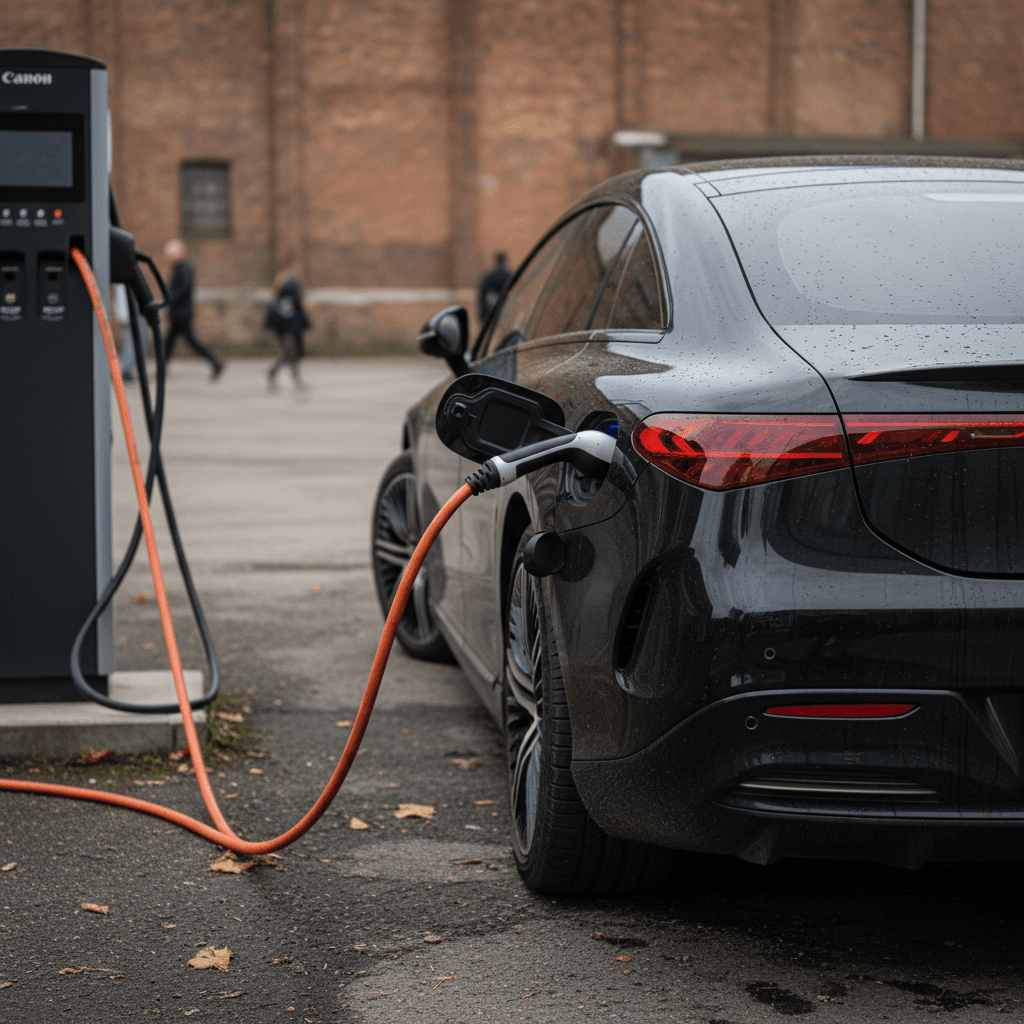
Home charging sweet spot
The big catch: depreciation and resale value
Here’s where the EQS stops being a fairy tale. Early EQS sedans have been some of the fastest‑depreciating luxury cars on the road. Third‑party studies found some EQS models losing close to half their value after a single year, and broader market data into 2024–2025 shows deep discounts across 2022–2024 cars.
Illustrative Mercedes EQS Value Trend (Sedan)
Approximate U.S. price ranges based on market and third‑party data through mid‑2025. These are directional, not quotes.
| Model year new | Original MSRP (approx.) | Typical used ask in 2026* | Estimated value drop |
|---|---|---|---|
| 2022 EQS 450+ | $105,000–$115,000 | $45,000–$55,000 | ≈50–60% loss in 4 years |
| 2023 EQS 450+/580 | $110,000–$130,000 | $50,000–$60,000 | ≈45–55% loss in 3 years |
| 2024 EQS | $110,000–$135,000 | $60,000–$75,000 | ≈35–45% loss in 2 years |
| 2025 EQS (updated) | $115,000–$140,000 | Too new for stable data | Expect heavy early hit |
Use this to understand the pattern: the EQS falls hard early, then levels off, exact numbers will vary by trim, options, mileage, and condition.
What this means for you
Reliability: what owners are really experiencing
The powertrain itself, battery, motors, inverter, hasn’t been the headline problem. Where the EQS stumbles is in complex electronics, driver‑assist systems, and the MBUX infotainment stack. Owner stories from 2022–2025 are a mixed bag: some drivers log tens of thousands of peaceful miles, others spend more time at the dealer than at the charger.
Common EQS Reliability Themes From Real Owners
These don’t happen to everyone, but they’re patterns you should know about before you sign.
ADAS & sensor gremlins
MBUX & electronics glitches
Dealer‑dependent fixes
Plenty of good stories, too
Do not skip this on a used EQS
The EQS is playing by EV‑era rules, not old‑school Mercedes rules: tech cycles, incentives, and shifting demand matter more than the three‑pointed star.
New vs used EQS in 2026: where the smart money goes
Buying or leasing new in 2026
- You’ll get the latest facelifted styling and, on newer cars, a slightly larger battery and more range.
- Full factory warranty and the latest software from day one.
- But you’re also paying the steepest part of the depreciation curve.
- Leasing can make sense if you want to hand back the car before tech and value move on again.
Buying used (2022–2025)
- Biggest upside: value. It’s common to see $50k–$60k cars that were $110k+ new.
- You can target model years and VIN ranges with fewer issues reported.
- Certified Pre‑Owned or strong third‑party warranty is a must.
- Use history matters: multiple ADAS or electrical repair visits are a red flag.
How Recharged can tilt the odds in your favor
How the EQS compares to Lucid, Tesla, and BMW
EQS vs Key 2026 Luxury EV Rivals (Big Picture)
This is a high‑level feel comparison for typical trims, not a spec sheet for every variant.
| Model | Character | Strengths | Weak Spots for 2026 Buyers |
|---|---|---|---|
| Mercedes EQS | Soft, ultra‑quiet luxury | Comfort, cabin quality, range, deals on used cars | Depreciation, inconsistent electronics reliability, not the sportiest |
| Lucid Air | Tech‑forward, long‑range GT | Class‑leading range, quick charging, sharp handling | Brand is younger, dealer/service footprint still growing |
| Tesla Model S | Minimalist, performance‑oriented | Supercharger access, speed, OTA software, mature EV package | Interior polish, build quality quirks, increasingly pricey new |
| BMW i5 / i7 | Driver’s luxury sedans | Handling, build quality, dealer network | Range and efficiency often trail the EQS and Lucid Air |
Don’t buy off a spreadsheet alone, but know what you’re getting into when you pick an EQS over its peers.
If you want the softest, quietest cocoon and you’re shopping used, the EQS is hard to beat for the money. If you’re cross‑shopping new, the case gets tougher: Lucid offers more range and efficiency; Tesla leans on its charging network and performance; BMW goes after drivers who care about steering feel. The EQS is the luxury couch in this living room.
Charging and road trips: living with an EQS day to day
- Battery sizes: Most EQS sedans pack roughly 108 kWh usable capacity, big even by 2026 standards.
- Real‑world range: Highway drivers commonly see 280–340 miles on a charge depending on wheels, temperature, and speed; around‑town range can be higher.
- DC fast charging: Peak power around 200 kW on the 400‑volt system. Think roughly 10–80% in the 30‑minute ballpark if the charger and conditions cooperate.
- AC home charging: With a 40‑ to 48‑amp Level 2 charger at 240V, overnight to full from 10–20% is entirely realistic.
Road‑tripping in an EQS
If you’re in the U.S., make sure you understand which fast‑charging networks you’ll rely on, Electrify America, ChargePoint, and others, and what kind of connectors you’ll need in your region. As North American Charging Standard (NACS) access and adapters roll out more broadly after 2025, EQS road‑tripping should only get easier.
Battery health and range fade: what to watch on a used EQS
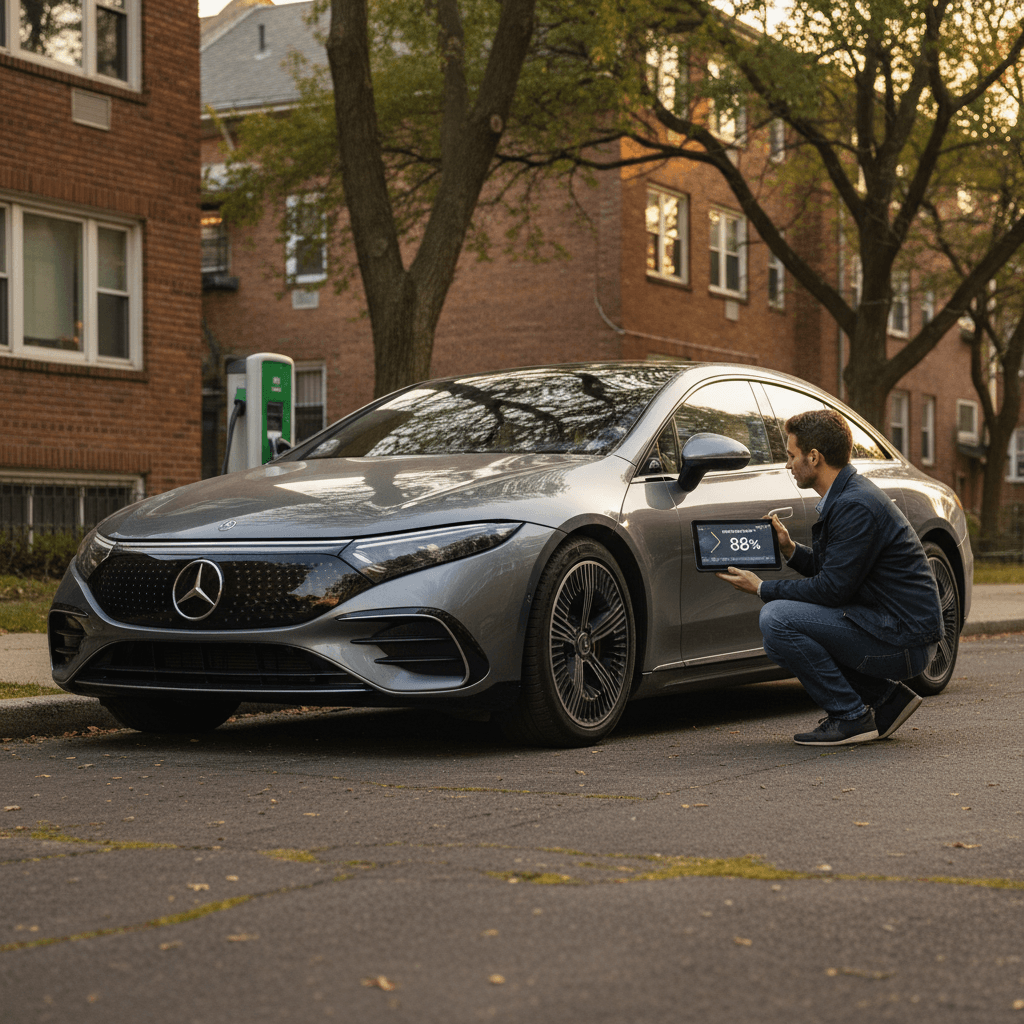
The EQS’s big pack helps mask degradation, losing 5–8% over a few years is less noticeable when you started with a lot. The bigger worry on a used EQS isn’t usually catastrophic battery failure; it’s buying a car that’s been fast‑charged hard, driven at very high speeds for long stretches, or parked hot and full for most of its life.
Battery & Range Health Checks Before You Buy
1. Ask for a battery health report
Ideally, you want quantitative data, not vibes. A <strong>Recharged Score battery diagnostic</strong> or dealer‑level scan is far more useful than “the range still seems fine.”
2. Compare indicated range to EPA figures
On a full charge at 100%, the displayed range shouldn’t be wildly below the original EPA estimate for that trim in similar weather, wheels, and driving profile.
3. Look for uneven cell behavior in reports
Large imbalances between modules in a health report can hint at past abuse or future issues, even if the car still feels fine today.
4. Ask about charging habits
A car that lived on home Level 2, usually charged to 70–80%, is ideal. A car fast‑charged to 100% several times a week on hot highways is not.
5. Inspect the underbody and charge ports
Check for physical damage, corrosion at the charge port, or evidence of poorly repaired impact damage around the battery area.
How Recharged helps here
Checklist: Is a Mercedes EQS worth it for you?
Decision Checklist for 2026 EQS Shoppers
You value comfort over corner carving
If your ideal drive is a quiet, unhurried glide instead of a canyon‑carving blast, you’re in the EQS’s target zone.
You can charge at home most nights
Home Level 2 charging turns the EQS into an easy‑living luxury appliance. Living on public DC fast charging alone will get old quickly.
You’re shopping used with a clear discount
An EQS that’s fallen from $115k to $55k is an opportunity. Paying full MSRP in 2026 with heavy depreciation looming is not.
You insist on strong warranty coverage
Whether factory, CPO, or high‑quality third‑party, coverage against big electronic or ADAS surprises is worth every penny on a car this complex.
You’re okay with some trips to the dealer
Even a good EQS may need occasional software updates or module replacements. If that sounds miserable, consider a simpler EV.
You’ve cross‑shopped Lucid, Tesla, and BMW
The EQS is the right choice when you’ve looked at the competition and still crave that unique blend of Mercedes cabin, range, and ride.
FAQ: Mercedes EQS buying questions for 2026
Frequently Asked Questions About Buying a Mercedes EQS in 2026
Bottom line: Is the Mercedes EQS worth buying in 2026?
If you think of the Mercedes EQS as a brand‑new $130,000 flagship, it’s a tough sell in 2026. Depreciation is brutal, the competition is fierce, and the electronics can be finicky. But if you think of it as a deeply discounted, warrantied, used luxury EV that happens to wear a three‑pointed star, the picture flips: suddenly you’re getting S‑Class‑grade comfort, big‑battery range, and a truly special cabin for the price of a well‑equipped midsize EV.
For the right driver, someone who values quiet over cornering, can charge at home, and is willing to buy smart with warranty backup, the Mercedes EQS is absolutely worth buying in 2026. And if you want help finding the good ones, with verified battery health and fair‑market pricing baked in, that’s exactly what Recharged was built to do.