If you’re trying to decide whether to buy, sell, or hold a Tesla Model 3, depreciation is the number you care about most. So how fast does a Tesla Model 3 depreciate in today’s market? In plain English: it held value extremely well from 2018–2021, fell **much faster** during the 2022–2023 price reset, and has since settled into a pattern that’s still better than most comparable gas sedans, but no longer bulletproof.
Key takeaway in one line
How fast does a Tesla Model 3 depreciate? The short answer
Tesla Model 3 depreciation at a glance (current market)
Those percentages hide a lot of nuance, but they’re a useful mental model. A well‑optioned Model 3 you bought for $50,000 brand new might be worth on the order of **$30,000–$32,000 after 3 years**, and **$23,000–$27,000 after 5 years**, assuming normal mileage and no major accidents. The spread inside those ranges is mostly explained by **battery health, mileage, accident history, and how aggressively Tesla has discounted new cars in that period**.
Depreciation is path‑dependent
Why Model 3 depreciation changed after 2022
From the Model 3’s launch in 2017 through about early 2022, used Teslas were resale unicorns. Long waitlists, limited competition, and rising gas prices meant a 1–2‑year‑old Model 3 could sell shockingly close to, or even above, its original MSRP in some months. That era is over.
What changed after 2022?
Four forces that reshaped Tesla Model 3 depreciation
1. Aggressive Tesla price cuts
Tesla cut new Model 3 prices multiple times between late 2022 and 2024. When a brand‑new car suddenly costs several thousand dollars less, **every used example above that price has to reprice down** almost overnight.
2. More EV competition
In 2018, a shopper considering a compact EV sedan mostly had one realistic choice. By 2024–2025, there are credible alternatives from Hyundai, Kia, Polestar and others. More supply and more choice naturally **push used prices toward normal car‑market behavior**.
3. Higher interest rates
Higher financing costs make new and used cars more expensive to carry. That squeezes buyers’ monthly payment limits and **forces both new and used prices down** compared with the near‑zero‑rate era.
4. Better‑understood battery aging
Early on, buyers were guessing about long‑term battery life. Now there’s enough data to see that most Model 3 packs hold up well, but degradation is **not zero**, especially for high‑mileage or fast‑charged cars. That’s shifted demand and pricing toward cars with **documented battery health**.
Good news for today’s buyers
Tesla Model 3 depreciation timeline: 1, 3, 5 and 7 years
To ground the discussion, let’s look at an approximate timeline for a mainstream Tesla Model 3 (RWD or Long Range) in the U.S. market, purchased at a typical transaction price and driven about 12,000 miles per year. These are **ballpark percentages off original MSRP**, not precise quotes for any specific VIN.
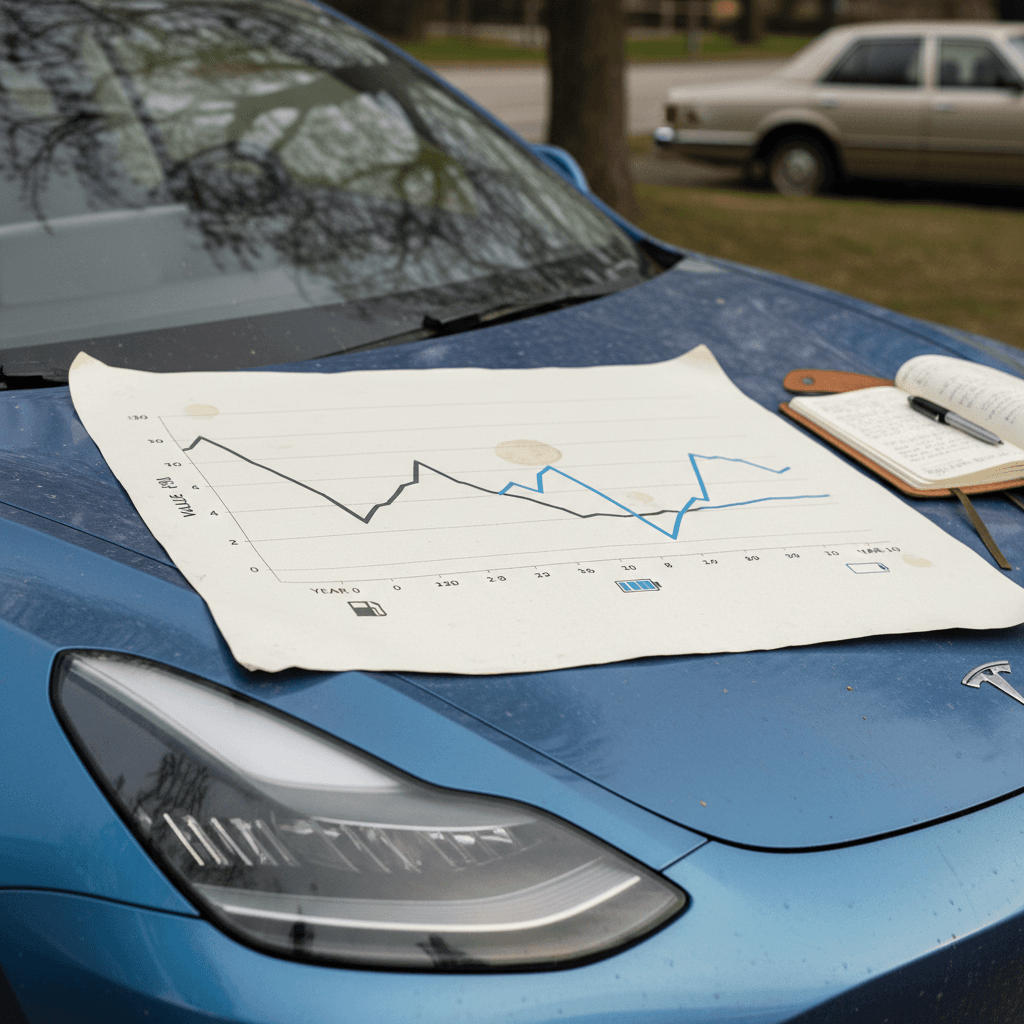
Approximate Tesla Model 3 depreciation curve
Illustrative cumulative depreciation vs. original MSRP for a typical Model 3 in today’s market conditions
| Age | Approx. value vs. original MSRP | What it usually looks like |
|---|---|---|
| 1 year | ~85% of MSRP (‑15%) | Still feels almost new; low miles, full warranty; hit comes mainly from initial drive‑off and new‑car incentives. |
| 3 years | ~60–65% of MSRP (‑35 to ‑40%) | First owner’s lease or loan often ends here; miles in the 30k–45k range; still in basic and battery warranty. |
| 5 years | ~45–55% of MSRP (‑45 to ‑55%) | Battery and drive unit usually still under warranty; cosmetic wear and mileage start to separate the clean cars from the rough ones. |
| 7 years | ~35–45% of MSRP (‑55 to ‑65%) | Warranty status and battery health dominate pricing; strong cars can outperform these numbers, weak ones can underperform. |
Actual results vary by trim, purchase timing, miles, battery health, and accident history.
Think in dollars, not just percentages
Miles, battery health and warranty: the biggest value drivers
With EVs, and Teslas in particular, **odometer miles only tell part of the story**. Two Model 3s with identical mileage can be thousands of dollars apart in value once you factor in **battery health, charging history, accident records, and warranty coverage**.
What actually moves Model 3 resale prices
Four levers that matter more than paint color or wheels
Battery health & fast‑charge history
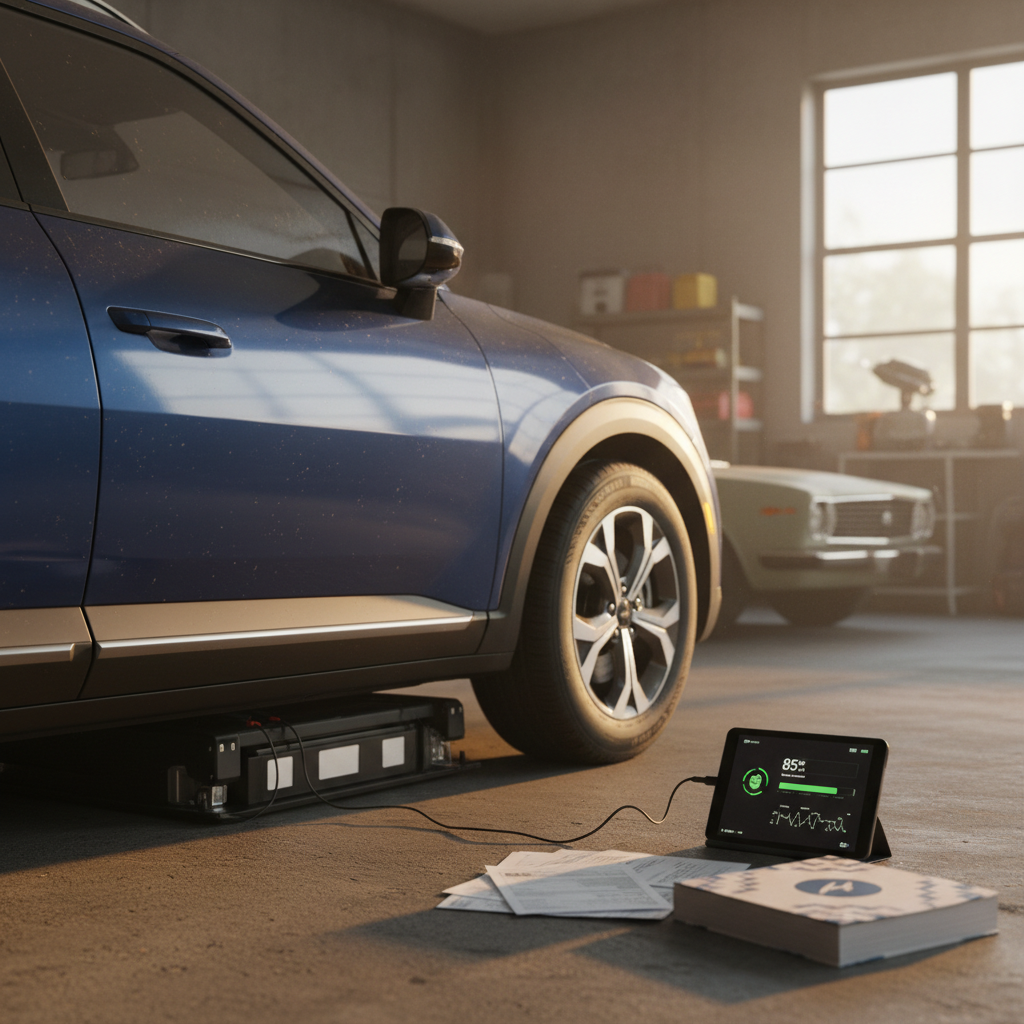
Buyers increasingly look beyond the dash’s estimated range. They want real data on **usable battery capacity** and how the pack has aged. Cars that were fast‑charged heavily, or show higher‑than‑average degradation, can see **noticeable price discounts**.
Mileage pattern, not just total miles
40,000 highway miles with gentle charging is not the same as 40,000 miles of short, hard‑driven trips and constant DC fast charging. Well‑documented, mostly Level 2 home‑charged miles are worth more than the raw odometer number suggests.
Warranty remaining
Tesla’s battery and drive unit warranty (often 8 years / 100k–120k miles depending on variant) acts as a **price floor**. As soon as a car ages or miles out of that coverage, depreciation usually **ticks faster**, unless you can prove the pack is still very healthy.
Accident and repair history
Like any car, structural repairs, airbag deployments, or branded titles hit value hard. But in EVs, poor‑quality collision repairs can also affect range and fast‑charging performance, making clean‑history cars that much more desirable.
How Recharged helps here
Ready to find your next EV?
Browse VehiclesTesla Model 3 vs gas sedan depreciation
A common question is whether a Tesla Model 3 depreciates faster or slower than a comparable gas sedan, think BMW 3 Series, Audi A4, or a loaded Honda Accord. Historically, the Model 3 has done **slightly better** over the first 5–7 years, though the gap shrank after Tesla’s 2022–2023 price cuts.
Where the Model 3 usually wins
- Lower operating costs (electricity vs gas, and less routine maintenance) make used Teslas attractive even if the sticker is higher.
- EV‑curious buyers often start used, so demand for well‑priced, clean Model 3s tends to be **deeper** than for a random gas sedan.
- Incentives and HOV privileges in some states can apply to used EVs, which can **support values**.
Where gas cars still fight back
- Some buyers remain nervous about battery replacement costs, even if they’re unlikely to face them.
- Luxury brands with heavy fleet or rental sales can depreciate quickly early on, but then **flatten** beyond year 5, similar to a Model 3.
- In regions with weak charging infrastructure, demand for used EVs can be softer than national averages.
Rule of thumb vs gas
How trims and options affect Model 3 resale value
Not all Model 3s are valued equally. Trim level, battery size, and a handful of options meaningfully shape how fast a particular car depreciates.
Which Model 3 versions hold value best?
Patterns we see consistently in the used market
Long Range vs RWD
Historically, **Long Range AWD** trims have held value slightly better than base RWD cars because they combine range, traction, and performance. But when new‑car price gaps shrink, the used premium also narrows.
Performance models
Model 3 Performance cars depreciate faster in percentage terms (higher MSRPs, sportier buyers), but they’re also the cheapest way to access that level of EV performance used. Enthusiast demand keeps a floor under clean examples.
Paint, wheels, and FSD
Color and wheel upgrades rarely return their full cost at resale. Full Self‑Driving (FSD) is even more complex: early on it helped resale; today, with subscriptions and changing feature sets, the **resale value of FSD is much more muted**.
Be careful with highly optioned cars
Real‑world used Model 3 price scenarios
To make all of this less abstract, here are simplified scenarios that mirror what we often see in the used Tesla market. Numbers are illustrative, but the patterns are real.
Sample Tesla Model 3 depreciation scenarios
Illustrative scenarios for common ages and mileages in today’s market.
| Car | Original price (approx.) | Age & miles today | Typical asking price range | Approx. depreciation |
|---|---|---|---|---|
| 2019 Model 3 Long Range AWD | $52,000 | 6 years / 72,000 mi | $22,000–$26,000 | ‑50 to ‑58% |
| 2021 Model 3 RWD | $45,000 | 4 years / 40,000 mi | $27,000–$31,000 | ‑31 to ‑40% |
| 2022 Model 3 Performance (highly optioned) | $63,000 | 3 years / 30,000 mi | $36,000–$42,000 | ‑33 to ‑43% |
| 2020 Model 3 RWD (heavy fast charging, higher degradation) | $42,000 | 5 years / 80,000 mi | $17,000–$21,000 | ‑50 to ‑60% |
Assumes clean titles and no major accidents. Local market conditions and Tesla’s current new‑car pricing will move these numbers up or down.
How to sanity‑check a price
Selling strategy: how to maximize your Model 3 resale price
Smart moves before you list your Model 3
1. Document battery health
If possible, get a **formal battery health report** rather than just a screenshot of the estimated range. On Recharged, this is baked into the Recharged Score so buyers can see verified pack data and charging history.
2. Fix high‑ROI cosmetic issues
Paint correction, curb‑rashed wheels, and a full interior detail can often return more than they cost on a late‑model Tesla. Bigger cosmetic repairs? Get quotes first, spending $3,000 to add $1,000 of value rarely makes sense.
3. Time your sale against new‑car incentives
If Tesla just cut prices or launched a big financing promotion, **wait a few weeks** if you can. Listing directly after a price cut is the worst moment to test the market as a private seller.
4. Be transparent about charging habits
Buyers increasingly ask: home charging or constant Supercharging? A simple, honest explanation, "mostly Level 2 at home, DC fast charging on road trips", reduces friction and justifies a stronger asking price.
5. Consider your selling channel
Private‑party can net more money, but takes time and effort. A **specialized used‑EV marketplace** such as Recharged can streamline the process, handle paperwork, and surface the right buyers who actually value battery data.
Using Recharged to sell
Buying a used Model 3: how to avoid overpaying
If you’re on the buy side, the depreciation that hurt early owners is now working in your favor. The trick is making sure you’re paying for **battery health and remaining warranty**, not just a badge and a body style.
- Start with **total cost of ownership**, not just price. Compare fuel, maintenance, and insurance over 5–7 years vs. your current or alternative car.
- Cross‑shop against **current new‑car pricing**. A used Model 3 that’s 5% cheaper than new but missing incentives and warranty years might not be a deal at all.
- Prioritize cars with **independent battery health verification**, for example, a Recharged Score Report, instead of anecdotal "range feels fine" claims.
- Be realistic about features like FSD. Great if you want it, but don’t assume they’ll hold value forever; pay a price that makes sense even if software pricing changes again.
- If you’re financing, look at the **monthly payment vs. new**. Sometimes a slightly more expensive new or certified car with better rates beats the cheaper, older car with higher APR.
Red flags on a used Model 3
Frequently asked questions about Tesla Model 3 depreciation
Tesla Model 3 depreciation FAQ
The bottom line on Tesla Model 3 depreciation
The Tesla Model 3 is no longer the depreciation‑defying outlier it was during the 2020–2021 supply crunch, but it still behaves like a **top‑tier compact luxury car** in resale terms, with a meaningful edge over many gas competitors once you factor in running costs. Expect a **steep but manageable drop in the first 3 years**, a slower slide through year 5, and then a more individualized story driven by battery health, miles, and warranty coverage.
If you’re selling, focus on **presenting verifiable battery and condition data**, and be mindful of Tesla’s latest new‑car pricing before you pick your number. If you’re buying, aim for a car that has **already absorbed the early depreciation** and comes with a clear, data‑backed health report. Platforms like Recharged, built specifically around used EVs, diagnostics, and transparent pricing, exist to help you navigate exactly these tradeoffs so you get the benefits of a Model 3 without gambling on its long‑term value.