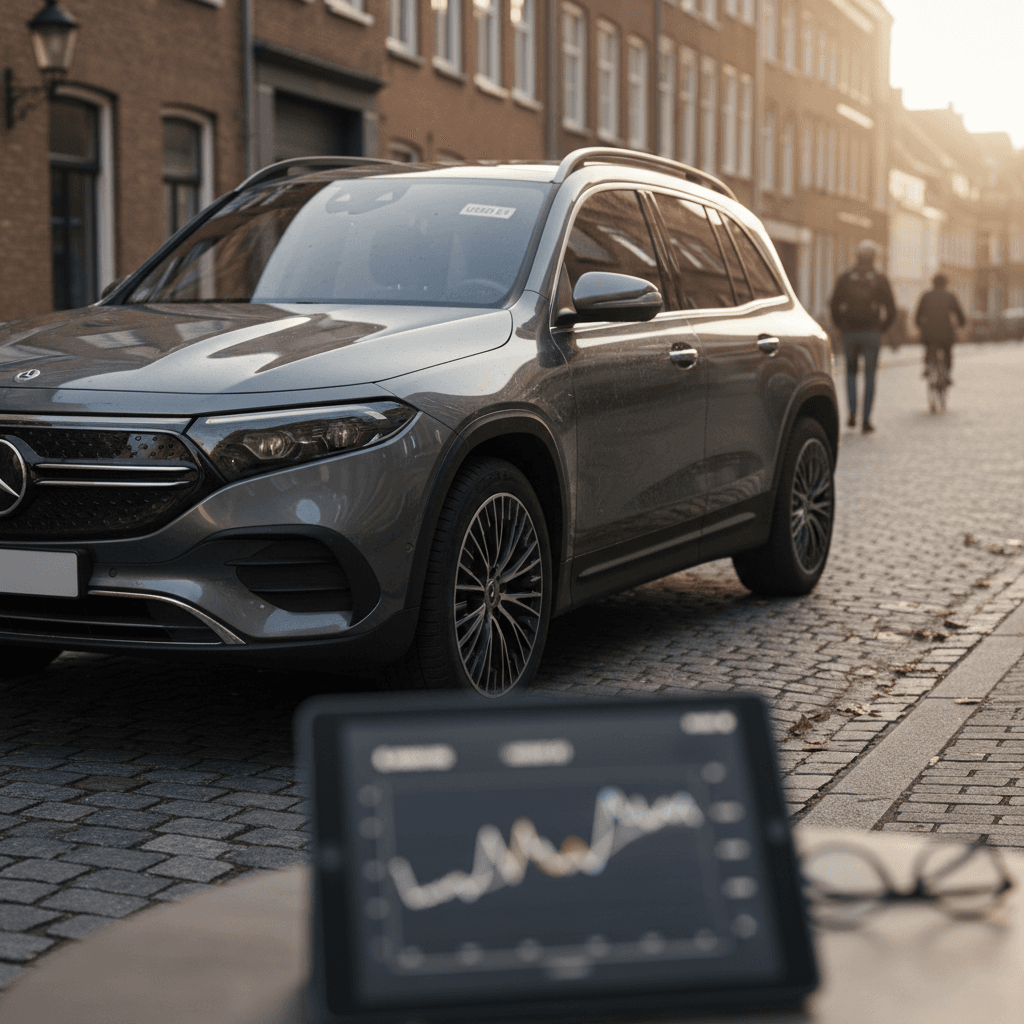
If you’re wondering whether the Mercedes EQB is worth buying in 2026, you’re not alone. It’s one of the few compact electric SUVs with three rows, but it’s also built on an older platform, with modest range and some early‑EV growing pains. In 2026, the EQB is no longer cutting‑edge, but that’s exactly why it can be a smart buy on the used market if you know what you’re getting.
Key context for 2026 shoppers
Quick answer: Is the Mercedes EQB worth buying in 2026?
- Yes, the EQB is worth buying used in 2026 if you want a compact luxury SUV with optional three‑row seating, mainly drive in the city or suburbs, and can live with 200–245 miles of rated range.
- It’s harder to recommend new in 2026, because newer EV SUVs offer more range and faster charging for similar money.
- Depreciation is steep, which means you can often find 2–3‑year‑old EQBs for roughly half of original MSRP, turning a so‑so new‑car value into a strong used‑EV deal.
- You should pay extra attention to battery health, charging behavior, and recall history before buying, areas where Recharged’s diagnostics and EQB‑specific experience are particularly valuable.
Recharged take in one line
What the Mercedes EQB is and where it fits
The Mercedes‑Benz EQB is the electric version of the GLB compact SUV. Instead of being designed from scratch as an EV, it’s a converted gasoline platform with a battery and electric motors swapped in. That architecture shapes almost everything about the EQB: its upright, boxy shape, relatively tight battery packaging, and “good enough” but not class‑leading efficiency.
Mercedes EQB key specs (U.S. models 2022–2025)
Approximate EPA ratings and specs for common EQB trims. Exact figures vary slightly by model year and wheel/tire choice.
| Trim | Drive | EPA range (mi) | 0–60 mph (sec) | Seats |
|---|---|---|---|---|
| EQB 250+ | FWD | ~245 | ~8.0 | 5 or 7 |
| EQB 300 4MATIC | AWD | ~205 | ~7.0 | 5 or 7 |
| EQB 350 4MATIC | AWD | ~221 | ~6.0 | 5 or 7 |
Use these numbers as ballpark comparisons when you’re cross‑shopping other EV SUVs.
Think of the EQB as a luxury city shuttle
Range and efficiency: Is the EQB long‑legged enough?
Range is the main reason many shoppers ask whether the Mercedes EQB is worth buying in 2026. On paper, the FWD EQB 250+ can deliver around 245 miles of EPA range, while the dual‑motor 300 and 350 versions typically fall closer to the low‑200‑mile bracket. In the real world, especially at highway speeds or in cold weather, many owners see something more like 180–210 miles on a charge, and less if you regularly use the third row and cargo area.
Highway and winter penalty
EQB range at a glance
When EQB range works well
- Daily commute under 60–70 miles round‑trip
- Mostly suburban or city speeds
- Home charging every night or every other night
- Occasional 150–200‑mile weekend trips
When EQB range feels limiting
- Frequent 250+ mile highway trips
- No access to home charging
- Regular mountain or winter driving with a full family
- Expectations shaped by newer 300+ mile EVs
Range vs. newer 2026 EVs
Charging experience: Home and road‑trip reality
Charging is another critical piece of deciding if the Mercedes EQB is worth buying in 2026. On AC power, the EQB uses a typical 11 kW onboard charger, which means a 0–100% charge from a 48‑amp home Level 2 unit takes on the order of 7–8 hours. That’s perfectly adequate for overnight charging, even if you arrive home nearly empty.
EQB charging strengths and weaknesses
What to expect when you plug in, at home and away.
Home charging
On a 40–48A Level 2 charger, you’ll typically add 25–30 miles of range per hour.
Enough to refill a typical day’s driving in just a couple of hours.
Public Level 2
At workplaces or public Level 2 stations, expect similar speeds to home charging.
Great for “top‑ups” while you shop or work.
DC fast charging
Peak DC charging power isn’t class‑leading, and the curve is modest.
You’ll usually aim for 10–80% in ~35–45 minutes when conditions are right.
Plan around the charging curve, not just peak kW
The EQB uses CCS fast‑charging hardware. In 2026, more new EVs (including Mercedes’ next‑generation models) are switching to the NACS connector used by Tesla, but CCS is still widely supported and will remain so for years. With the right adapter, you’ll be able to access many Tesla Superchargers as networks continue to open up, but if your road‑trip life revolves around fast charging, it’s worth checking the CCS coverage along your specific routes.
Make home charging your baseline
Interior space, comfort, and tech
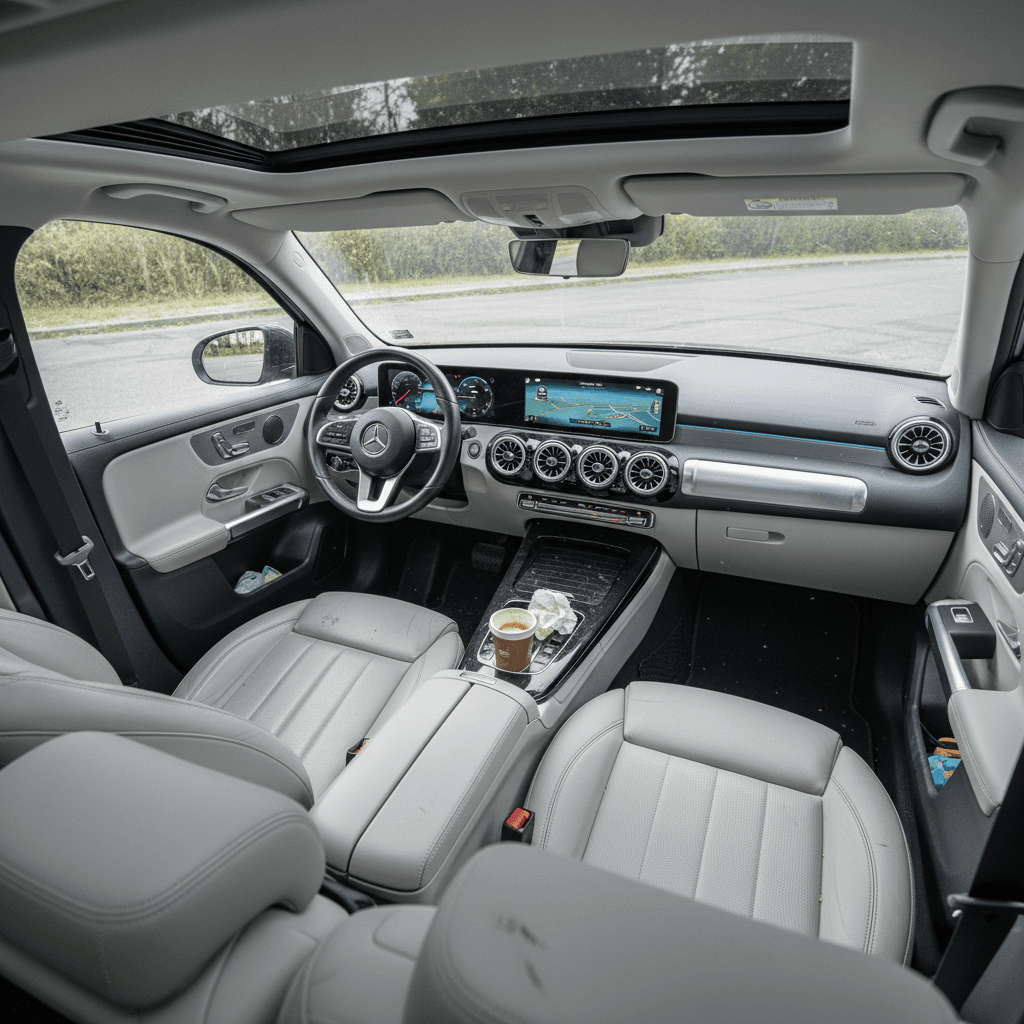
Space and comfort are where the EQB quietly earns its keep. Because it’s based on the GLB, you get a tall roof, big windows, and a surprisingly roomy second row for such a compact footprint. The optional third row is tight for adults but can be a lifesaver for short trips with kids or when you just need one more seat.
- Driving position: Classic small SUV, upright, with good visibility and an easy step‑in height.
- Cabin quality: Materials feel properly premium in higher‑trim EQBs, though some hard plastics remind you this started life as a more mainstream model.
- Infotainment: MBUX looks good and supports Apple CarPlay/Android Auto, but by 2026 the UI and graphics show their age compared to Mercedes’ latest MB.OS screens.
- Noise and comfort: Quiet and solid around town, with a slightly firmer ride than some rivals due to the added battery weight.
Tech aging gracefully, but aging nonetheless
Reliability and recalls: What we know in 2026
First‑generation EVs from legacy brands have sometimes struggled with software bugs and occasional component failures, and the EQB is no exception. Owner reports are mixed: plenty of people have largely trouble‑free experiences beyond normal maintenance, while others have reported frustrating glitches, warning lights, and in a few high‑profile cases, drive‑system failures that required warranty repairs.
- There have been software‑related service campaigns, including over‑the‑air updates for communication modules and connectivity systems on 2019–2025 models, EQB included.
- A recent recall campaign targeted potential internal battery issues on certain early EQB 300 4MATIC builds, underlining why it’s important to check VIN‑specific recall status before buying.
- Like many modern Mercedes models, some owners report dealer‑dependent software updates, which can make the car feel outdated if it hasn’t been kept current.
Why a pre‑purchase inspection matters more than ever
At Recharged, every EQB we list goes through a high‑voltage system check and gets a Recharged Score battery health report, so you’re not guessing about past fast‑charging abuse, cell imbalance, or hidden fault codes you won’t see on the dashboard. If you’re shopping EQBs elsewhere, strongly consider an independent EV‑savvy inspection.
Depreciation and used pricing: Why 2026 is the sweet spot
The other big reason the Mercedes EQB is worth a close look in 2026: depreciation. Like many luxury EVs from the early‑to‑mid‑2020s, the EQB has taken a significant hit in its first few years. Kelley Blue Book data shows that some 2023 EQBs have lost roughly half their original value by year three, landing in the mid‑$20,000s to low‑$30,000s depending on trim and mileage. That’s painful for the first owner, but a major opportunity for you.
EQB value dynamics in 2026 (directional)
Why 2–4‑year‑old EQBs are the sweet spot
How the EQB compares to other EV SUVs in 2026
EQB vs. popular 2026 EV SUV alternatives (high‑level)
Representative comparison of where the EQB tends to sit in the used market vs. newer or rival models.
| Model | Typical range | Row options | Driving feel | Used/new value angle |
|---|---|---|---|---|
| Mercedes EQB | ~200–245 mi | Available 3rd row | Calm, upright, not sporty | Strong as used buy, weak as new buy |
| Tesla Model Y | ~260–330 mi | No 3rd row (most), 7‑seat option on some | Quicker, more efficient | Better range; cabin feel is more minimalist |
| Hyundai Ioniq 5 | ~260–320 mi | 2 rows | Smooth, very fast‑charging | Techier, but no third row |
| Kia EV9 | ~250–300 mi | Standard 3rd row | Big, comfortable, more space | Great family hauler; pricier, especially new |
| Volvo EX30/EX40 | ~210–275 mi | 2 rows | Compact, premium cabin | Smaller footprint; no third row |
Exact prices and specs vary by trim and region; this is meant as a directional comparison.
Where the EQB really stands out
Who should, and shouldn’t, buy a Mercedes EQB
Is the EQB a match for you?
1. You mainly drive locally
Your life is built around school runs, commuting, errands, and weekend outings under ~150–180 miles round‑trip. You aren’t constantly pushing maximum range.
2. You have reliable home or workplace charging
Access to Level 2 charging (at least 32A) means the EQB quietly refuels while you sleep or work, and DC fast‑charging speed is less critical.
3. You value comfort and practicality over specs
You need a flexible, compact family hauler with the option of a third row more than you need 0–60 bragging rights or 300‑mile range.
4. You’re shopping value, not novelty
You’re comfortable buying a 2–4‑year‑old luxury EV at a steep discount instead of paying top dollar for the latest, longest‑range model.
5. You’re willing to do your homework
You’re open to reviewing battery‑health reports, recall history, and service records, or working with a retailer like Recharged that does that legwork for you.
When the EQB is probably not the right choice
Buying a used EQB (2021–2025): What to check
If you’ve decided the Mercedes EQB is worth buying in 2026, the next question is how to separate the great used examples from the questionable ones. Early‑generation luxury EVs are where doing your homework pays off the most.
Essential checklist for a used EQB
Battery health and fast‑charge history
Ask for a <strong>battery health report</strong> showing usable capacity vs. original, and look for signs of heavy fast‑charging that may have accelerated wear. Recharged includes this as part of every Recharged Score report.
Recall and service campaign completion
Run the VIN through recall databases and confirm all battery‑ and software‑related campaigns have been performed. This is especially important for early 300 4MATIC models.
Charging behavior test
If possible, plug into both Level 2 and DC fast chargers during your test drive. Watch for unusually slow rates, error messages, or repeated interruptions that could signal issues.
Software version and features
Check that the infotainment and driver‑assist systems are on current software. Ask for documentation of any dealer‑applied updates since new.
Tire wear and alignment
Electric SUVs are heavy; uneven tire wear can hint at alignment or suspension issues that a casual glance might miss.
Interior wear and third‑row hardware
Fold and unfold every seat, especially the third row. Check latches, seatback releases, and cargo‑cover fittings for signs of abuse or misalignment.
Leverage EV‑specific inspection tools
FAQ: Mercedes EQB worth buying in 2026
Frequently asked questions about the Mercedes EQB in 2026
Bottom line: Is the Mercedes EQB worth buying in 2026?
In 2026, the Mercedes EQB is no longer the newest, longest‑range, or fastest‑charging EV SUV, but that’s exactly why it has become interesting. As a new car, it’s hard to recommend over fresher electric SUVs on more modern platforms. As a used luxury EV that’s already absorbed its worst depreciation, offers an available third row, and delivers comfortable, quiet commuting, it can be an excellent buy for the right driver.
If your daily driving fits within roughly 150–180 miles, you have reliable access to home charging, and you’re more interested in practical comfort and value than owning the latest tech showcase, a carefully vetted EQB is absolutely worth buying in 2026, especially in that 2–4‑year‑old sweet spot. Just make sure you’re buying the specific car in front of you, not an idealized spec sheet, by insisting on transparent battery‑health data and a thorough EV‑focused inspection. That’s exactly what Recharged was built to provide, so you can enjoy the benefits of a discounted luxury EV without inheriting someone else’s problems.