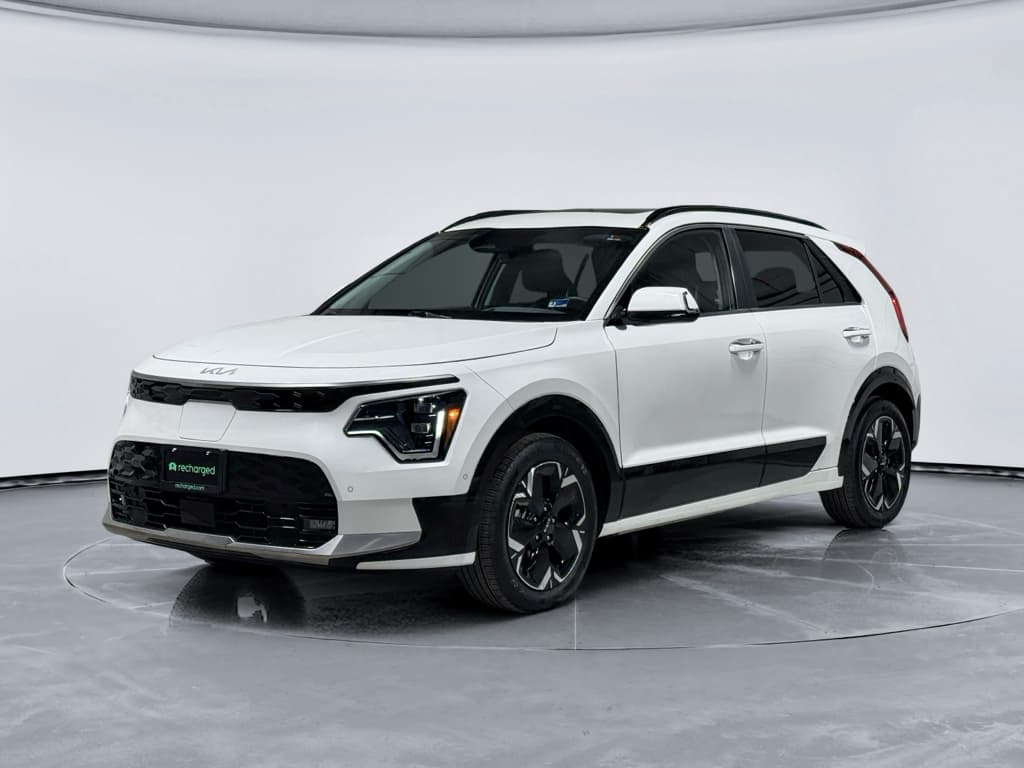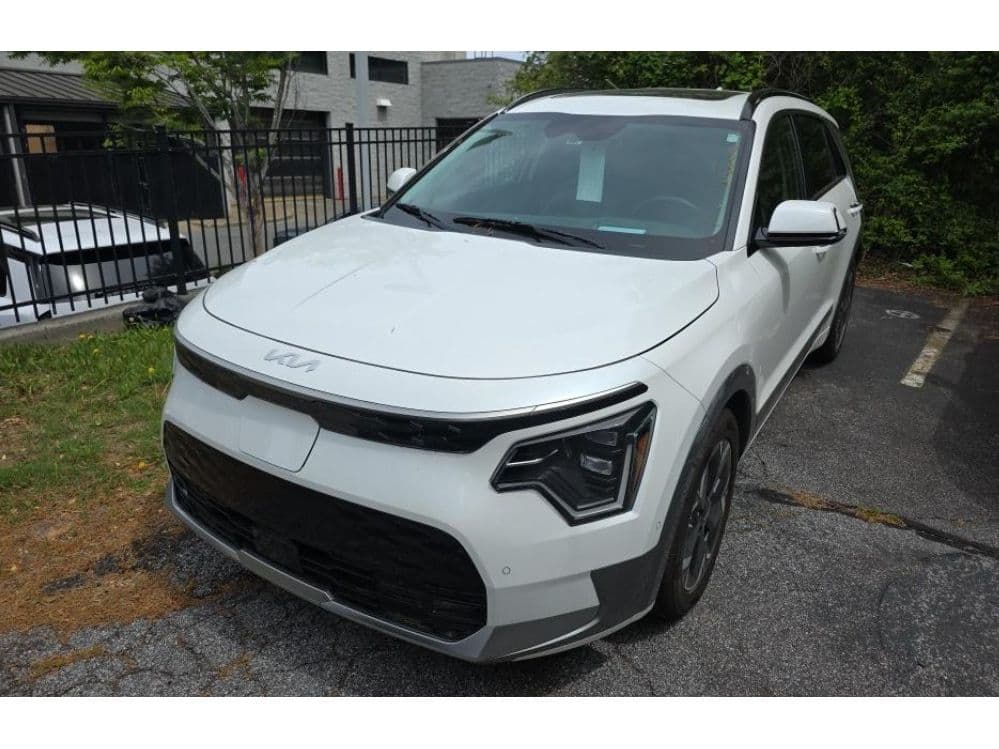
If you’re shopping the used EV market, the question **“is the Kia Niro EV a good used car?”** comes up a lot, and for good reason. The Niro EV quietly combines long range, a practical hatchback body and one of the strongest battery warranties in the business. But like any used electric car, it has patterns of issues, model‑year quirks and charging limitations you need to understand before you sign anything.
The short version
Quick answer: is a used Kia Niro EV a good car?
Used Kia Niro EV at a glance
If you want a relatively affordable used EV with **real‑world 200+ mile range**, normal crossover practicality and solid battery longevity, the Niro EV belongs on your shortlist. It doesn’t have Tesla‑level fast charging or flashy performance, but it’s efficient, quiet, and tends to age better than many early EVs in both battery health and interior wear.
Who the Niro EV fits best
Model years and versions to know
Before you decide whether *a* used Niro EV is a good car, you need to know **which Niro EV you’re actually looking at**. Kia has built two generations so far, with small but important differences for used buyers.
Kia Niro EV generations for U.S. shoppers
How the main Niro EV generations break down, and what that means for you as a used buyer.
| Generation / years | What it is | Range & pack | Why consider it used? |
|---|---|---|---|
| 1st gen (2019–2022) | Original e‑Niro body style, shared platform with Hyundai Kona Electric | 64 kWh pack, EPA range typically 239–239 mi in the U.S. (higher in some trims/markets) | Largest supply on the used market, proven battery durability, simpler tech, usually lowest prices |
| 2nd gen (2023–present) | Redesigned Niro EV (often called "SG2"), more modern interior and styling | Similar usable battery size with EPA range around mid‑250‑mile bracket depending on trim | Still relatively new used, more tech, higher prices, and fewer long‑term reliability data points |
Most used Niro EVs on U.S. lots today will be 2019–2022 first‑generation cars.
Trim and equipment basics
Battery life and range on a used Niro EV
Battery health is make‑or‑break for any used EV. The good news is that the Niro EV’s 64 kWh pack has built a reputation for **slow, predictable degradation** when used normally. High‑mileage owners regularly report **mid‑90% state of health** even past 100,000 miles, and many 2019–2021 cars still show essentially full usable capacity in everyday driving.
Niro EV battery: strengths vs tradeoffs
Why its pack ages well, and what you give up in return
Battery strengths
- Durable chemistry: Real‑world reports often show single‑digit degradation well past 100,000 miles.
- Thermal management: Liquid‑cooled pack avoids the worst heat‑related failures seen in some early EVs.
- Capacity warranty: Kia’s EV warranty generally includes protection if capacity drops below ~70% within 10 years/100,000 miles (check the exact terms by VIN).
Tradeoffs you should know
- Modest DC fast‑charging speeds: Peak rates are lower than newer EVs, so road‑trip stops are longer.
- Range drops in cold climates: Like any EV, expect winter range hits, especially on short trips.
- Fast‑charge history matters: Heavy DC use isn’t a deal‑breaker, but it’s worth checking with a battery health report.
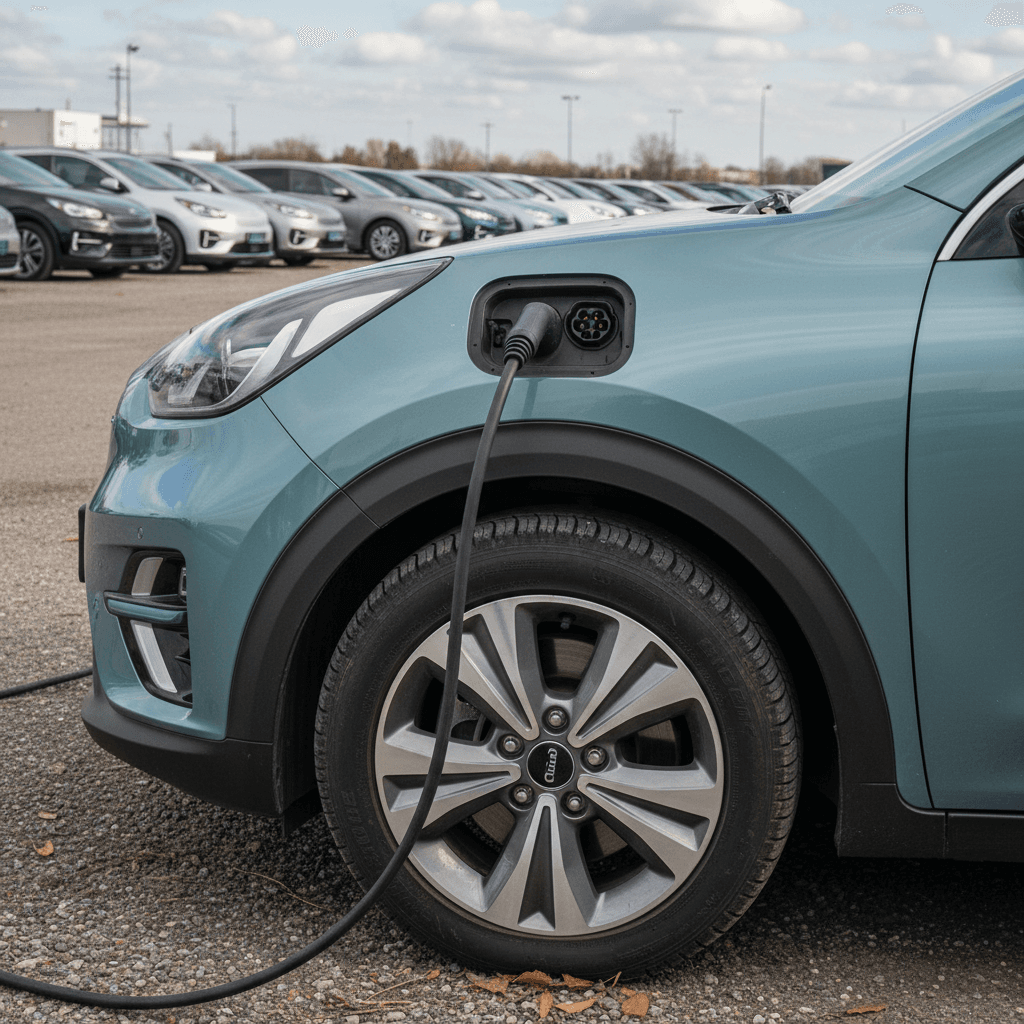
How Recharged checks Niro EV battery health
Reliability: what actually goes wrong
Overall, the Kia Niro EV lands on the **“above‑average but not perfect”** end of the used EV reliability spectrum. There’s no single catastrophic flaw that makes the car a bad bet, but there are **repeat patterns** you should screen for, especially on first‑generation cars.
- Front drivetrain noise and reduction gear failures on some 2019–2022 cars (often described as a "wheel‑of‑fortune" whine from the front). Many were repaired under powertrain warranty but can be expensive out of coverage.
- Occasional **DC fast‑charging faults** or onboard charger issues that require high‑voltage diagnostics and may be misdiagnosed as public‑charger problems.
- HVAC and heat‑pump issues on some cars, especially where the **AC fails after fast charging** and resumes only after a cool‑down or service visit.
- Intermittent 12‑volt battery or accessory‑power issues that can mimic a dead EV, but are usually fixable with software updates or a new 12‑V battery.
- Normal wear items, tires, suspension bushings, brake hardware, wear roughly in line with other compact crossovers, often a bit slower due to regenerative braking.
Take drivetrain noise seriously
1st‑gen (2019–2022) reliability pattern
- Pros: Simple, proven powertrain; lots of owner history; many early issues already addressed under warranty.
- Watch for: Drivetrain noise, failed AC after DC fast charging, and any history of high‑voltage charger or BMS repairs.
- Good news: Most cars run quietly into high mileage with only minor issues, if they’ve had recalls and software updates.
2nd‑gen (2023+)
- Pros: Updated cabin, more modern safety tech, incremental efficiency tweaks.
- Watch for: Software glitches and early‑build bugs that are typical of any redesign; long‑term data is still emerging.
- Good news: Most used examples are still well within comprehensive warranty, so big surprises are less likely.
Warranty coverage on used Kia Niro EVs
One of the strongest arguments that a used Niro EV **is** a good car is Kia’s long warranty structure, especially if you’re buying a 2019 or newer U.S. car that’s still within the original term.
Typical U.S. warranty coverage on Niro EVs (check VIN to confirm)
Always verify coverage by VIN and in‑service date, but this gives you a working mental model.
| Coverage type | Typical term | What it usually covers | Why it matters used |
|---|---|---|---|
| EV system / battery warranty | 10 years or 100,000 miles from first in‑service date | High‑voltage battery, traction motor, power electronics, onboard charger (details vary by year) | Protects you from most big‑ticket EV drivetrain failures and severe capacity loss early in the car’s life. |
| Powertrain warranty | 10 years or 100,000 miles (often aligned with EV system) | Core drive components; overlaps EV system coverage on full EVs | Important for front‑end drivetrain or reduction‑gear repairs on earlier cars. |
| Basic bumper‑to‑bumper | 5 years or 60,000 miles | Infotainment, interior, most electronics and general hardware | Most 2019–2020 cars are past this; later years may still have partial coverage. |
| Anti‑perforation and roadside | Varies, often 5–12 years | Rust‑through, roadside assistance, trip interruption in some cases | Adds peace of mind but rarely a deciding factor. |
Warranty coverage usually follows the car, not just the first owner, though commercial and salvage history can change that.
How to confirm real coverage
Charging performance and road-trip ability
Here’s where the Niro EV shows its age a bit. For daily use, commuting, errands, weekend trips, its combination of efficiency and 200‑plus miles of range is excellent. But compared with newer EVs on 800‑volt architectures, **DC fast‑charging is on the slow side**, which matters if you road‑trip a lot.
What charging a used Niro EV is like
Strong for home use, merely adequate for road trips
At home (Level 2)
- On a 240 V Level 2 charger, most Niro EVs can add **20–30 miles of range per hour**, depending on amperage.
- Overnight charging easily covers a typical U.S. daily commute.
- Excellent match for homeowners or those with reliable workplace charging.
On road trips
- DC fast‑charging peaks lower than many newer EVs; think more in the **30–60 minute** range for a substantial top‑up instead of 15–20 minutes.
- Planning around **Electrify America and other CCS networks** is key.
- Fast charging slowdowns or errors can indicate either public‑charger issues or a car that needs software updates or inspection.
Network compatibility
- Earlier Niro EVs use **CCS**; future models will transition to **NACS** as the industry standard, but CCS infrastructure will remain important for years.
- Adapters and evolving networks mean your Niro EV should stay workable, but newer EVs will ultimately have more plug‑and‑go Supercharger access.
Reality check for frequent highway travelers
What to look for when buying a used Niro EV
This is where the difference between a **good** used Niro EV and a **problem child** really shows. Two cars that look identical on a lot can have completely different battery health, warranty situations and repair histories.
7‑step checklist for evaluating a used Kia Niro EV
1. Pull a detailed battery‑health report
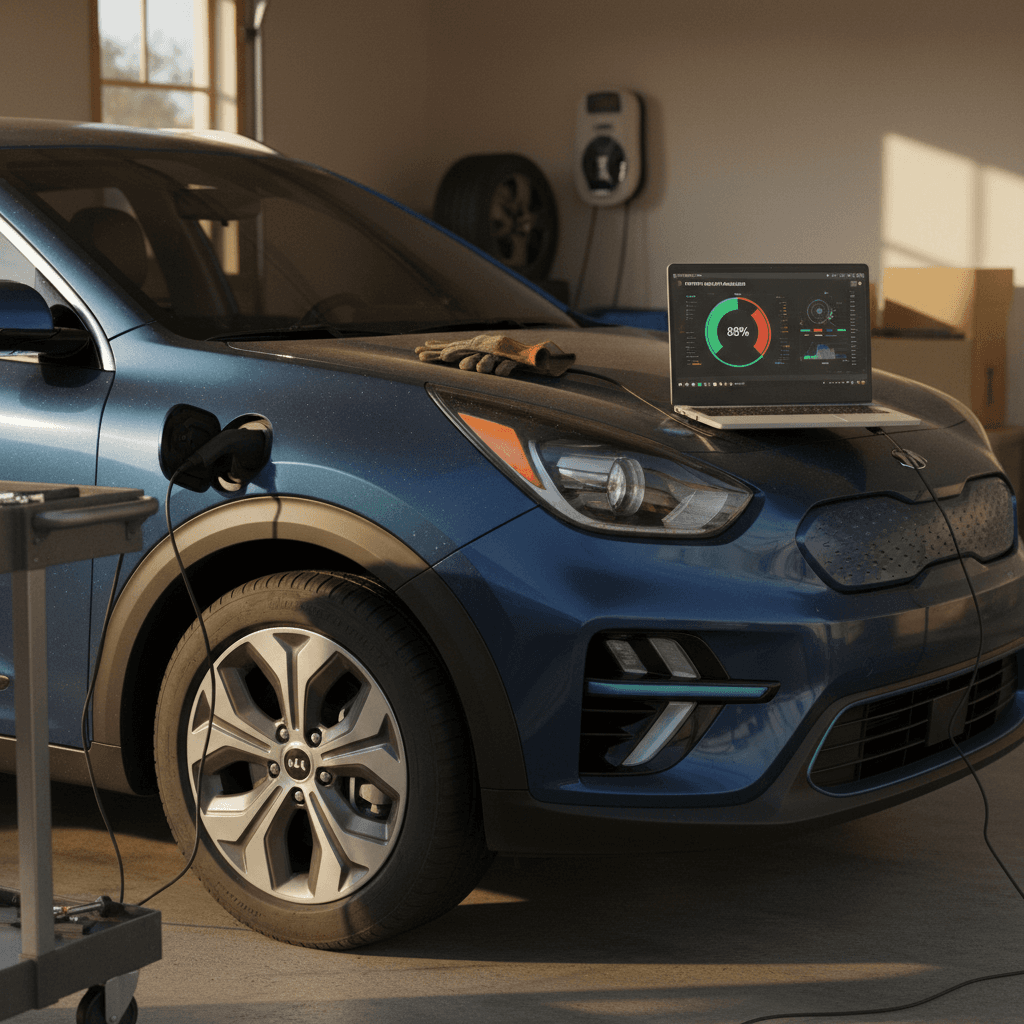
Don’t rely only on the dash range estimate. Use a professional diagnostic (like the Recharged Score battery report) or a qualified EV shop to read **state of health, DC vs AC usage and fault codes**.
2. Verify remaining warranty by VIN
Call a Kia dealer with the VIN to confirm **EV system and powertrain warranty** status, in‑service date, and whether any major repairs or open recalls are on file, especially for **drivetrain, battery, and charger**.
3. Test‑drive for drivetrain noise and smoothness
On a quiet road, accelerate gently to 45–60 mph and then coast. Listen for **whines, grinding or rumbling** from the front. A healthy Niro EV should be quiet aside from a gentle motor hum and tire noise.
4. Check DC fast‑charging behavior (if possible)
If you can, plug into a working DC fast charger. Watch for **unexpected charge‑session drops, unusually low power, or error messages**. Some issues are network‑related, but consistent failures across chargers can signal a car problem.
5. Inspect tires, brakes and suspension
Uneven tire wear, steering pull or clunks over bumps can signal alignment or suspension issues. Regenerative braking normally keeps pad wear low; very worn brakes can suggest harsh driving or poor maintenance.
6. Confirm software updates and recall history
Ask for service records showing recent **software updates** and completed recalls, including any relevant to charging, drivetrain or camera systems. A car that’s been kept up‑to‑date is usually a safer bet.
7. Evaluate charging habits and use case fit
Ask how the previous owner charged: mostly **home Level 2** is ideal. Heavy DC fast‑charging isn’t automatically a deal‑breaker, but you’ll want stronger battery‑health proof. Then compare the car’s range and charging to **your real daily needs**.
How Recharged de‑risks used Niro EVs
Ready to find your next EV?
Browse VehiclesHow the Kia Niro EV compares to other used EVs
No used EV exists in a vacuum. Whether the Niro EV is a “good” used car for you depends on **what you’re cross‑shopping** and which tradeoffs you care about most.
Used Niro EV vs common alternatives
Where it shines, and where others might suit you better
vs Chevy Bolt EV / EUV
- Pros for Niro: More comfortable ride, nicer interior, stronger battery warranty, hatchback practicality.
- Pros for Bolt: Often cheaper, slightly quicker DC charging in some conditions, very efficient.
- Verdict: If you value comfort, cargo space and warranty, the Niro EV usually wins; if price is everything, the Bolt can undercut it.
vs Hyundai Kona Electric
- Shared DNA: Niro EV and Kona Electric share much of their underlying tech, including battery and motor.
- Differences: Styling, interior layout, and tuning; problems and strengths are broadly similar.
- Verdict: Choose based on price, condition and which cabin you prefer, battery behavior is comparable.
vs Tesla Model 3 / Y (older years)
- Pros for Niro: Typically lower purchase price, hatchback practicality, simpler ownership for people who don’t need Autopilot or Supercharger‑centric road‑tripping.
- Pros for Tesla: Faster charging on the Supercharger network, stronger performance, richer software ecosystem.
- Verdict: If you’re a heavy road‑tripper or want Tesla’s ecosystem, the Tesla wins. For pragmatic daily use and value, a good Niro EV can be the smarter buy.
FAQ: used Kia Niro EV
Frequently asked questions about used Niro EVs
Bottom line: should you buy a used Kia Niro EV?
If your question is **“is the Kia Niro EV a good used car?”**, the answer is **yes, with the right homework**. A clean, well‑maintained Niro EV with a healthy battery and remaining Kia EV warranty delivers quiet, efficient, low‑drama electric driving at a price that often undercuts flashier rivals. Its weaknesses, modest fast‑charging and some drivetrain and HVAC issues on certain cars, are real but manageable if you screen for them up front.
Focus your search on **vehicle history, battery health, and warranty status**, not just color and options lists. Use a structured checklist, insist on real diagnostics, and don’t ignore drivetrain noises or weird charging behavior. If you’d rather not piece that together alone, browsing **pre‑vetted Niro EVs on Recharged** lets you shortcut straight to cars with **transparent battery scores, fair market pricing and EV‑specialist support**, and that’s what turns a good used EV on paper into a great ownership experience in reality.