You’re standing in a downpour with your charge port open and cable in hand, wondering if charging an electric car in the rain is actually safe, or if you’re about to recreate a movie-style lightning scene. The reassuring answer: modern EVs and charging equipment are engineered to be safely used in rain, snow, and most everyday wet conditions. Still, there are smart precautions worth knowing so you protect yourself, your car, and your charger.
Short answer
Can You Safely Charge an Electric Car in the Rain?
The core concern is obvious: electricity and water don’t mix. But EVs are not extension cords dragged across a wet lawn. Both the vehicle and the charging equipment are designed so that power doesn’t flow until a secure connection and safety checks are completed. When you plug the connector into the car, the system does an electronic “handshake” first. If anything looks unsafe, charging simply won’t start.
- The metal pins on the connector are recessed and sealed, so you can’t accidentally touch live contacts.
- The connector and inlet form a tight, gasketed fit that’s rated to withstand splashing water from any direction.
- Charging only begins after the car and charger agree that the connection is secure and there are no faults.
- If a fault is detected mid-session (for example, water intrusion where it shouldn’t be), built‑in safety devices cut power almost instantly.
Think of it this way: your EV and charger expect to live outdoors. If they had to stay dry to be safe, the entire ownership experience would fall apart in places where it rains or snows for months at a time.
Good news for driveway parkers
How EV Chargers Stay Safe in Wet Weather
Wet‑weather safety isn’t a happy accident, it’s baked into how EVs and chargers are engineered. A few key design features make charging an electric car in the rain safe for everyday use.
Built‑In Safety Features That Make Rainy Charging Routine
Why your EV and charger can shrug off bad weather
Sealed connectors
Smart electronics
Ground‑fault protection
What is an IP rating?
Beyond the box and cable, most EV batteries sit in a sealed pack that’s tested to withstand everything from car‑wash spray to deep puddles. The high‑voltage system is isolated from the outside world, and multiple layers of fuses and contactors disconnect it when charging stops or a fault is detected.
Home Charging in the Rain: Garages, Driveways, and Carports
Home is where most EV charging happens, and it’s also where owners improvise the most. That’s fine, within limits. The same rules that keep public charging safe apply at home, but you also need to think about how your outlet and wiring interact with the weather.
Garage or enclosed carport
If you park in a garage or covered carport, you’re in the easiest scenario. Weather is largely a non‑issue, and a properly wired Level 2 wall unit is about as worry‑free as plugging in a laptop.
- Mount the EVSE on a solid surface, away from places where water can pool.
- Keep the cable off the floor when possible so it’s not sitting in melted snow or puddles.
- Have a licensed electrician install or verify the circuit, especially if your home is older.
Driveway or open parking spot
Charging in an uncovered driveway is still safe if the equipment is outdoor‑rated. Here, the weak link is usually the household outlet, not the car.
- Avoid running a 120‑volt Level 1 cable through standing water or across long distances.
- Use an outdoor‑rated, weather‑protected outlet enclosure; never leave plugs sitting directly in a puddle.
- Consider upgrading to a dedicated, hard‑wired Level 2 charger on its own breaker for safer, faster charging.
Be careful with extension cords
If you’re installing a new home charger, especially one that lives outdoors, talk with a qualified electrician about a dedicated GFCI‑protected circuit and an in‑use weatherproof cover. It’s a relatively small investment that pays off in both convenience and peace of mind every time it rains.
Public Charging in Rain, Snow, and Car Wash Conditions
Public charging stations are designed for the real world: parking lots, highway rest stops, and shopping centers where weather rarely cooperates. Their enclosures, cables, and user interfaces all have to survive years of rain, snow, UV exposure, and temperature swings.
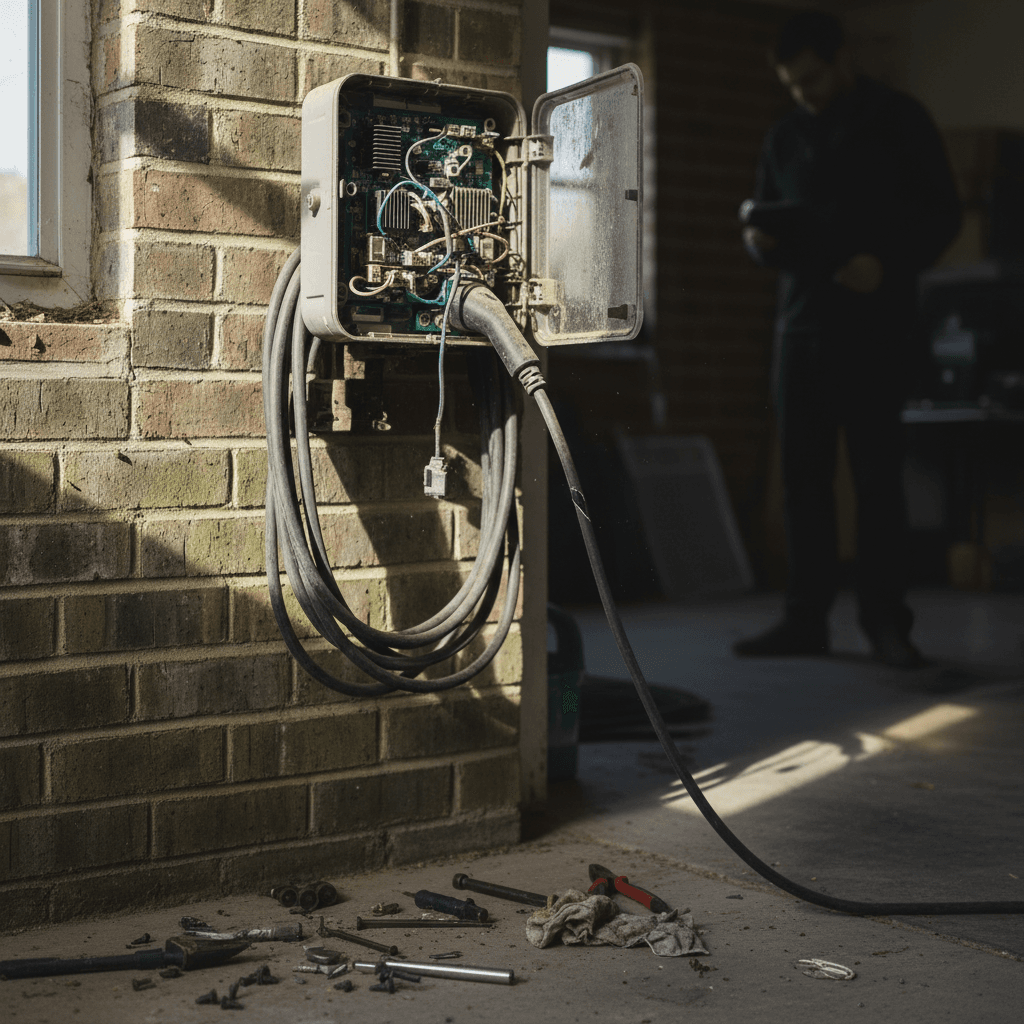
- You can safely plug and unplug at most Level 2 and DC fast chargers in the rain or light snow; the system is designed for it.
- If the charger or screen looks damaged, loose, or severely corroded, skip that station and report it in the network’s app.
- Avoid letting the connector or your charge‑port door fall into slush or standing water where dirt and road salt can get packed into the contacts.
- Many newer stations have canopies or awnings, not because they need them for safety, but because they’re nicer for you as the driver. Use them when you can.
Rainy‑day road trip tip
Car washes are also safe from a charging‑system standpoint. Just don’t go through one while you’re plugged in, your EV won’t let you drive away with the cable attached anyway.
What About Thunderstorms, Flooding, and Extreme Weather?
Everyday rain is one thing; severe weather is another. Your EV and charger are robust, but they’re not designed to be underwater or in the middle of a lightning strike. A few common‑sense rules go a long way.
Rain vs. Truly Dangerous Conditions
When charging is fine, and when it’s time to unplug
Normal rain & light snow
Thunderstorms & flooding
When to stop charging immediately
If your area is at risk of hurricanes, flash floods, or ice storms that regularly knock out power, think about where your home charger sits. Mounting it a bit higher on the wall, away from low spots where water can pool, adds an extra layer of protection.
7 Common Wet-Weather Charging Mistakes to Avoid
- Letting the connector or household plug sit in a puddle while in use.
- Using a light‑duty or indoor‑only extension cord between the outlet and your EVSE.
- Ignoring cracked plastic, smashed screens, or exposed wiring on public chargers.
- Forcing a connector that doesn’t feel like it’s seating cleanly into the port (especially if there’s ice, packed snow, or heavy grit).
- Hanging the charger cable in a way that creates a low spot where water can collect around the plug.
- Leaving the charge port open for long periods during heavy wind‑driven rain when you’re not actually charging.
- Assuming all outlets are equal, older or DIY‑modified circuits may not be suitable for the continuous load of EV charging in any weather.
Quick gear check
Quick Safety Checklist Before You Plug In
Pre‑Charge Safety Check (Takes Less Than a Minute)
1. Look for standing water
If the outlet, base of the charger, or area around your tires is under water, don’t plug in. Move to higher ground or a different spot.
2. Inspect the connector and cable
Wipe off excess water, mud, or slush from the handle and the port area. Make sure you don’t see cracks, exposed metal, or severe corrosion.
3. Check the outlet or wall box
For home setups, make sure covers are closed, plugs are snug, and nothing is buzzing, sparking, or unusually warm to the touch.
4. Plug in firmly, then step back
Insert the connector in one smooth motion until it clicks, then let the car and charger complete their handshake. You shouldn’t need to wiggle or jam it in.
5. Confirm charging status
Verify on the car’s dash, the charger’s lights, or the app that charging has started normally, no error messages or flashing red indicators.
Charging in the Rain and Your Used EV’s Long-Term Health
If you’re shopping for a used EV, you might wonder whether years of outdoor charging in all kinds of weather have taken a toll. The good news: properly designed charging systems are built with this in mind. Normal rain‑or‑shine use shouldn’t harm the battery or high‑voltage components.
Where weather does matter is in the details of how the car was cared for: Was the charging equipment in good condition, or held together with tape? Was the car regularly driven through deep water or parked where floods were common? Those are the scenarios more likely to cause problems later.
How Recharged helps you see past weather worries
If you’re trading in or selling an EV that’s spent its life parked outside, Recharged’s instant offer and consignment options make it easy to turn that well‑used, weather‑tested car into your next electric upgrade, without having to guess what your vehicle is worth.
FAQ: Charging an Electric Car in the Rain
Frequently Asked Questions About Rainy-Day EV Charging
The Bottom Line: Relax, Charging in the Rain Is Designed to Be Safe
Owning an EV doesn’t mean waiting for clear skies before you can top up. Between sealed connectors, smart electronics, and strict safety standards, charging an electric car in the rain is a scenario your vehicle and charger are built to handle. The real risks show up only when equipment is damaged, submerged, or improvised in ways it was never designed for.
If you stick to properly installed, outdoor‑rated chargers, keep cords and plugs out of standing water, and do a quick visual check before you plug in, you can treat wet‑weather charging as just another part of daily EV life. And when you’re ready to buy, sell, or trade into a used EV that fits your climate and charging setup, Recharged is here with transparent battery health reports, fair pricing, and EV‑savvy specialists to guide you from first question to final click.