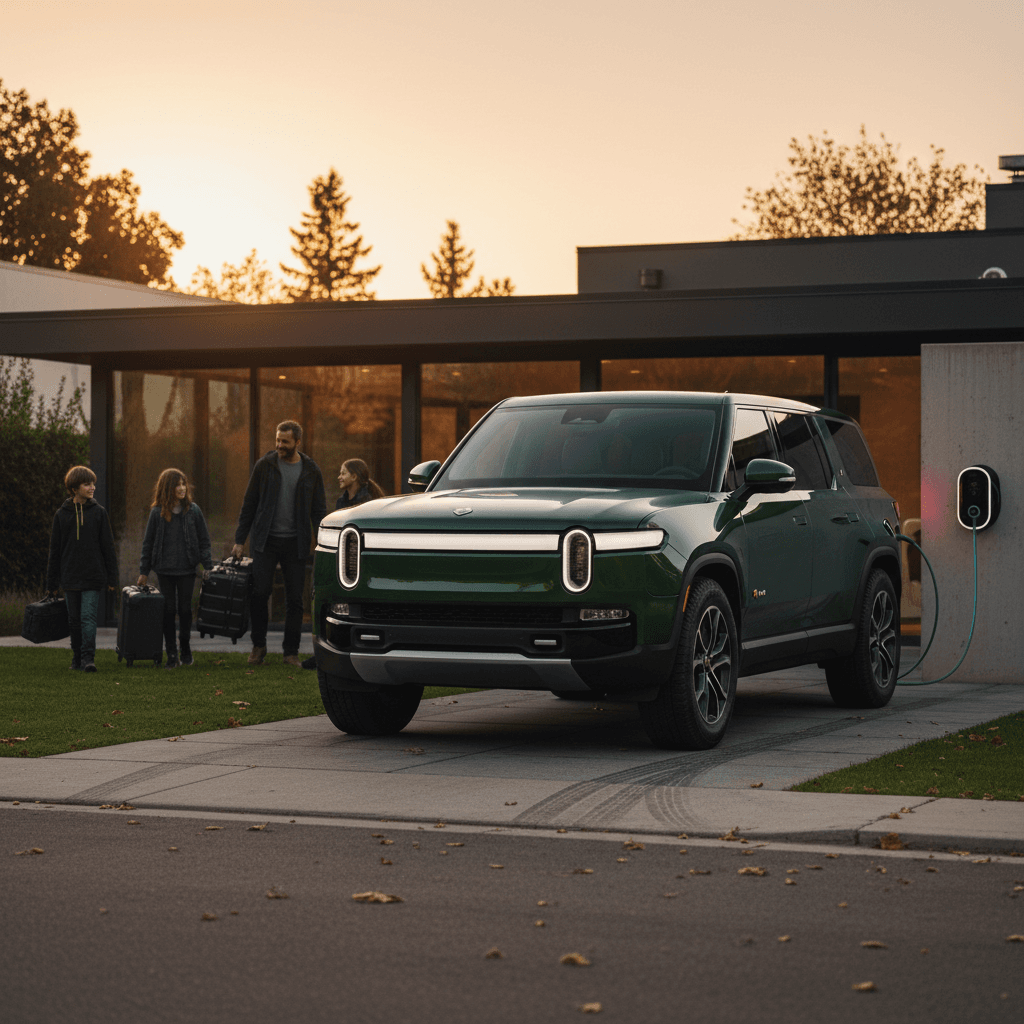
If you’re shopping for a three-row electric SUV with real off‑road chops, the question “is the 2025 Rivian R1S a good buy?” probably keeps popping up. It’s quick, capable, and gorgeous, but it’s also expensive, built by a young brand, and evolving fast. Let’s walk through whether this is the right EV to park in your driveway, or one you’re better off waiting to buy used.
Key context for 2025
Quick answer: Is the 2025 Rivian R1S a good buy?
Who the 2025 R1S is great for
- Drivers who want a luxury three-row SUV that’s actually fun to drive.
- Families who road-trip, ski, camp, and need real AWD and off-road ability.
- Early EV adopters who enjoy frequent over‑the‑air software updates and new features.
- Buyers who can afford a premium payment and are okay with some new‑brand rough edges.
Who should think twice
- If you live far from a Rivian service center and can’t tolerate downtime.
- If you want rock‑solid long‑term reliability data before buying.
- If your budget is tight and a $75K+ SUV would stretch you.
- If you rarely use three rows or go off‑pavement, there may be cheaper EVs that fit better.
Our verdict in one sentence
What’s new for the 2025 Rivian R1S?
The 2025 model year is more than just a fresh paint color. Rivian overhauled the R1S lineup with new motors, batteries, and electronics. If you’ve read reviews of 2022–2024 R1S models, understand that the 2025 behaves differently on the road and in the real world.
2025 Rivian R1S at a glance
- New motor lineup: Dual‑Motor, new 850‑hp Tri‑Motor, and 1,025‑hp Quad‑Motor versions.
- Updated battery options: Standard, Large, and Max packs, including more affordable LFP chemistry on lower trims.
- Revised driver‑assist hardware to support Rivian’s expanding Autonomy and Autonomy+ features.
- Incremental tweaks to ride/handling, NVH, and interior details that make Gen2 R1S feel more refined than early builds.
2025 vs earlier R1S if you’re shopping used later
Pricing, trims, and who each 2025 R1S is for
Rivian pricing moves around more than a traditional automaker’s, but for 2025 you can think of the R1S lineup in four broad buckets: Dual‑Motor, Dual‑Motor Performance, Tri‑Motor Max, and Quad‑Motor Max, each tied to different battery packs.
2025 Rivian R1S trims in simple English
Approximate U.S. pricing and positioning for key 2025 R1S variants. Exact pricing will vary by options and timing.
| Trim | Approx. starting price (new) | Horsepower | EPA range potential | Best for |
|---|---|---|---|---|
| Dual‑Motor Standard | ~$78,000 | ~533 hp | ~270 mi | Buyers who want the Rivian experience at the lowest price, shorter‑range commuters. |
| Dual‑Motor Large / Max | Low–mid $80Ks+ | Up to mid‑600s hp | Up to ~410 mi | Road‑trippers who want the best mix of price and range. |
| Tri‑Motor Max | Around low $100Ks | ~850 hp | High‑300s mi | Enthusiasts who want brutal acceleration and strong range. |
| Quad‑Motor Max | Mid $110Ks+ | ~1,025 hp | High‑300s mi | Halo buyers who want the quickest, most capable R1S possible. |
Use this as a directional guide when you’re weighing value, not a final price sheet.
Which 2025 R1S trim feels like “enough”?
Most shoppers don’t need the headline numbers to love this SUV.
Dual‑Motor as the sweet spot
For most people, the Dual‑Motor with Large or Max pack is the one to get. It’s already very quick, has excellent range, and costs noticeably less than the Tri‑ and Quad‑Motor versions.
Tri‑Motor for thrill‑seekers
If you live for on‑ramp pulls and mountain passes, the Tri‑Motor Max combines serious speed with long‑distance road‑trip legs. You pay for the privilege.
Quad‑Motor as the halo
The Quad‑Motor Max is the wild one, overkill for most buyers, but irresistible if you want the bragging rights and the very best performance Rivian currently offers.
Watch future price moves
Range, battery, and charging: How usable is it day to day?
On paper, the 2025 R1S offers roughly 270 to 410 miles of EPA range depending on trim, wheels, and battery pack. In real life, how far you go on a charge depends heavily on speed, weather, roof racks, and how often you sink it in the throttle.
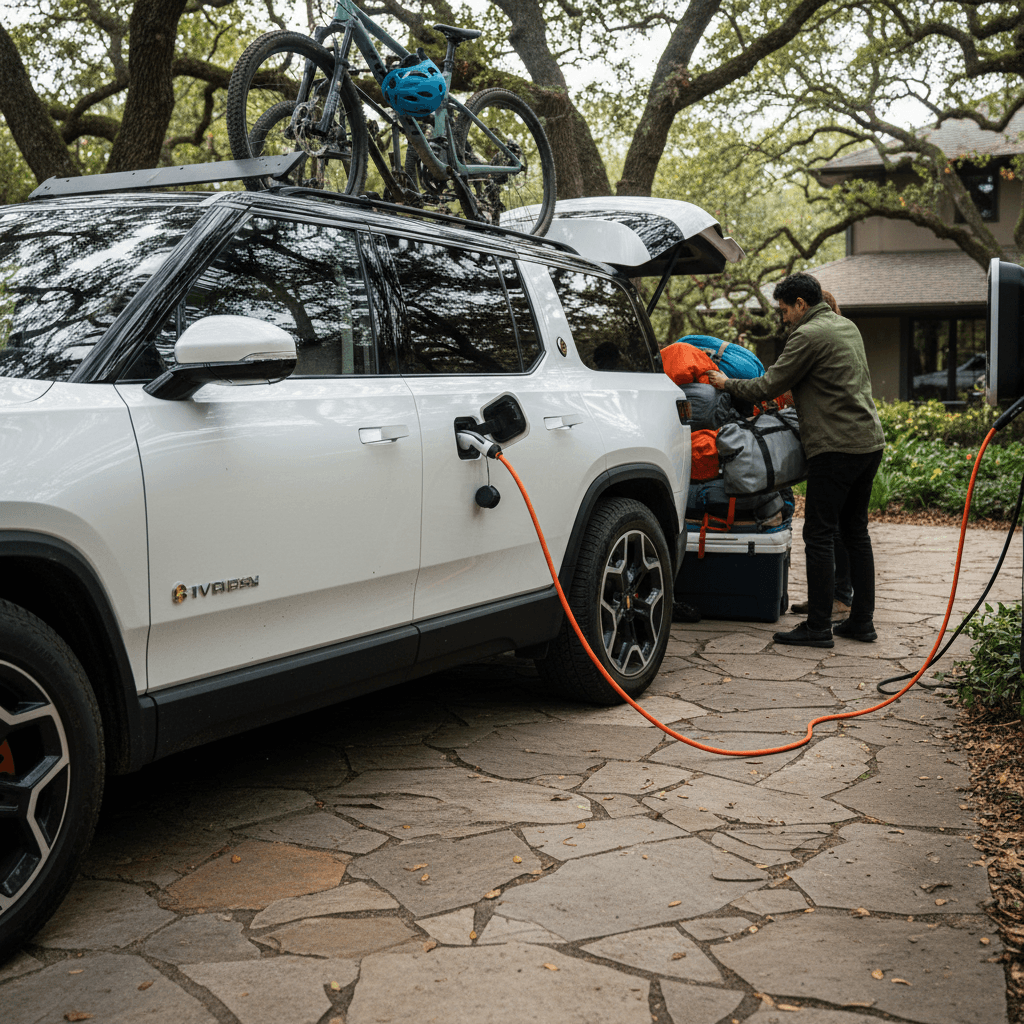
- Standard pack: Lower cost, shorter range, best for city and suburban duty with reliable home charging.
- Large pack: The pragmatic choice if you drive a mix of city, highway, and weekend getaways.
- Max pack: The road‑trip champ; if you regularly cover long distances or tow, this is the safest bet.
Home charging makes or breaks the experience
On DC fast chargers, the R1S is built to handle high charging power, so a well‑planned stop can take you from roughly 10% to 80% in under an hour in good conditions. For a big, boxy SUV, that’s acceptable, but not industry‑leading. The upside is Rivian’s native integration with its navigation and routing, which improves trip planning as software evolves.
Performance, ride, and interior: Living with an R1S
The R1S looks like a concept car that escaped the auto show, and it largely drives that way. Even in base Dual‑Motor form, it’s quick enough to surprise passengers. The Tri‑ and Quad‑Motor versions are genuinely fast SUVs, with the sort of instant torque you usually associate with super sedans, not three‑row family haulers.
How the R1S feels from behind the wheel
Think adventure vehicle first, appliance second.
Ride & handling
The 2025 R1S balances comfort and control better than early builds. Adjustable air suspension and adaptive dampers let you go from cushy commute to competent off‑roader with a few taps.
Off‑road credibility
With generous ground clearance, clever traction control, and real off‑road modes, the R1S is closer to a Land Rover Discovery in spirit than a typical luxury crossover.
Interior & space
The cabin feels warm and modern, with big screens and interesting materials. The third row is usable for kids or short adults, and cargo space with the seats down is excellent.
Software experience keeps evolving
Reliability and ownership risks with a young brand
Here’s the uncomfortable part: Rivian is still a relatively new automaker. Early R1T and R1S owners have reported everything from blissfully trouble‑free miles to repeat visits for trim, HVAC, or software issues. Third‑party reliability scores so far put Rivian below established luxury brands, with most complaints centered on minor build quality and electronics rather than catastrophic failures.
Where Rivian seems to have improved
- Gen2 2025 hardware is designed to be more robust and easier to service than launch‑year trucks.
- Many software gremlins get chased out via regular OTA updates.
- Owners close to a service center often report smooth, concierge‑style support.
Where the risk remains
- Service centers are still sparse in many parts of the U.S., so help can be far away.
- Some owners have seen long wait times for appointments or parts.
- There’s not yet a huge sample of R1S vehicles past 100,000 miles to tell a full long‑term story.
Distance to a service center matters
“On any complex machine, you will have problems. The question is how fast the company fixes them and how they treat you in the process.”
Cost of ownership: Insurance, maintenance, and depreciation
The sticker price is just the opening bid. With a 2025 R1S, your ongoing costs fall into three buckets: insurance, maintenance/repairs, and depreciation.
Where your money goes after purchase
Electric SUVs save on gas but not on everything else.
Insurance
The R1S is a high‑value luxury EV, so insurance can run higher than a mainstream SUV. Expect premiums more in line with a BMW X7 or Mercedes GLS.
Maintenance & repairs
EVs avoid oil changes and many wear items, but Rivian parts and labor aren’t cheap. Under warranty you’re mostly covered, but out‑of‑warranty repairs on low‑volume EVs can be pricey.
Depreciation
Like most luxury EVs, the R1S is likely to depreciate faster than a gas SUV. That’s bad news if you buy new and sell quickly, but good news if you’re shopping used in a couple of years.
How a used marketplace like Recharged fits in
Should you buy a 2025 R1S new, or wait for a used one?
This is the heart of the “is it a good buy” question. The R1S drives wonderfully and feels special, but buying new in 2025 isn’t the only play.
Buying a 2025 R1S new makes sense if…
- You want the latest hardware and autonomy features from day one.
- You value the full factory warranty and don’t mind being an early adopter.
- You’re okay with higher depreciation in exchange for exactly your spec and color.
- You live near a service center and can tolerate potential teething issues.
Waiting for a used R1S may be smarter if…
- You’d rather let someone else absorb the steepest depreciation.
- You’re flexible on color/options and care more about value than being first.
- You want to see one or two more years of real‑world reliability data on 2025+ trucks.
- You’d like to lean on a marketplace like Recharged for inspection and battery‑health data.
Leasing vs buying for a fast‑evolving EV
Checklist: Is the 2025 Rivian R1S right for you?
7 questions to answer before you sign
1. How far are you from a Rivian service center?
Look up the nearest Rivian service facility and imagine the worst case: could you live with a tow and a week in the shop if a tricky issue cropped up?
2. Do you have reliable home charging?
If you can install a Level 2 charger, the R1S is easy to live with. If you depend on public DC fast charging daily, build in more time and patience.
3. Will you really use three rows and off‑road ability?
If your daily life never fills more than two rows and never leaves pavement, a smaller or less expensive EV SUV may be a better financial fit.
4. Is your budget comfortable with a luxury‑EV payment?
Run the numbers, including insurance. If a surprise repair or loss in resale value would keep you up at night, consider a lower‑priced EV or wait for used inventory.
5. How much do you care about cutting‑edge tech?
If you enjoy new features showing up over the air and can tolerate a glitch now and then, the R1S will delight you. If you want set‑and‑forget predictability, a more mature platform may suit you better.
6. What’s your ownership horizon?
Plan to keep it 6–10 years? Prioritize long‑range battery packs and long‑term support. Plan to swap in 2–3 years? Focus on lease terms and incentives.
7. Do you have a backup vehicle?
Owning any early‑generation EV is easier if there’s another car in the household. It turns a rare service visit from a crisis into an inconvenience.
FAQ: 2025 Rivian R1S buying questions
Common questions about the 2025 Rivian R1S
Bottom line: Is 2025 Rivian R1S a good buy?
If you strip away the buzz, the 2025 Rivian R1S is a deeply appealing SUV: fast, capable, distinctive, and genuinely fun in a way many three‑row family haulers aren’t. It’s a good buy for drivers who understand what they’re getting into, a premium, early‑generation EV from a young brand, and are financially and logistically prepared for that reality.
If you’re the sort of buyer who keeps cars a long time, lives near a Rivian service center, and can afford a high‑end EV without losing sleep over resale swings, the 2025 R1S can be a spectacular daily companion. If you’re more cautious, watching the used market and reliability data for a year or two, then shopping a vetted used R1S through a marketplace like Recharged, might be the smarter play. Either way, the R1S has earned its place on your short list; the real question is whether your life and budget are ready for it right now.