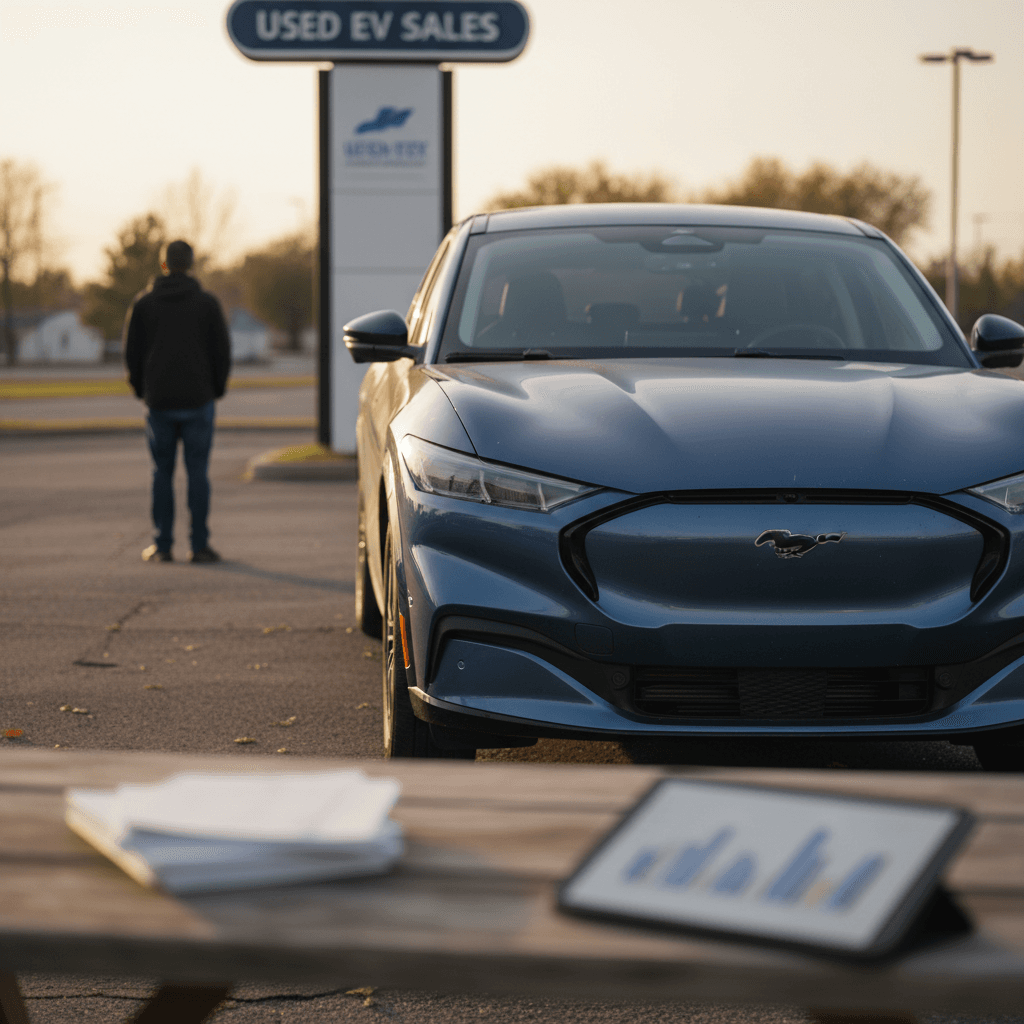
If you’re eyeing a 2025 Ford Mustang Mach‑E in 2026, whether new on a lot or lightly used, the real question isn’t just “is it cool?” It’s **whether the 2025 Mustang Mach‑E is a good buy** once you factor in pricing, range, reliability history, and depreciation that’s been steeper than many gas SUVs.
Quick verdict
Overview: Is the 2025 Mustang Mach‑E a Good Buy?
2025 Mustang Mach‑E pros and cons at a glance
The high‑level tradeoffs before you dive in
What the 2025 Mach‑E does well
- Strong performance: quick off the line, especially GT and Rally trims.
- Competitive range with extended‑range battery and efficient heat pump on 2025 models.
- Comfortable, quiet ride with a genuinely useful hatchback layout.
- Improved tech and driver assists like BlueCruise hands‑free driving on many trims.
Where it comes up short
- Above‑average depreciation compared with similar gas SUVs and some EVs.
- Ongoing recalls (door latches, park module) that require timely software updates.
- Charging network still a mixed story if you rely heavily on non‑Tesla public DC fast charging.
- Interior and ride feel are more sensible crossover than Mustang‑level exciting for some shoppers.
If you’re buying new, the 2025 Mach‑E can be a good buy when **discounted versus MSRP** and when you plan to hold onto it for several years. If you’re buying used, it can be an *excellent* value precisely because early depreciation has already hit, especially when you have solid battery‑health data and a good price benchmark (this is exactly where tools like the Recharged Score and our fair‑market pricing models are built to help).
What’s New on the 2025 Ford Mustang Mach‑E?
By 2025, the Mustang Mach‑E is no longer a first‑generation experiment. Ford has iterated on the platform with better efficiency hardware and more focused trims, including the off‑road‑flavored Rally.
- Trim lineup centered around Select, Premium, GT, and the more rugged Mach‑E Rally.
- Available **heat pump system** on 2025 models improves cold‑weather efficiency and cabin warm‑up compared with early years.
- Updated driver‑assist and infotainment software, with BlueCruise availability on more trims.
- Battery tech that increasingly leans on lithium iron phosphate (LFP) for standard‑range packs in some markets, with traditional NMC chemistry in extended‑range packs.
- CCS1 charging port remains standard in the U.S. for 2025, with Ford offering a NACS (Tesla) adapter option rather than a native NACS port.
Model‑year shopping tip
Pricing and What You’ll Actually Pay
By early 2026, new 2025 Mach‑E inventory in the U.S. is selling in a market where EVs have generally seen **aggressive discounts and heavy incentives**, especially on lots that are long on electric crossovers. On the used side, depreciation has already taken a noticeable bite out of values.
2025 Mustang Mach‑E pricing snapshot (early 2026, U.S.)
Watch the sticker vs. transaction gap
If you’re financing, the Mach‑E’s depreciation curve means you’ll want to **avoid long loan terms at full MSRP**; that’s how you end up upside‑down on a car that the market doesn’t reward on the resale side. If you prefer low monthly payments and short commitment, a lease can sometimes make more sense on the new‑car side, while **a 1–2‑year‑old used 2025** can strike the best balance of price and remaining warranty coverage.
Range, Charging, and Real‑World Efficiency
On paper, the 2025 Mustang Mach‑E continues to offer **competitive range** for a compact electric SUV, especially with the extended‑range battery and rear‑wheel drive. Real‑world range depends a lot on climate, highway speeds, and wheel/tire choices, but the 2025 hardware and software are a step up from the earliest model years.
Typical 2025 Mustang Mach‑E range expectations
Approximate EPA‑style ranges for the 2025 lineup. Exact numbers vary by final certification, wheel size, and options.
| Trim / Battery | Drivetrain | Battery type | Approx. rated range |
|---|---|---|---|
| Select SR | RWD | LFP (standard range) | ~230–250 miles |
| Select SR | eAWD | LFP (standard range) | ~210–230 miles |
| Premium ER | RWD | NMC (extended range) | ~280–310 miles |
| Premium ER | eAWD | NMC (extended range) | ~260–290 miles |
| GT ER | eAWD | NMC (extended range) | ~240–270 miles |
| Mach‑E Rally ER | eAWD | NMC (extended range) | ~230–250 miles |
Use this as a directional guide; always check the specific EPA label for the car you’re considering.
Cold‑weather improvement
Home charging
If you install a Level 2 charger at home, a 2025 Mach‑E can typically go from low state of charge to full overnight. A 40‑ or 48‑amp Level 2 unit on a 240V circuit is ideal for most owners.
- Standard‑range: comfortably fills from near‑empty in about 7–9 hours.
- Extended‑range: more like 9–11 hours depending on amperage.
Public fast charging
On DC fast chargers, a healthy Mach‑E can usually add 10–80% in roughly 30–40 minutes if it can reach near its rated kW peak. In reality, you’ll see a wide spread depending on charger brand, temperature, and station congestion.
In North America, the 2025 Mach‑E still uses a CCS1 port, but Ford now offers a NACS (Tesla) adapter, giving you access to a growing slice of the Supercharger network, one of the biggest day‑to‑day quality‑of‑ownership upgrades for Mach‑E drivers.
Reliability and Recalls: How Worried Should You Be?
Early Mach‑E model years (2021–2022) had some well‑publicized issues, especially high‑voltage battery contactor failures and various software glitches. By 2024–2025, much of that early‑adopter pain has been ironed out, and owner‑reported reliability has generally trended upward, but the picture isn’t spotless.
2025 Mach‑E reliability snapshot
Where things stand as of early 2026
Major HV battery fixes mostly behind it
Newer recalls you shouldn’t ignore
Mixed service experience
Don’t shrug off open recalls
In owner forums, 2024–2025 Mach‑E drivers tend to report **fewer catastrophic issues** and more of the usual EV annoyances: finicky infotainment, occasional sensor warnings, and charging‑station quirks that have more to do with the network than the car. Reliability still isn’t at the level of a Prius, but by 2025 the Mach‑E is no longer an early‑beta science project either.
Depreciation and Resale Value
Here’s where the “is the 2025 Mustang Mach‑E a good buy?” question gets tricky. The Mach‑E has been one of the **harder‑hit EVs on depreciation**, thanks to fast‑moving EV tech, aggressive discounting on new inventory, and lingering consumer skepticism about long‑term battery life.
How the Mach‑E holds its value
Why depreciation can be your friend
Recharged’s own data across many used Mach‑E transactions shows that by 2026, **market reality matters far more than theoretical depreciation curves**. A clean‑title 2025 with a strong Recharged Score, verified battery health, and the right options can be a better long‑term bet than a brand‑new example that’s still priced like EV hype never cooled off.
How the 2025 Mach‑E Compares to Rivals
When shoppers ask if the 2025 Mach‑E is a good buy, what they usually mean is: “Is it better than a Tesla Model Y, Hyundai Ioniq 5, Kia EV6, or maybe a gas RAV4 or CR‑V?” On that score, the Mach‑E ends up in a nuanced middle lane.
2025 Mustang Mach‑E vs key competitors (high level)
Broad strokes comparison for a typical mid/upper‑trim configuration.
| Vehicle | Strengths | Weak points for buyers like you |
|---|---|---|
| Ford Mustang Mach‑E | Comfortable ride, good range, familiar Ford dealer network, strong performance in GT/Rally trims, now with access to Tesla Superchargers via adapter. | Steeper depreciation, recalls and mixed service experiences, interior and software not as polished as the best in segment. |
| Tesla Model Y | Excellent DC fast‑charging experience on Supercharger network, strong efficiency, mature OTA software, very broad availability in the used market. | Sparse interior not for everyone, build quality still inconsistent, insurance can be pricey, ride can feel harsher than Mach‑E. |
| Hyundai Ioniq 5 | Ultra‑fast 800V charging on the right networks, stylish design, roomy interior, good efficiency. | Charging network experience depends heavily on where you live; some early software quirks, dealer experience varies widely. |
| Kia EV6 | Sporty dynamics, strong range, fast charging, upscale interior in GT‑Line and GT. | Rear visibility and packaging not as practical, dealer markups in some markets, depreciation still an open question. |
| Toyota RAV4 Hybrid / Prime | Excellent reliability record, easy fueling, strong resale, massive dealer network. | No full‑EV experience, higher running costs vs cheap home charging, feels dated next to latest EV tech. |
Exact specs vary by trim; this is meant as a directional cross‑shop guide.
How to think about the comparison
Who the 2025 Mustang Mach‑E Is (and Isn’t) For
The 2025 Mach‑E is a good buy if…
You mostly charge at home
The Mach‑E shines as a daily commuter or family runabout when you can plug in overnight. Home charging neutralizes most of the public‑network drama and lets you focus on comfort and performance.
You’re buying used at a discount
A lightly used 2025 at a meaningful discount to new MSRP can deliver a lot of EV for the money, especially if you verify strong battery health and a clean recall history.
You plan to keep it 5+ years
Heavy early depreciation matters less if you’re not flipping the vehicle quickly. In that scenario, focus on long‑term comfort, charging convenience, and warranty coverage more than resale.
You want an EV that still feels like a normal SUV
If you like EV smoothness but don’t want the stark minimalism of a Tesla, the Mach‑E’s cabin and driving feel will be more familiar.
- You expect bulletproof Toyota‑style reliability and dealer service turnaround.
- You plan to resell in just 2–3 years and care deeply about residual value.
- You’ll rely almost entirely on public fast charging in a region where CCS infrastructure is sparse or unreliable.
- You want the absolute best road‑trip charging experience and are okay with a more minimal interior (in which case a Model Y or similar might be better).
Buying a Used 2025 Mach‑E: What to Look For
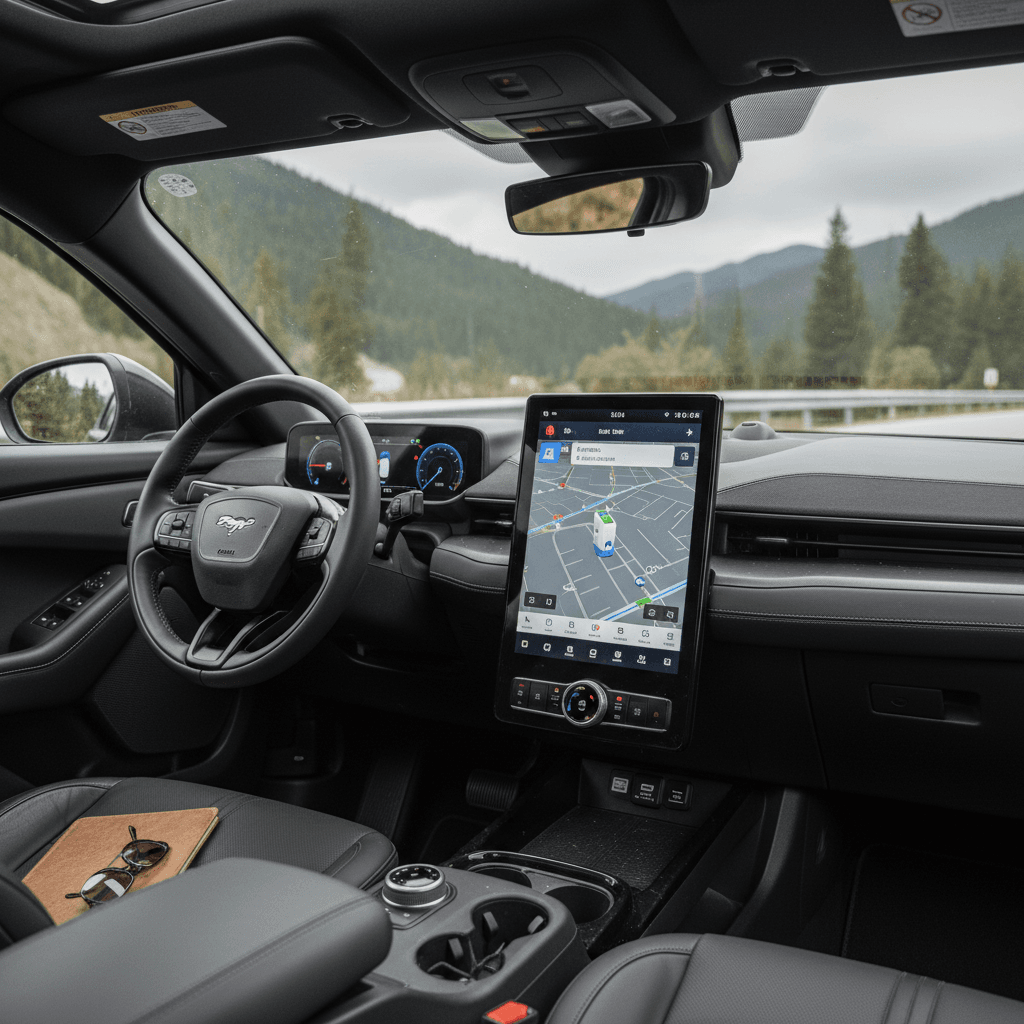
By 2026, there will be plenty of 2025 Mach‑E examples coming off short leases or traded in for the next shiny EV. That’s an opportunity, but only if you’re picky. Here’s how to shop like an analyst, not an impulse buyer.
Essential checks before you buy a used 2025 Mach‑E
1. Pull a full battery‑health report
Battery state‑of‑health (% of original capacity) matters more on an EV than almost any other spec. A <strong>Recharged Score</strong> includes independent battery diagnostics so you’re not relying solely on the in‑car display, which can be conservative or misleading.
2. Verify recall and software‑update status
Use the VIN with NHTSA’s lookup and ask for dealer records. Confirm recent campaigns, like door‑latch and park‑module software updates, have been completed, or have them scheduled in writing.
3. Check DC fast‑charging history and patterns
Heavy frequent DC fast charging isn’t necessarily a deal‑breaker, but on any EV it can correlate with faster degradation. If possible, look for vehicles that saw mostly home Level 2 charging with occasional road‑trip fast charging.
4. Inspect tires and suspension for wear
The Mach‑E’s weight and instant torque can chew through tires faster than you might expect, especially on GT and Rally trims. Uneven wear may suggest alignment or suspension issues.
5. Test all driver‑assist and infotainment features
On your test drive, exercise BlueCruise (if equipped), adaptive cruise, lane centering, and parking sensors. Cycle through menus and Bluetooth/CarPlay/Android Auto to catch intermittent glitches.
6. Benchmark price against real‑world data
Look at multiple sources (appraisal tools, recent sale comps, and EV‑specific retailers like Recharged) rather than taking a single asking price at face value. Don’t be afraid to walk if the seller is pricing the car like depreciation hasn’t happened.
How Recharged helps de‑risk a used Mach‑E
FAQ: 2025 Mustang Mach‑E Buying Questions
Common questions about buying a 2025 Mach‑E
Bottom Line: Is the 2025 Mach‑E a Good Buy?
Viewed coldly, the 2025 Ford Mustang Mach‑E is a **second‑wave EV** in a first‑wave market correction: dynamically competent, more refined than the early cars, but living in a world where EVs don’t get a free pass on pricing or resale anymore. That’s exactly why it can be a smart buy for the right shopper.
If you mostly charge at home, plan to keep the car several years, and buy at a price that reflects real‑world depreciation, the 2025 Mach‑E delivers a compelling mix of range, comfort, and performance. If, on the other hand, you expect Toyota‑level reliability, rock‑solid resale in two or three years, and road‑trip charging that’s always painless, you’re better served with a different play, whether that’s a Model Y, a Korean 800V EV, or a hybrid crossover.
Where the Mach‑E really shines is as a **data‑driven used purchase**: a low‑mile 2025 with a strong Recharged Score, clean recall history, and fair‑market pricing can give you a sophisticated EV experience at a substantial discount to new. If you’re ready to shop that kind of deal, Recharged’s marketplace, battery diagnostics, and EV‑specialist support are built to tilt the odds in your favor.