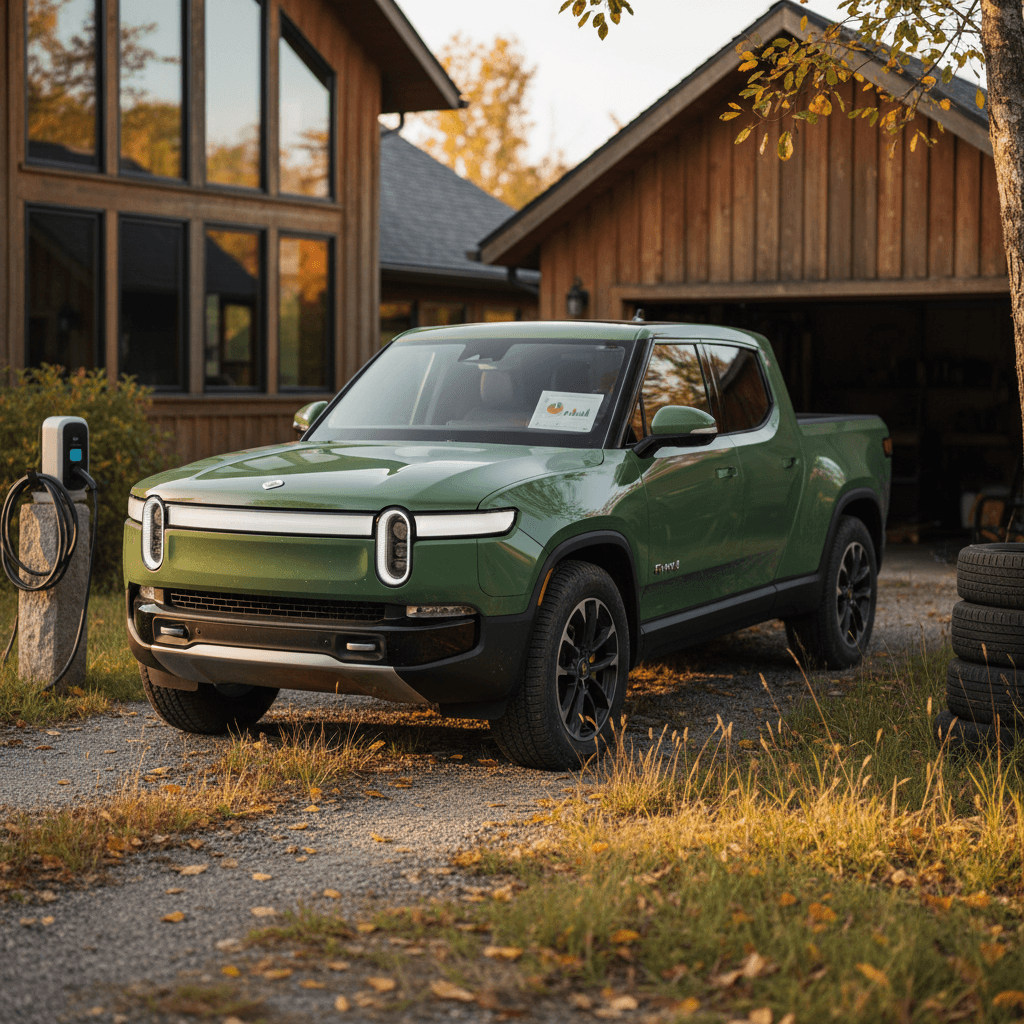
If you’re eyeing an electric pickup, you’re probably wondering if the 2024 Rivian R1T is a good buy in 2026, especially with newer trucks and the upcoming Rivian R2 on the way. The R1T delivers serious performance, real off‑road hardware and standout design, but it also carries questions about reliability, depreciation and service access that you shouldn’t ignore.
Context: Looking at the R1T in 2026
Quick answer: Is the 2024 Rivian R1T a good buy?
Yes, if you want a halo EV truck
The 2024 R1T is a fantastic truck to drive, quick, quiet, and genuinely capable off‑road with available air suspension and multiple drive modes. EPA‑rated ranges span roughly the mid‑200s to low‑400s miles depending on battery pack and wheels, giving it competitive or better range than many electric pickups. Owners consistently rate it high on satisfaction, and used pricing in 2026 is starting to look compelling versus new.
But it’s not the right truck for everyone
Rivian is still a young automaker. Reliability is improving but remains more mixed than mainstream brands, and service centers are thin on the ground. There have been multiple recalls, from suspension components to seat‑belt hardware, that you’ll want verified as completed. If you need bomb‑proof uptime, live far from a service center, or simply want the lowest‑cost truck to own, a 2024 R1T may not be the safest bet.
Where the value is in 2026
Ready to find your next EV?
Browse VehiclesWhat changed for the 2024 R1T versus earlier years?
Rivian has iterated on the R1T since its launch, and the 2024 model year sits in the middle of that evolution. It’s not a total redesign, but several tweaks make it more appealing than early 2022 builds and more affordable than the latest trucks.
- More mature software: Over‑the‑air updates have improved drive modes, charging behavior, UI speed and driver‑assist features compared with early trucks.
- Dual‑motor focus: For 2024, the Dual‑Motor all‑wheel‑drive setup became the heart of the lineup, with performance that’s still sports‑car quick but more efficient and less expensive than the original Quad‑Motor.
- Battery options: Standard, Large and Max packs give you a range ladder, and 2024 trucks benefit from Rivian’s better‑understood thermal management and range estimates.
- Feature packaging: The popular Adventure trim continued to bundle most of the comfort and off‑road hardware shoppers want, simplifying the decision tree compared with early adopter builds.
Model year vs. build date
Pricing, depreciation and value in 2026
2024 Rivian R1T value snapshot (April 2026 estimates)
Exact numbers will vary by trim, mileage, region and incentives, but the pattern is clear: the initial depreciation hit is already baked into most 2024 R1Ts by 2026. That’s what makes them interesting right now. You’re not paying launch‑year hype pricing, but you’re still getting modern hardware, long range and remaining factory warranty.
2024 R1T value compared with alternatives (2026 market snapshot)
How the 2024 Rivian R1T typically stacks up against comparable electric and gas trucks on the used market.
| Vehicle | Typical 2026 used price* | Powertrain highlight | Range/MPGe or MPG | Value take |
|---|---|---|---|---|
| 2024 Rivian R1T Adventure (Large pack) | $68k–$75k | Dual‑Motor AWD, instant torque | ~350 mi EPA, all‑electric | Strong performance and range; higher up‑front cost but lower fuel bills. |
| 2023–2024 Ford F‑150 Lightning Lariat | $55k–$65k | Dual‑motor EV, BlueCruise available | ~240–320 mi, EV | Cheaper to buy, less ground clearance and off‑road focus than R1T. |
| 2023–2024 Ram 1500 Limited (gas) | $45k–$55k | V8 or turbo V6 | 17–22 mpg combined | Lower purchase price, but much higher fuel and maintenance costs over time. |
Approximate used‑market snapshots for well‑equipped trucks with average miles in spring 2026. Actual prices vary by region and spec.
Depreciation risk to watch
Range, battery packs and real-world ownership
For many buyers, the central question isn’t just “Is the 2024 R1T a good buy?” It’s “Will the range work for how I drive?” On paper, the 2024 R1T’s battery lineup covers a wide spread, with EPA estimates roughly from the high‑200s to just over 400 miles depending on pack, wheels and drive unit.
2024 Rivian R1T battery pack options (typical specs)
Exact numbers vary by wheel size, tires and software, but this gives you a realistic ballpark.
Standard pack
- EPA range: roughly mid‑200s miles
- Best for: short commutes, frequent DC fast charging, lower up‑front cost
- Downside: less road‑trip flexibility, especially with big wheels or aggressive tires
Large pack
- EPA range: roughly mid‑300s miles in Dual‑Motor with efficient wheels
- Best for: mixed city/highway use, occasional towing, one‑vehicle households
- Downside: truck price and weight creep up
Max pack
- EPA range: roughly low‑400s miles in ideal specs
- Best for: long‑distance road‑trippers, heavy towing, rural owners
- Downside: highest purchase price; harder to find used
How to sanity‑check real‑world range
Battery health is where used‑EV risk usually hides. The R1T hasn’t been on the road long enough to produce 10‑year degradation data, but early trucks suggest relatively modest loss when owners avoid constant 100% fast‑charging and keep daily SOC in a reasonable band. When you’re shopping, you want more than a dashboard guess.
Why a third‑party battery health report matters
Performance, utility and what the R1T does best
As a truck, the 2024 R1T is less about raw payload than it is about doing a lot of things very well. Dual‑Motor trucks still deliver 0–60 mph times in the mid‑4‑second range in performance guise, with instant torque that shames most gas pickups. Quad‑Motor versions go even harder, at the cost of efficiency and tire life.
Where the 2024 R1T shines
You’ll get the most out of an R1T if your lifestyle aligns with its strengths.
Adventure and overlanding
- Adjustable air suspension and clever drive modes
- Strong approach and departure angles vs. most EVs
- Plenty of power for dirt, snow and sand
Everyday hauling
- Short bed but smart storage (gear tunnel, frunk)
- Enough payload for home‑improvement runs and toys
- Flat floor and quiet cabin for family duty
Performance daily driver
- Muscle‑car acceleration from an upright, practical shape
- One‑pedal driving in traffic
- Luxury‑level interior materials and tech in Adventure trims
Towing reality check
Reliability, service and recalls: the honest picture
Here’s the toughest part of the “Is the 2024 R1T a good buy?” question: reliability and service. Owner satisfaction is high, but survey data and anecdotal reports show a split picture. Many 2024 owners report trouble‑free miles beyond routine visits; others have dealt with nagging issues, repeat service trips and long waits for parts or appointments.
- Build quality: Most complaints center on wind noise, trim alignment, minor leaks and squeaks rather than catastrophic drivetrain failures.
- Electronics and software: Occasional infotainment glitches, sensor errors and driver‑assist quirks are common gripes, though many are addressed via software updates.
- Hardware campaigns and recalls: Suspension components, seat‑belt hardware and other safety‑related parts have been subject to recalls or service campaigns. Any 2024 truck you consider should show all campaigns completed.
- Service access: If your nearest Rivian Service Center is 150+ miles away, plan for more logistics and downtime when something does go wrong, even with mobile service available in some areas.
Don’t skip the reliability homework
“Consider yourself an early adopter, and be at peace with the extra bit of effort that takes as an owner.”
Running costs vs. gas trucks
Once you own it, the 2024 Rivian R1T usually costs less to run than a comparably quick gas or diesel pickup. Electricity is cheaper per mile than gasoline in most U.S. markets, and there’s no engine oil, transmission fluid or exhaust system to maintain.
Energy and maintenance
- Home charging: Level 2 home charging typically delivers some of the lowest cost per mile of any pickup on the road.
- Public fast charging: More expensive than home power, but still often cheaper than gas on a per‑mile basis.
- Maintenance: You’re mainly looking at tires, brake fluid, cabin filters and alignment, plus any Rivian‑specific service campaigns.
Insurance and tires
- Insurance: Premiums can be higher than a mainstream gas truck because of the R1T’s price and aluminum‑intensive construction.
- Tires: The torque and weight of the R1T can chew through tires faster than a lighter vehicle. Budget for quality replacements roughly every 25–40k miles depending on driving style.
Leaning on total cost of ownership
Who should buy a 2024 R1T, and who should pass
Is a 2024 R1T a good buy for you?
Match your situation to the truck’s personality before you pull the trigger.
A 2024 R1T is a strong buy if:
- You want a premium adventure truck with real off‑road ability and EV smoothness.
- You have home charging or consistent access to Level 2 charging at work.
- You live within a reasonable distance of a Rivian Service Center or mobile service coverage.
- You’re comfortable being an early adopter and can tolerate the occasional software quirk or service visit.
- You’re buying a truck with documented service history and a verified strong battery.
You should probably skip it if:
- You need bullet‑proof uptime and minimal downtime for work.
- You live many hours from the nearest Rivian service location.
- Your towing involves heavy trailers over long distances multiple times a month.
- Your budget is tight enough that an unexpected repair or extra depreciation would be a major problem.
- You prefer to stick with brands that have long dealer networks and decades of reliability data.
How to shop for a 2024 R1T used
Essential checks before you buy a 2024 R1T
1. Verify battery health beyond the guess‑o‑meter
Don’t rely only on the displayed range at 100%. Ask for a <strong>third‑party battery health report</strong> or consider platforms like Recharged that include diagnostic‑based battery scoring and fast‑charge history as part of the listing.
2. Run the VIN for recalls and campaigns
Check for open recalls on suspension, seat‑belts and other safety‑critical systems. Confirm with documentation that all <strong>Rivian service campaigns</strong> have been completed.
3. Review service and repair history
Look for patterns: repeated visits for the same concern, long parts delays, or major hardware replacements. A truck with a couple of resolved niggles is normal; a truck with a dozen unsolved issues is not.
4. Inspect for off‑road abuse and towing
The R1T encourages adventure. Check for underbody damage, bent suspension components, abnormal tire wear and hitch/tongue wear that might suggest heavy towing beyond what you’re comfortable inheriting.
5. Test all electronics and driver‑assist systems
During your test drive, cycle through drive modes, check cameras, parking sensors, adaptive cruise and lane‑keeping. Make sure the infotainment screen behaves consistently and connects cleanly to your phone.
6. Confirm charging behavior
If possible, plug into a DC fast charger during the test period. Watch how quickly the truck ramps up power and whether it maintains a healthy curve. Surprise charging behavior can indicate thermal issues or prior abuse.
How Recharged simplifies the used R1T search
FAQ: 2024 Rivian R1T as a buy
Frequently asked questions about buying a 2024 Rivian R1T
Bottom line: Is the 2024 R1T right for you?
For the right buyer, the 2024 Rivian R1T is absolutely a good buy in 2026. It’s one of the most compelling electric trucks on the road, with range that rivals or beats many competitors, truly enjoyable performance and a cabin that feels special every time you climb in. But it’s also a truck from a young automaker still working through reliability, service‑capacity and pricing growing pains.
If you’re an EV‑curious truck shopper with access to home charging, a reasonable path to service and a bit of patience for software‑defined vehicles, a well‑vetted 2024 R1T can be a standout choice. Focus on the right spec, insist on a clear service and recall history, and demand real battery‑health data before you sign. Platforms like Recharged, with Recharged Score diagnostics, fair‑market pricing, EV‑specialist support and nationwide delivery, make that process far more transparent than the traditional dealer dance.
If, on the other hand, you prize absolute simplicity, live hours from a service center, or need a heavy‑duty tow rig that eats cross‑country miles without range planning, you may be happier in a more traditional truck for now. The key is matching the R1T’s strengths to your reality. Do that well, and a 2024 R1T won’t just be a good buy, it’ll feel like the truck you’ve been waiting for.