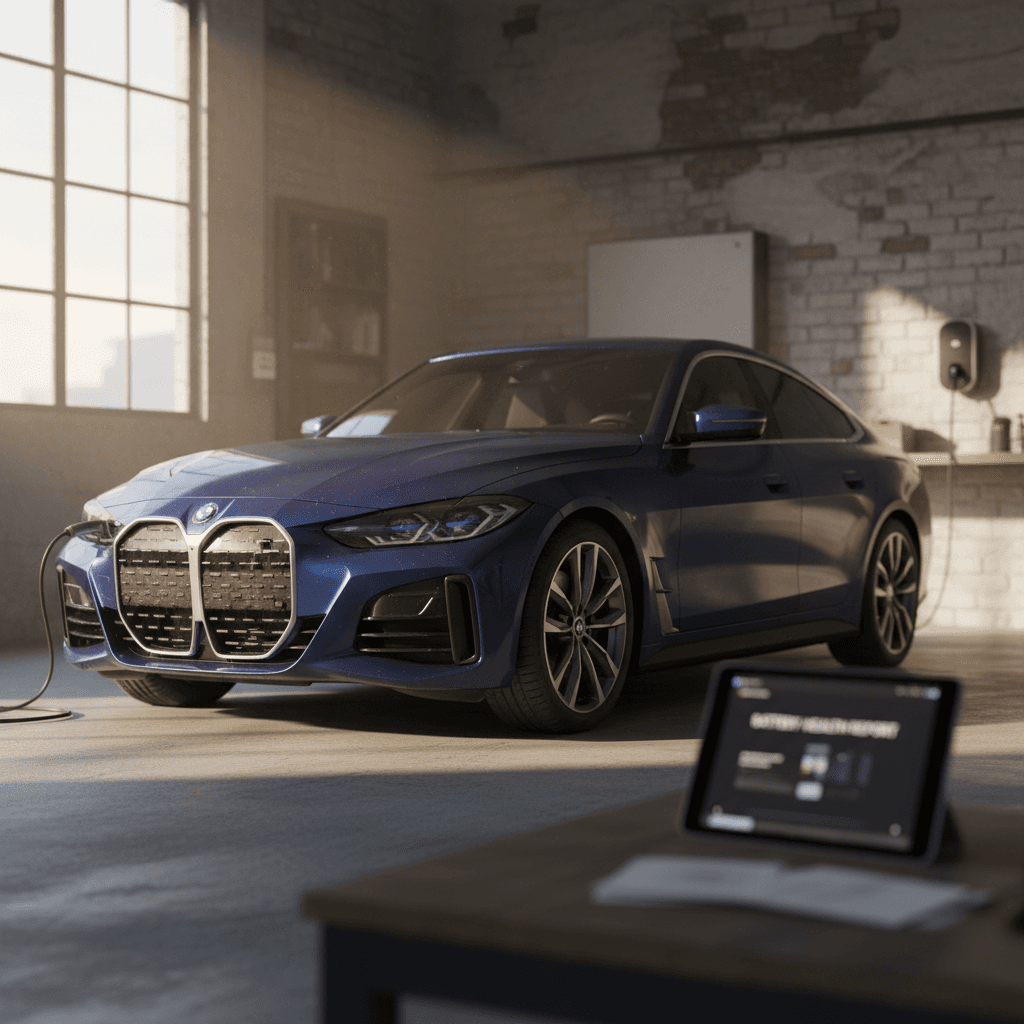
You’re not imagining it: the 2023 BMW i4 has suddenly become one of the most interesting used EVs on the market. Two or three years ago it was a pricey science experiment; in 2026 it’s a heavily depreciated, properly quick, well‑trimmed German EV that often costs about what you’d pay for a new mainstream compact. The question is simple: is the 2023 BMW i4 a good buy today, or a beautiful headache waiting to happen?
The short version
Overview: Is the 2023 BMW i4 a Good Buy?
What the 2023 i4 gets right
- Heavy early depreciation means you can buy a 2023 i4 for roughly half its original MSRP in many trims, depending on miles and condition.
- Serious performance even in the single‑motor eDrive40, with the dual‑motor M50 happily humiliating sports sedans from a stoplight.
- Real‑world range that, in the eDrive40, is still competitive with many new EVs in 2026.
- BMW cabin and dynamics: a proper driving position, high‑quality materials, and a chassis that actually wants to go for a drive.
Where you need to be careful
- Software and electronics quirks, especially early iDrive 8 cars, can mean trips to the dealer for updates.
- Charging network reality: unlike Tesla, you’re living in the CCS fast‑charging universe unless you have access to an adapter and compatible Superchargers.
- Early‑EV depreciation will likely continue; don’t expect this car to be a resale hero.
- Ride comfort can be firm and noisy on big wheels; test‑drive on your local roads, not silk‑smooth dealer loops.
Quick answers: who should buy a 2023 BMW i4?
Is the 2023 BMW i4 a good buy, for you?
Three common buyer profiles and how well the i4 fits
Daily commuter
Great fit if you:
- Drive 30–80 miles a day
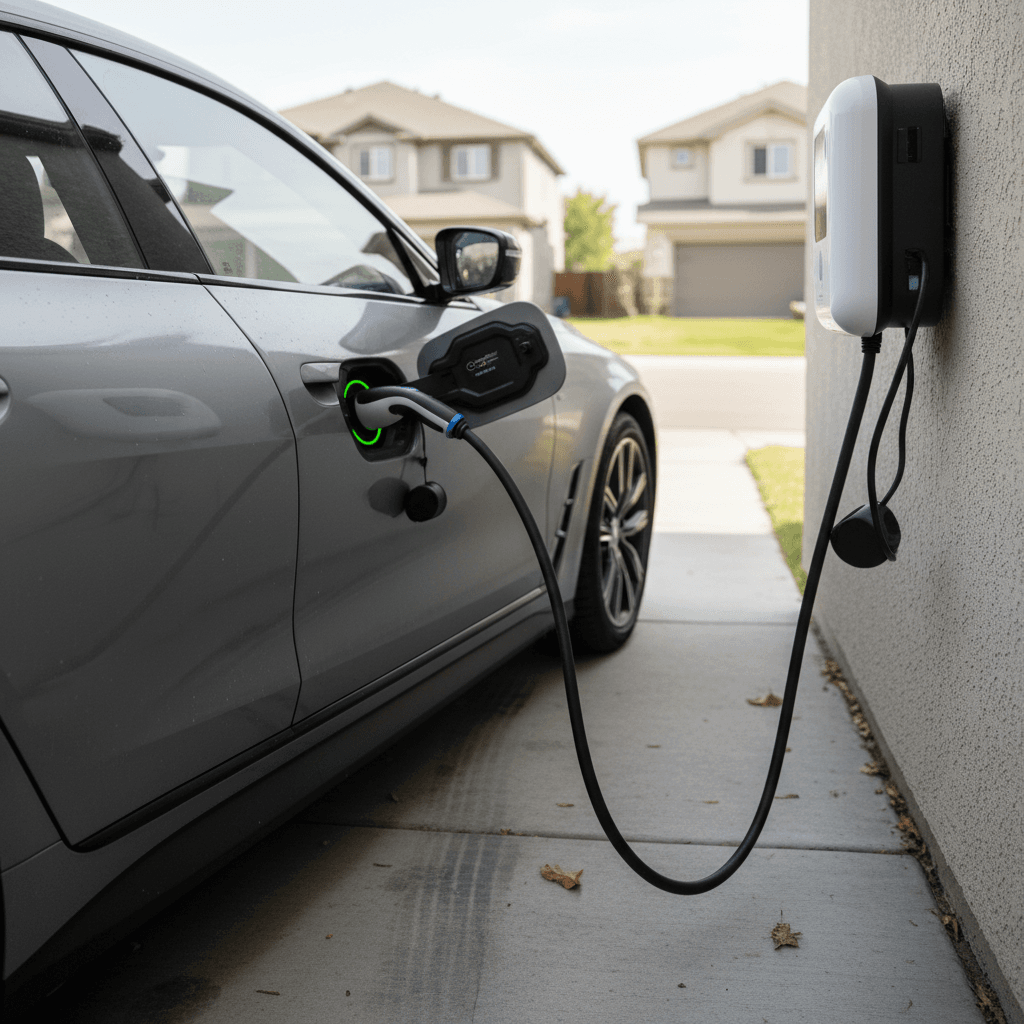
- Have a home Level 2 charger
- Value comfort and quiet over max range bragging rights
The eDrive40 trim, in particular, makes a refined, efficient daily driver.
Enthusiast driver
Very good fit if you:
- Care about steering feel and chassis balance
- Want instant EV torque without a sparse, minimalist interior
- Are looking at a Tesla Model 3 Performance but prefer BMW’s vibe
The M50 is a riot, but be honest about how much power you’ll actually use.
Road‑trip warrior
Mixed bag if you:
- Road‑trip often in areas with patchy CCS fast charging
- Depend on easy access to Tesla’s Supercharger network
The i4 can road‑trip, but a Tesla still wins on charging convenience in much of the U.S.
2023 BMW i4 at a glance (used in 2026)
Key specs and real-world range
On paper, the 2023 BMW i4 looks like a familiar BMW 4‑Series Gran Coupé that’s been quietly electrified. Underneath, though, it’s a proper EV with a flat battery pack and a choice of single‑ or dual‑motor setups. When you’re shopping used, the trim and wheel choice matter more than the brochure numbers.
2023 BMW i4 trims and real‑world range
Approximate real‑world ranges for a healthy battery in 2026, assuming mixed driving and moderate climate.
| Trim | Drivetrain | Factory EPA range (mi) | Typical real‑world range (mi) | Character |
|---|---|---|---|---|
| eDrive35 | RWD | ~256 | ~210–240 | Entry battery, fine for shorter commutes |
| eDrive40 | RWD | ~301–307 | ~260–300 | Best blend of price, range and performance |
| M50 | AWD | ~245–270 | ~200–230 | Serious performance, more efficiency penalty |
If you see significantly less than these numbers in similar conditions, investigate battery health and tire choice.
Range tip
Pricing and depreciation in 2026
Here’s where the 2023 BMW i4 becomes genuinely attractive. Like most early luxury EVs, it took a big value hit leaving the showroom. By 2026, that early‑adopter tax has already been paid, by someone else.
Typical 2023 BMW i4 used pricing (United States, early 2026)
Approximate asking price ranges for clean‑title cars with normal miles and no major accident history. Local markets will vary.
| Trim (2023) | Typical mileage | Approx price range | Notes |
|---|---|---|---|
| eDrive35 | 20k–40k mi | $32,000–$39,000 | Lower MSRP new; overlaps older, higher‑spec trims. |
| eDrive40 | 20k–45k mi | $36,000–$44,000 | Sweet spot for most buyers; many well‑optioned cars in this band. |
| M50 | 25k–50k mi | $40,000–$50,000 | Heavier depreciation but still commands a premium for performance. |
These are ballpark figures, not offers. Use them as a starting point, then compare to live listings and a Recharged Score Report.
Watch out for cheap outliers
Compared with a similarly aged Tesla Model 3, the BMW i4 generally depreciates more sharply in the first three years. That’s bad news for the first owner, but an opportunity for you. You’re getting a premium interior, a German badge and serious performance for the price of a new mainstream compact car.
Reliability and common 2023 i4 issues
The 2023 BMW i4 isn’t a disaster, but it also isn’t an unbreakable electric miracle. Broadly, it’s landed near the middle of the EV reliability pack: electric motors and drivetrains have been stout, while owners’ headaches tend to live in software, charging behavior, and the modern BMW obsession with screens everywhere.
- Software and infotainment bugs – intermittent wireless Apple CarPlay drops or glitchy navigation, usually cured by software updates.
- Charging‑related warnings – occasional high‑voltage system errors after DC fast charging, sometimes tied to early Battery Management System software that has since been updated under recall or service campaigns.
- Electronics gremlins – oddities with tire‑pressure monitoring, driver‑assist cameras, or interior climate control that require dealer diagnosis rather than driveway tinkering.
- Hardware recalls – including early high‑voltage battery ECU software recalls and fire‑risk advisories that, if ignored, can materially change your risk profile.
Non‑negotiable: recall status
Owner‑reported experiences run the gamut. Some drivers rack up 30,000–50,000 miles with basically tire wear and scheduled service. Others bounce between home and dealer for hard‑to‑reproduce charging faults. That split isn’t unusual for early EVs, but it makes shopping carefully absolutely crucial.
Battery health, warranty and fast charging history
The good news: the 2023 i4 carries an 8‑year/100,000‑mile high‑voltage battery warranty from original in‑service date, with coverage for defects and a capacity floor around 70%. For most 2023 cars, that means coverage until roughly 2031, assuming average miles. But warranty isn’t a free pass, you still want a healthy pack on day one.
How to think about a 2023 i4 battery in 2026
Warranty is your safety net; state of health is your day‑to‑day reality.
Warranty clock
Most 2023 i4s still have 5–7 years of battery warranty left, depending on when they were first sold and how heavily they’ve been driven.
Degradation so far
Well‑cared‑for packs typically show modest range loss by year three. Heavy DC fast‑charging or constant high‑speed use can accelerate wear.
Fast‑charging history
A car that lived on CCS fast chargers along the interstate will usually show more stress than one that mostly sipped gently on a home Level 2 wallbox.
Use data, not vibes
Battery and charging checklist for a 2023 BMW i4
1. Confirm remaining battery warranty
Ask for the in‑service date so you know the exact warranty end date and mileage cutoff. Don’t just rely on model year.
2. Review battery state of health (SOH)
Use a proper diagnostic tool or a Recharged Score Report to see estimated pack SOH, not just guess from a range number on a random day.
3. Ask about typical charging habits
A car mostly charged at home to 80–90% on Level 2 is ideal. One that lived on 150–350 kW DC fast chargers is still ok, but needs closer scrutiny.
4. Test fast‑charging behavior
If you can, do a DC fast charge from about 10–60% and watch for warning lights, unusual noises, or wildly inconsistent charging curves.
5. Scan for HV system codes
Have a BMW‑capable scan run on the high‑voltage system to check for stored or intermittent faults, even if the dash shows no current warnings.
Daily livability and driving experience
Drive a 2023 BMW i4 back‑to‑back with many mainstream EVs and you immediately feel the difference. This is an EV wearing a proper luxury‑sport sedan suit, not a smartphone on wheels with a steering wheel bolted on as an afterthought.
What it’s like to live with
- Cabin quality: classic BMW, solid switchgear, supportive seats, and a driving position that actually fits tall adults.
- Noise and comfort: quiet on smaller wheels; firm and a bit thumpy on 19s or 20s, especially on rough pavement.
- Practicality: hatchback trunk and split‑folding rear seats make it more useful than a traditional sedan, though rear headroom is only “OK” for tall passengers.
- Tech: iDrive 8 is powerful but can feel fussy; make sure you’re happy with the interface during your test drive.
How it drives
- Steering and chassis: more communicative than many EVs; it feels like a BMW first, an EV second.
- Performance: even the eDrive40 feels quick; the M50 is genuinely fast, with instant torque and confident passing power.
- Braking feel: blended regen/friction system is well‑tuned, though it can feel different from a Tesla’s one‑pedal approach.
- Weight: like most EVs, the i4 is heavy. You feel that in tight corners, but the low center of gravity keeps it composed.
When the i4 just works
2023 BMW i4 vs used Tesla Model 3
You can’t talk about a used 2023 BMW i4 without addressing the Silicon Valley elephant in the room. If you’re shopping in the mid‑$30,000s to mid‑$40,000s, you’re almost certainly cross‑shopping a used Tesla Model 3.
2023 BMW i4 vs comparable used Tesla Model 3
How a typical 2023 i4 stacks up against a similarly priced used Tesla Model 3 in 2026.
| Factor | 2023 BMW i4 | Used Tesla Model 3 (Long Range / Performance) | Advantage |
|---|---|---|---|
| Interior quality | More traditional luxury, better materials, quieter on smaller wheels | Minimalist, tech‑forward, some hard plastics | BMW i4 |
| Performance | eDrive40 is quick; M50 is seriously fast | Long Range is brisk; Performance is very quick | Tie – depends on trims |
| Range & efficiency | Competitive but usually slightly less efficient | Generally more efficient, slightly better highway range | Model 3 |
| Charging network | CCS public networks; limited Supercharger access unless equipped and supported in your region | Full Supercharger access and mature ecosystem | Model 3 |
| Ride & handling | Feels like a classic sports sedan, but heavy | Lighter, more tossable, but less refined over bumps | Depends on taste |
| Depreciation | Steeper early hit, good for second owners | Holds value better historically | BMW i4 for buyers today |
| Brand & image | Traditional German premium | Tech status symbol, but more common | Subjective |
Not every comparison will line up exactly, but this is the broad shape of the trade‑offs.
How to choose between them
Checklist: what to look for on a used 2023 i4
Pre‑purchase checklist for a 2023 BMW i4
1. Pull a battery health and charging history report
Ask for a recent battery health report or a Recharged Score diagnostic. Look for consistent SOH, no major fast‑charging anomalies, and no history of repeated high‑voltage fault codes.
2. Verify recall and software update status
Use the VIN to confirm that all recalls, especially high‑voltage battery and power‑loss recalls, have been completed. Ask the seller to show documentation of recent software updates.
3. Test Level 2 and DC fast charging
If possible, plug into both a home‑style Level 2 charger and a public DC fast charger. Watch for warning lights, odd charging stops, or dramatically slow charging rates.
4. Inspect tires, wheels and suspension
Many i4s wear low‑profile tires on big wheels. Check for uneven tire wear, wheel damage, or signs of impact that could hint at suspension issues.
5. Live with the tech for 20–30 minutes
Pair your phone, use Apple CarPlay/Android Auto, try navigation and driver assists. If the interface drives you crazy in half an hour, it won’t get better in year three.
6. Look for evidence of careful ownership
Service records, clean interior, no mystery warning lights, and a seller who can speak intelligently about how they charged and maintained the car are all good signs.
Who the 2023 BMW i4 is, and isn’t, for
Is the 2023 BMW i4 a good buy for you?
Match your use case to the car’s strengths and weaknesses.
Great buy if…
- You have reliable home charging and only use DC fast charging on trips.
- You do moderate daily mileage and occasional longer drives.
- You want a luxury‑feeling EV rather than a tech minimalist one.
- You’re comfortable buying a car that’s taken a big hit in value and may depreciate further, because you’re in it for the long haul.
Think twice if…
- You rely heavily on public DC fast charging in areas where CCS infrastructure is weak.
- You expect bulletproof, appliance‑like reliability and hate the idea of software updates or dealer visits.
- You need maximum rear‑seat space or a tall, SUV‑like seating position.
- You don’t have access to detailed battery health data and are risk‑averse.
FAQ: 2023 BMW i4 as a used buy
Frequently asked questions about the 2023 BMW i4
Bottom line: is a 2023 BMW i4 a good buy?
If you’re coming out of a gas BMW 3‑ or 4‑Series and wondering whether it’s finally time to plug in, the 2023 BMW i4 is one of the most compelling on‑ramps in 2026. The early adopters have absorbed the eye‑watering depreciation, the big battery recalls are largely in the rear‑view mirror, and what’s left, for a carefully chosen car, is a refined, fast, quietly confident EV that still feels special.
Is the 2023 BMW i4 a good buy? For drivers with home charging, realistic expectations about public CCS networks, and a willingness to vet battery health and software history, the answer is a clear yes. For road‑trip die‑hards who live by the Supercharger map or shoppers who want set‑and‑forget appliance reliability, a different EV may be a better fit.
If you want to skip the guesswork, browsing 2023 BMW i4s on Recharged means every car comes with a Recharged Score battery‑health report, expert EV‑specialist support, available financing and nationwide delivery, all wrapped in a fully digital buying experience. The i4 is a nuanced car; it deserves a buying process that’s just as carefully thought‑through.