If you’re hunting for an affordable, efficient EV, you’ve almost certainly asked yourself: is the 2022 Chevrolet Bolt EV a good buy in 2026? Between steep depreciation, a well‑known battery recall, solid range, and a discontinued new model, the 2022 Bolt EV sits in a strange but often very appealing spot on the used‑EV market.
The short version
Quick answer: Is the 2022 Chevy Bolt EV a good buy?
When the 2022 Bolt EV is a great buy
- You want an affordable commuter EV with real‑world range comfortably over 200 miles.
- You have access to home Level 2 charging or reliable workplace charging.
- You find a car with completed battery recall work and a clean battery‑health report.
- You don’t need all‑wheel drive, towing, or road‑trip‑optimized DC fast charging.
When you should probably look elsewhere
- You frequently drive long highway trips and rely on fast charging to cover distance quickly.
- You live in an area with poor public charging and no way to install home charging.
- You’re uncomfortable with the vehicle’s history of a high‑profile battery fire recall, even though a fix exists.
- You want a more spacious cabin or crossover‑style ride height (think Bolt EUV, Kona Electric, Ioniq 5).
Key 2022 Chevy Bolt EV numbers (used, 2026 snapshot)
Why the 2022 Bolt EV is attractive on the used market
The 2022 Chevrolet Bolt EV landed after GM’s major mid‑cycle refresh. It kept the Bolt’s efficient powertrain but added a more modern interior, updated exterior styling, and a lower starting MSRP than earlier years. Then GM announced the end of Bolt EV production after 2023, which froze in a lot of depreciation and made 2022 models a prime value play on the used market.
Standout strengths of the 2022 Chevy Bolt EV
Why so many budget‑minded EV shoppers start here
Serious value
Useful real‑world range
Strong Level 2 charging
Solid safety story
Low running costs
Compact but practical
Biggest caveat: the battery recall
Pricing and depreciation: What should you pay?
Because of the recall history and GM’s aggressive price cuts, the 2022 Bolt EV has depreciated hard compared with many other EVs. New, a 2022 LT started around the mid‑$30,000s before incentives, but by early 2026, many 2022s trade hands in the mid‑teens to high‑teens, depending on miles, trim, and condition.
Typical 2022 Chevy Bolt EV used price ranges (U.S., early 2026)
Ballpark retail asking prices; local markets and vehicle condition vary.
| Mileage | Condition / Story | Expected Price Range | Notes |
|---|---|---|---|
| Under 20,000 miles | Clean history, well‑equipped 2LT | $18,000 – $19,500 | Top of the used‑market range; look for every recall completed |
| 20,000 – 40,000 miles | Typical commuter use, 1–2 owners | $15,000 – $18,000 | Sweet spot for value; most buyers land here |
| 40,000 – 70,000 miles | Higher‑mileage commuter | $13,500 – $16,000 | Expect more cosmetic wear; battery health becomes even more important |
| Any mileage | Undocumented or incomplete recall | Discount vs. market needed | Treat cautiously; plan for extra due diligence or walk away |
Use these as starting points, not hard rules. A verified new battery pack or exceptional condition can justify a premium.
How to tell if the price is fair
Battery recall: What it means for 2022 Bolt buyers
In 2021, GM expanded its battery recall to cover all 2017–2022 Chevrolet Bolt EV and EUV models because defective cells from supplier LG could, in rare cases, cause fires when the pack was charged to a high state of charge. For 2022 owners, that meant software limits and, in some cases, physical battery replacement.
- Later‑build 2022s are statistically less likely to have bad cells than early Bolts, but they were still included in the recall campaign.
- GM’s remedy has been a mix of full pack replacement and software‑based monitoring and limits designed to catch faulty modules before they fail.
- Dealers were instructed to replace packs that flagged certain diagnostic criteria, but not every 2022 automatically received a brand‑new battery.
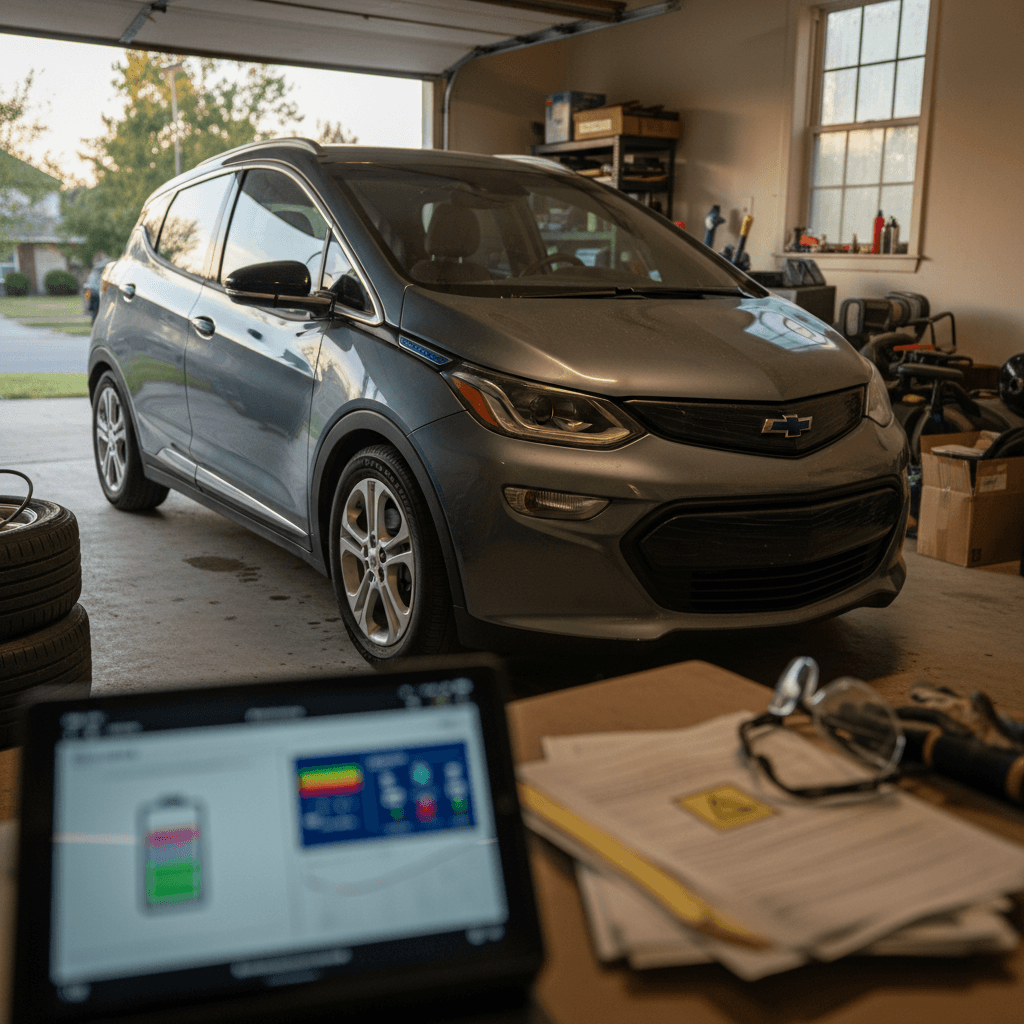
Battery‑recall checklist for a 2022 Bolt EV
1. Pull the official recall history
Ask the seller for the VIN and run it through GM’s recall portal or NHTSA’s database. Confirm the battery campaign shows as completed, not just “open” or “in progress.”
2. Ask for dealer paperwork
Request service invoices or repair orders showing what was actually done, software update only, module replacement, or full pack replacement.
3. Clarify remaining warranty
A 2022 Bolt EV originally carried an 8‑year/100,000‑mile battery warranty from its in‑service date. Ask the dealer to confirm the exact warranty end date and coverage in writing.
4. Look for software charge limits
Some recall phases limited charging to 80–90% for safety. Make sure the current software allows normal use unless a fault is detected.
5. Get a battery‑health assessment
If possible, use an independent battery‑health report, like a <strong>Recharged Score</strong>, to see estimated remaining capacity and detect any abnormal pack behavior.
6. Walk away if answers are vague
If a seller can’t clearly explain what recall work was done, or documents don’t match their story, treat it as a red flag and be ready to move on.
Don’t ignore the recall
Range, charging, and real-world usage
On paper, the 2022 Chevy Bolt EV delivers an EPA‑rated 259 miles of range. In practice, what you get depends on temperature, speed, terrain, and how often you use climate control, but most owners still find it comfortably exceeds the needs of a typical commute.
What range looks like in the real world
Rough estimates for planning, not laboratory numbers
Mild weather, mixed driving
Cold winters
Fast highway cruising
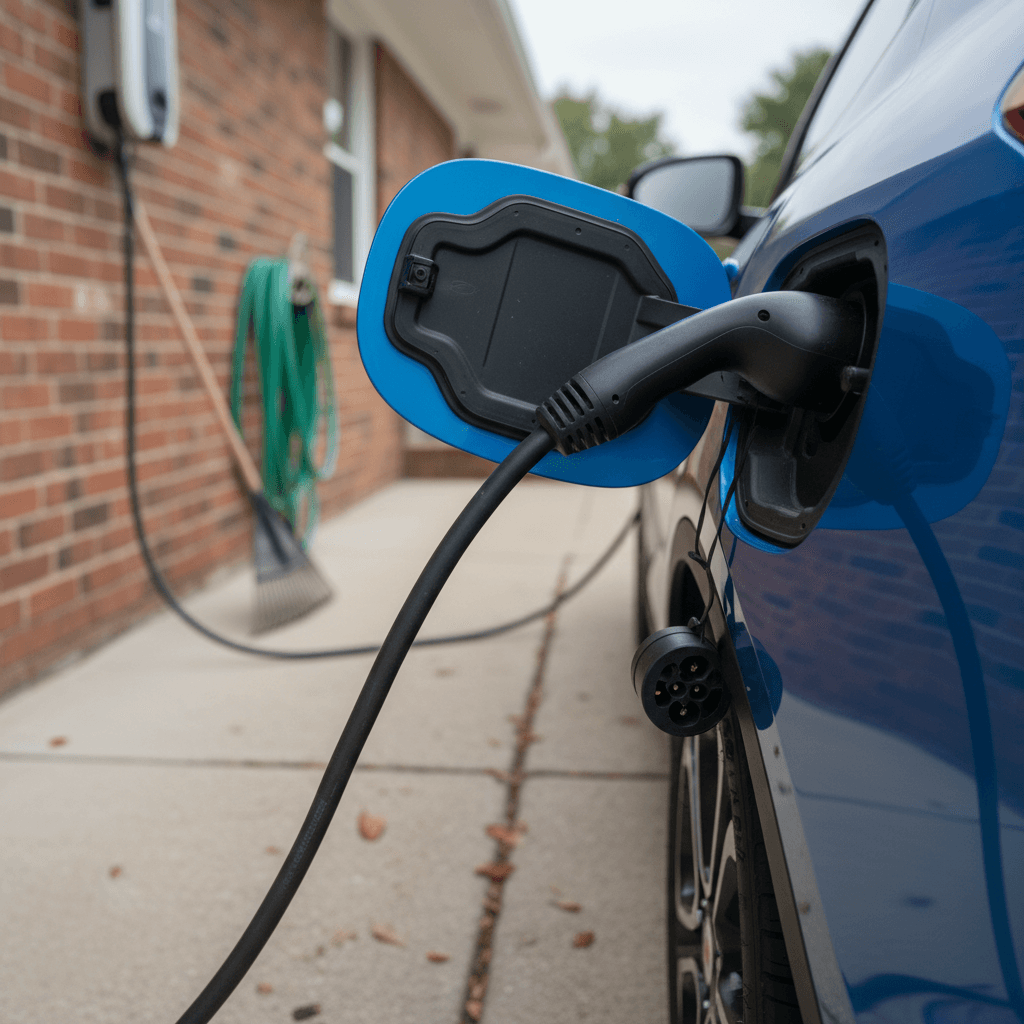
Charging is where the 2022 Bolt EV is clearly optimized more for home use than road‑trip duty. The 11.5 kW onboard charger makes it an excellent Level 2 home‑charging car, fully recharging overnight on a 40–48 amp circuit. DC fast charging, however, tops out at a modest rate compared with newer EVs, and sustained charging speeds are on the slow side for frequent long‑distance travel.
Home charging makes the Bolt shine
Reliability issues and owner reports
Once you set the recall aside and focus on day‑to‑day repairs, the 2022 Bolt EV lands roughly in the average to above‑average reliability zone for an affordable EV. Multiple owner‑survey sources show most drivers reporting few major problems beyond the recall itself, though there are scattered reports of battery modules and charging hardware needing replacement.
- Battery‑related issues: A minority of 2022 owners have seen pack or module replacements beyond the recall, usually triggered by diagnostic trouble codes. Most cars, however, run trouble‑free once the recall work is done.
- Onboard charging issues: Some owners report Level 2 chargers or charging ports needing repair or replacement, common enough to treat as something to check during a pre‑purchase inspection.
- Software quirks: Occasional infotainment reboots, app glitches, and one‑off warning lights show up in owner forums but rarely translate into chronic, unfixable problems.
- Wear items: Tires can wear quickly if you drive aggressively, instant EV torque plus a relatively soft OEM tire compound adds up. Brakes, by contrast, tend to last a long time thanks to regenerative braking.
What a good inspection should cover
Safety ratings and driver-assistance tech
From a safety standpoint, the Bolt EV performs solidly for a small hatchback. It has earned strong federal crash‑test scores and respectable ratings from the IIHS in most categories, even if it’s not at the very top of the pack like some newer crossovers. Standard active‑safety equipment on 2022 models includes automatic emergency braking, lane‑keeping assist, and forward collision alert, with blind‑spot monitoring and rear cross‑traffic alert available on higher trims.
- Multiple airbags and a strong safety cage design for a compact car.
- Electronic stability control and anti‑lock brakes standard.
- Available adaptive cruise control and high‑beam assist in certain configurations.
- LATCH anchors in the rear seat for child seats (check fitment if you use bulky rear‑facing seats).
Good safety for city and suburban duty
2022 Bolt EV vs alternatives
How the 2022 Bolt EV stacks up
Rough comparisons for typical used‑market shoppers in 2026
Vs. 2020–2022 Nissan Leaf
Vs. Kona Electric / Niro EV
Vs. Tesla Model 3 (Standard Range)
Vs. Bolt EUV
Vs. plug‑in hybrids
Where the 2022 Bolt wins
How to shop for a used 2022 Bolt EV
You don’t need to be an engineer to buy a 2022 Chevy Bolt EV wisely, but you do need to be systematic. Here’s a practical roadmap to follow.
Step‑by‑step 2022 Bolt EV shopping checklist
1. Define your use case
Write down how many miles you actually drive per day and how often you road‑trip. If 90% of your life is under 80 miles a day, the Bolt’s range is likely more than enough.
2. Confirm charging access
Decide where the car will live and how you’ll charge it. A dedicated 240‑V Level 2 circuit at home is ideal, but some buyers make a Bolt work with workplace charging or reliable nearby public stations.
3. Shortlist the right VINs
Prioritize cars with clear history reports, one or two owners, and no major crash damage. Ask sellers up front for the VIN so you can pre‑check recall and warranty status.
4. Verify recall completion in writing
Get printed or digital documentation from a Chevrolet dealer confirming that the high‑voltage battery recall has been completed on that specific VIN and what work was done.
5. Get a battery‑health report
Use a third‑party battery‑health tool, or buy from a retailer like Recharged that includes a <strong>Recharged Score</strong> report with measured pack capacity and diagnostics.
6. Test both Level 2 and DC fast charging
If possible, plug the car into a Level 2 charger and a DC fast charger before you buy. Watch for errors, strange noises, or charging speeds far below what’s normal for a Bolt.
7. Drive it like you’ll actually use it
Include a mix of surface streets and highway driving. Pay attention to ride comfort, cabin noise, and how quickly the range estimate drops at your normal speed.
8. Negotiate based on data
Use your inspection results, battery‑health report, and comparable listings to justify your offer. A car with weaker range or missing documentation should be discounted accordingly.
How Recharged helps with used Bolt EVs
Because the 2022 Bolt EV’s biggest question mark is its battery history, it’s exactly the kind of car that benefits from a transparent, EV‑specific buying experience. That’s where Recharged comes in.
What you get when you shop a 2022 Bolt EV with Recharged
Designed around EV questions, not generic used‑car checklists
Recharged Score battery diagnostics
Recall & warranty verification
Fair‑market pricing
Nationwide delivery
EV‑specialist guidance
Trade‑in and selling options
Ready to find your next EV?
Browse VehiclesFAQ: 2022 Chevy Bolt EV buying questions
Frequently asked questions about the 2022 Chevrolet Bolt EV
Bottom line: Who should buy a 2022 Bolt EV?
So, is the 2022 Chevrolet Bolt EV a good buy? For the right driver, absolutely. If your life is built around commuting, errands, and occasional regional trips, and you have reliable charging at home or work, a well‑vetted 2022 Bolt EV delivers impressive range, low running costs, and serious value after its steep depreciation.
The keys are due diligence and documentation: you want clear proof of completed battery‑recall work, a strong battery‑health report, and a price that reflects the Bolt’s market reality, not just the seller’s wish list. Get those pieces right, and the 2022 Bolt EV can be one of the smartest used‑EV purchases you can make in 2026. If you’d rather have experts handle the homework, browsing Recharged’s curated Bolt listings, each with a Recharged Score Report, is an easy way to start.