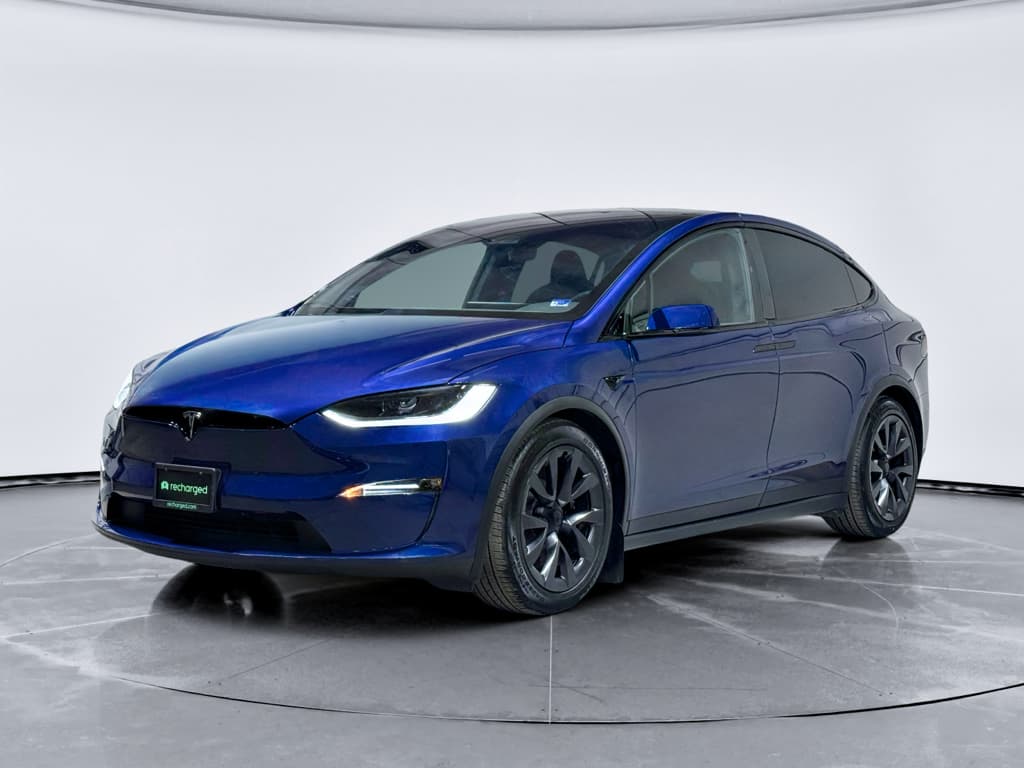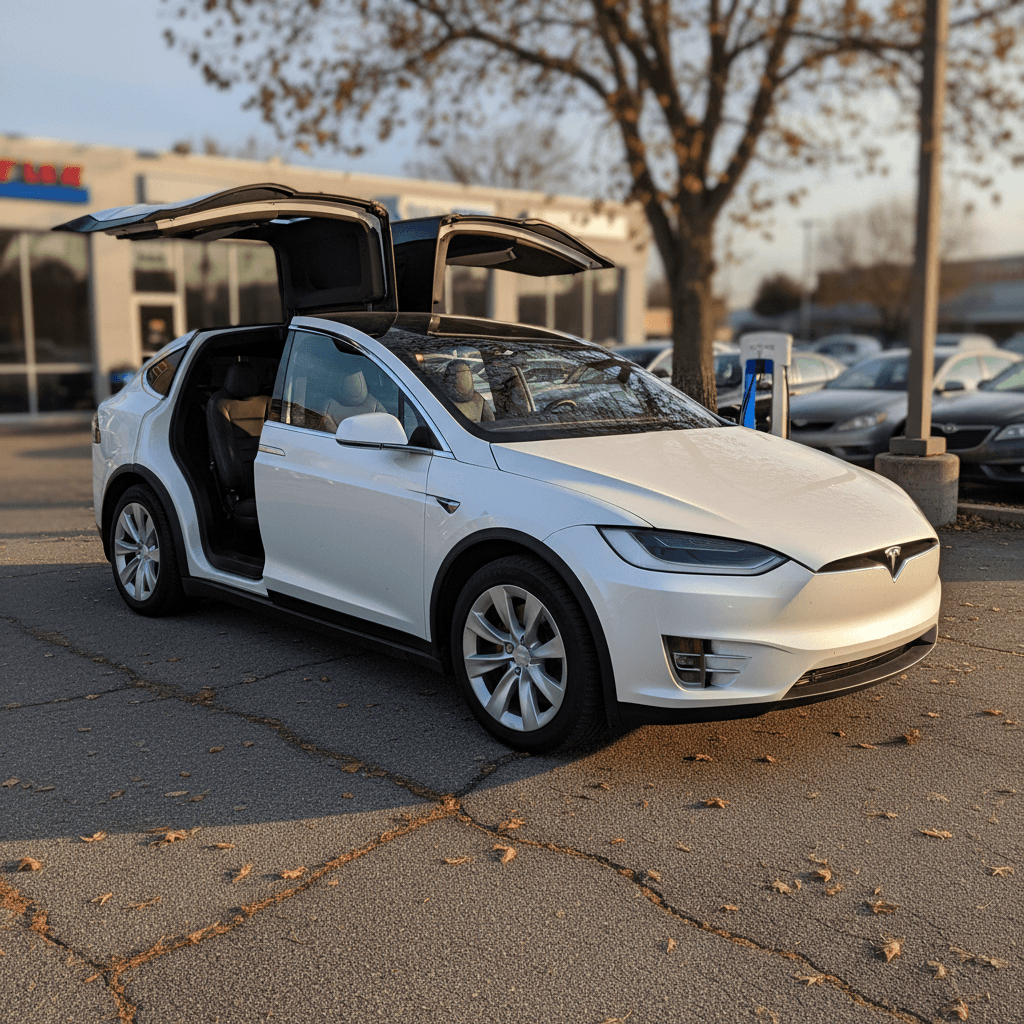
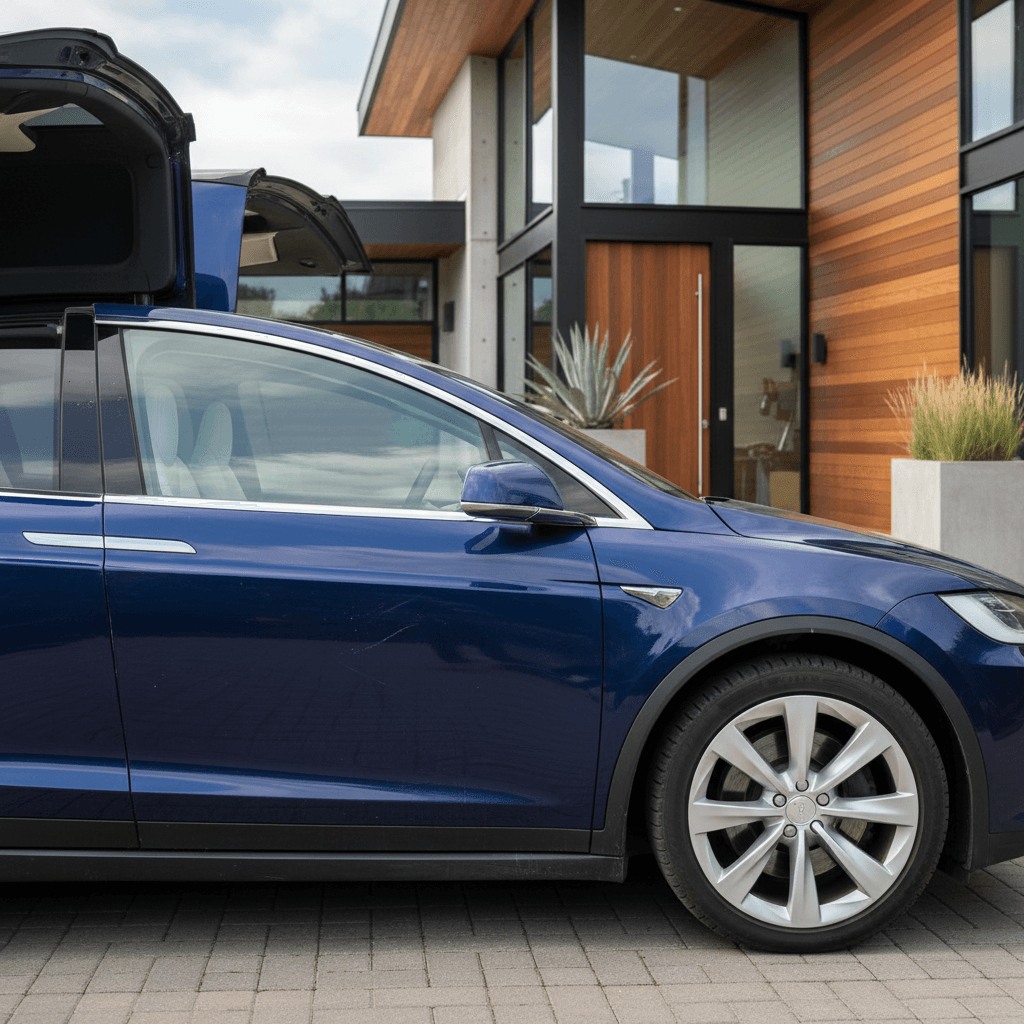
If you’re wondering whether a 2020 Tesla Model X is a good buy in 2026, you’re not alone. The big Tesla SUV has gone from six‑figure status symbol to attainable used EV, thanks to heavy depreciation. But with complex tech, unique Falcon Wing doors and mixed reliability, it’s not a vehicle you buy on impulse. Let’s walk through the numbers, the known trouble spots, and the situations where a 2020 Model X makes solid sense, and when you’re better off with something else.
Quick answer
Overview: Is the 2020 Model X a Good Buy?
Why a 2020 Model X is appealing
- Huge price drop vs. new – Original stickers often exceeded $100,000. Today, many 2020s list tens of thousands less.
- Strong performance – Dual‑motor all‑wheel drive and instant torque make this a seriously quick family hauler.
- Long range – EPA ratings around 328–351 miles when new, depending on trim, give plenty of highway confidence.
- Unique packaging – Three rows, easy third‑row access via Falcon Wing doors, massive cargo capacity.
Why you should be cautious
- Spotty reliability history – Consumer surveys historically rate the Model X below average on reliability, especially in earlier years.
- Expensive out‑of‑warranty repairs – Suspension, door mechanisms, and body work can be costly.
- Complex features – Autopilot hardware/software, air suspension and doors add more to inspect.
- Big, heavy, premium SUV – Insurance, tires and brakes cost more than on a compact EV.
2020 Tesla Model X Fast Facts
Key Specs, Range and Charging for the 2020 Tesla Model X
The 2020 Model X is a mid‑size luxury electric SUV with standard dual‑motor all‑wheel drive and a large ~100 kWh battery pack. Depending on trim (Long Range, Long Range Plus, Performance), EPA range when new typically landed between roughly 328 and 351 miles. That’s still competitive with today’s new EV SUVs, especially if the battery has been treated well.
- Seating: 5, 6 or 7 seats depending on configuration
- Drivetrain: Dual‑motor all‑wheel drive
- Battery: ~100 kWh pack
- EPA range new: roughly 328–351 miles (trim‑dependent)
- Towing: Rated up to 5,000 lbs when properly equipped
- Charging: DC fast charging on Tesla Supercharger network; AC up to 48A on Level 2 (charger and wiring permitting)
Charging advantage
Used Pricing and Depreciation: What Should You Pay?
Because Tesla has cut new‑vehicle prices repeatedly, the Model X has taken a depreciation hit that would make an old‑school luxury sedan blush. That’s painful for the first owner, but it can be a gift to you if you buy carefully. Recent price indexes show average used Model X transaction prices around the upper $30,000s to low $40,000s for 2020 models with typical mileage, with higher‑spec Performance or low‑mile examples pushing above that.
Typical 2020 Model X Asking Price Bands (Spring 2026)
Illustrative ranges for U.S. retail listings; local markets and vehicle condition can move these numbers up or down.
| Condition & Mileage | Likely Trim | Indicative Asking Range | Notes |
|---|---|---|---|
| High miles (80k–110k+) | Long Range / Long Range Plus | $32,000–$38,000 | Attractive prices, but inspect battery health, suspension and service history closely. |
| Average miles (40k–80k) | Long Range / Long Range Plus | $38,000–$45,000 | Sweet spot for many buyers: depreciation baked in, but still plenty of life left. |
| Lower miles (<40k) | Long Range / Performance | $45,000–$55,000+ | Paying a premium for low miles; condition and options (6‑seat, FSD) matter. |
| Tesla CPO or extended coverage | Varies | Usually several thousand more than private party | You’re paying for added warranty and reconditioning confidence. |
Use these as ballpark guides, not hard rules. Always compare multiple vehicles in your region.
Don’t overpay just for software options
Battery Health and Range Loss on a 2020 Model X
By 2026, a 2020 Model X is about six years old. For EVs, that puts the traction battery front and center in your buying decision. Long‑range Tesla packs have generally aged better than many skeptics predicted, but that doesn’t mean every vehicle is equal. Usage patterns, climate and charging habits all matter.
How to Think About 2020 Model X Battery Health
What’s typical, what’s concerning, and what you can’t see at a glance
Typical degradation
Many owners of Teslas in this age range report roughly 8–15% capacity loss versus new. On a 2020 Model X rated around 340 miles, that might mean a realistic full‑charge range in the high‑200s to low‑300s today.
Red flags to watch for
Unusually low displayed range, repeated DC fast‑charging multiple times a day, or a service history showing battery‑related warnings or derating can indicate accelerated wear or issues.
How Recharged helps
Every vehicle sold through Recharged includes a Recharged Score Report with verified battery diagnostics, so you see how the pack is performing versus peers, before you buy.
Pro move: verify the numbers, not just the guess
Reliability and Common Issues Owners Report
Here’s where the 2020 Model X requires a cool head. Tesla has improved quality over time, and the 2020s are generally better than early‑build Xs, but the model still carries a reputation for below‑average reliability. Owner reports and surveys highlight a few recurring themes you should know about.
- Suspension and half‑shaft shudder – Some X owners have reported shudder or vibration under hard acceleration, often tied to front half shafts and suspension geometry.
- Falcon Wing doors – The party trick of the Model X can also be a pain point. Misalignment, sensors and latches have been sources of complaints and repairs, especially on vehicles that have seen rough use or prior body work.
- Interior trim and seals – Wind noise, water leaks and trim alignment have surfaced on some vehicles. Less glamorous than Autopilot, but annoying and potentially expensive to chase down.
- Electronics and screens – Large displays are a Tesla strength, but failures or yellowing screens and MCU glitches have appeared on earlier cars. Always test every function carefully.
- Recalls and software updates – Tesla has handled some issues via over‑the‑air updates, including driver‑assistance behavior, but mechanical items still require service visits.
Why pre‑purchase inspection matters more with a Model X
“With any complex luxury vehicle, the first owner takes the hit on price. The savvy second owner wins only if they buy the *right* example, one with documented care, clean history and no looming big‑ticket repairs.”
Safety, Tech and Driving Experience
From a safety and tech standpoint, the 2020 Model X is still very much in the game. Tesla’s crash performance and active safety tech have been strong, and even 2020 hardware offers robust automatic emergency braking, lane‑keeping support and adaptive cruise when properly optioned. The panoramic glass, minimalist cockpit, and instant torque give the X a driving character that still feels more like a sleek spaceship than a six‑year‑old SUV.
What You Get in a 2020 Model X
The high points that still feel modern today
Strong crash performance
Tesla’s big vehicles have historically performed well in crash testing, and the X benefits from a low center of gravity and large crumple zones.
Over‑the‑air updates
Even a 2020 Model X can continue to receive software updates that tweak interfaces, add features or refine driver‑assistance behavior.
Effortless performance
Dual‑motor all‑wheel drive delivers swift acceleration and confident all‑weather traction, overkill for some, but addictive if you enjoy driving.
Ownership Costs: Insurance, Maintenance and Repairs
You shouldn’t evaluate whether a 2020 Tesla Model X is a good buy on sticker price alone. Ownership costs on a big luxury EV SUV can surprise first‑time buyers who are coming out of smaller crossovers or sedans.
- Insurance – The Model X is large, powerful and expensive to repair. Many owners see higher premiums than on a Model 3 or compact gas SUV. Always get quotes using the actual VIN before you commit.
- Tires and brakes – Heavy curb weight and strong acceleration mean frequent tire replacements if you drive hard. Brakes often last longer thanks to regeneration, but replacement parts are pricey when you do need them.
- Maintenance – No oil changes, but you still have cabin filters, brake fluid, coolant for the battery system, and potential suspension wear items over time.
- Repairs and body work – Tesla‑specific panels, glass and Falcon Wing doors make collision repairs more expensive and sometimes slower than mainstream SUVs.
- Charging costs – Electricity is typically cheaper than gas on a per‑mile basis, especially if you can charge at home on off‑peak rates.
Where Recharged fits in
Ready to find your next EV?
Browse VehiclesWhen a 2020 Model X Is a Smart Buy
A used 2020 Model X is not for everyone, and that’s fine. But for certain buyers, it hits a sweet spot: huge capability, still‑modern technology and a price that’s finally come down to earth.
Ideal Buyer Profiles for a 2020 Model X
If you see yourself here, a 2020 X might make sense
EV‑curious family that road‑trips
You want three rows, serious cargo space and the ability to road‑trip without planning every DC fast charge. A 2020 Model X gives you Supercharger access, long range and an airy cabin your family will actually enjoy spending time in.
Homeowner with Level 2 charging
If you can install, or already have, a 240V Level 2 charger in your garage, the Model X becomes a comfortable daily driver with minimal fueling hassle. Charging exclusively at public fast chargers is possible, but less pleasant.
You value performance and tech
If you’d otherwise be shopping for a used German luxury SUV, the 2020 Model X offers comparable or better straight‑line performance with a lower running‑cost profile and a much more modern tech story.
You’re buying carefully, not impulsively
You’re willing to pull the Carfax, read the service records, get a battery health report, and walk away from questionable examples. That mindset is key to making a complex EV like the Model X a truly smart buy.
When to Walk Away, or Consider Alternatives
Just as important as identifying a good deal is recognizing when a 2020 Model X isn’t the right answer. This is where many buyers save themselves thousands of dollars and months of frustration.
Red flags: when to walk away
- Visible misalignment or damage around Falcon Wing doors, tailgate or glass roof.
- Range or battery warnings on the screen, or an unusually low indicated range at high state of charge.
- Spotty or nonexistent service history, especially on higher‑mile examples.
- Salvage or rebuilt title unless you are highly experienced and know exactly what was repaired.
- Seller pressure to skip inspection or rush a decision.
When an alternative might be better
- You don’t need three rows – A used Model Y or other 2‑row EV SUV can be cheaper to buy and own.
- Budget is tight – Maintenance reserves and insurance on a big luxury EV can stretch thin budgets; a smaller used EV or plug‑in hybrid might be wiser.
- You live far from Tesla service – Long drives or shipping the car for routine work can quickly get old.
- You want simple, set‑and‑forget ownership – Mainstream EV crossovers may offer less drama, even if they’re less exciting.
Checklist: How to Inspect a Used 2020 Tesla Model X
Pre‑Purchase Inspection Steps for a 2020 Model X
1. Verify battery health and displayed range
Check the rated range at 90–100% charge and compare to original EPA numbers for that trim. Whenever possible, get a professional battery health report, Recharged includes this in the Recharged Score.
2. Scan the service history and recalls
Review digital or paper records for prior repairs, especially Falcon Wing doors, suspension components and electronics. Confirm open recalls have been addressed or can be scheduled easily.
3. Inspect doors, glass and body alignment
Open and close both Falcon Wing doors multiple times on uneven surfaces if possible. Look for binding, misalignment, leaks, or warning messages. Check panel gaps around the doors, hatch and front doors.
4. Test every tech feature
Run through the touchscreen, instrument cluster, cameras, parking sensors, Autopilot (if equipped), HVAC, seat heaters, audio system and connectivity. Glitches here can be frustrating and expensive to sort out.
5. Check tires, brakes and suspension
Uneven tire wear, clunks over bumps or excess play in the steering can signal suspension work ahead. With a heavy, powerful EV like the X, you want these systems in top shape.
6. Confirm charging behavior
If possible, plug into both a Level 2 charger and a DC fast charger. Make sure the car charges at the expected power levels without error messages or connector issues.
7. Evaluate total cost, not just price
Get insurance quotes with the actual VIN, budget for a set of tires, and keep a reserve for out‑of‑warranty repairs. A low price isn’t a good deal if you’re one big repair away from regret.
FAQ: Buying a 2020 Tesla Model X Used
Frequently Asked Questions About the 2020 Model X
Bottom Line: Should You Buy a 2020 Model X?
A 2020 Tesla Model X can absolutely be a good buy, but only if you choose the right example and go in with realistic expectations. Depreciation has turned a once‑six‑figure electric flagship into something many families can actually afford, while its range, performance and technology still feel contemporary in 2026.
On the other hand, this is not the EV for someone who just wants cheap, simple transportation. The Model X is big, complex and expensive to fix when things go wrong. If you’re willing to do your homework, budget for ownership costs and lean on tools like a Recharged Score battery report and professional inspection, the 2020 X can deliver a lot of EV for the money, and a driving experience very few SUVs can match.
If you decide the 2020 Model X fits your life, consider browsing used inventory on Recharged, where every EV comes with verified battery health, transparent pricing, and the option to pre‑qualify for financing online. That way, when you do find the right Model X, you’ll be ready to act with confidence instead of crossing your fingers.