If you’re looking for an instant offer for a used electric car, you’re probably juggling two competing priorities: speed and price. You want cash (or trade-in value) now, but you don’t want to leave thousands of dollars on the table because a buyer doesn’t understand EVs, or your battery’s real health.
Instant offers are everywhere now
Why instant offers for used electric cars are different
Traditional instant offer tools were built around gas cars. They’re tuned to things like mileage, engine condition, and auction data going back decades. Used EVs live in a different world: battery health, software history, charging habits, and incentives all shift what your car is worth and how fast dealers are willing to write a check.
What’s driving demand for instant EV offers in 2026
EVs can spook some buyers
How an instant offer for a used electric car actually works
Behind the scenes, most instant offers follow a similar playbook. They use a pricing engine, fed by auction results, retail listings, and historical sales, to produce a number the buyer is willing to stand behind, at least for a short window. For EVs, the better tools are starting to plug in battery data and charging history as well.
Typical instant-offer journey for a used EV
Online tools move fast, but there are still a few key checkpoints before money hits your account.
1. Enter your EV’s details
2. Get a preliminary number
3. Verification & final offer
Don’t skip the photos
What data really goes into an EV instant offer
No two platforms calculate value the exact same way, but most lean on a similar set of inputs. For used electric cars, you want a buyer that looks beyond just model year and mileage.
Key inputs that shape a used EV instant offer
These are the levers that typically move your electric car’s price up or down when you request an instant quote.
| Factor | Why it matters for EVs | What helps your price | What hurts your price |
|---|---|---|---|
| Model, trim & options | Some trims have bigger batteries, faster charging, or popular option packages. | Long-range battery, dual motor, popular colors, premium packages. | Base battery, slow-charging trims, unpopular colors. |
| Mileage & usage pattern | Miles still matter, but less than batteries, for now. | Lower miles than similar listings in your area. | High miles without matching service or charging history. |
| Battery health & range | Actual usable capacity often matters more than odometer readings. | Documented health report, stable range, no high-voltage errors. | Noticeable range loss, pack warnings, or missing battery data. |
| Charging history | Fast-charging patterns can hint at long-term battery wear. | Mostly home Level 2 charging, balanced DC fast-charge use. | Heavy fast-charging with no home charging history. |
| Title & accident history | Structural repairs or flood damage are especially concerning on EVs. | Clean title, documented minor cosmetic repairs only. | Salvage title, airbag deployment, or water damage. |
| Market demand | Some EVs move fast; others sit. Instant buyers adjust for that risk. | In-demand models like certain Teslas, IONIQ 5, or popular crossovers. | Slow sellers, older compliance cars, or limited-range city EVs. |
If the tool barely asks about these factors, assume it’s using a generic gas-car playbook for your EV.
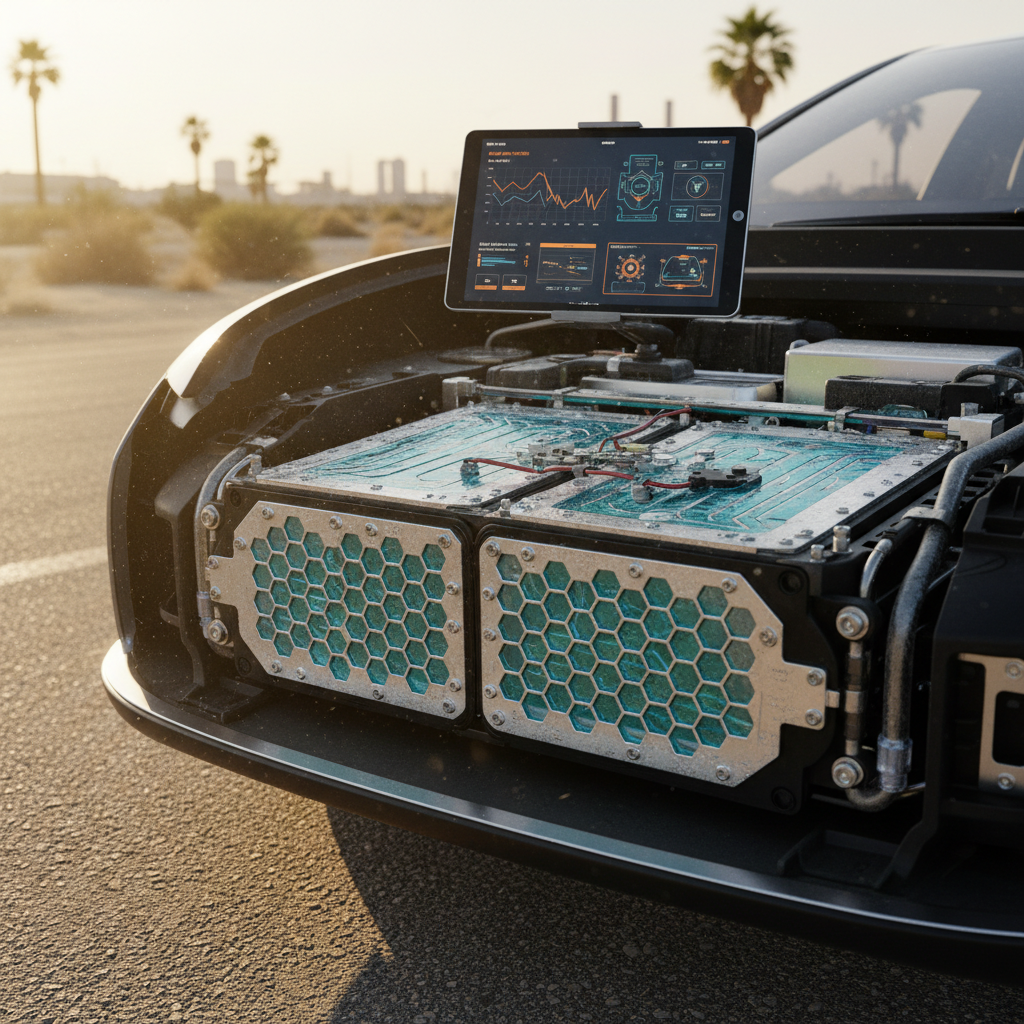
Battery health: the number-one price driver
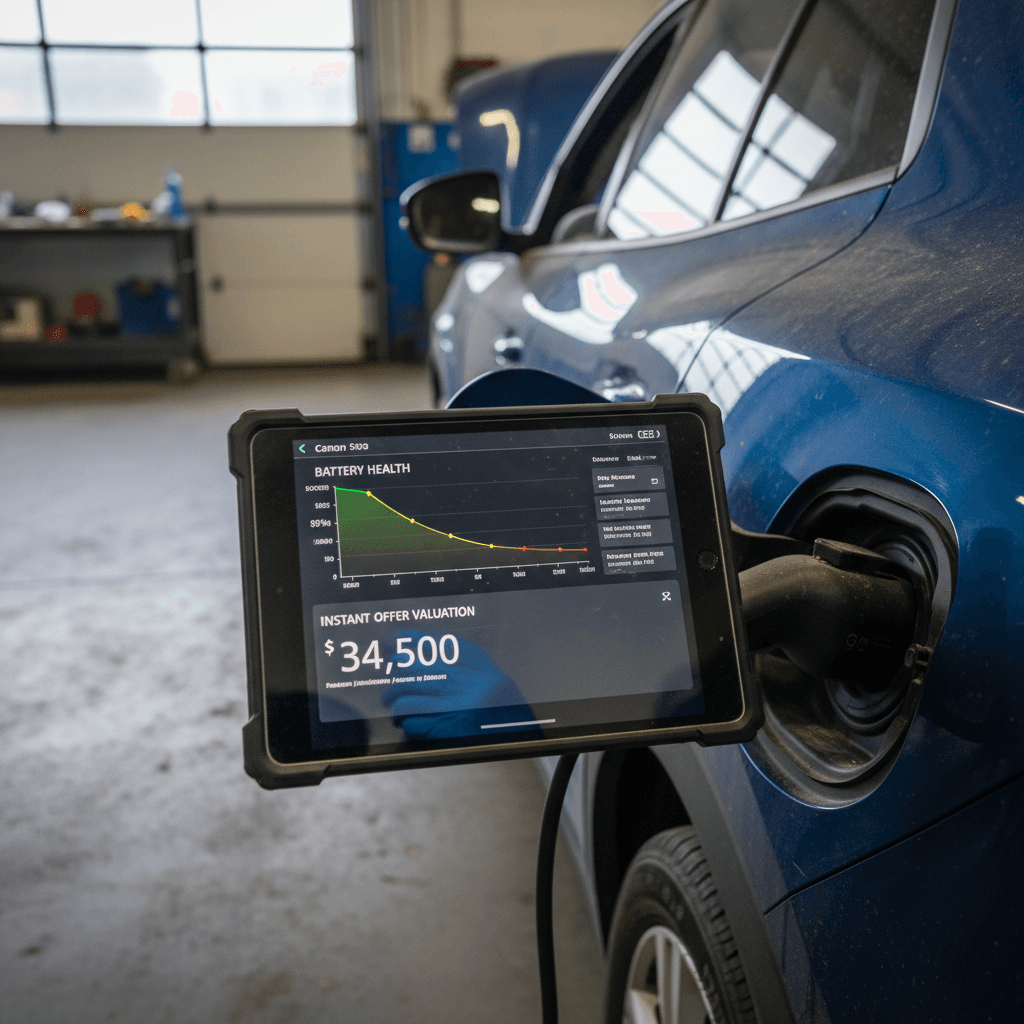
Ask any dealer quietly managing their used EV inventory and you’ll hear the same thing: battery uncertainty kills deals. If a buyer can’t see reliable state-of-health data, they either walk away or price in a worst-case scenario. That’s why a credible battery report can unlock value an old-school instant offer tool leaves on the table.
When your battery is healthier than average
If your EV has been mostly charged at home on Level 2, kept out of extreme heat, and hasn’t lived its life at 100% or 0%, there’s a good chance its battery is doing better than the averages baked into generic pricing tools.
With proof, like a third‑party battery health report or a platform-specific diagnostic such as a Recharged Score, you can justify a higher instant offer than an algorithm that only sees year and miles.
When your battery shows real degradation
On the flip side, if your usable range is noticeably below what similar EVs deliver, sophisticated buyers will discount accordingly. That isn’t punishment; it’s risk management. The more transparent you are about battery condition, the less room there is for ugly surprises at inspection, and the more likely a buyer is to honor the instant offer you see on screen.
Beware of offers that ignore the battery
Where you can get an instant offer for a used electric car
You have more options than ever if you want a fast number for your EV. The right channel depends on how much time you have, how unique your car is, and whether you’re willing to trade a bit of money for convenience.
Four common ways to get an instant offer for a used EV
Each path balances price, speed, and effort a little differently.
Franchise & used-car dealers
Online car-buying sites
Marketplaces & consignment
Private sale + pricing tools
Where Recharged fits
Ready to find your next EV?
Browse VehiclesHow to compare instant offers like a pro
If you only collect one offer, you’ll never know whether the number on your screen is strong or soft. Comparing at least two or three instant offers, especially from EV‑savvy buyers, gives you real negotiating power.
Look beyond the headline number
- Fees and deductions: Some buyers tack on reconditioning or transport fees at the last minute.
- Offer expiration: A number that’s only good for 24 hours is harder to build a plan around than one locked for 7 days.
- Inspection wiggle room: Read the fine print about how much they can lower the price for "undisclosed" issues.
Weigh convenience against dollars
A nationwide buyer that picks up your car at home and pays you electronically might offer less than a retail marketplace where your EV is shown to multiple shoppers. Decide how much that convenience is worth to you in real money, $300? $1,000?, before you compare numbers.
Use offers as leverage
Checklist before you accept any instant offer
Pre-acceptance checklist for your EV instant offer
1. Gather your documents
Have your title (or lender information), registration, driver’s license, and key fobs ready. If you have service records, charging receipts, or prior battery diagnostics, keep those handy too, especially for older EVs.
2. Pull or request a battery health report
If your buyer doesn’t provide one, consider getting a third‑party report, or, where available, a Recharged Score. Going into an inspection with no battery data puts you on your heels.
3. Fix easy cosmetic issues
Quick wins like a wash, vacuum, and removing personal items won’t magically add thousands to your instant offer, but they can make the inspection smoother and reduce nitpicks that justify price cuts.
4. Photograph everything clearly
Take well-lit photos of the exterior, interior, wheels, and infotainment screens. Include a shot of the odometer and any range or battery screens. Clear evidence now helps keep your final offer close to the instant one.
5. Confirm payoff and equity
If you still owe money on the car, get a 10-day payoff from your lender and confirm that the buyer will handle payoff directly. Understand how much equity (or negative equity) you’re bringing to the table.
6. Read the fine print
Before you click “accept,” check how long the offer is valid, how payment works, whether there are transport fees, and what counts as a “deal‑breaking” condition at inspection.
How Recharged handles instant offers and battery health
Recharged is built specifically around used electric vehicles, so instant valuations start with the right question: what shape is your battery really in? Every vehicle on the platform includes a Recharged Score Report that analyzes battery health, fair market pricing, and vehicle condition so buyers and sellers are working from the same clean sheet of data.
Why EV-specific data makes your instant offer more accurate
Recharged combines battery diagnostics with real-world market data to keep lowball offers in check.
Verified battery diagnostics
Fair market EV pricing
EV-specialist support
Sell, trade, or consign, on your terms
Common pitfalls when selling a used EV quickly
Speed matters, but rushing into the first instant offer you see can cost serious money, especially in a segment as volatile as used EVs. Here are a few traps to avoid.
- Accepting an offer that’s clearly below similar listings without understanding why.
- Ignoring the battery question and hoping it won’t come up until after you’re paid.
- Letting a buyer nickel-and-dime you at inspection for normal EV quirks like expected range loss.
- Revealing you’re desperate to sell, which encourages more aggressive discounting.
- Assuming all instant offer tools treat used EVs the same way they treat used gas cars.
Watch out for “we don’t really want EVs” penalties
FAQ: Instant offers for used electric cars
Frequently asked questions about instant offers for used EVs
Bottom line: getting a fair instant offer for your EV
Instant offers for used electric cars have matured quickly, but the gap between an EV‑savvy platform and a generic buyer is still wide. If you want speed without getting short‑changed, look for tools that respect battery health, real market data, and transparent pricing. Use more than one offer as a benchmark, be ready with your paperwork, and don’t apologize for asking questions about how your price was built.
Recharged was built around that kind of transparency. With a Recharged Score battery health report, fair-market pricing, EV‑specialist support, and flexible options, instant offer, trade‑in, or consignment, you don’t have to choose between a quick sale and a smart one. If you’re ready to see what your used EV is really worth, your next step is simple: get a data‑backed valuation and let the offers compete for your car.