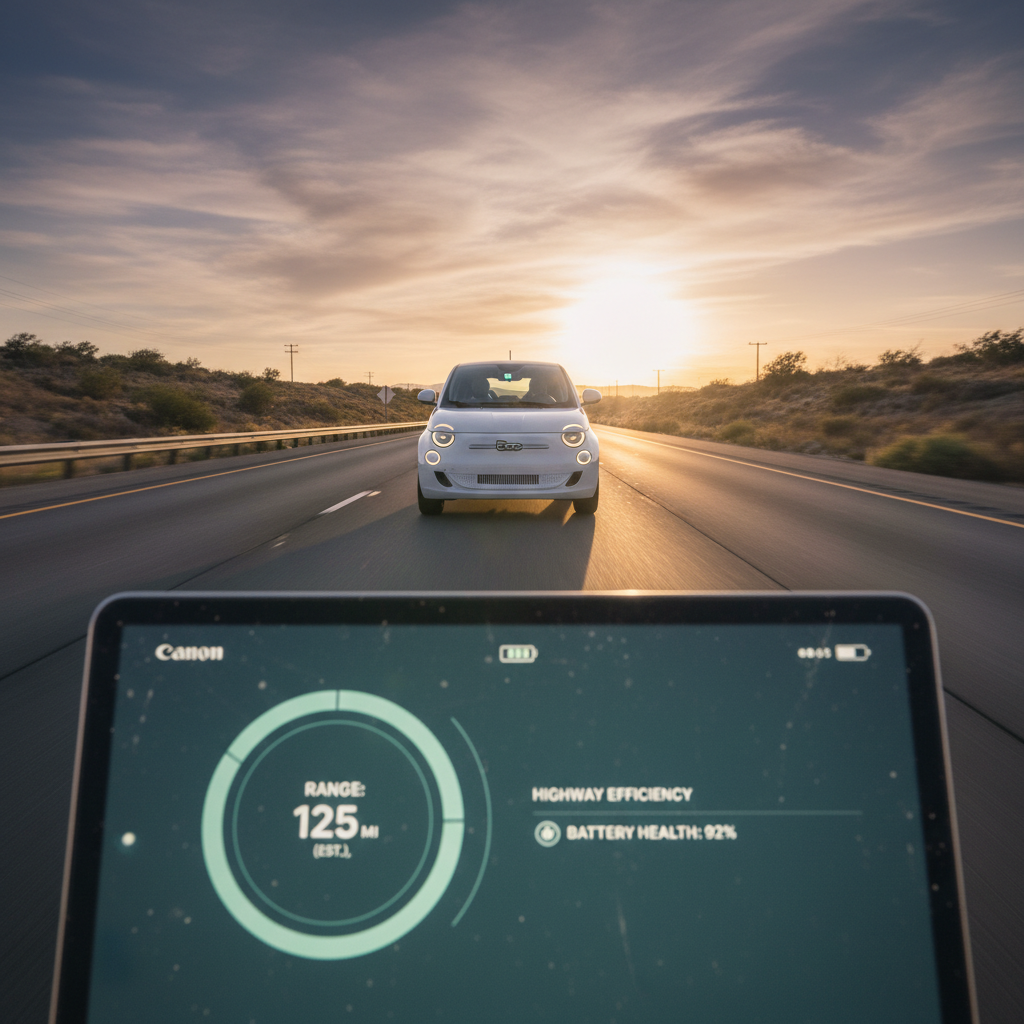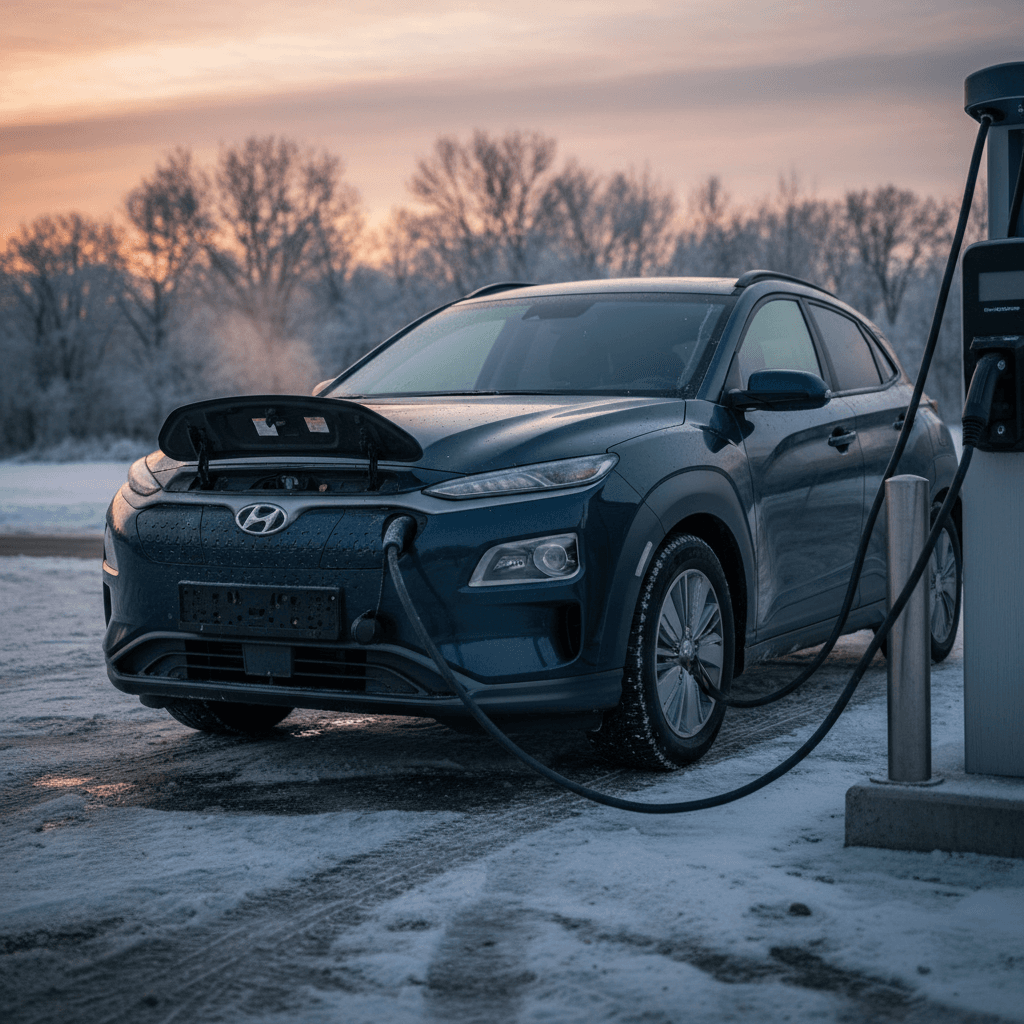
If you live where winter actually means frost on the windshield and breath in the air, the Hyundai Kona Electric’s range in cold weather is more than a spec-sheet curiosity, it decides whether you stop for a charge or make it home on fumes of electrons. Let’s walk through what’s normal, what’s not, and how to keep your Kona doing its best work when the temperature drops.
Quick takeaway
Hyundai Kona Electric EPA range vs. real-world winter range
First, it helps to anchor ourselves in the official numbers before we talk about snow, slush, and reality.
EPA-rated range for recent Hyundai Kona Electric models
Approximate EPA range ratings for U.S.-market Kona Electric trims. Always confirm the exact year and battery in your owner’s manual or window sticker.
| Model year & battery | Trim examples | EPA range (mi) | Battery capacity |
|---|---|---|---|
| 2019–2023 Long Range | SEL / Limited | 258 | ~64 kWh |
| 2024+ Standard Range | SE | 200 | 48.6 kWh |
| 2024+ Long Range | SEL / Limited | 261 | 64.8 kWh |
These are warm-weather laboratory ratings; winter driving will reduce these numbers.
On paper, a long-range Kona Electric will go about 258–261 miles on a full charge in mixed driving. In warm weather at moderate speeds, plenty of owners match or beat those numbers. The story changes once temperatures hang near freezing and you’re running the heater, seat warmers, and defroster.
Typical winter range vs. EPA rating
Think of the EPA number as your best-case springtime scenario. In winter, especially on the highway, planning on 60–80% of that rating is usually a lot less stressful than chasing brochure claims.
How much range loss is normal in cold weather?
Cold affects every EV, but not all to the same degree. A large real-world study of thousands of EVs found that, on average, models retained about 80% of their rated range around freezing temperatures. The Hyundai Kona line did a bit better than that, holding onto roughly 84% of its EPA range in those conditions, which tracks with what many owners report in the wild.
- Around freezing (30–40°F / -1–4°C): 10–20% loss is common, especially on mixed driving with some cabin heat.
- Well below freezing (0–20°F / -18– -6°C): 20–30% loss is typical, more on short, stop‑and‑go trips.
- Severe cold (below 0°F / -18°C): Expect 30%+ loss, and up to roughly 40% during constant high‑speed driving with heavy heater use.
Don’t panic over the guess‑o‑meter
What matters most is your actual energy use over distance. If you track kWh consumed per 100 miles (or miles per kWh) over a week, you’ll get a clearer picture than watching the projected range bounce around with every cold start.
Why the Kona Electric loses range in the cold
The Kona Electric has a very efficient drivetrain, but it’s still bound by physics and chemistry. Three main culprits eat into winter range:
Three main winter range killers
Same battery, different conditions, here’s what changes in the cold.
1. Cold battery chemistry
2. Cabin heating load
3. Aerodynamics & rolling drag
Warm battery, happy battery
Heat pump, battery heating, and trim differences
Not every Kona Electric is built exactly the same for winter work. Depending on your model year and market, the car may have a heat pump, a battery heater, both, or neither. Those pieces quietly make a big difference when it’s ugly outside.
What a heat pump does for you
Instead of simply using electric resistance elements (like a giant toaster) to heat the cabin, a heat pump moves existing heat around, using much less energy in moderate cold. In shoulder‑season temps, say 25–45°F, it can trim HVAC consumption significantly compared with resistance heat alone.
That translates directly into more usable winter range, especially on longer drives where cabin heat runs continuously.
Battery heaters and Snow mode
Many Kona Electrics include a battery heater that gently warms the pack, particularly during DC fast charging or in very cold ambient temps. It doesn’t make range losses disappear, but it helps protect performance and charging speed.
Hyundai also offers a Snow drive mode that softens throttle response and traction control. It doesn’t change physics, but it can help you drive more smoothly, another quiet win for efficiency.
Not sure what your car has?
Driving strategies to maximize Kona winter range
You can’t control the weather, but you have a lot of say in how your Kona Electric uses its energy. Think about winter range as an efficiency puzzle: the more pieces you line up, driving style, climate settings, route choice, the easier it is to hit your target.
Practical habits that add real miles in winter
1. Precondition while plugged in
Use the Hyundai app or in‑car settings to warm the cabin and, when available, the battery while you’re still plugged into home charging. This lets the grid handle the heavy lifting instead of your traction battery.
2. Use seat and wheel heaters first
Seat and steering‑wheel heaters sip power compared with blasting hot air. Set the cabin temperature a bit lower and let the contact heat keep you comfortable with less impact on range.
3. Ease up on the highway speed
Above about 65 mph, aerodynamic drag climbs fast. Dropping from 75 to 65 mph in cold weather can save a noticeable chunk of energy, often more than turning the heat down a notch.
4. Choose Eco mode in bad weather
Eco mode softens throttle response and can dial back HVAC power. That makes it easier to avoid wasteful bursts of acceleration on slick roads and helps the car babysit its own energy use.
5. Combine errands into fewer trips
Short, cold‑soaked drives are the enemy of efficiency. Consolidate errands so the car warms up once and stays closer to its ideal operating temperature instead of starting from frozen several times a day.
6. Watch your consumption, not just range
Use the Kona’s energy consumption display (kWh/100 mi or mi/kWh) as your scoreboard. If the number improves, your winter driving habits are working, even if the guess‑o‑meter still looks pessimistic.
A realistic winter goal
Charging your Kona Electric in cold weather
Winter doesn’t just trim how far you can go, it also affects how fast you can put energy back in. A cold battery will accept charge more slowly, especially at DC fast chargers, and the car may run the battery heater in the background to protect itself.
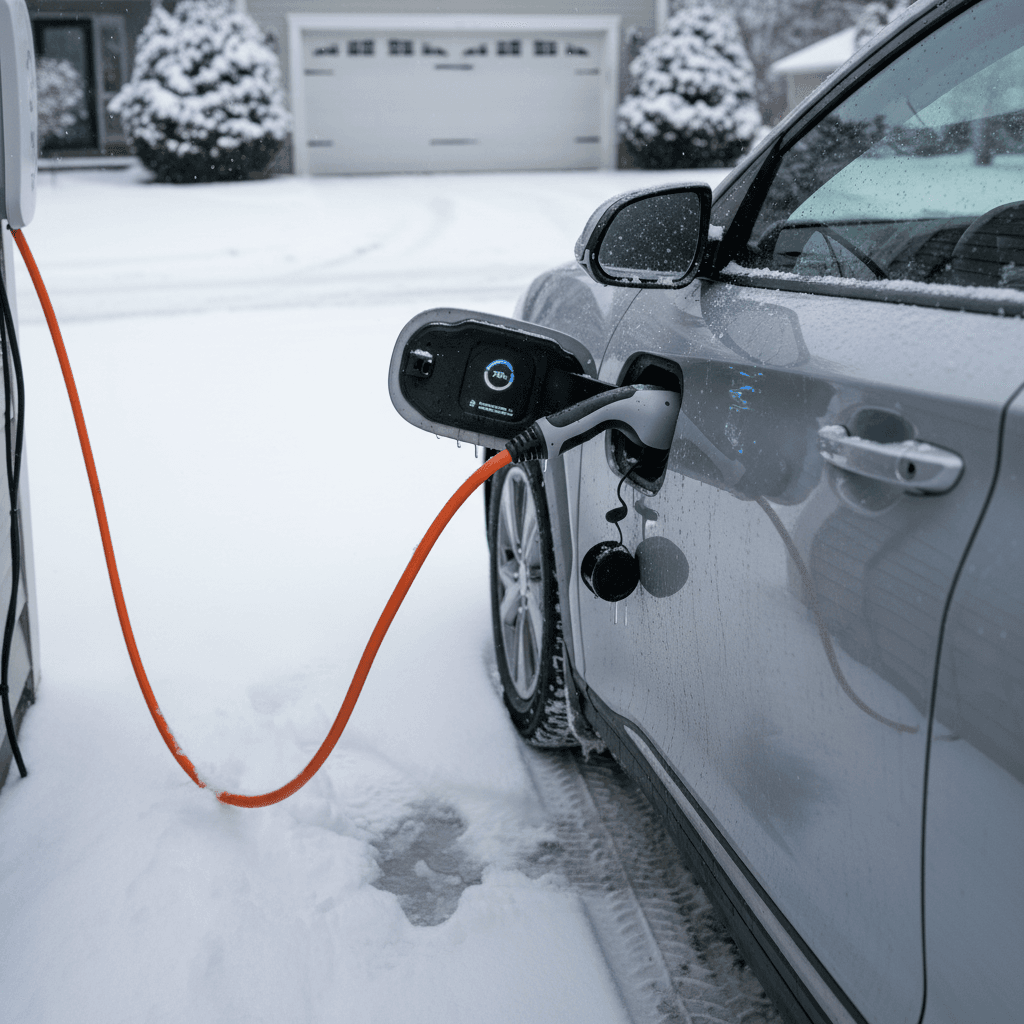
- Whenever possible, park and charge indoors or in a sheltered spot. Even a basic garage that’s a few degrees warmer than outside helps.
- If you’re road‑tripping, arrive at fast chargers with a low state of charge (20–30%) after driving for a while. The battery will be warmer and more willing to accept higher power.
- Don’t be surprised if the car limits DC fast‑charge speeds on a frigid pack. That’s the battery protection system doing its job, not a sign of immediate failure.
- At home, a Level 2 charger (240V) is ideal for winter. It can comfortably refill a daily commute overnight, even if temperatures slow things down a bit.
Thinking about upgrading home charging?
Planning trips with winter range in mind
Daily commuting in the cold is one thing; staring down a sub‑freezing highway slog is another. This is where a little conservative planning with your Hyundai Kona Electric range in cold weather pays off in peace of mind.
For daily driving
- Try to keep your typical winter route within half your realistic cold‑weather range. If you count on 180 miles, aim for 90 miles or less between full charges.
- Top up frequently rather than running down to single‑digits. Lithium‑ion batteries are happiest cycling between roughly 20–80% for everyday use.
- Use public Level 2 chargers at work or shopping centers as a buffer if your winter commute gets close to your comfort limit.
For road trips
- In winter, plan legs using 60–70% of the EPA range instead of the full number. For a 261‑mile Kona, think in 160–180‑mile chunks.
- Favor charging stops near amenities so you can warm up while the car charges, and check chargers in advance in your preferred app.
- Build in a margin for headwinds, wet roads, or detours. Winter is not the time to see how close you can cut it between stations.
Watch for the hidden range killers
Considering a used Kona Electric? What to look for
If you’re shopping the used market, a Kona Electric is one of the more efficient, winter‑friendly EVs you can buy without spending luxury money. But just like a gas car in rust country, the story gets more interesting after a few winters.
Winter-specific checks for a used Kona Electric
A little homework now saves a lot of cold‑weather frustration later.
Battery health & history
Climate equipment
Charging & warranty coverage
Buying a used EV can feel opaque if you’re trying to judge both battery health and winter behavior from a 15‑minute test drive. This is exactly where Recharged tries to simplify the process. Every vehicle we list, Kona Electric included, gets a Recharged Score battery health report, fair‑market pricing analysis, and support from EV specialists who know what to ask about cold‑weather performance, charging, and equipment packages.
Frequently asked questions about Kona Electric winter range
Kona Electric cold-weather FAQ
Bottom line on Hyundai Kona Electric range in cold weather
Cold weather will absolutely knock your Kona Electric off its glossy EPA pedestal. But that doesn’t mean it’s a bad winter companion, far from it. In real‑world use, most drivers can count on roughly 60–80% of the rated range when temperatures dip, and with smart charging, preconditioning, and calm driving, the Kona still covers a lot of daily ground without drama.
If you’re already an owner, think of winter as an invitation to fine‑tune your habits rather than a reason to white‑knuckle the steering wheel. And if you’re shopping for a used Kona Electric, focus on verified battery health, winter‑friendly equipment, and your own daily routes. Recharged was built to make that process transparent, with Recharged Score battery diagnostics, fair pricing, and EV‑savvy specialists who can help you decide whether a Kona Electric fits your winter and year‑round life.