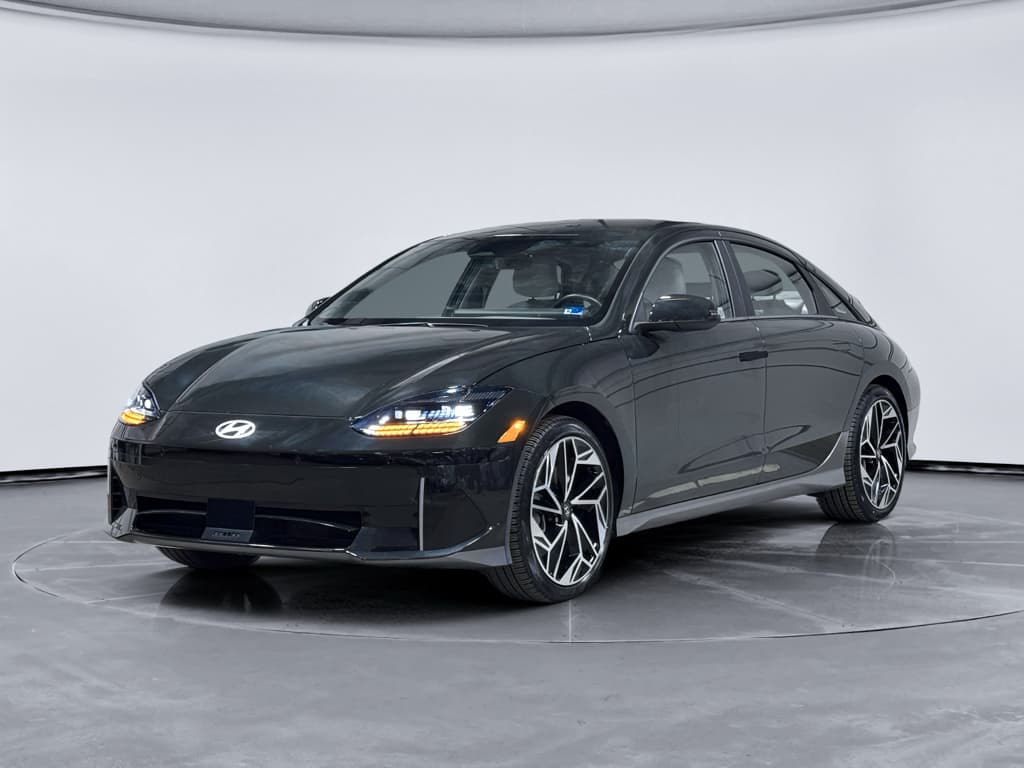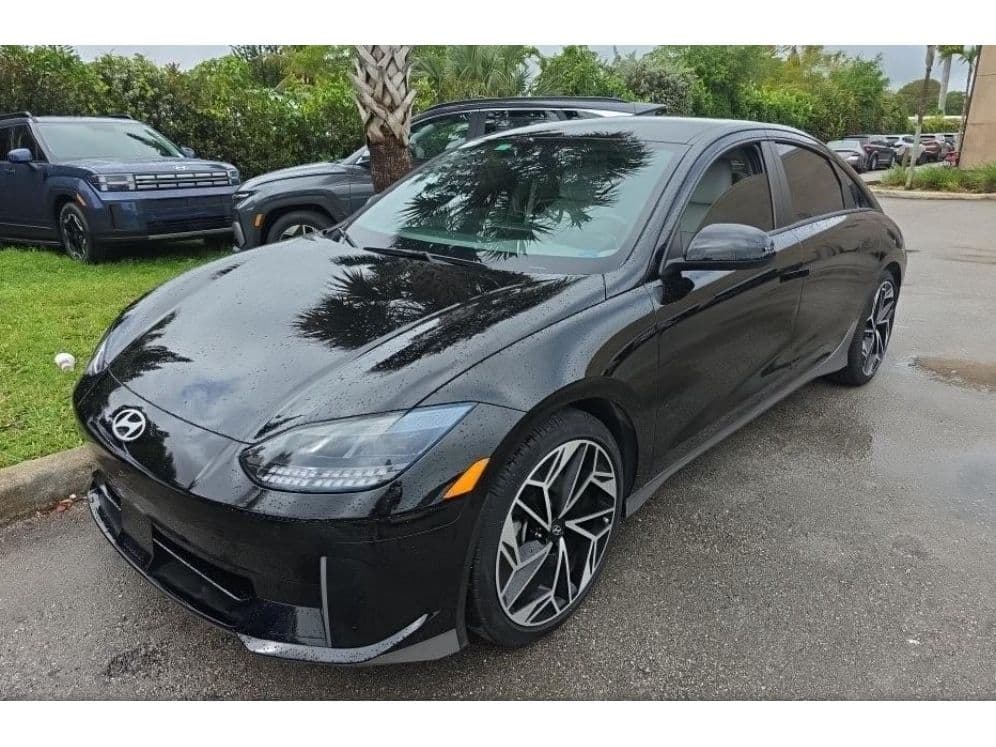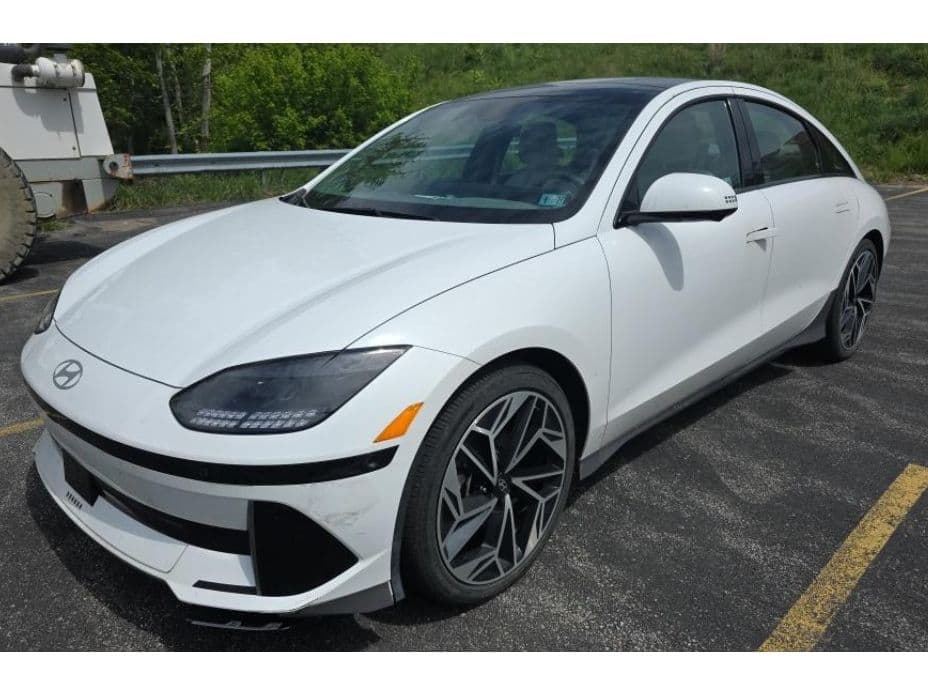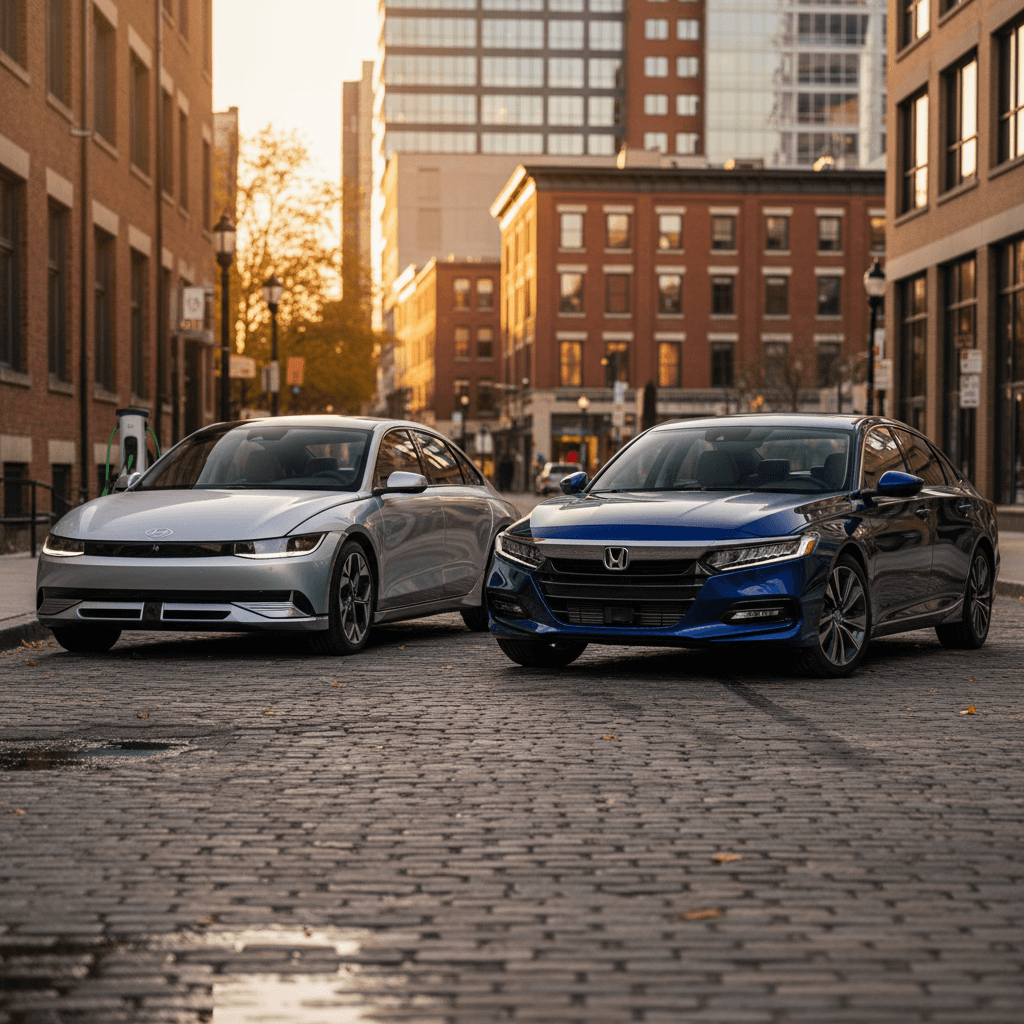
If you’re cross-shopping the Hyundai Ioniq 6 against a Honda Accord, you’re really deciding between two different futures: a sleek, fully electric sedan vs one of the best gas/hybrid sedans ever built. This guide walks through costs, range, practicality, and ownership so you can decide, realistically, whether the Hyundai Ioniq 6 or the Honda Accord is the smarter buy for you.
Two excellent, but very different, sedans
Ioniq 6 vs Accord: who is this guide for?
This Hyundai Ioniq 6 vs Honda Accord comparison is written for shoppers who are genuinely on the fence: maybe you like the idea of an EV but you also appreciate the familiarity and flexibility of a gas or hybrid sedan. We’ll focus on 2023–2025 Ioniq 6 models and 2023–2025 Honda Accords (including the hybrid), with an eye toward what you’ll actually find new on dealer lots or lightly used.
- You commute under or around 60–80 miles a day and want something comfortable and efficient.
- You’re debating a new Accord vs a used or discounted Ioniq 6.
- You’re trying to understand total cost of ownership, not just sticker price.
- You want a clear recommendation based on how and where you drive.
At a glance: Hyundai Ioniq 6 vs Honda Accord specs
Core specs: Ioniq 6 vs Accord (U.S. market, typical trims)
Approximate specs that matter for everyday buyers. Exact numbers vary slightly by trim and wheel size.
| Hyundai Ioniq 6 (EV) | Honda Accord Hybrid | Honda Accord 1.5T Gas | |
|---|---|---|---|
| Powertrain | Battery-electric, RWD or AWD | 2.0L I-4 + hybrid system (FWD) | 1.5L turbo I-4 (FWD) |
| Power | 225–320 hp (most trims) | 204 hp combined | 192 hp |
| EPA efficiency | Up to ~140 MPGe (SE Long Range RWD) | Up to 51/44/48 mpg (city/hwy/combined) | Around 29/37/32 mpg (city/hwy/combined) |
| Usable range / tank | Up to ~305–360 miles EPA depending on trim | ~44–48 mpg × 12.8 gal ≈ 560–615 miles | ~32 mpg × 14.8 gal ≈ ~475 miles |
| Charging / fueling | 800V DC fast charging; ~10–80% in ~18–20 min in ideal conditions | Gasoline only | Gasoline only |
| Cargo (trunk) | ~11–12 cu ft (varies by market and spec) | 16.7 cu ft | 16.7 cu ft |
| Drivetrain | RWD or AWD | FWD | FWD |
Ioniq 6 numbers are based on long‑range U.S. trims; Accord numbers are for 2024 hybrid and 1.5T gas models.
Specs are only the starting point
Purchase price, incentives and depreciation
On paper, a new Honda Accord generally starts cheaper than a new Hyundai Ioniq 6. But incentives and depreciation flip the script quickly, especially if you’re open to a lightly used EV.
New vs used: what you’ll actually pay
Ballpark U.S. pricing as of early 2025 (before taxes/fees). Always check local listings for current numbers.
Hyundai Ioniq 6 pricing dynamics
New: Well‑equipped trims often land in the mid–$40,000s to low $50,000s before incentives.
Used: Like many recent EVs, early Ioniq 6 models have seen steep depreciation. It’s increasingly common to see 1–2‑year‑old cars priced more like a new mainstream sedan. That hurts first owners, but makes the Ioniq 6 a very compelling used buy.
On Recharged, every used Ioniq 6 includes a Recharged Score Report with verified battery health and fair market pricing, so you can see at a glance how much range you’re really getting for your money.
Honda Accord pricing dynamics
New: Non‑hybrid Accords typically start in the low–$30,000s; hybrids run several thousand higher, especially in well‑equipped trims.
Used: Accords depreciate more slowly than most EVs. You’ll pay more for a 2‑ to 3‑year‑old Accord than for an equivalently aged mass‑market EV, but you’re buying into a very well‑understood, low‑risk platform.
For budget shoppers, a lightly used Accord Hybrid can be a sweet spot: strong mpg, familiar fueling, and predictable running costs.
Don’t forget EV incentives
Running costs: fuel vs electricity
The biggest long‑term difference between the Ioniq 6 and Accord is what you put in the “tank.” Gasoline vs electricity isn’t just an environmental question; it’s a math problem that directly affects your monthly budget.
Illustrative annual energy costs (typical U.S. commuter)
If you can charge an Ioniq 6 at home most nights, your per‑mile energy cost is typically less than half that of an Accord Hybrid, and far below a pure gas Accord. If you rely heavily on expensive public DC fast charging, the advantage shrinks, but you still gain the smoothness and low maintenance of an EV.
Key question: where will you charge?
Range, mpg and real-world commutes
Range anxiety is still the top reason many buyers hesitate on EVs. But when you compare realistic range to a typical American commute, both cars are more than up to the task, just in different ways.
Ioniq 6: EV range realities
- Long‑range rear‑wheel‑drive trims are EPA‑rated around 305–360 miles, depending on wheels and configuration.
- Real‑world owners commonly report 250–330 miles on a full charge in moderate weather, with efficiency dropping in cold conditions or at sustained high speeds.
- For a 40–60‑mile round‑trip commute, that means you’re typically charging every few days, not every night, unless you prefer topping up more often.
- Thanks to its 800V architecture, the Ioniq 6 can charge from about 10–80% in roughly 18–25 minutes on a capable DC fast charger, making long‑distance trips practical with a bit of planning.
Accord: gasoline range realities
- The Accord Hybrid can easily deliver mid‑40s mpg combined, with highway tanks stretching over 500 miles.
- Even the non‑hybrid Accord is efficient for a mid‑size sedan, and you can refuel in minutes almost anywhere.
- For long‑distance drivers in rural areas with sparse charging infrastructure, that refueling convenience is hard to beat.
- In daily commuting, though, the difference between 300 EV miles and 550 gas miles matters less than it feels, most people simply don’t deplete an entire tank or battery in a day.
If your daily driving is predictable, the Ioniq 6 works brilliantly
Space, practicality and comfort
Both cars are mid‑size sedans with adult‑friendly rear seats, but they package that space very differently. This is one of the biggest non‑obvious trade‑offs between Ioniq 6 and Accord.
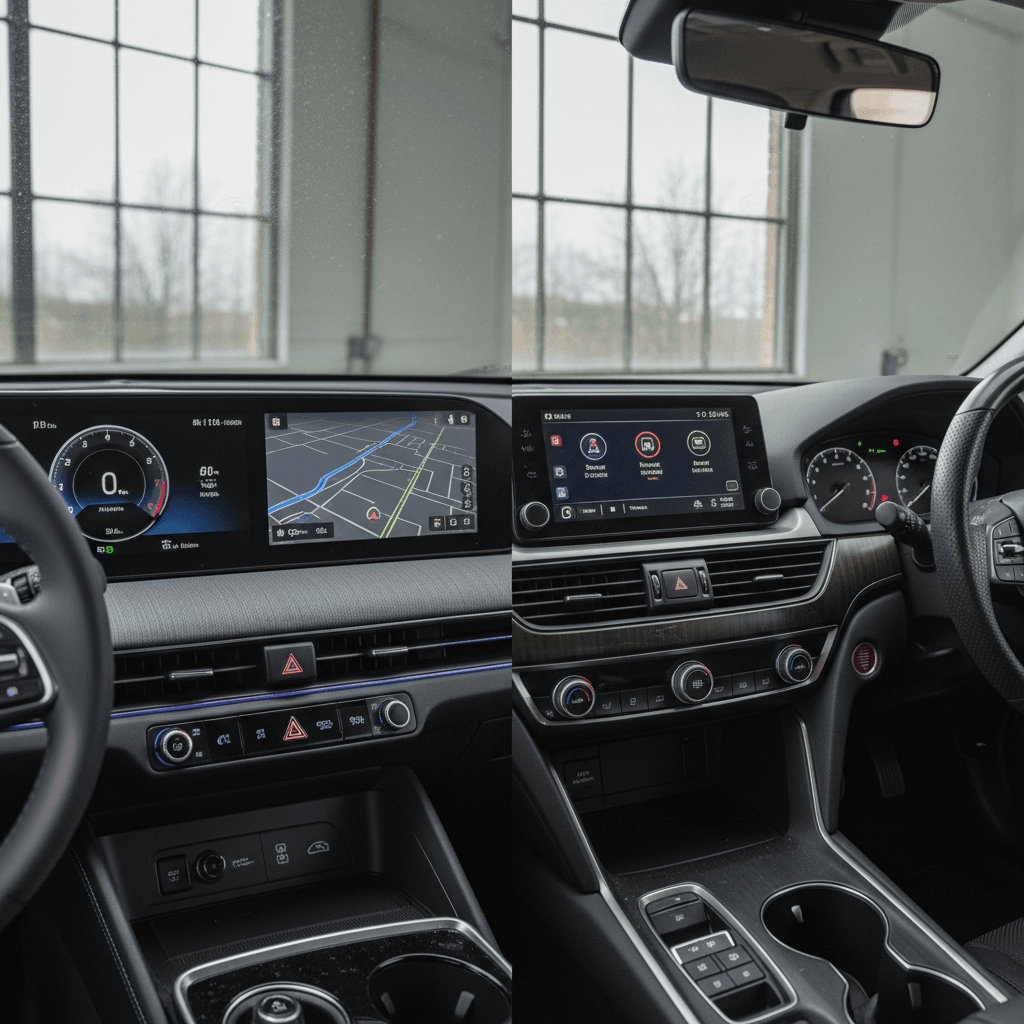
Cabin and cargo: EV coupe look vs classic sedan
How each car handles people and stuff.
Hyundai Ioniq 6 practicality
- Striking, low‑roof “streamliner” profile looks fantastic but slightly compromises rear headroom for taller passengers.
- The cabin feels modern and airy up front, with a completely flat floor and lots of EV‑specific storage spaces.
- The trunk is useable but not class‑leading; a sloping rear deck and EV packaging mean you give up some cubic feet versus a traditional sedan.
- If you regularly carry tall adults in the back or large, boxy cargo, it’s worth doing a back‑to‑back test sit with an Accord.
Honda Accord practicality
- The Accord’s upright greenhouse and long roofline give it excellent rear headroom and legroom; adults genuinely fit well in the back.
- A big 16.7‑cu‑ft trunk is one of the best in the class, with a wide opening and usable shape.
- The cabin is conservative but smartly laid out; there’s a reason ride‑hailing and family buyers love Accords.
- If maximum space per dollar is your priority, the Accord wins this round.
Bring your actual cargo to the test drive
Driving experience, tech and safety
Here’s where the Ioniq 6 and Accord feel the most different from behind the wheel, even when on paper their power outputs look similar.
Ioniq 6: smooth, quick, and tech‑forward
- Instant EV torque makes the Ioniq 6 feel quicker and more effortless than its numbers suggest, especially around town.
- AWD versions deliver serious punch; even RWD trims feel serene and composed.
- The cabin is dominated by twin digital displays, EV‑specific information, and available features like advanced highway driving assists.
- Ride quality is generally comfortable but can feel firmer on large wheels; efficiency drops on 20‑inch tires.
Accord: familiar, refined, and still very modern
- The Accord Hybrid feels plenty strong for daily driving, with electric assist smoothing out low‑speed acceleration.
- Steering and ride tuning are classic Honda: light but accurate, tuned more for comfort and confidence than drama.
- You still get a modern digital cluster, large central touchscreen, and Honda Sensing safety suite standard or widely available.
- Noise, vibration and harshness are well controlled, though the gas engine is always there in the background under load.
Safety is a strong point for both
Ownership hassle: maintenance and reliability
The real cost of a car isn’t just what you pay upfront or at the pump, it’s how often you’re in the shop, what breaks as the miles add up, and how predictable those expenses feel.
Maintenance and reliability: what to expect
1. Routine maintenance
The Ioniq 6 eliminates oil changes, spark plugs, exhaust systems and most transmission service. You’re mainly handling tires, cabin filters, and occasional brake service. The Accord Hybrid adds some EV‑style simplicity to a conventional car, but it still needs regular engine and transmission care.
2. Battery vs engine longevity
Modern EV battery packs like the Ioniq 6’s are engineered for many years and miles, and Hyundai backs them with long warranties. Engines and hybrid systems in the Accord are also very robust, but they have more moving parts and fluids that require attention.
3. Dealer and independent shop access
Any Honda dealer can work on an Accord, and virtually every independent shop understands them. EV‑specific expertise is more concentrated, but it’s growing quickly; if you’re in a rural area, Honda’s dealer footprint is still an advantage.
4. Software and updates
The Ioniq 6 is more software‑centric, and Hyundai can improve or tweak behavior via updates. That’s powerful, but it also means you’re more dependent on the automaker’s software decisions. The Accord changes more slowly, for better or worse.
Used EV due diligence = battery health
Which should you buy? Recommendations by driver type
Once you get past specs, the right answer to “Hyundai Ioniq 6 vs Honda Accord, which should you buy?” depends on your lifestyle, housing, and appetite for change. Here’s a decision framework that’s more honest than a one‑size‑fits‑all verdict.
Best pick by common driver profiles
Urban / Suburban commuter with home charging
Daily driving under 80 miles, predictable routine.
Off‑street parking where you can install or already have Level 2 charging.
Electricity rates that aren’t punitive.
You like modern tech and don’t mind learning a new interface.
<strong>Recommendation:</strong> Hyundai Ioniq 6. You’ll save meaningfully on energy and maintenance, enjoy a much quieter drive, and rarely visit a gas station again.
Apartment dweller or street parker with no consistent charging
Limited or no access to overnight charging at home or work.
Relying mostly on public Level 2 and DC fast chargers.
Often park in different spots; charging is a constant negotiation.
<strong>Recommendation:</strong> Honda Accord Hybrid. Until your charging situation improves, the inconvenience and cost of public charging can outweigh EV benefits.
Frequent long-distance driver / rural travel
Regular 200–400‑mile days, sometimes through charging deserts.
You value the ability to refuel <em>anywhere</em> in a few minutes.
Charging networks near you are sparse or unreliable.
<strong>Recommendation:</strong> Honda Accord Hybrid first, gas Accord second. The Ioniq 6 can absolutely road‑trip, but if your routes lack dependable fast charging, you’re taking on extra planning overhead.
Tech‑enthusiast early adopter
You enjoy new tech, apps, and over‑the‑air updates.
You’re comfortable troubleshooting charging quirks and learning new systems.
You want your next car to feel like a step into the future, not a continuation of the past.
<strong>Recommendation:</strong> Hyundai Ioniq 6, ideally with home charging. It’s a more transformative upgrade from a conventional car.
How a used Ioniq 6 stacks up vs a new Accord
Because late‑model EVs have depreciated faster than beloved gas sedans like the Accord, many shoppers are now choosing between a new Accord and a lightly used Ioniq 6 at similar monthly payments. That’s where marketplaces like Recharged can tilt the decision toward the EV, if it fits your life.
Why a used Ioniq 6 can be a smart play
- Depreciation has already taken a big bite, so you capture a large chunk of value at a lower price point.
- You still get modern EV range, 800V fast charging, and up‑to‑date safety and tech features.
- Buying through Recharged means you see a Recharged Score Report with battery health, pricing transparency, and expert support, reducing the uncertainty that scares many first‑time EV buyers.
When a new Accord still wins
- You can’t reliably charge at home or work and expect to rely heavily on public charging.
- You plan to keep the car for a very long time in an area where EV service is scarce.
- You prioritize a big trunk and maximum back‑seat comfort over design and tech.
- You simply prefer the feel of a conventional car and don’t want your daily driver to be a science experiment.
Leverage total cost of ownership, not just MSRP
FAQ: Hyundai Ioniq 6 vs Honda Accord
Frequently asked questions
Bottom line: Ioniq 6 vs Accord
If you have reliable home charging, value quiet and instant torque, and are comfortable embracing a more digital driving experience, the Hyundai Ioniq 6 is the more future‑proof and often cheaper‑to‑run choice, especially as a lightly used car with verified battery health. It turns every commute into something calmer and more modern than even a well‑sorted Accord can offer.
If you lack stable charging, live far from robust EV service or public fast chargers, or you simply want the lowest‑friction, easiest‑to‑understand ownership experience, a Honda Accord Hybrid remains a fantastic answer. It’s efficient, spacious, and supported virtually everywhere.
Either way, the smartest move is to make your decision on total cost of ownership and lifestyle fit, not just sticker price or the latest hype. If an Ioniq 6 looks right for you, shopping used through Recharged gives you transparency on battery health, pricing, and support from EV specialists who live and breathe this transition every day.