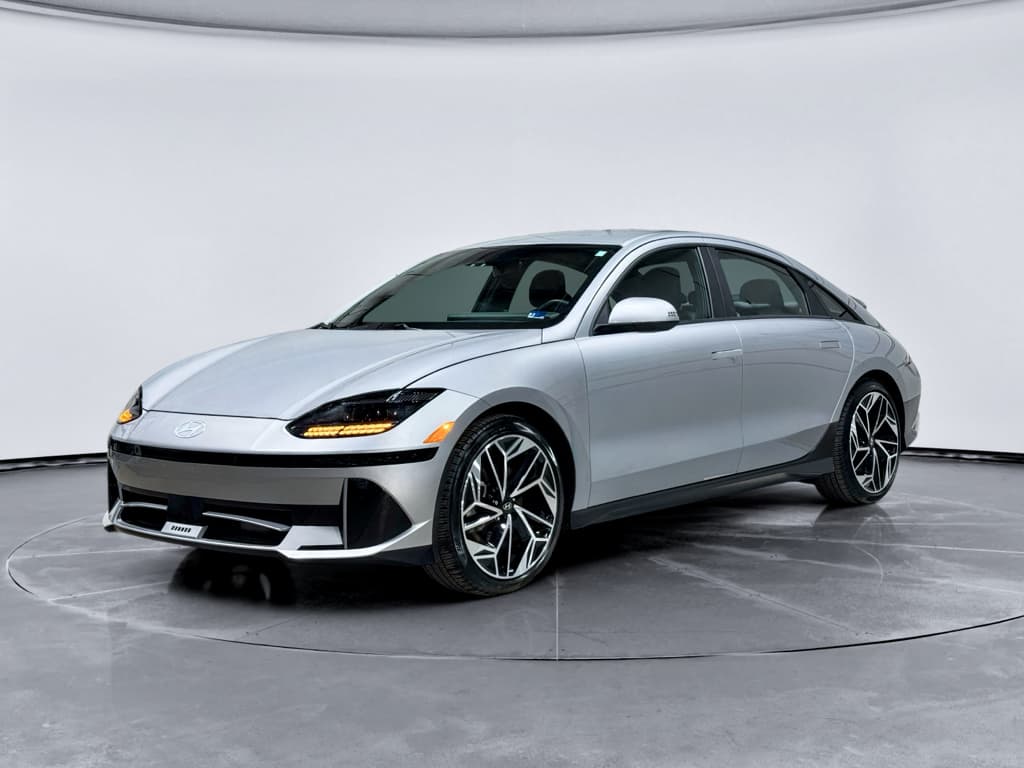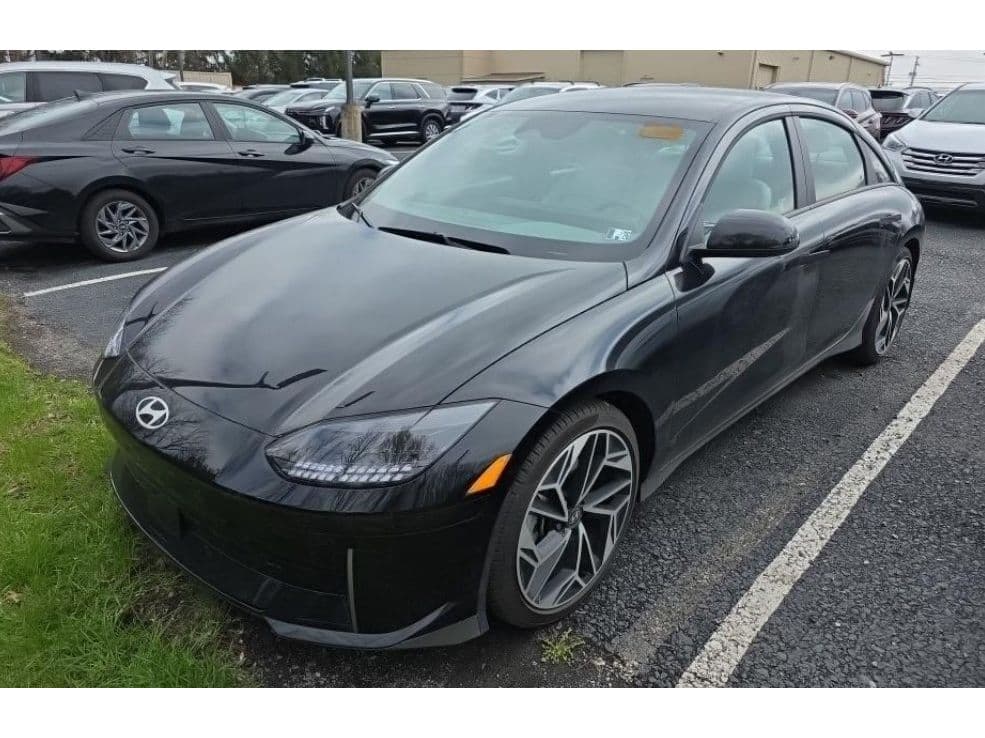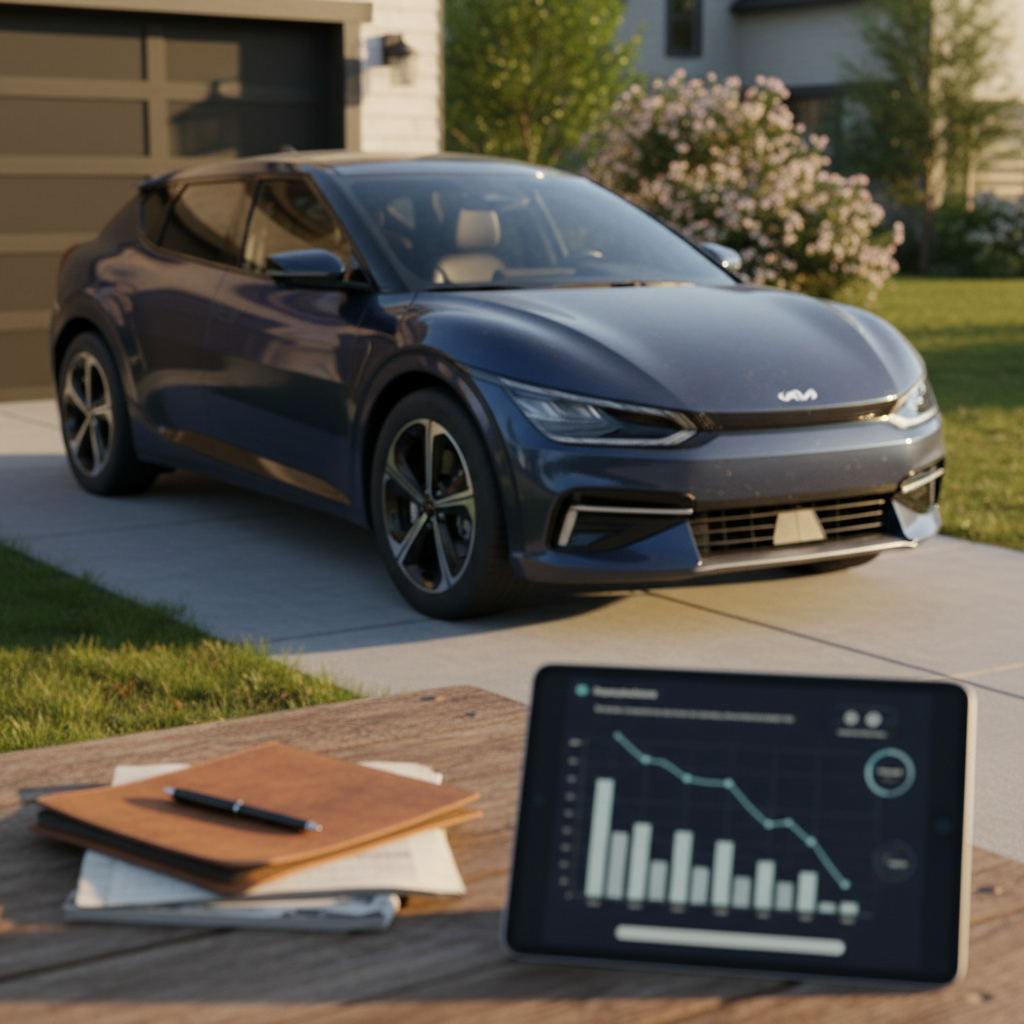
If you’re driving a Hyundai IONIQ 6 and eyeing your next EV, the first question is simple: what’s my IONIQ 6 trade-in value? The answer depends on more than a quick online estimate. EV demand, depreciation, battery health, and even which state you live in can move your number thousands of dollars in either direction.
Big picture on IONIQ 6 value
Hyundai IONIQ 6 trade-in value: the quick basics
- Most IONIQ 6 trade-in values in early 2026 fall roughly in the mid-$20,000s to low $40,000s depending on trim, miles, and condition.
- Third-party pricing tools often show a spread of $8,000–$15,000 between a rough-condition base car and a clean, high-trim car with low miles.
- Traditional guides (KBB, Edmunds, etc.) are helpful benchmarks, but they don’t see your actual battery health or local EV demand.
- Dealers build in room for reconditioning, auction risk, and profit, so their first offer is almost never the ceiling.
Think of your Hyundai IONIQ 6 trade-in value as a moving target. Online estimates are the starting grid, but the real race is won (or lost) based on how prepared you are when you show up with the keys.
What your Hyundai IONIQ 6 might be worth today
Sample Hyundai IONIQ 6 value snapshots (early 2026)
These numbers are directional, not promises. They’re based on guidebook data and used-market trends for the Hyundai IONIQ 6 sedan in the U.S. in 2024–2026. Your actual offer will move up or down based on miles, options, battery health, accident history, and how badly the buyer wants an IONIQ 6 on their lot this month.
Watch the timing
How dealers actually calculate IONIQ 6 trade-in value
When you ask a dealer what your Hyundai IONIQ 6 trade-in value is, they’re not guessing. They’re stacking a few data sources and then adjusting for risk and profit:
Inside the IONIQ 6 appraisal playbook
What most dealers look at before giving you a number
1. Pricing guides & auction data
Dealers lean on sources like auction reports and pricing guides to see what IONIQ 6s are actually selling for right now, not just advertised for.
- Trim, options, and drivetrain (RWD vs AWD)
- Model year and original MSRP
- Regional demand for EV sedans
2. Miles, use pattern & condition
Two identical IONIQ 6s can be thousands apart if one has 18,000 highway miles and the other has 60,000 stop-and-go city miles.
- Visible wear: paint, interior, tires, brakes
- Service history and open recalls
- Accident or flood history on Carfax/AutoCheck
3. Battery & charging profile
On EVs, this is the new engine compression test. Dealers want to know:
- Estimated remaining battery capacity
- Fast-charging vs home-charging history
- Any trouble codes or range complaints
4. Reconditioning & resale risk
Every dollar they might spend getting your IONIQ 6 front-line ready gets sliced off your offer.
- Tires, brakes, glass, detail work
- Out-of-warranty repairs
- How long similar cars are sitting on their lot
Add it all up and most franchise dealers build a cushion of a few thousand dollars between what they pay you and what they hope to retail (or wholesale) the car for. Your job is to shrink that gap by showing them your IONIQ 6 is the easy one, the car they don’t have to babysit or discount heavily to sell.
7 factors that move your IONIQ 6 value up or down
The levers that change your IONIQ 6 trade-in number
1. Model year & trim
A 2025 IONIQ 6 SEL or Limited with the larger battery and more tech will track higher than a 2023 SE Standard Range. Buyers pay more for range and equipment, and trade-in values follow.
2. Mileage vs age
For a typical commuter, staying under about 12,000–15,000 miles per year helps keep your car in the "normal" bucket. Extra miles can drop value quickly, especially if the odo number doesn’t match the car’s condition.
3. Battery health & range
If your IONIQ 6 still delivers range close to its original rating, that’s a huge selling point. Documented battery health can separate your car from a similar one that’s been fast-charged hard or poorly maintained.
4. Accident and repair history
A clean history report and factory-scheduled maintenance help your trade sit at the top of the guide range. Structural damage or airbag deployment can push you toward wholesale money instead of retail-level offers.
5. Options & color
Popular colors, tech packages, upgraded wheels, and AWD can all help, if buyers in your area actually want them. Oddball colors or wheel/tire setups can sometimes hurt value more than they help.
6. Market and seasonality
Sedans like the IONIQ 6 often do better in urban markets and coastal EV hubs. In colder climates, winter range concerns or utility buyers leaning toward crossovers can flatten demand and values.
7. Incentives and new-car pricing
If Hyundai or competitors cut new-vehicle prices or stack cash incentives on the hood, used values can slide. The reverse is also true: when new EVs get more expensive or scarce, the used IONIQ 6 can look like a bargain.
Know your target number
Hyundai IONIQ 6 vs Tesla and other EVs on resale
When shoppers talk resale value, they usually ask one thing: "How does the Hyundai IONIQ 6 stack up against a Tesla Model 3?" On paper, the Tesla still holds a slight edge. Some data sources peg the IONIQ 6 at roughly a 60% value loss over five years, versus closer to the mid‑50% range for the Model 3. That doesn’t make the Hyundai a bad bet, it just means you need to be smarter on the trade-in side.
Where the IONIQ 6 holds up well
- Modern design and tech that still feel fresh against newer rivals.
- Strong efficiency and DC fast‑charging speeds that appeal to used‑EV buyers.
- Hyundai’s long battery warranty (often transferable) adds confidence.
Where it can lag a bit
- Tesla’s brand strength and Supercharger access keep Model 3 prices firm in many regions.
- EV sedan demand is softer than crossovers, especially in snow‑belt states.
- If Hyundai or others discount new sedans heavily, used prices may adjust downward.
Model 3 vs IONIQ 6 value reality
Step-by-step: how to maximize your IONIQ 6 trade-in offer
Prep checklist before you ask for an IONIQ 6 trade-in number
1. Pull your numbers at home
Use two or three online tools (KBB, Edmunds, a dealer or marketplace instant offer) to see a low–high range for your IONIQ 6. Screenshot them and bring them along, those are your comps.
2. Gather your paperwork
Service records, recall documentation, and proof of major repairs (like new tires or brakes) all support a stronger offer. Have your title or payoff information handy so the dealer knows you’re serious.
3. Give it a real detail, not a rinse
A clean, odor‑free interior and polished exterior can move a car up an entire condition bracket. Fix cheap, obvious items: burned‑out bulbs, filthy floor mats, personal items in the trunk.
4. Document battery health and range
If your IONIQ 6 still shows strong range, snap photos of your dash after a full charge. If you have a third‑party battery health report or dealer documentation, bring it, it’s the EV equivalent of a compression test.
5. Get multiple offers within a few days
Don’t stop at the first desk. Get an instant offer from an online buyer, a quote from a Hyundai dealer, and one from an EV‑focused buyer like Recharged so you can compare real numbers.
6. Negotiate trade and purchase separately
If you’re buying another vehicle, ask the dealer to show the trade value and sale price independently. That makes it harder for them to pad one number while quietly shrinking the other.
7. Watch fees and “add‑ons”
A great trade‑in number can evaporate if it’s paired with inflated doc fees, add‑ons you didn’t ask for, or a marked‑up interest rate. Look at the out‑the‑door price, not just the trade line.

Using battery health to your advantage
With a gas car, the dealer listens for engine knock. With your IONIQ 6, they’re quietly trying to guess your battery health and future range complaints. If you can replace guesswork with facts, you gain leverage.
Turn your IONIQ 6 battery into a selling point
What to have ready before you ask for a trade-in value
State-of-charge & range photos
Before your appraisal, charge to 100% and take photos of:
- Displayed range at full charge
- Odometer reading
- Any battery warning messages (or the lack of them)
Service & warranty records
Print or save PDFs showing:
- Battery or high‑voltage system work
- Software updates and recalls
- Regular maintenance like brake fluid, tires, and inspections
Independent battery health report
A third‑party test, like the Recharged Score, quantifies remaining battery capacity and charging behavior. That helps serious buyers price your car based on real data, not fear.
Why Recharged cares so much about battery data
Trade in your IONIQ 6 or sell it privately?
Trade-in vs private sale for your Hyundai IONIQ 6
How the two main options stack up for most EV owners
| Option | Typical Price | Time & Effort | Risk & Hassle | Best For |
|---|---|---|---|---|
| Dealer trade-in | Lowest, but fast | Same day to a few days | Low: dealer handles paperwork, but offers less | If you’re busy, upside-down on a loan, or value speed |
| Online instant offer | Competitive, often above local dealer | 1–7 days | Low–medium: easy process, some scheduling hassle | If you want convenience plus a bit more money |
| Private sale | Highest on paper | 1–6+ weeks | High: listings, test drives, payment & title risks | If you’ll work for every dollar and can wait |
| Trade or sell to Recharged | Market-based, EV-focused pricing | A few minutes online + inspection | Low: EV specialists and digital paperwork | If you want a fair offer from people who know EVs |
There’s no one right answer, just the path that best fits your time, risk tolerance, and financial goals.
If you’re willing to manage listings, calls, and test drives, and you’re comfortable screening buyers and handling payment, private sale can net you more than a straight trade. But once you factor in time, safety, and potential deal fall‑throughs, many IONIQ 6 owners are happier taking a slightly lower but much cleaner trade or instant‑offer route.
Be careful with private-party EV sales
Trading your IONIQ 6 at Recharged
Recharged was built specifically around used EVs, so a Hyundai IONIQ 6 isn’t just "another sedan" to us. It’s a sleek, ultra‑efficient electric that deserves to be priced on its battery health and real‑world condition, not just a guess from a generic guide.
What happens when you bring your IONIQ 6 to Recharged
Designed to be simpler, and fairer, than a traditional trade
Transparent, EV-specific appraisal
We look beyond mileage and auction data. Your IONIQ 6 gets:
- A thorough condition inspection
- Battery health diagnostics for your Recharged Score
- Pricing benchmarked against real EV sales, not guesses
Leverage your battery health
If your battery is in great shape, that becomes part of the value conversation, not an unknown risk. The Recharged Score Report travels with the car, and supports stronger pricing.
Nationwide, digital-first experience
You can start your offer online from anywhere in the U.S., then arrange pickup or visit our Experience Center in Richmond, VA. We also offer nationwide delivery if you’re trading into another EV.
Financing & trade support in one place
Looking to roll your IONIQ 6 equity into a different EV? Recharged offers financing, trade-in, instant offers, consignment, and guided support from EV specialists, without the usual dealership games.
Ready to find your next EV?
Browse VehiclesIf you bought your Hyundai IONIQ 6 for its style, quiet ride, and efficiency, you made a smart call. To finish the story just as well, take the time to understand your IONIQ 6 trade-in value, document your battery health, and line up more than one offer. Whether you trade it at a local dealer, sell it privately, or work with an EV-focused marketplace like Recharged, the goal is the same: turn a car you’ve enjoyed into the strongest possible starting point for whatever you plug in next.