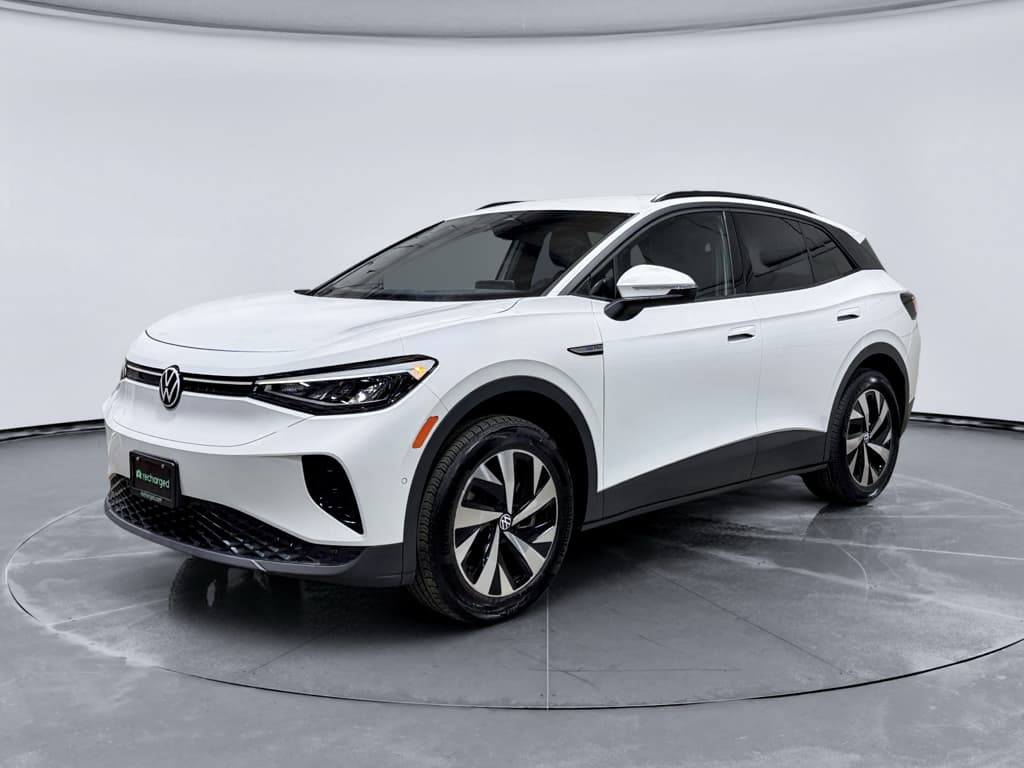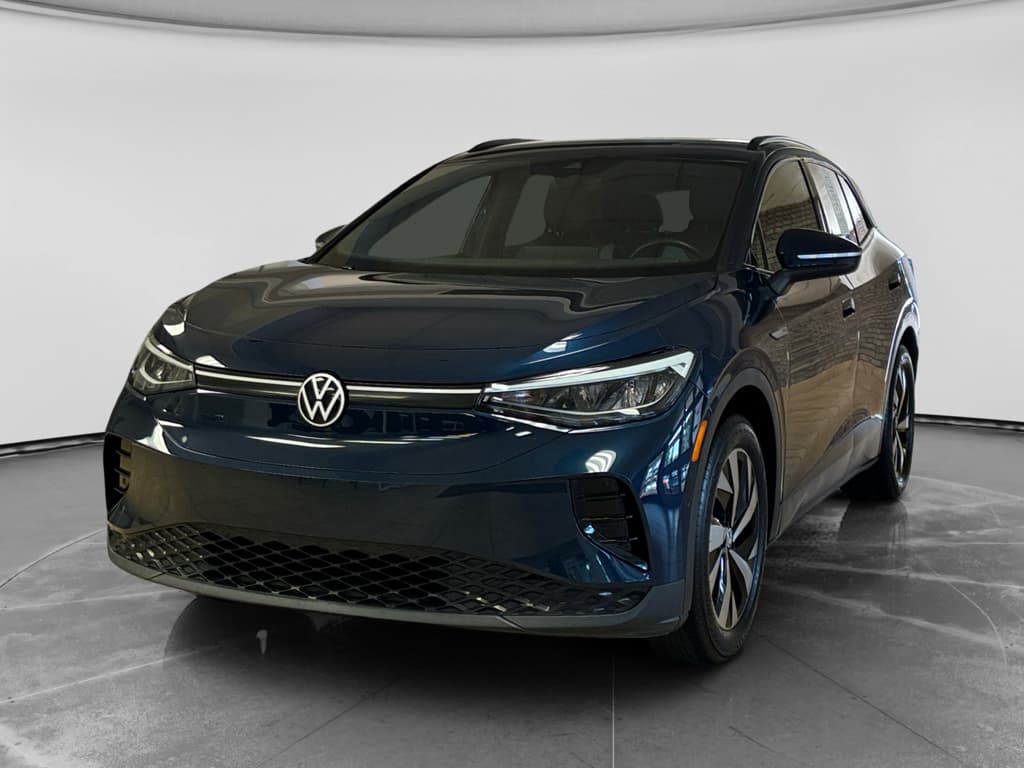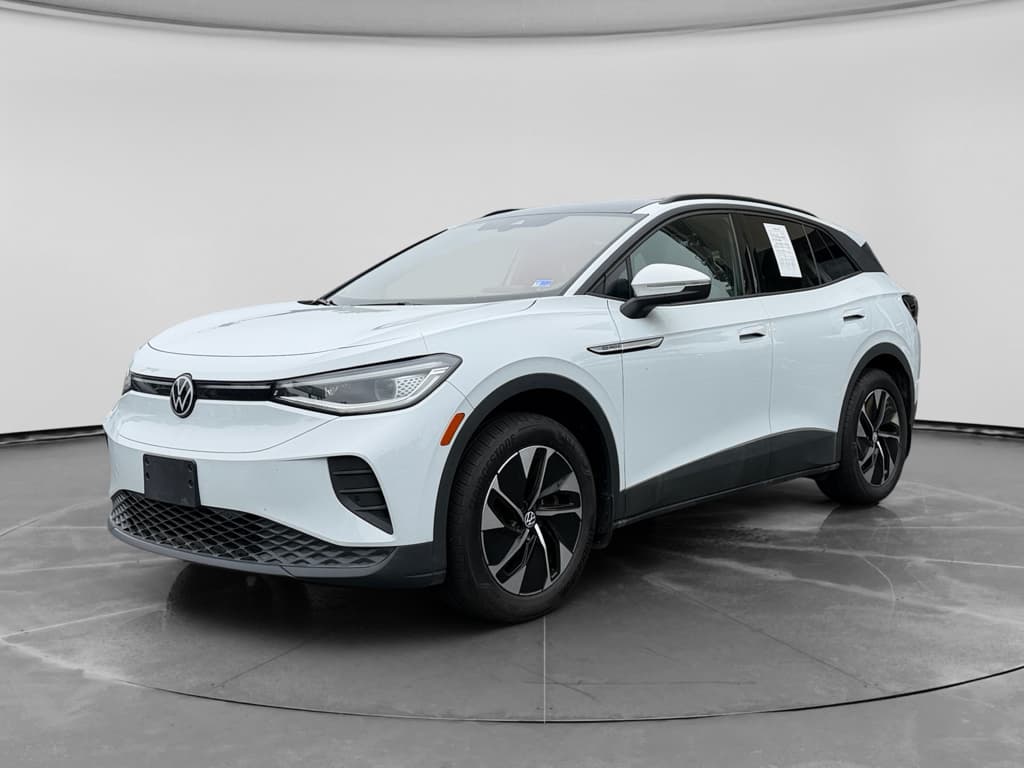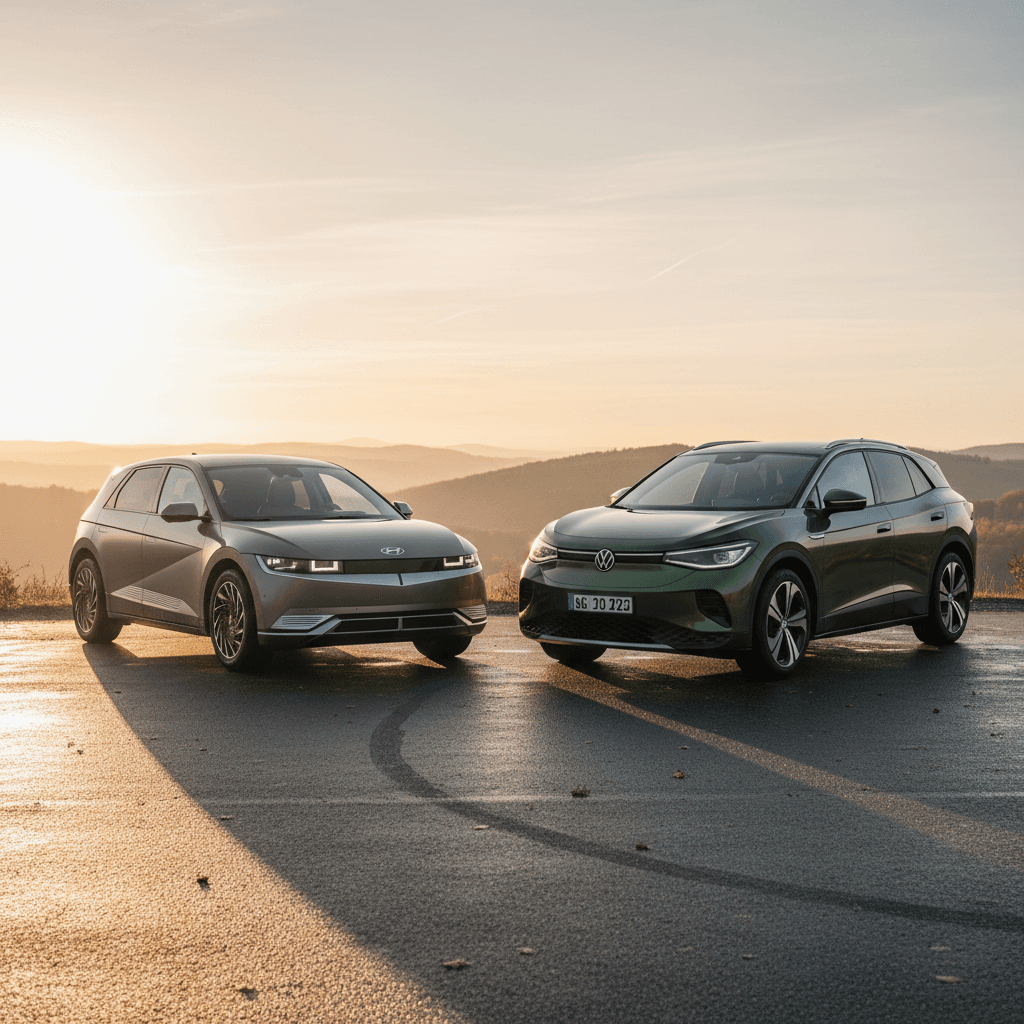
If you’re cross‑shopping the Hyundai Ioniq 5 vs Volkswagen ID.4 and wondering which is better, you’re looking at two of the most important mainstream electric SUVs on the market. They share the same basic mission, family‑friendly space and everyday usability, but they go about it in very different ways. The Ioniq 5 leans futuristic and fast‑charging, while the ID.4 aims for familiar, VW‑like comfort.
At a glance
Hyundai Ioniq 5 vs VW ID.4: quick overview
Hyundai Ioniq 5: the tech‑forward sprinter
- Retro‑futuristic hatchback‑meets‑SUV styling that still turns heads.
- Built on Hyundai’s E‑GMP platform with an 800‑volt electrical architecture for very fast DC charging.
- Strong performance, especially in dual‑motor AWD trims, and a playful driving character.
- Spacious interior with sliding rear seats and clever storage.
Volkswagen ID.4: the comfortable all‑rounder
- Looks and feels more like a conventional compact SUV, which some drivers prefer.
- 400‑volt architecture with solid but slower DC fast‑charging than the Ioniq 5.
- Comfort‑tuned ride and quiet cabin; more understated to live with every day.
- Simple, boxy cargo area that’s easy to load, with competitive interior space.
Electric SUV highlights: Ioniq 5 vs ID.4 (recent U.S. models)
Key specs at a glance
Hyundai Ioniq 5 vs Volkswagen ID.4: core specs (recent U.S. models)
High‑level specs for typical 2024–2025 trims. Exact numbers vary by battery, drivetrain, and wheels, so always double‑check the window sticker on any specific car, especially on the used market.
| Spec | Hyundai Ioniq 5 (typical U.S. trims) | Volkswagen ID.4 (typical U.S. trims) |
|---|---|---|
| Platform voltage | 800 V E‑GMP | 400 V MEB |
| Battery capacity | ~58–84 kWh usable (varies by year/market) | 62 kWh or ~82 kWh usable |
| EPA range (RWD, larger pack) | ~303–320 mi possible depending on year/wheels | ~275–291 mi for Pro/Pro S RWD |
| EPA range (AWD, larger pack) | ~260–270+ mi typical | ~255–263 mi typical |
| Peak DC fast‑charge rate | Up to ~230 kW | Up to ~175 kW (later models; earlier closer to 125–135 kW) |
| 0–60 mph (AWD) | Roughly 5 seconds | Roughly 5.4–5.7 seconds |
| Onboard Level 2 AC charger | ~10.5–11 kW | ~11 kW |
| Body style | Compact crossover, hatchback profile | Compact crossover, more traditional SUV profile |
Use this as a directional comparison, not a substitute for checking the exact VIN‑specific specs.
Spec sheet trap
Range and real-world efficiency
On paper, the Hyundai Ioniq 5 usually wins the range battle, especially in rear‑wheel‑drive trims with the larger battery. Typical U.S. models land in the high‑200s to low‑300s miles of EPA range. The VW ID.4 tends to lag slightly, particularly in AWD form and with the larger 82‑kWh pack, though it’s still comfortably in long‑commute and road‑trip territory for most drivers.
- In real‑world mixed driving, many Ioniq 5 owners report efficiency around 3.0–3.5 mi/kWh, depending on climate and speed.
- ID.4 owners often see similar or slightly lower efficiency, especially in earlier years with less‑aggressive drivetrain tuning.
- Wheel size matters on both: 19‑inch wheels almost always beat 20s or 21s for range.
- Cold climates, high highway speeds, and heavy cargo will cut into range more noticeably on both of these than on a larger‑battery luxury SUV.
Cold-weather tip
Charging speed and network access
Charging is where the Ioniq 5 really separates itself. Thanks to its 800‑volt architecture, it can sustain high charging power for a long portion of the 10–80% window on a strong DC fast charger. The ID.4’s 400‑V architecture and more modest charging curve mean more time parked on road trips, even if you’re using the same station.
Ioniq 5 vs ID.4: charging in the real world
Both are fine daily, but the Ioniq 5 is simply better at road trips.
Hyundai Ioniq 5 charging
- DC fast‑charge from about 10–80% in roughly 18–20 minutes when the battery and charger cooperate.
- Peak rates over 200 kW are common on strong 350‑kW stations.
- Standard Level 2 AC charging up to ~10.5–11 kW at home or work gets you a full charge overnight.
- Recent U.S. models adopt the Tesla‑style NACS port, opening up broad Supercharger access without bulky adapters.
Volkswagen ID.4 charging
- Earlier ID.4s charged closer to 125–135 kW; newer ones can approach ~175 kW, but overall sessions are still slower than the Ioniq 5.
- Expect more like 30–35 minutes for a healthy 10–80% fast‑charge stop.
- Same ~11‑kW Level 2 capability at home means daily life is similar when you plug in overnight.
- VW is also moving toward broader access to Tesla Superchargers, but timing and adapter details vary by model year.
Road‑trip winner: Ioniq 5
Space, comfort, and practicality
Both of these are compact crossovers on paper, but in person they feel more like roomy family cars. The Ioniq 5’s long wheelbase and sliding rear bench create lounge‑like rear legroom, while the ID.4 leans into a more upright, traditional SUV vibe that many families are comfortable with.
Hyundai Ioniq 5: airy and flexible
- Very long wheelbase for this class, which translates to limo‑like rear legroom.
- Sliding and reclining rear seat lets you trade legroom for cargo as needed.
- Flat floor and open center console area feel more like a modern lounge than a traditional car.
- Cargo space is generous but the sloping rear glass means tall boxes fit better in the ID.4.
Volkswagen ID.4: conventional and family‑friendly
- Boxier cargo area with a wide hatch opening is easy to load with strollers, crates, and gear.
- Rear seat space is competitive, though not as limo‑like as the Ioniq 5.
- Seats tend to be soft and comfortable; ride tuning is on the relaxed side, especially in non‑performance trims.
- Cabin design feels familiar to anyone coming from a Tiguan or other compact SUV.
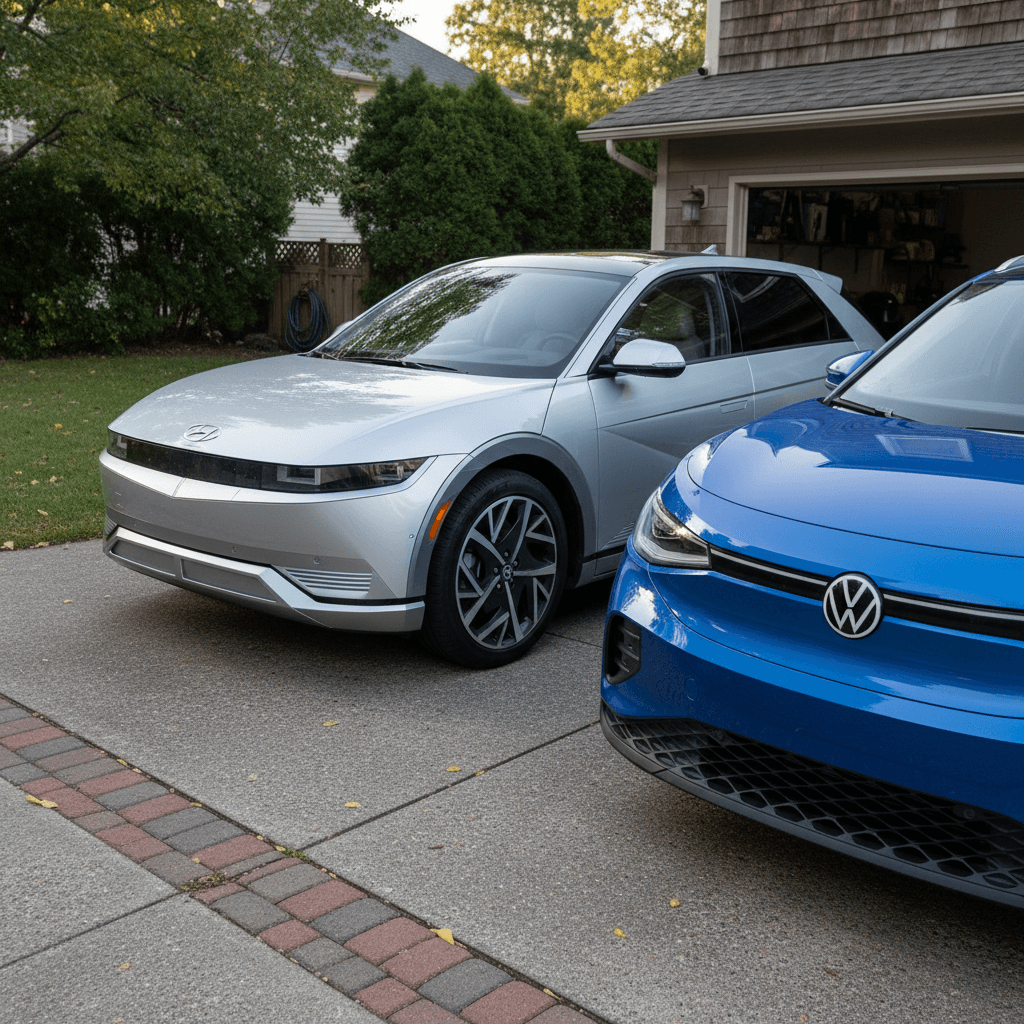
If you have car seats or tall kids…
Driving experience and performance
On the road, the Ioniq 5 feels more like a sporty hatchback in SUV clothing, while the ID.4 is tuned as a comfortable commuter first and foremost. Power outputs and 0–60 times are close on paper, but the way each car responds to inputs feels different.
How they drive: character more than specs
Same basic mission, very different personalities.
Ioniq 5 driving feel
- Quick, responsive acceleration even in single‑motor trims; dual‑motor AWD models feel genuinely brisk.
- Tight, composed handling for this class makes it more fun on backroads.
- Some drivers notice slightly firmer ride over sharp bumps, especially with larger wheels.
- Excellent one‑pedal or near‑one‑pedal driving modes for city traffic.
ID.4 driving feel
- Still plenty quick versus gas crossovers, but tuned for smoothness over outright punch.
- Softer suspension and more relaxed character make it easygoing on long drives.
- Steering and brake feel are generally predictable and unremarkable, in a good way.
- Less aggressive regen by default; some drivers prefer the more “normal car” feel.
Coming from an ID.4 into an Ioniq 5, many owners describe it as having all the comfort of the VW with noticeably faster charging and a more engaging drive.
Software, tech, and user experience
Both models launched with software that drew criticism, VW for a sluggish, touch‑heavy interface and Hyundai for some early‑run quirks and limited update cadence. Over the last few years both have improved, but they still take different approaches to in‑car tech.
Ioniq 5 tech strengths
- Simple, clean twin‑screen layout with clear graphics and straightforward menus.
- Hyundai’s driver‑assist suite (Highway Driving Assist) is competent on highways and usually less fussy than VW’s lane‑keeping in early ID.4s.
- Vehicle‑to‑load (V2L) capability on many trims lets you power tools, camping gear, or even another EV in a pinch.
- Later software versions improve phone integration and charging route info, though it’s still not perfect.
ID.4 tech strengths
- Later‑model ID.4s have noticeably improved infotainment performance and more physical controls than the earliest builds.
- VW’s IQ.Drive driver‑assist can work well on highways once you learn its quirks.
- Navigation and route planning have matured with updates, especially around charging stops.
- Interior ambient lighting and traditional VW touches give the cabin a relaxed, familiar feel.
Software and updates vary by year
Reliability and ownership experience
Neither the Ioniq 5 nor the ID.4 has a long, decades‑deep reliability record yet, they’re both relatively new EV platforms. What we do have is early owner‑report data, recall history, and how each brand handles service and warranty support.
- Both models have had software‑related recalls and campaigns, especially in early model years, as automakers dialed in thermal management and charging behavior.
- Hyundai’s EV warranty is generally strong, and the Ioniq 5 has earned a reputation for robust fast‑charging performance without excessive degradation so far, when owners follow sensible charging habits.
- VW’s ID.4 has seen some early build issues, from 12‑volt battery gremlins to infotainment glitches, but many have been addressed via service bulletins and software updates.
- Local dealer quality matters: Hyundai and VW dealer networks vary widely in EV expertise, so check reviews for EV service specifically in your area.
Battery health on the used market
Used market pricing and long-term value
On today’s used market in the U.S., you’ll often find more ID.4s available at a given price point than Ioniq 5s, partly because VW leaned heavily on lease deals and fleet sales early on. That means the ID.4 can sometimes undercut the Ioniq 5 on price for similar mileage and equipment.
Ioniq 5 vs ID.4 as used EVs
Depreciation, demand, and what you actually get for your money.
Hyundai Ioniq 5 used value
- Strong demand and positive media coverage keep prices relatively firm, especially for long‑range and AWD trims.
- Faster DC charging and distinctive design help it hold appeal versus newer competitors.
- Later model years with native NACS ports can command a premium as Supercharger access becomes a must‑have feature.
- If you find a fairly priced Ioniq 5 with documented battery health, it’s one of the strongest used‑EV buys in this segment.
Volkswagen ID.4 used value
- More volume and heavier incentives on new models translate into steeper depreciation in some markets.
- That can make the ID.4 a bargain if you prioritize comfort and space over ultimate charging speed.
- Pay attention to model year: later ID.4s get meaningful charging and software upgrades that are worth paying a bit more for.
- Because pricing is often lower, you might be able to step up to a better‑equipped ID.4 trim for the same money as a more basic Ioniq 5.
Financing and trade‑ins with Recharged
Which is better: Ioniq 5 or ID.4?
“Better” depends less on internet arguments and more on how you actually drive. The Ioniq 5 is objectively stronger on fast‑charging speed and feels more special to live with, while the ID.4 quietly nails the brief of a comfortable, straightforward electric family SUV at an attractive price, especially used.
Match the EV to your life, not the spec sheet
Choose the Hyundai Ioniq 5 if…
You care about fast DC charging, do regular road trips, or just want an EV that feels a bit more futuristic and fun. The Ioniq 5’s 800‑V architecture, strong performance, and lounge‑like cabin make it the more compelling choice for many enthusiasts and heavy‑milers.
Choose the Volkswagen ID.4 if…
You want a comfortable, familiar‑feeling SUV with plenty of space and you’re primarily charging at home. If you rarely use DC fast charging and care more about ride comfort and a conventional shape, the ID.4 can be a terrific value, particularly on the used market.
You live in an apartment or rely on public charging
The Ioniq 5’s faster DC charging is a huge advantage if you can’t plug in at home. Shorter sessions mean less time babysitting chargers and more time doing literally anything else.
You mostly commute and run errands locally
If you have home Level 2 charging and your driving is 30–60 miles a day, either EV will feel transformative. In this use case, let cabin feel, dealer proximity, and pricing steer you, an attractively priced ID.4 can make a ton of sense.
You’re worried about battery longevity
Focus less on brand myths and more on battery health data for the specific car you’re considering. A Recharged Score Report can level the playing field between a low‑miles ID.4 and a higher‑miles Ioniq 5 by showing you how each pack is aging.
You want to future‑proof for charging networks
As North America coalesces around the Tesla‑style NACS connector and more automakers plug into the Supercharger network, later Ioniq 5s with native NACS ports and updated ID.4s with Tesla access will be more attractive. If you’re shopping used, weight that access alongside price.
If you forced a verdict, the Hyundai Ioniq 5 is the more rounded, future‑proof choice for most EV‑curious households thanks to its charging speed, design, and driving character. But if your budget is firm and your driving patterns are modest, a well‑spec’d Volkswagen ID.4 can be the smarter financial move, especially as a used buy. The key is to shop individual cars, not just badges, look closely at model year changes, charging capabilities, and verified battery health so you end up with the EV that fits your life, not someone else’s spreadsheet.