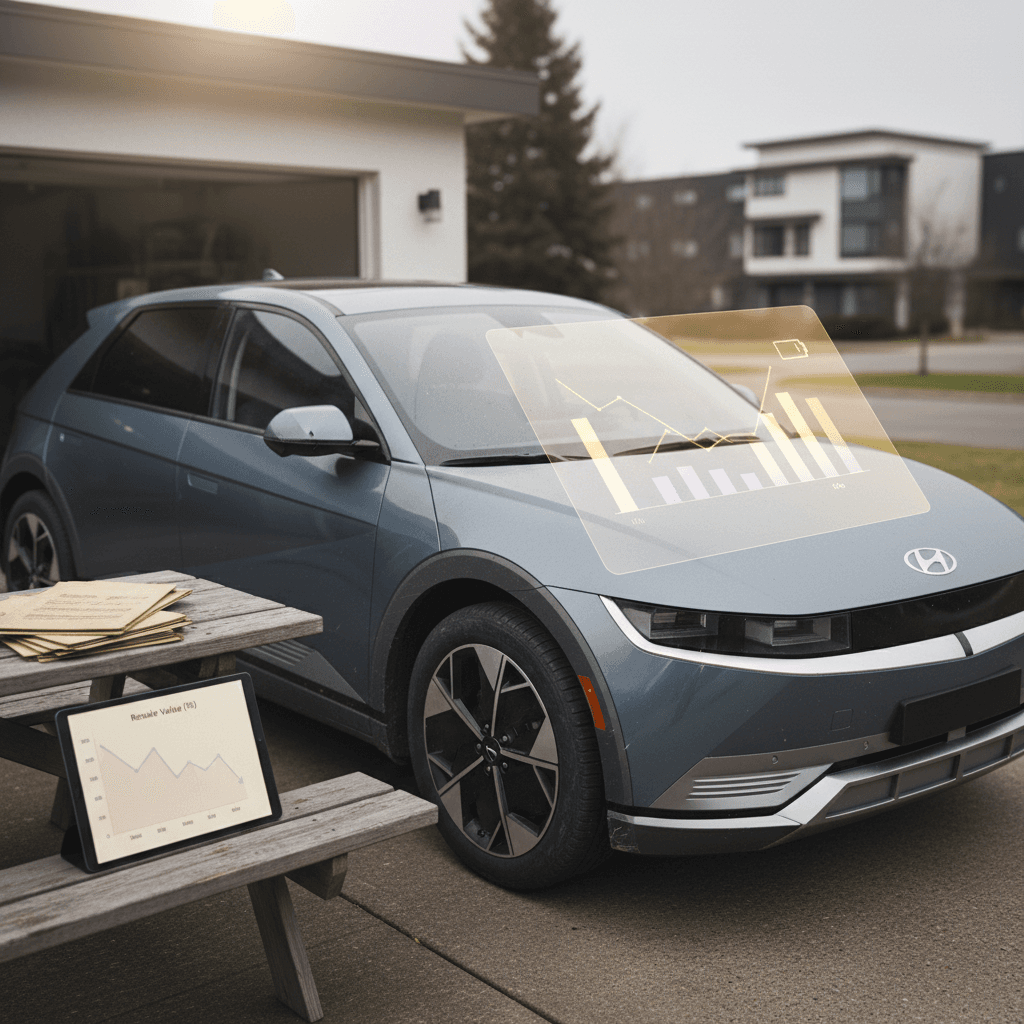
If you’re looking at a used Hyundai Ioniq 5 or thinking about selling yours, the big question is simple: what is a Hyundai Ioniq 5 worth after 3 years? EV prices have been volatile, incentives keep changing, and battery tech is moving fast. But there’s now enough real‑world data to sketch a clear picture of 3‑year Ioniq 5 value in 2025–2026.
Context: model years and timing
Hyundai Ioniq 5 value after 3 years: quick overview
3‑year Hyundai Ioniq 5 value snapshot (typical U.S. market)
Different data providers peg 3‑year Hyundai Ioniq 5 depreciation in the same general band: roughly mid‑40% to mid‑50% of value lost by year three. Some models do better, some worse, depending on how they were bought, driven, and maintained.
How much does a Hyundai Ioniq 5 depreciate in 3 years?
Let’s level‑set with what multiple sources are signaling today:
- Analysts that track EV depreciation show the Ioniq 5 losing around 45–55% of its original MSRP in the first three years.
- Lease and finance residuals for 36‑month terms commonly sit in the 50–60% residual range for mainstream trims in normal markets, which implies 40–50% depreciation over three years.
- Some consumer‑facing valuation tools show steeper first‑owner losses for heavily incentivized or high‑MSRP trims, especially early builds that were sold at or above sticker in 2022.
Put simply, a typical Hyundai Ioniq 5 will often be worth about half of its original price after three years. That’s slightly worse than some Teslas, but in line with many mainstream EV crossovers and not dramatically different from gasoline compact SUVs when you strip out tax credits and early‑adopter pricing bubbles.
What that 3‑year depreciation looks like in real dollars
Illustrative 3‑year Hyundai Ioniq 5 value ranges
These are simplified examples using rounded numbers and typical U.S. conditions. Local market, incentives, and mileage can push you higher or lower.
| Original MSRP | Trim Example | Mileage After 3 Years | Likely Retail Asking Price | Approx. Value Kept |
|---|---|---|---|---|
| $43,000 | SE Standard Range RWD | 30,000 miles | $23,000–$26,000 | ~53–60% |
| $50,000 | SEL RWD/ AWD mix | 36,000 miles | $25,000–$29,000 | ~50–58% |
| $55,000 | Limited AWD, big options | 40,000 miles | $26,000–$31,000 | ~47–56% |
| $60,000+ | Launch‑year, markups & accessories | 45,000+ miles | $27,000–$32,000 | ~45–52% (vs. actual transaction price) |
Always check current local pricing and get a battery‑health report before relying on any single estimate.
Watch the tax credit effect
On the flip side, early‑adopter buyers who paid over MSRP in 2022 or skipped incentives can see much uglier percentage losses, even if the current used price matches today’s market. The car didn’t underperform; the market simply cooled around it.
Ioniq 5 value after 3 years vs other popular EVs
The Ioniq 5 sits in the middle of the pack on 3‑year EV value retention:
3‑year value: Ioniq 5 vs. key EV rivals (big‑picture view)
Not exact dollars, directionally where each model tends to land.
Hyundai Ioniq 5
Typical 3‑year depreciation: roughly mid‑40% to mid‑50% range from MSRP.
- Strong demand and good reviews support values.
- Heavier drops where early markups or rich incentives applied.
Tesla Model Y
Typical 3‑year depreciation: often a bit better than Ioniq 5, thanks to brand pull and over‑the‑air upgrades.
- Frequent new‑car price cuts can suddenly drag used values down.
- Still one of the strongest mass‑market EVs for resale.
Ford Mustang Mach‑E & peers
Typical 3‑year depreciation: often similar to or slightly worse than Ioniq 5.
- Deep discounts and inventory spikes can erode used values.
- Software and charging‑network changes influence demand.
Good news for Hyundai owners
Why some 3‑year‑old Ioniq 5s hold value better than others
Not all 3‑year‑old Ioniq 5s are equal. Even within the same model year, you’ll see thousands of dollars of spread between the cheapest and most expensive examples. Key drivers include:
Key value drivers for a 3‑year‑old Hyundai Ioniq 5
Trim, options and original MSRP
Higher‑trim Limited and well‑optioned AWD models cost more new and will be worth more in dollars three years later, but they may lose a bigger *percentage* of their initial price than simpler SE or SEL models.
Mileage and usage pattern
An Ioniq 5 with 20,000–30,000 miles looks very different on a pricing screen than one with 50,000+. Frequent DC fast charging, rideshare use or heavy towing (where applicable) can also worry informed buyers.
Battery health and fast‑charging history
Because range is the lifeblood of any EV, a clean battery‑health report with limited degradation is a major resale advantage. Aggressive fast‑charging habits over three years can shave value if they show up in diagnostics.
Accident and repair history
EV buyers pay attention to Carfax and similar reports. Structural repairs, airbag deployments or missing service records will drag a 3‑year‑old Ioniq 5’s value down fast.
Warranty coverage remaining
Hyundai’s battery warranty is long, but as the basic bumper‑to‑bumper coverage burns down, shoppers push harder on price. A car that still has several years of comprehensive coverage left will be easier to sell at a premium.
Local market and incentives
Some regions are flooded with off‑lease Ioniq 5s, others see very few. State and local incentives on new EVs can pull used prices down if the gap between new‑after‑incentives and used narrows too much.
Battery health: the hidden driver of 3‑year value
At three years old, most Ioniq 5 battery packs are still in very good shape. But buyers don’t just want reassurance, they want proof. That’s where objective battery diagnostics can separate an average car from a standout one in the used market.

How Recharged uses battery data
Strong battery report
- Capacity and range close to original EPA estimates.
- Normal DC fast‑charging usage with healthy charge curves.
- No high‑voltage system warnings or history of pack repairs.
Result: easier to sell, more buyer interest, and often higher offers from dealers and online marketplaces.
Questionable battery history
- Notable range loss compared with similar 3‑year‑old Ioniq 5s.
- Heavy DC fast‑charging, especially in very hot climates.
- Warning codes or prior high‑voltage work in service history.
Result: tougher to finance, lower bids, and more time on market as savvy EV shoppers walk away.
Leasing residuals: what finance companies assume your Ioniq 5 will be worth
Even if you’re not leasing, lease residuals are a useful window into how banks and captive finance arms view 3‑year value. For the Ioniq 5, many 36‑month leases over the last few years have used residual factors in roughly the 50–60% of MSRP range at 10,000–12,000 miles per year.
In practice, that means a $50,000 Ioniq 5 might have had a contract residual somewhere around $25,000–$30,000 at lease‑end. When market conditions shifted, because of new incentives, competition, or price cuts on new EVs, the real‑world value sometimes drifted above or below those projections.
If you’re coming off a lease
Best time to sell or trade a 3‑year‑old Ioniq 5
Every EV hits a point where depreciation slows and value flattens out. For the Hyundai Ioniq 5, that inflection is often right around the end of year three into year four, once the steepest first‑owner drop has already happened, but before warranty mileage and cutting‑edge features fall too far behind newer rivals.
- End of year three: A sweet spot if your mileage is average and you’ve kept up on service. You maximize what you get back while your car still feels current to shoppers.
- Before major redesigns or range bumps: If Hyundai releases a significantly longer‑range or refreshed Ioniq 5, older models may see a step‑down in used pricing as shoppers chase the new spec sheet.
- Ahead of lease return waves: In markets where many Ioniq 5s were leased with the same 36‑month terms, there can be a flood of off‑lease inventory. Selling or trading a few months earlier can help you avoid that glut.
Market timing still matters
Steps to maximize your Hyundai Ioniq 5’s value
Practical ways to protect 3‑year value
1. Keep mileage in check
Staying closer to 10,000–12,000 miles per year instead of 15,000+ keeps your Ioniq 5 inside the mileage bands that lenders and pricing tools favor, which translates into stronger offers when you sell.
2. Document charging and service habits
Save records showing regular maintenance and any high‑voltage system checks. If you’ve mostly AC‑charged at home and rarely used DC fast charging, note that for future buyers, it’s a real selling point.
3. Fix cosmetic issues before listing
Curb rash, cracked glass, and obvious dings are amplified on futuristic designs like the Ioniq 5. A modest reconditioning allowance can add more in resale value than it costs in most cases.
4. Get an independent battery‑health report
A third‑party diagnostic, such as the <strong>Recharged Score battery health report</strong> included on every car listed through Recharged, turns range anxiety into confidence and often justifies a higher asking price.
5. Compare instant offers vs. consignment
If you want speed, an instant offer from a marketplace or dealer may be the right move. If you’re willing to wait, a consignment or marketplace listing (Recharged offers both) can reach retail buyers and potentially capture more of the car’s value.
6. Highlight software and feature updates
If your Ioniq 5 has received over‑the‑air feature updates, recall fixes, or charging‑standard upgrades, mention them. Buyers like knowing they’re not inheriting an ignored update backlog.
Real‑world 3‑year Ioniq 5 value scenarios
Scenario 1: Value‑friendly commuter
Vehicle: 2023 Ioniq 5 SEL RWD
Mileage at 3 years: 26,000
Condition: Clean history, minor wear, mostly home‑charged, good battery report.
Original MSRP: ~$50,000
Likely resale band: around $27,000–$30,000 in a balanced market, or roughly mid‑ to high‑50% of original MSRP.
Scenario 2: High‑mileage road‑warrior
Vehicle: 2022 Ioniq 5 Limited AWD
Mileage at 3 years: 55,000
Condition: Clean title but noticeable wear; heavy DC fast‑charging on service records.
Original transaction: ~$57,000 with early‑market markup.
Likely resale band: mid‑$20,000s, translating into a steeper apparent depreciation percentage, partly driven by that high original price.
Scenario 3: Incentive‑heavy lease return
Vehicle: 2023 Ioniq 5 SE AWD, leased
Mileage at 3 years: 30,000
Condition: Good; no major cosmetic issues; typical DC fast‑charge use.
Sticker vs. net cost: $49,000 MSRP, but ~$7,500+ in lease incentives passed through.
Likely resale band: $25,000–$28,000. Paper depreciation looks near 45–50% from sticker, but the lessee’s true loss from their net cost is closer to the mid‑30% range.
Don’t rely on a single pricing source
FAQ: Hyundai Ioniq 5 value after 3 years
Frequently asked questions about 3‑year Ioniq 5 value
Bottom line: is a 3‑year‑old Ioniq 5 a good value?
After three years, the Hyundai Ioniq 5 has settled into a clear pattern: it doesn’t hold value like the very strongest EVs on the market, but it avoids the horror‑story depreciation some early electric models suffered. For sellers, that means there’s real money to recover if you present the car well, document battery health, and shop your options. For buyers, it means a 3‑year‑old Ioniq 5 can be a sweet spot, modern tech, fast charging, and distinctive styling at a meaningful discount from new.
If you’re weighing your own move, buying used, trading out of a lease, or selling a 3‑year‑old Ioniq 5 outright, an objective view of battery health and fair market pricing is your best ally. That’s exactly what the Recharged Score Report is designed to provide on every Ioniq 5 we list, along with EV‑specialist support from valuation through financing, trade‑in, and nationwide delivery.