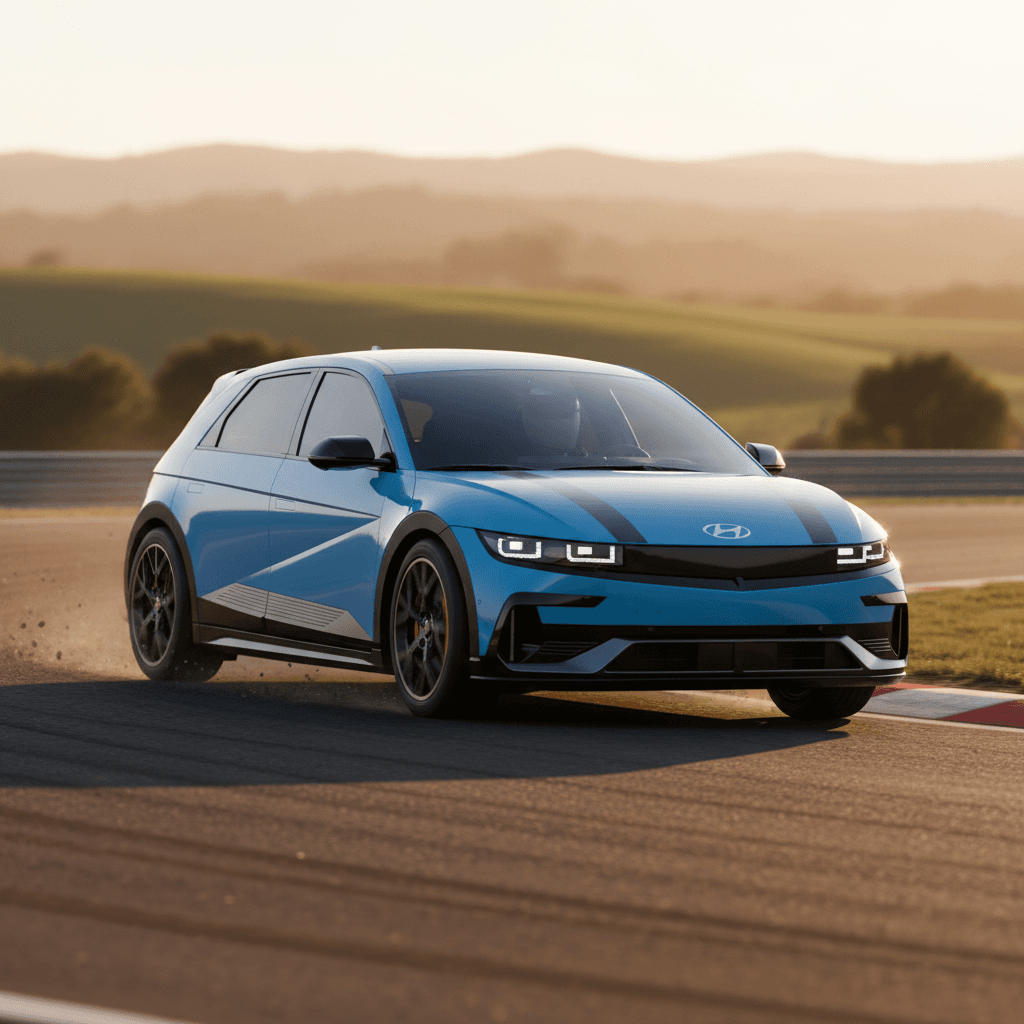
The Hyundai IONIQ 5 N isn’t just a quicker IONIQ 5. It’s a full-on performance EV with up to 641 hp, drift and launch modes, and genuine track credibility. In this Hyundai IONIQ 5 N performance review, we’ll dig into how it accelerates, corners, and charges, and whether it makes sense as an everyday performance SUV, especially as prices soften and used examples start hitting the market.
Performance EV in a Nutshell
Hyundai IONIQ 5 N at a Glance
Hyundai IONIQ 5 N: Key Performance Numbers
On paper, the IONIQ 5 N reads like a spec-sheet flex. Hyundai quotes up to 478 kW (650 PS / about 641 hp) from a dual‑motor setup when N Grin Boost is active, fed by an 84‑kWh battery and driving all four wheels. Officially, 0–100 km/h (62 mph) takes roughly 3.4 seconds and top speed is a head‑turning 260 km/h (162 mph). That puts it squarely in the conversation with a Tesla Model Y Performance and even some traditional hot SUVs from BMW M and Mercedes‑AMG.
Quick Context for Shoppers
Power, Acceleration and Top Speed
Hyundai splits the IONIQ 5 N’s dual motors into a more powerful rear unit and a slightly smaller front unit. With N Grin Boost off, you’re still looking at more than 600 hp combined. Hit the dedicated N button on the steering wheel, and for about 10 seconds the system unleashes its full 641‑hp potential.
- Dual‑motor AWD with performance‑biased rear motor for a rear‑drive feel under power.
- N Grin Boost (NGB) delivers a short burst of max output for overtakes or sprints.
- N Launch Control preps the battery and motors for repeatable, hard launches.
In independent testing, the IONIQ 5 N consistently feels as quick as its numbers suggest. Launch control produces a shove more like a supercar than a compact SUV, and passing power at highway speeds is effortless. Unlike some EVs that run out of breath above 100 mph, the Hyundai continues to pull strongly as it works toward that 162‑mph top speed, making it feel more like a long‑legged performance car than a city‑only EV.
Mind the Heat
Handling, Brakes and Track Stamina
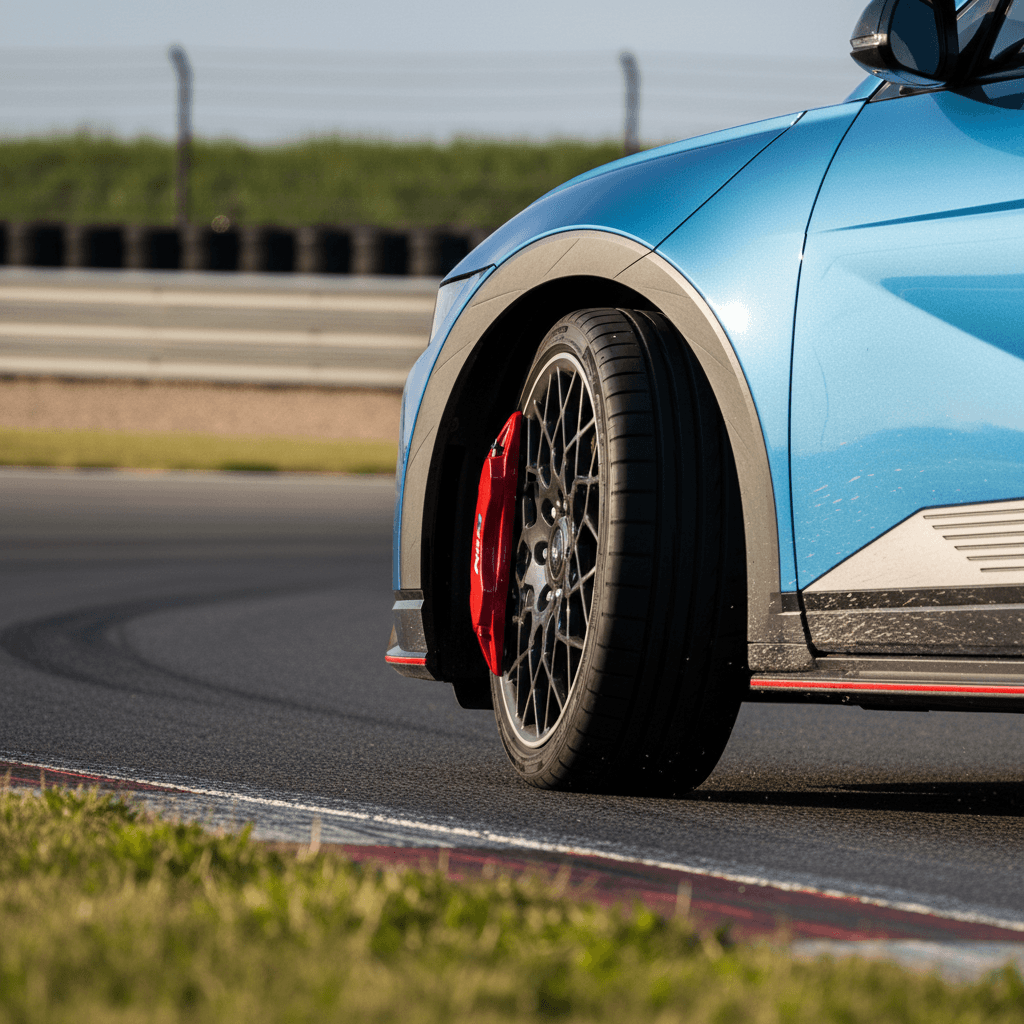
If there’s one area where the IONIQ 5 N separates itself from typical performance EVs, it’s cornering and braking endurance. Hyundai re‑engineered the suspension, added a rear electronic limited‑slip differential, and fitted serious hardware: 275/35R21 Pirelli P Zero tires and 400‑mm front rotors with four‑piston calipers.
How the IONIQ 5 N Handles Like a Giant Hot Hatch
Track‑focused tuning wrapped in a practical EV body
N Electronically Controlled Suspension
Rear e-LSD & N Torque Distribution
0.6g Regenerative Braking
On a proper road course, the IONIQ 5 N feels much more composed than its curb weight suggests. Turn‑in is sharp, the body stays impressively flat, and the rear‑drive bias lets you rotate the car under power instead of simply plowing wide like many heavy EVs. The Pirelli summer tires offer real grip but will wear quickly if you lean on them every weekend.
Braking performance is a standout. The car combines strong friction brakes with up to 0.6g of regenerative deceleration, which means you can brake later and more consistently than you’d expect from a family‑sized crossover. On track, that also helps keep the friction brakes cooler and extends stamina over multiple laps, an area where many EVs still struggle.
Track-Friendly Battery Management
Sound, Shifting and the EV “Theatre” Factor
Hyundai knows not everyone wants their performance EV to be completely silent. That’s where N Active Sound+ and N e‑Shift come in. These features simulate engine noise and gear changes through the speakers and powertrain mapping, giving you a more familiar performance‑car experience.
- N Active Sound+ plays different synthesized sound profiles, everything from a playful, sci‑fi EV tone to something closer to a traditional performance exhaust.
- N e‑Shift mimics an 8‑speed dual‑clutch gearbox, with noticeable “upshifts” and “downshifts” as you pull paddles behind the steering wheel.
- The system even cuts torque briefly during simulated shifts, so your body feels a real surge instead of one continuous wave of acceleration.
Purists will argue you don’t need fake noises or gears in an EV. But from a driver‑engagement standpoint, Hyundai’s approach works: it gives you timing, rhythm, and feedback to play with on a favorite back road or track, instead of just mashing the throttle and hanging on. Importantly, you can dial these systems back or turn them off entirely if you prefer the classic EV whoosh.
Range, Efficiency and Charging Performance
Performance has a cost, and in the IONIQ 5 N you’ll feel it most in range and efficiency. With its 84‑kWh pack, EPA estimates land around 221 miles of range, shorter than most regular IONIQ 5 trims, but still usable for daily driving and weekend trips. Drive it hard and that number falls quickly; think closer to 190 miles at steady highway speeds in independent testing, and significantly less during repeated track sessions.
Charging and Range: What to Expect
Fast on the plug, thirsty on the road
Ultra-Fast DC Charging
Real-World Range
Charging at Home vs. Public
The IONIQ 5 N supports 350‑kW DC fast charging and an 800‑V architecture, so if you find a truly high‑power station, you’ll spend less time plugged in than many rivals. That’s a big plus if you’re road‑tripping or live on public infrastructure. Just keep in mind that cold weather, high speeds, and aggressive driving will all eat into the theoretical numbers.
Daily Driving, Comfort and Practicality
Strip away the N‑specific hardware and the IONIQ 5 N is still an IONIQ 5, boxy, spacious, and family‑friendly. You sit a little lower in more heavily bolstered front buckets, but visibility is good and the flat floor gives the cabin an airy feel.
Ride & Noise
- Stiffer suspension and big 21‑inch wheels mean more impact harshness than a standard IONIQ 5.
- In its softest mode, the ride is perfectly livable for most commuters, but rough pavement will still make itself known.
- Performance tires generate more road noise, especially on coarse surfaces and in colder weather.
Space & Utility
- Plenty of rear‑seat legroom and headroom for adults, similar to the regular IONIQ 5.
- Flat load floor and split‑folding rear seats make it easy to haul gear.
- Cargo volume trails some boxier SUVs but is more than enough for daily duty and weekend trips.
For many buyers, the biggest surprise is how normal the IONIQ 5 N feels when you’re not in attack mode. Leave it in a comfort‑oriented setting, turn down the fake engine sounds, and it behaves like a slightly firmer‑riding family EV. The trick is that, at any moment, you can tap an N button and wake up a completely different personality.
Hyundai IONIQ 5 N vs. Key Rivals
Performance EV shoppers usually cross‑shop the IONIQ 5 N with the Tesla Model Y Performance, Kia EV6 GT, and sometimes compact luxury SUVs like the BMW iX3 or Mercedes‑AMG EQE SUV. Each takes a different approach: Tesla leans on software and straight‑line pace, Kia pushes even harder on outright power, and the Germans major on refinement. The Hyundai’s niche is playfulness and track durability in a relatively attainable package.
IONIQ 5 N vs. Popular Performance EV Rivals
Headline performance numbers and positioning for context. Exact pricing and specs can vary by model year and options.
| Model | Drivetrain & Power | 0–60 mph (approx.) | Top Speed | EPA Range (approx.) | Starting Price (approx.) |
|---|---|---|---|---|---|
| Hyundai IONIQ 5 N | Dual‑motor AWD, up to 641 hp | ≈3.3–3.4 s | ≈162 mph | ≈221 miles | Mid-$60,000s |
| Tesla Model Y Performance | Dual‑motor AWD, ~450+ hp | ≈3.5 s | 155 mph | ≈279 miles | Low‑$50,000s (before incentives) |
| Kia EV6 GT | Dual‑motor AWD, 576 hp | ≈3.4 s | ≈162 mph | ≈206 miles | Low‑$60,000s |
| Ford Mustang Mach‑E GT Perf. Pack | Dual‑motor AWD, 480 hp | ≈3.5 s | ≈124 mph | ≈260 miles | Mid‑$50,000s |
How the Hyundai stacks up against major performance EV crossovers.
How to Test-Drive the Competition
Ownership Costs and Used-Market Outlook
As of early 2026, Hyundai had aggressively cut pricing on many 2026 IONIQ 5 trims to stay competitive, though the IONIQ 5 N has typically been insulated from the deepest discounts. That said, the broader EV market has shifted: higher inventory, expiring federal tax credits, and rapid new‑model introductions are all pushing prices down, especially in the used market.
What to Expect When Owning an IONIQ 5 N
Beyond sticker price: depreciation, maintenance, and insurance
Depreciation
Maintenance
Insurance & Warranty
How Recharged Can Help
Who the IONIQ 5 N Is Really For
Is the IONIQ 5 N the Right Performance EV for You?
You care more about fun than maximum range
If your priority is carving on‑ramps and the occasional track day, not hyper‑miling a 300‑mile commute, the IONIQ 5 N’s 200‑ish real‑world miles may be plenty.
You want an EV that feels engaging, not just fast
N Active Sound+, N e‑Shift, and rear‑biased torque distribution give you more to do behind the wheel than simply flooring it in a straight line.
You have access to home or workplace charging
To really enjoy the car’s power without constant range anxiety, easy daily charging is a must. Relying purely on public infrastructure will get old fast.
You’re okay with a firmer ride
The N’s suspension is tuned for control, not cushiness. If your roads are crumbling and you crave plush comfort, a regular IONIQ 5 or another EV SUV may be a better fit.
You understand performance running costs
Sticky tires, big brakes, and occasional track days all add up. If you budget for that, the day‑to‑day EV running costs (no gas, less routine maintenance) are still compelling.
FAQ: Hyundai IONIQ 5 N Performance
Frequently Asked Questions About IONIQ 5 N Performance
Bottom Line: Should You Buy an IONIQ 5 N?
When you zoom out, the Hyundai IONIQ 5 N is one of the most convincing arguments yet that performance EVs can be fun, not just fast. It sacrifices some range and comfort for sharper reflexes, stronger brakes, and a personality that invites you to explore its limits, on track days as well as on the daily commute.
If you’re a driver who craves engagement and can live with a firmer ride and modest range, the IONIQ 5 N deserves to be at the top of your list. If you’re more efficiency‑minded, a regular IONIQ 5, or a different long‑range EV SUV, will make more sense. Either way, the N’s arrival is good news for enthusiasts: it raises the bar for how exciting an electric SUV can feel, and as more of them reach the used market, it opens up a new kind of performance EV ownership that’s easier to access than ever.
When you’re ready to explore used options, Recharged can help you compare IONIQ 5 N listings against other performance EVs, understand real battery health through the Recharged Score, and line up financing and nationwide delivery, so you can focus on the driving, not the guesswork.