If you own a Hyundai IONIQ 5 and love the idea of car camping, you’re sitting on one of the best platforms for a compact electric camper. This Hyundai IONIQ 5 camping setup guide walks you through V2L power, sleep layouts, climate control, and gear so you can turn your EV into a quiet, all‑electric basecamp without killing your range or your battery.
What this guide covers
Why the IONIQ 5 makes sense for camping
IONIQ 5 strengths as a camping platform
What this EV does better than a typical compact SUV
Huge battery, tiny loads
The IONIQ 5’s battery packs (up to ~84 kWh on newer models, low‑70s on earlier long‑range trims) are massive compared with camping loads. Even a 500W setup running for 8 hours at night only uses about 4 kWh, a small slice of your total energy.
Built‑in V2L power
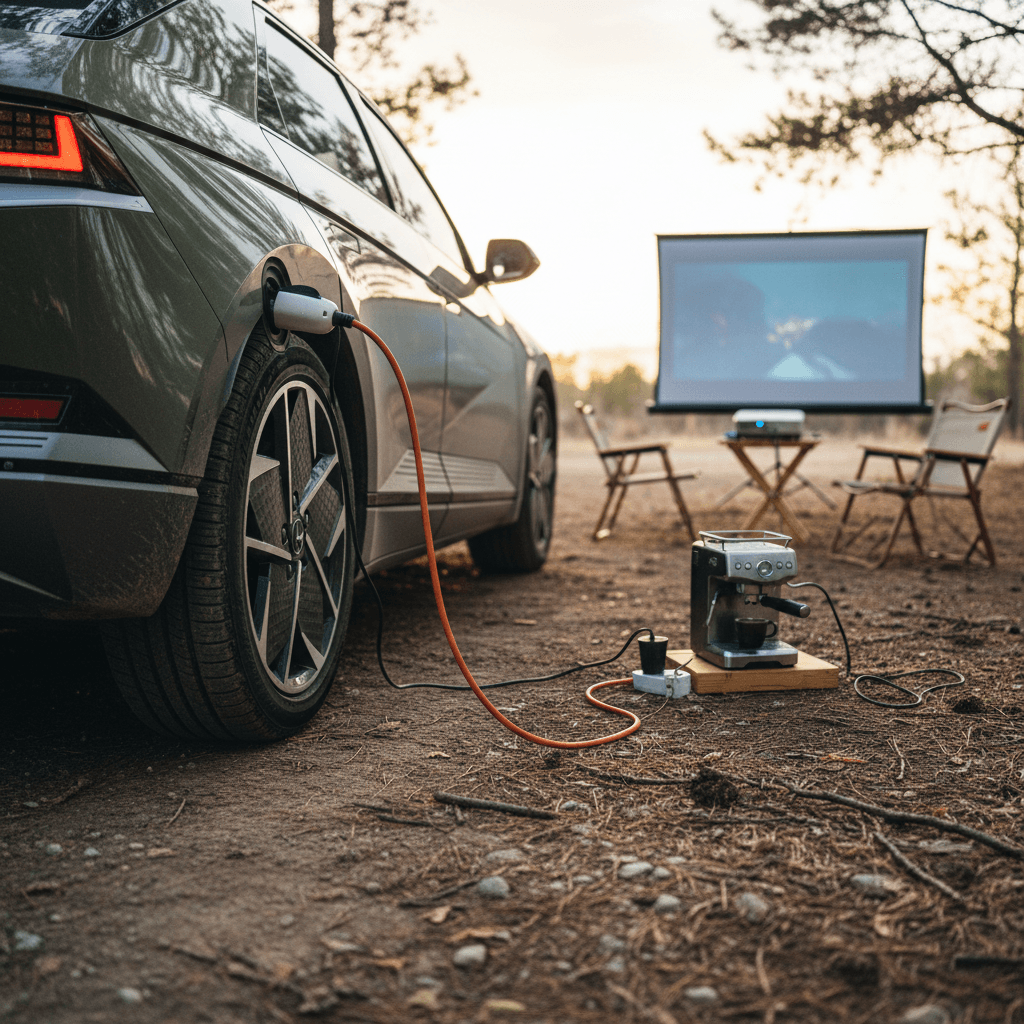
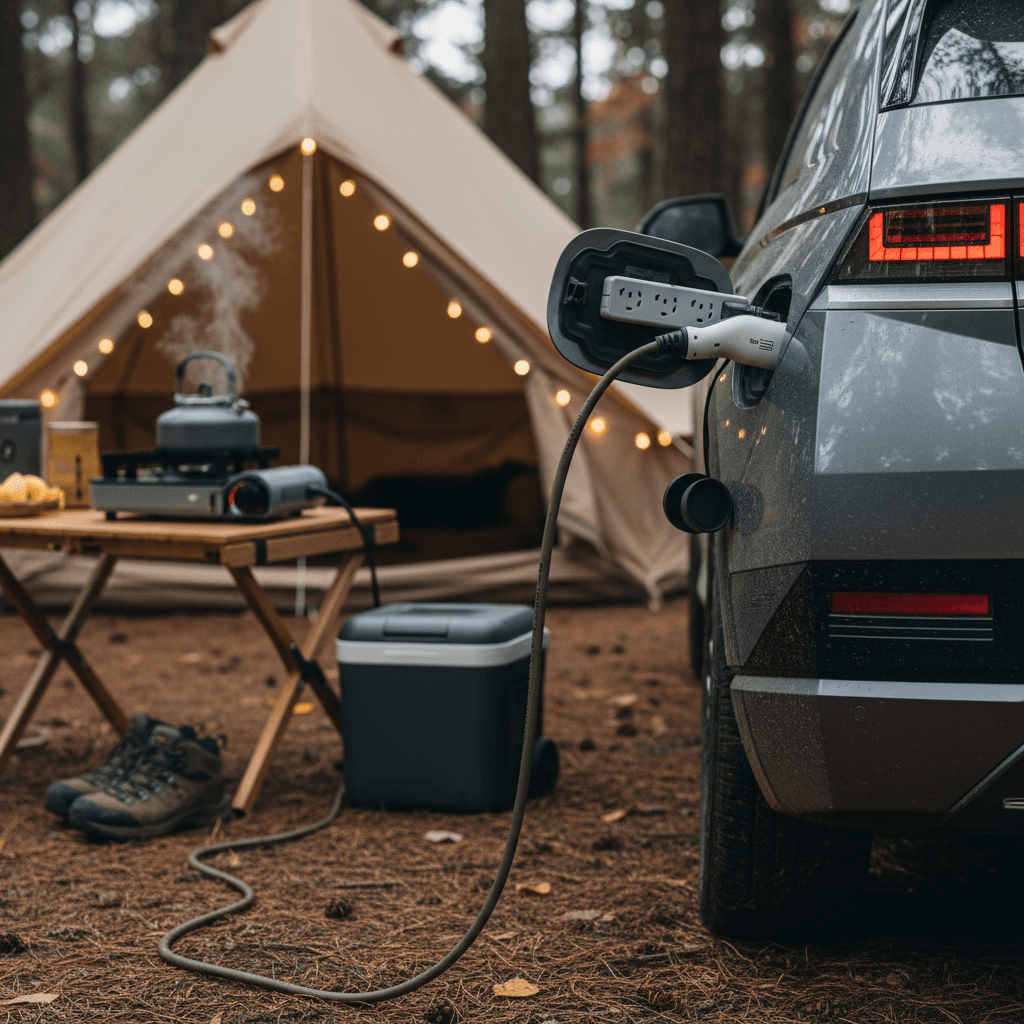
Vehicle‑to‑Load (V2L) gives you 120V AC power up to about 1.9 kW (15A), using standard NEMA 5‑15 household outlets. You can plug in fridges, fans, laptops, induction cookers, and more without a generator.
Flat floor, good sleep length
With the rear seats folded, the IONIQ 5 offers roughly 72–75 inches of usable sleeping length. The flat cargo floor from the dedicated EV platform makes it much easier to build a level sleep platform than in many crossovers.
Hyundai has also steadily upgraded the IONIQ 5 platform: newer 84 kWh models, including adventure‑focused trims like the XRT, offer more range and NACS fast‑charging support while keeping V2L capability. For camping, that translates to shorter charging stops and more flexibility in where you camp and how far you roam.
Used IONIQ 5 as a camping rig
Understanding IONIQ 5 V2L power for camping
IONIQ 5 V2L and battery numbers that matter
V2L (Vehicle‑to‑Load) is what transforms the IONIQ 5 from “EV that happens to be at a campsite” into a true electric power hub. It provides standard 120V AC power from either an interior outlet (usually under the rear seats) or an external adapter that plugs into the charge port.
- Output: 120V AC, up to roughly 1.9 kW (15A) continuous from the external V2L adapter.
- Ports: Interior 120V outlet (in many trims) plus an external adapter at the charge port.
- Protection: The car will shut down V2L if you exceed the power limit for more than a few seconds.
- Battery: A long‑range pack gives you dozens of kWh beyond what you need just to sleep and run lights.
Know the hard limits
Planning your Hyundai IONIQ 5 camping setup
Step 1: Define your use cases
Start by deciding how you actually plan to camp with your IONIQ 5:
- Drive‑in campsites with parking next to a tent
- Car‑camping in the cabin at trailheads or festivals
- Hybrid trips using both a tent and the car as backup shelter
- Power‑only trips where the IONIQ 5 feeds a tent, trailer, or tiny cabin via V2L
Step 2: Decide how you’ll sleep
There are three main options:
- Inside the car on a custom or inflatable mattress
- Hatchback tent that connects to the rear opening for extra headroom
- Standalone ground tent while using the IONIQ 5 as a power station
Your sleeping choice drives what insulation, privacy shades, and ventilation you need.
Once you’re clear on your camping style, you can right‑size your gear instead of overbuying. The IONIQ 5’s cargo space is good but not infinite, and every extra pound affects efficiency, especially on long climbs.
Building a comfortable IONIQ 5 sleep setup
Step‑by‑step IONIQ 5 sleep setup
1. Measure your interior
Fold the rear seats and measure usable length from the hatch to the back of the front seats (usually about 72–75 inches). Note any height changes where the seats fold to plan for leveling.
2. Level the cargo area
Use interlocking foam gym tiles or a lightweight plywood platform to smooth over gaps between folded seats and cargo floor. A level surface matters more for sleep quality than mattress thickness.
3. Choose the right mattress
Most people fit well on a <strong>25–26 inch wide backpacking pad</strong> or a trimmed full‑size foam mattress. If you’re over about 6 feet, consider sleeping slightly diagonal or moving one front seat forward.
4. Add insulation and condensation control
Use closed‑cell foam under your mattress and pack microfiber towels or a small portable dehumidifier if you camp in cold, damp conditions. Crack a window slightly or use vent clips to reduce moisture buildup.
5. Install privacy and sun shades
Magnetic or cut‑to‑fit window covers keep light out and heat in (or vice versa). Reflective shades on the windshield and rear hatch also cut energy use by reducing heating and cooling load.
6. Decide on inside vs. tent nights
For longer trips, alternate car‑sleep nights with tent nights. The IONIQ 5 can power a tent via V2L, but many campers prefer the car for stormy or very cold nights and the tent for fair‑weather lounging.
Hatch‑tent hacks
Powering your campsite with V2L
Once your sleep situation is sorted, your next task is designing a V2L power system that gives you comfort without surprises. Think in watts (instant power) and watt‑hours (energy over time), not just “plugs.”
Common Hyundai IONIQ 5 camping loads and battery impact
Use this as a ballpark planner. Actual consumption depends on temperature, efficiency of your devices, and how continuously they run.
| Device | Typical draw | 8‑hour use | Approx. battery used | Notes |
|---|---|---|---|---|
| LED string lights + lantern | 10–20 W | 0.1 kWh | <1% | Negligible; you’ll barely notice this. |
| 12V compressor fridge | 40–60 W avg | 0.4 kWh | ~1% | Great use of V2L. Keep it shaded and ventilated. |
| Laptop + phones | 60–100 W | 0.5–0.8 kWh | ~1% | Batch‑charge during evening, then unplug. |
| Low‑setting electric blanket | 60–80 W | 0.5 kWh | ~1% | Safer and more efficient than running cabin heat all night. |
| Small induction cooktop | 800–1,200 W | 0.3 kWh (15–20 min) | <1% | Cook quickly, then shut off. Don’t run with other big loads. |
| Portable AC or big space heater | 800–1,500 W | 6–12 kWh (overnight) | 10–20%+ | Feasible for short durations, but will eat battery quickly. |
These numbers assume a long‑range pack with roughly 72–84 kWh usable capacity. Percentages are approximate.
Smart V2L strategy
Two ways to configure your IONIQ 5 power system
Both use V2L, but one adds a portable power station as a buffer.
Direct‑from‑car V2L
Simple & cheap: Plug a heavy‑duty power strip into the OEM Hyundai V2L adapter and run your devices directly from the car.
- Best for: Weekend trips, minimal gear, moderate temperatures.
- Pros: Fewer devices to manage; less cost.
- Cons: Every watt‑hour comes straight from your traction battery; less flexibility if you misjudge consumption.
V2L + power station hybrid
More control: Use V2L to charge a 1–3 kWh portable power station during the day, then run lights, fridge, and devices from that station at night.
- Best for: Multi‑day trips, off‑grid stays, shoulder‑season camping.
- Pros: Smoother loads on the car, easier battery budgeting, redundancy.
- Cons: Higher upfront cost and more to pack.
Managing climate control and battery drain
Comfortable temperatures are where many EV camping plans go sideways. The IONIQ 5 gives you two main tools: V2L for powering external devices and Utility Mode for running the car’s own HVAC and electronics while stationary.
- Use Utility Mode (not just ACC) if you want the car’s built‑in heat or A/C while parked, so you draw from the high‑voltage pack instead of risking the 12V battery.
- Pre‑condition the cabin while driving or during your last fast‑charge stop so you start the night already warm or cool.
- In cold weather, combine a modest cabin set‑point with an electric blanket or heated mattress pad on V2L instead of cranking the heater all night.
- In hot weather, emphasize passive cooling, reflective window covers, cross‑ventilation with cracked windows and a small fan, and camping in shade, before resorting to a full‑blown portable AC.
Avoid V2L‑powered space heaters
Essential gear checklist for IONIQ 5 camping
Core Hyundai IONIQ 5 camping gear
Sleep system
Foam or inflatable mattress cut to fit, a warm sleeping bag or quilt, compact pillows, and a way to level the cargo floor (foam tiles or a simple platform).
Window covers & ventilation
Reflectix or custom magnetic window covers, windshield shade, rear hatch curtain, and vent clips or rain guards so you can crack windows without inviting bugs or rain.
V2L adapter & cables
Hyundai OEM V2L adapter for the exterior port, a quality 12–14‑gauge outdoor extension cord (keep it reasonably short), and a surge‑protected power strip with built‑in breaker.
Lighting
USB or 12V LED string lights, a headlamp for each person, and a small lantern. LEDs draw almost no power but dramatically improve comfort and visibility.
Cooling & refrigeration
A 12V compressor fridge or efficient cooler plus a small, quiet 12V or USB fan. Both are excellent matches for the IONIQ 5’s V2L output and low overnight consumption.
Cooking setup
Either a compact induction cooktop (run only when needed), or a conventional camp stove kept outside the car. Induction pairs well with V2L; open flame never belongs inside the cabin.
Power station (optional but powerful)
A 1–3 kWh portable power station if you want a buffer between the car and your devices, especially for multi‑day or off‑grid trips.
Safety & recovery kit
First‑aid kit, basic tools, tire repair kit, 12V or battery‑powered inflator, high‑visibility vests, and a printed map in case cell coverage drops.
Sample IONIQ 5 camping loadouts
Choose a Hyundai IONIQ 5 camping configuration that matches your style
Weekend Warrior (1–2 nights, mild weather)
Sleep in the car on a foam pad or inflatable mattress.
Rely on the IONIQ 5’s V2L for fridge, lights, and device charging only.
Cook on a small induction plate or outdoor gas stove for short bursts.
Expect ~5–10% battery drop per night from camping use, plus normal driving.
Festival / Road‑Trip Camper (3–5 nights)
Combine car sleeping with a ground tent for flexibility.
Add a 1–2 kWh power station topped up via V2L during the day.
Use low‑wattage electric blanket, fan, and fridge from the power station overnight.
Budget 10–20% of your battery across several days just for campsite power, and plan charging stops accordingly.
Shoulder‑Season Explorer (cold nights)
Prioritize insulation: window covers, insulated bedding, and warm clothing.
Pre‑heat the cabin before bed using Utility Mode, then rely on V2L blanket heat.
Keep V2L loads low and avoid electric space heaters inside the vehicle.
Target campsites within comfortable driving distance of DC fast chargers in case you need a larger buffer.
Power‑Hub Basecamp (supporting tent or trailer)
Park the IONIQ 5 as a stationary power hub running lights, fridge, and devices for a family tent or small trailer.
Use heavy‑duty outdoor cables and weather‑safe connections at all times.
Strongly consider a power station to avoid accidental deep SoC drops on the car.
Check campground rules around EV charging and power use before plugging into anything other than your own V2L system.
Charging and range planning on camping trips
The IONIQ 5’s 800V architecture and strong DC fast‑charging performance are a big part of why it works so well as a camping rig. Especially on newer 84 kWh models, 10–80% fast charges in around 20 minutes are realistic under good conditions, so you can build charging into grocery or lunch stops instead of sitting at chargers all day.
- Plan your arrival SoC: Aim to reach your campsite with at least 40–60% SoC if you plan heavy V2L use or multiple nights without moving the car.
- Segment your day: Fast‑charge in the morning or midday, then drive and explore, then set up camp with enough energy left for overnight use and the next day’s drive.
- Use apps intelligently: Mix EV‑focused apps (like A Better Routeplanner, PlugShare, or your network’s app) with standard navigation to find chargers near trailheads and campgrounds.
- Respect campground rules: Many RV parks ban EV charging from their pedestals or charge extra for 50A sites. V2L is your friend here because it doesn’t involve plugging the car into their grid at all.
- Build in weather margin: Headwinds, cold temps, and mountain grades all cut range. If you know you’ll be using V2L heavily, add a 10–20% extra buffer to your usual range assumptions.
Used IONIQ 5 and route confidence
Safety, etiquette, and what not to do
High‑voltage and fire safety
- Don’t run open‑flame stoves or grills in or immediately under the hatch. Carbon monoxide and fire risk aren’t magically solved by driving an EV.
- Don’t block escape paths. Keep at least one door or the hatch easily openable from the inside if you’re sleeping in the car.
- Mind your neighbors. Bright LED strings and blaring music at 1 a.m. don’t win friends just because your setup is electric and quiet.
- Watch for wildlife. Don’t leave food in the cabin in bear country; your IONIQ 5 is not a certified bear canister.
- Respect property rules. Some campgrounds are still figuring out policies around EVs. If they prohibit EV charging, clarify that you’re only using your own V2L power, or choose a more EV‑friendly spot.
FAQ: Hyundai IONIQ 5 camping setup
Frequently asked questions about IONIQ 5 camping
Is an IONIQ 5 a good used EV for camping?
For many drivers, the Hyundai IONIQ 5 hits a rare sweet spot: big‑battery efficiency, V2L power, fast charging, and a cabin that converts into a genuinely usable sleep space. With a thoughtful IONIQ 5 camping setup, leveled sleep platform, right‑sized V2L loads, climate strategies, and a realistic view of battery impact, you can treat your EV as both transportation and a silent, emissions‑free generator.
If you’re still in the shopping phase, a well‑chosen used IONIQ 5 can be one of the most capable and economical EV camping rigs available. Buying through a retailer like Recharged adds the peace of mind of battery‑health verification, expert EV support, and nationwide delivery, so you can spend less time worrying about degradation curves and more time planning your next trailhead or stargazing spot.