
Search traffic for “hybrid car maintenance near me” is climbing for a reason. New EV sales are slowing, hybrid sales are booming, and a lot of first-time hybrid owners are suddenly trying to figure out where to service a powertrain that’s part gas, part electric. The good news: if you understand a few basics, maintaining a hybrid in 2025 can be predictable, and cheaper than many gas-only cars over the long haul.
Hybrid ownership is surging
Why hybrid maintenance matters more in 2025
If you bought your hybrid to dodge high gas prices and unpredictable EV charging, you’re not alone. Recent cost-of-ownership data shows that hybrids often undercut full EVs on total cost, thanks to lower purchase prices and simpler repair bills, while still returning excellent fuel economy. At the same time, a hybrid has more moving pieces than either a pure gas car or a pure EV: you’re maintaining an engine, a high-voltage battery, and everything that connects them. Skip the basics and you can wipe out those fuel savings in a single repair.
Hybrid maintenance in context
How hybrid car maintenance differs from gas and EVs
Compared with a gas car
- Engine still matters: You still need regular oil changes, spark plugs, coolant and belt inspections.
- Brakes last longer: Regenerative braking takes load off the pads and rotors, so many hybrids go 70,000+ miles on original pads.
- Fewer transmission headaches: Many hybrids use eCVTs or simplified gearsets with fewer failure points.
Compared with a full EV
- More moving parts: EVs skip oil changes entirely; hybrids don’t.
- Smaller battery, different stress: Hybrid packs cycle frequently but rarely charge to 100%, which helps longevity.
- More routine under-hood checks: Fluids, belts and filters still matter to keep the gas engine healthy.
Think of your hybrid as two systems
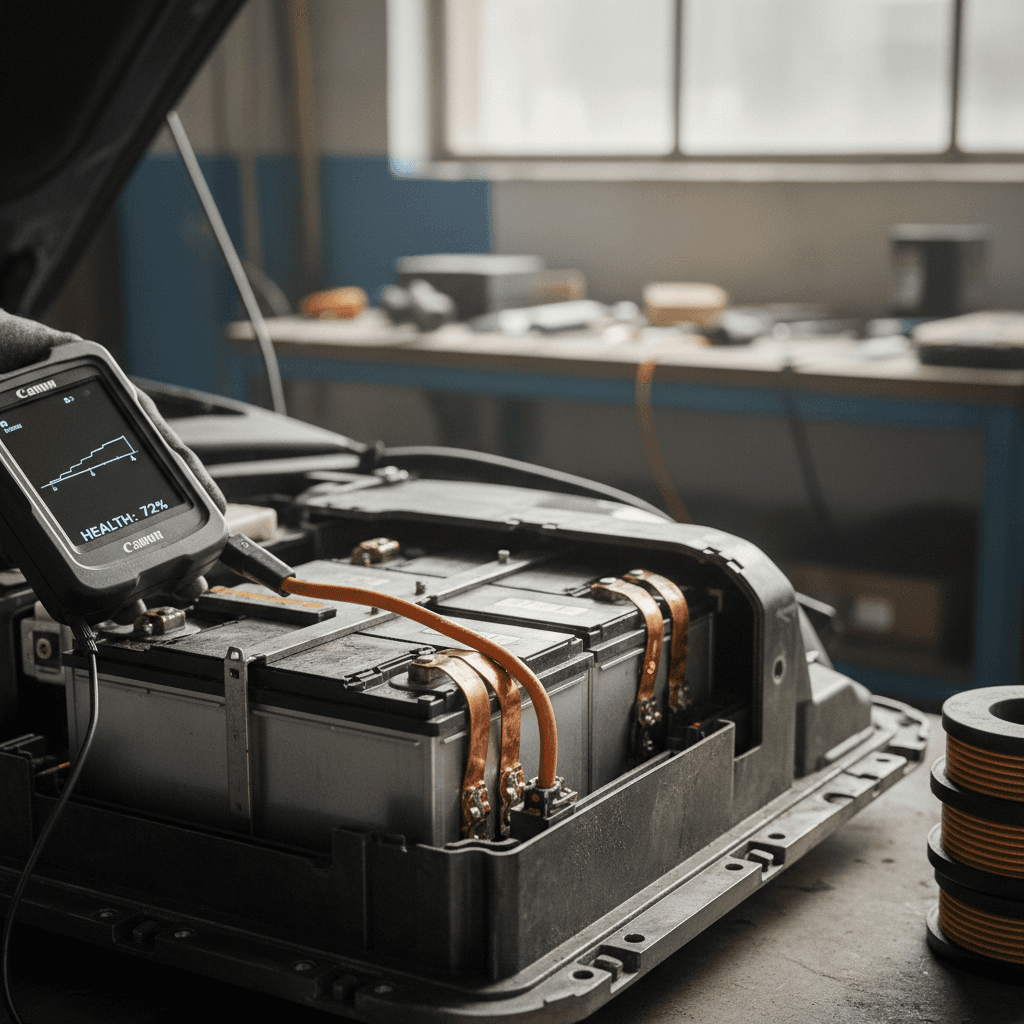
Typical hybrid maintenance schedule
Every brand has its own book, but most hybrids in the U.S. follow a predictable pattern. Always confirm your exact intervals in the owner’s manual or app, but this overview will help you vet any shop that claims to specialize in “hybrid car maintenance near me.”
Common hybrid service intervals (typical, not brand-specific)
Use this as a conversation starter with your mechanic; your exact schedule may differ.
| Mileage / Time | Key Services | Notes |
|---|---|---|
| Every 5,000–7,500 mi | Engine oil & filter, tire rotation, visual inspection | Some newer hybrids can stretch to 10,000 miles; confirm in manual. |
| Every 15,000–20,000 mi | Engine air filter, cabin air filter | Clogged cabin filters can reduce HVAC performance, which stresses the battery cooling system. |
| Every 30,000–45,000 mi | Brake inspection, coolant level check, hybrid system scan | Regenerative braking means pads may still look new, but calipers should be exercised to prevent sticking. |
| Every 60,000–100,000 mi | Spark plugs, brake fluid exchange, possibly engine coolant | Honda/Toyota often push spark plug changes toward the high end; short trips may require earlier replacement. |
| Every 100,000–150,000 mi | Comprehensive hybrid health check, battery cooling service | Shops should inspect battery cooling fans and ducts, especially if you carry pets or drive in dusty areas. |
Service intervals assume normal driving. Short-trip, hot-climate or towing use may shorten these windows.
Quick DIY checks between services
Check tires monthly
Hybrids are sensitive to tire pressure. Underinflation crushes your fuel economy and can confuse driver-assist systems.
Monitor dash warnings
Hybrid system and battery warnings usually show up early. Don’t ignore odd start/stop behavior or new lights.
Listen on cold starts
Rattles or rough idle when the gas engine fires up can signal overdue oil changes, failing mounts or software issues.
Keep vents and fans clear
Many hybrid batteries pull cooling air from the rear seat or cargo area. Don’t block vents with bags, pet blankets or cargo.
Real-world hybrid maintenance costs
Owners worry that hybrid shops will charge a premium. The data tells a more nuanced story: routine maintenance on mainstream hybrids is often in line with, or slightly below, similar gas models, while major repairs can be expensive if the high‑voltage system is neglected.
- Recent five‑year cost‑to‑own analyses for popular models like Toyota Corolla Hybrid, Camry Hybrid, RAV4 Hybrid, Honda Accord Hybrid and others show average annual maintenance often in the $600–$900 range over the first 5 years of ownership.
- Plug‑in hybrids can cost more to refuel in the real world than lab tests suggest, especially if owners rarely plug in, but they still usually beat comparable gas-only models on fuel cost.
- Hybrid repair bills tend to spike later in life, often after warranty, if earlier owners skipped coolant services, software updates or brake fluid changes.
Beware of “lifetime” fluids
Hybrid battery life, service and warning signs
Hybrid batteries generate headlines and anxiety, but for most drivers they’re not a ticking time bomb. Modern hybrid packs are engineered to cycle in a narrow state‑of‑charge window and are often backed by 8–10 year warranties. Still, age, heat and neglect can take a toll, especially on older or high‑mileage used hybrids.
What to watch for with your hybrid battery
Catch issues early and you’ll have more options than “replace the pack.”
Early warning signs
- Noticeable drop in fuel economy
- Engine running more often at low speeds
- Battery charge gauge swings rapidly
- New whirring noises from rear vents
Diagnostic steps
- Scan for hybrid or battery codes
- Check battery cooling fans and ducts
- Review software update campaign history
- Measure module voltages on older packs
Life-extending habits
- Park in shade when possible
- Keep battery vents free of dust and pet hair
- Follow coolant service intervals
- Avoid chronic short trips when possible
High-voltage safety
How to find quality hybrid car maintenance near me
When you type “hybrid car maintenance near me” into a search engine, you’ll see a mix of dealership service departments, independent shops and general repair chains. The logos matter less than the people and tools inside the building. Here’s how to narrow the field.
Three places to look for hybrid service
Each option has trade‑offs in price, convenience and expertise.
Franchise dealerships
- Factory training & brand‑specific tools
- Best for warranty, recalls, software, complex diagnostics
- Usually higher labor rates, but predictable processes
Independent hybrid specialists
- Techs who see hybrids all day, not once a month
- Often better at out‑of‑warranty repairs
- Labor rates can be lower than dealers
General repair chains
- Fine for tires, oil, basic inspections, if they follow factory specs
- Often lack hybrid‑specific tooling
- Good backup when traveling, but ask about hybrid experience
Checklist: Vetting a “hybrid mechanic near me”
Ask how many hybrids they service weekly
You want a shop that sees hybrids regularly, not once a quarter. Volume is a good proxy for familiarity.
Confirm high-voltage training
Technicians should have documented hybrid or EV safety training. Many brands and trade groups offer certifications, ask which ones they hold.
Look for proper scan tools
A good hybrid shop should be able to read hybrid control modules, battery data and live sensor information, not just generic OBD‑II codes.
Ask about parts sourcing
For critical components, OEM parts or high‑quality remanufactured packs are worth the premium over bargain-bin options.
Check reviews for pattern issues
One or two bad reviews happen; repeated complaints about misdiagnosis or upselling are a red flag.
Key questions to ask any hybrid mechanic
Once you’ve narrowed your list of hybrid maintenance shops near you, a short phone call or in‑person visit can separate true specialists from shops that are still learning on the job.
- “What hybrid models do you work on most often?” (Listen for your brand and similar vehicles.)
- “Can you show me a sample inspection report for a hybrid?”
- “How do you price diagnostics vs. repairs?”
- “Do you have battery reconditioning or only full replacement options?”
- “What’s your warranty on hybrid-related repairs?”
Good shops love informed customers
Ways to save money on hybrid maintenance
The cheapest maintenance strategy is rarely to hunt for the lowest advertised oil-change coupon. It’s to prevent big failures, use the right parts the first time, and time services intelligently. Here are levers you control as a hybrid owner.
Smart ways to trim hybrid ownership costs
Focus on prevention and data, not guesswork.
Plan around the maintenance curve
Hybrid maintenance costs usually stay modest early on, then rise as mileage climbs. Budget ahead for 60k, 90k and 120k‑mile services instead of treating them as surprises.
Get everything documented
Keep digital or paper records for every service, including hybrid system checks. That proof matters for warranty claims today and resale value tomorrow.
Don’t stretch oil “just because it’s a hybrid”
Some drivers assume the engine works half as hard and double their oil interval. Your oil still ages with time and short trips. Follow the factory schedule or oil‑life monitor.
Watch your fuel economy trend
A steady drop in MPG, with no change in driving pattern, is free diagnostic data. Bring that history when you visit a shop, it can shorten diagnostics and cut labor hours.
Use maintenance as a negotiation tool
If you’re buying a used hybrid: maintenance checks that matter
Shopping used is where hybrid maintenance really crosses paths with market value. You’re not just buying a car, you’re inheriting someone else’s habits. A clean hybrid with poor service history is often a worse bet than a higher‑mileage example that’s been maintained on schedule.
Before you buy
- Scan the hybrid system: Ask for a pre‑purchase inspection that includes hybrid control modules, not just generic codes.
- Review service records: Look for coolant changes, brake fluid exchanges and any battery cooling work.
- Test drive on varied roads: City, highway and low‑speed parking-lot driving help reveal weird engine start/stop behavior.
How Recharged approaches it
When a hybrid comes through Recharged, our EV‑specialist team uses our Recharged Score Report to evaluate battery health, charging behavior (for plug‑in hybrids) and maintenance patterns. That data feeds into pricing and our recommendations, so you’re not guessing about the most expensive components on the car.
Battery health is now a pricing input
FAQ: Hybrid car maintenance near me
Frequently asked questions
Bottom line: Treat maintenance as part of your fuel savings
Hybrids have become the quiet default choice for a lot of American drivers who want better fuel economy without betting their daily routine on public charging. Keeping one healthy isn’t mysterious, but it does require you to think beyond the next oil-change coupon. If you choose a shop that truly understands hybrid systems, stick to a realistic schedule and keep your documentation in order, you’ll protect both your fuel savings and your resale value. And if you decide your next move is a used hybrid or a full EV, tools like Recharged’s Recharged Score and EV‑specialist guidance can help you judge battery health and total ownership costs before you sign anything.