If you’re buying or selling a used electric vehicle, knowing **how to transfer an EV warranty to a new owner** can mean thousands of dollars of protection gained, or accidentally thrown away. The good news: in most cases, the factory and battery warranties follow the car. The catch: some brands, extended contracts, and CPO add‑ons have fine print and deadlines you don’t want to miss.
Big picture
Why EV warranty transfer matters when a car changes hands
Why EV warranty transfer is a big deal for used buyers
With replacement battery packs routinely running **five figures**, keeping the warranty intact is one of the smartest things you can do as a buyer or seller. When coverage transfers cleanly, the next owner gets factory backing on the most expensive component in the car, and the seller can legitimately ask more money for a vehicle that’s still protected.
How Recharged helps
Ready to find your next EV?
Browse VehiclesWhat parts of an EV warranty can transfer?
The main EV warranty buckets
Know which coverages usually follow the car, and which may not
1. High‑voltage battery & EV system
What it is: Coverage on the traction battery, electric motors, inverter, onboard charger, and related high‑voltage components.
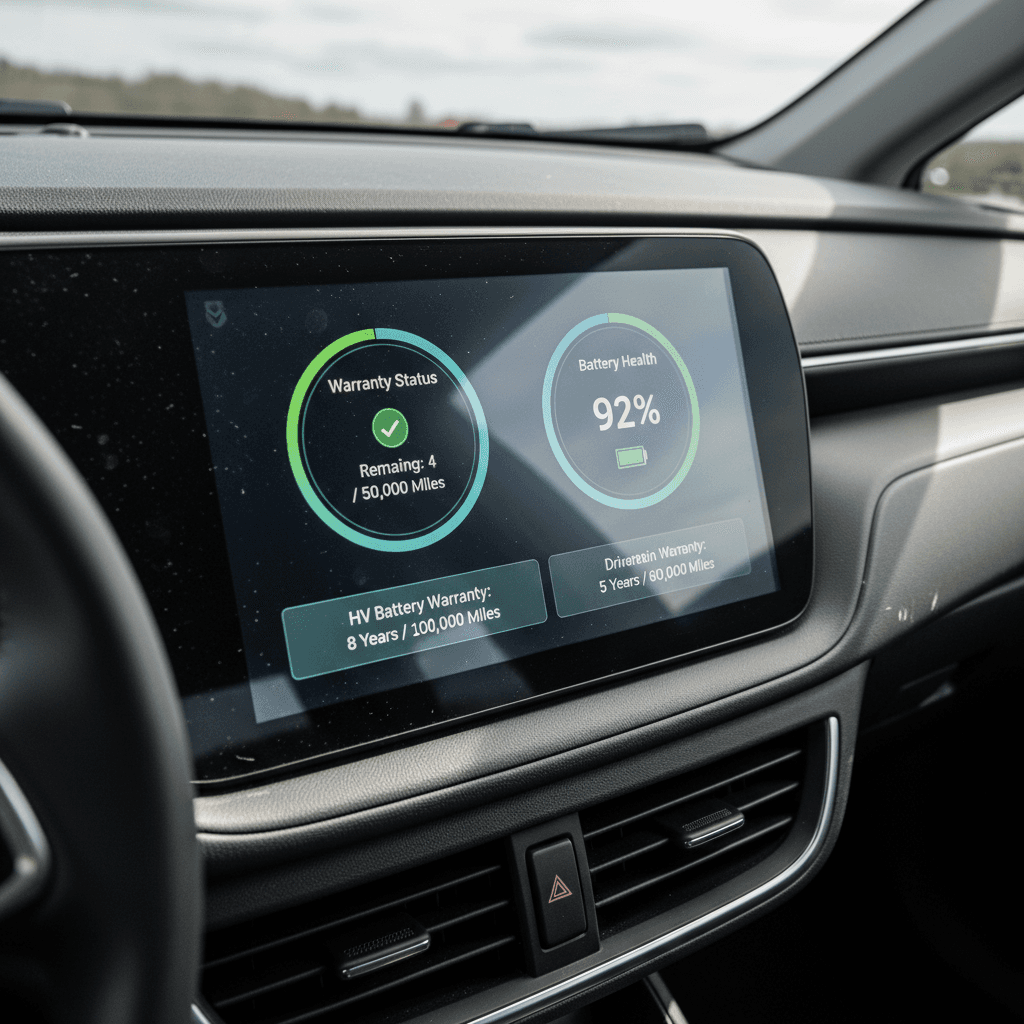
- Typically 8–10 years / 100,000 miles (or more in some CARB states).
- Often includes a capacity guarantee (commonly 70% of original capacity).
- Almost always designed to be transferable to subsequent owners while in term.
2. Bumper‑to‑bumper & powertrain
What it is: The general “new vehicle limited warranty,” plus any separate powertrain coverage.
- Commonly 3 years / 36,000 miles bumper‑to‑bumper.
- 5 years / 60,000 miles powertrain is typical for many brands.
- These usually transfer, but some brands shorten powertrain coverage for later owners.
3. CPO (certified pre‑owned) add‑ons
What it is: Extra coverage a manufacturer adds when it certifies a used EV, often extending bumper‑to‑bumper or powertrain.
- Coverage terms vary widely by brand.
- Sometimes fully transferable, sometimes not.
- Often tied to buying the car from a franchise dealer.
4. Extended service contracts & third‑party plans
What it is: Optional contracts sold by dealers, independent providers, or EV‑focused companies.
- Frequently transferable, but only if you submit a form, fee, and proof of sale.
- Some allow transfer only once; others not at all.
- These rarely transfer automatically, assume you must take action.
Don’t assume everything transfers
Does an EV warranty automatically transfer to a new owner?
In the U.S., most **factory EV warranties are VIN‑based**, not person‑based. That means when the car is sold, the remaining coverage normally comes along for the ride, whether the buyer is a dealer or a private party. The warranty booklet will spell this out under a section usually labeled “Ownership transfer” or “Subsequent owners.”
- Factory new‑vehicle and battery warranties: usually transfer automatically with the car, with no forms or fees.
- CPO (certified pre‑owned) add‑on coverage: often transfers if the vehicle is re‑sold by a dealer within the same brand network; may or may not follow a private‑party sale.
- Extended service contracts (manufacturer‑backed): often transferable once, but require a signed request, proof of sale, and sometimes a fee.
- Third‑party extended warranties: highly variable; many require notification within 30 days of sale or the contract terminates.
The legal backdrop in the U.S.
Step‑by‑step: how to transfer an EV warranty to a new owner
Let’s walk through the process from both sides of the transaction. The steps are similar whether you’re dealing with a Tesla, Hyundai, Ford, or any other modern EV, but you’ll still want to confirm the exact rules in your owner’s documentation.
If you’re the <strong>seller</strong>: transferring coverage correctly
1. Gather all warranty documents and service records
Collect the warranty booklet, any CPO paperwork, and extended service contracts, plus maintenance records and repair invoices. This proves the car has been cared for and shows what coverage exists.
2. Confirm what’s transferable on this specific EV
Read the sections labeled “Transferability,” “Subsequent owner,” or “Assignment.” Note whether the high‑voltage battery, bumper‑to‑bumper coverage, CPO add‑ons, and extended contracts can transfer, and what deadlines apply.
3. Call the warranty administrator before you list the car
For extended or CPO coverage, call the phone number on the contract. Ask: what form is needed, how much the fee is (if any), and the exact deadline to submit transfer paperwork after the sale.
4. Include warranty details in your listing
In your ad or listing, accurately state what’s left: for example, “Battery warranty to 8 years/100,000 miles; basic warranty through March 2027.” Avoid fuzzy claims like “full warranty” if only some pieces remain.
5. Complete transfer forms immediately after the sale
Once you have a signed bill of sale, fill out any transfer form with the buyer’s info, VIN, current mileage, and sale date. Send it via the method required, online portal, email, or certified mail, and keep copies.
6. Share proof with the buyer
Send the buyer scans or photos of submitted forms and any confirmation emails. This builds trust and gives them a paper trail in case there’s ever a dispute about coverage.
If you’re the <strong>buyer</strong>: locking in coverage after purchase
1. Get the VIN and mileage before you commit
Ask the seller for the full VIN and current odometer reading. Use manufacturer sites or call a dealer to check remaining factory and battery warranty based on that VIN.
2. Ask for all warranty and service paperwork
Before or at delivery, get the warranty booklet, any CPO addenda, and extended‑warranty contracts. If the seller can’t produce them, assume extra coverage beyond basic factory terms may not be valid.
3. Verify transfer rules in writing
Read the contracts yourself, don’t rely on verbal assurances. Confirm whether you, as the next owner, are eligible and what steps you must take within a certain number of days after the sale.
4. Call to put your name on file
After you buy the car, call the brand’s customer‑care line or log into their owner portal to update ownership. Do the same with any extended‑warranty administrator so claims aren’t delayed later.
5. Save copies of title, bill of sale, and transfer forms
Keep digital copies of your purchase paperwork and any warranty transfer forms. If you ever have a coverage dispute, this packet becomes your best friend.
6. Schedule a baseline inspection (optional but smart)
Especially on a higher‑mileage EV, consider an inspection and battery health check. At Recharged, our Recharged Score does this automatically, but you can also ask a dealer or EV‑savvy shop to document condition soon after purchase.
Brand‑specific EV warranty transfer “gotchas”
Every automaker writes its own rules. The high‑voltage battery warranty almost always transfers, but certain brands handle powertrain and extra coverage differently. Here are patterns you’ll commonly see; always confirm with the latest warranty booklet for the model year you’re buying.
Examples of EV warranty transfer nuances by brand
Not a complete list, use this as a checklist of questions to ask for the brand you’re considering.
| Brand examples | Battery & EV system warranty | Powertrain / other coverage for later owners | Typical transfer action |
|---|---|---|---|
| Tesla | 8 yrs / 100,000–150,000 mi battery & drive unit on most models; generally transferable for the term. | No separate powertrain warranty; coverage is wrapped into the battery/drive‑unit terms. | Ownership update via Tesla app or account; warranty follows VIN, no separate fee. |
| Hyundai / Kia / Genesis | EV system & battery often 10 yrs / 100,000 mi and marketed as transferable. | Traditional powertrain (on ICE/hybrid) drops from 10/100k to 5/60k for later owners; EV‑system coverage is typically still full term for subsequent owners. | Factory coverage follows VIN; CPO and extended plans may require a form and fee. |
| GM (Chevy, Cadillac, GMC Ultium) | Commonly 8 yrs / 100,000 mi battery with 70% capacity guarantee, transferable. | Some special‑case models (e.g., early Hummer EV policy years) have restrictions if sold very early. | Standard factory coverage auto‑transfers; watch for fine‑print resale restrictions on niche models. |
| Ford | 8 yrs / 100,000 mi battery on modern EVs; transfers to subsequent owners while in term. | Typical 5/60k powertrain; generally transfers, but CPO add‑ons may be limited to first CPO buyer. | Update ownership with Ford; extended service contracts require a transfer request. |
| Nissan | 8 yrs / 100,000 mi battery on newer EVs; earlier Leafs may have shorter or more nuanced capacity terms. | Standard powertrain 5/60k; generally transfers but provides limited value on a pure EV. | Factory coverage follows VIN; extended contracts may have a 30‑day transfer deadline. |
Terms change over time and can vary by state. Always verify against the current warranty booklet for the exact model and year.
Smart move when cross‑shopping brands
How to verify remaining EV warranty as a buyer
Before you sign anything, you want to know two things: **what’s covered** and **how long it will last for you**. Here’s how to confirm that instead of taking anyone’s word for it.
- Ask the seller for the VIN and current mileage, plus build date (on the door jamb or in the owner’s portal).
- Look up the brand’s warranty terms by model year on the manufacturer’s website and compare your car’s in‑service date and mileage.
- Call a dealer’s service department with the VIN and ask them to read out remaining factory and battery coverage, many will do this in a few minutes.
- Request copies of any CPO or extended‑warranty contracts and read the sections on “Coverage period,” “Transferability,” and “Exclusions.”
- Confirm that the car hasn’t been branded salvage or rebuilt; most factory warranties terminate if the title status changes.
Where Recharged fits in
Selling your EV: how to show and transfer warranty
Make your warranty a selling point
When you still have meaningful factory or battery coverage left, it’s a real asset. In your listing and conversations, be specific:
- “Battery warranty to 2031 or 100,000 miles.”
- “Basic bumper‑to‑bumper through June 2027.”
- “Transferable extended coverage to 120,000 miles.”
Specific dates and mileages sound more credible to buyers than vague phrases like “still under warranty.”
Make transfer painless for the buyer
Have blank transfer forms printed or links ready, and offer to complete your portion at the time of sale. Provide:
- Copy of your driver’s license (if required).
- Bill of sale with VIN, mileage, and price.
- Signed warranty transfer form or online confirmation.
The easier you make this, the more confident a serious buyer will feel about paying a strong price for your EV.
Considering selling?
Factory vs. CPO vs. extended EV warranties
How the main warranty types compare on transferability
Know what usually follows the car, and what might not
Factory warranty
Pros
- Included in the price of the car when new.
- Battery and EV system coverage is usually generous.
- Almost always follows the VIN automatically.
Cons
- Finite term; older EVs may have little or no coverage left.
- Salvage or severe misuse can void coverage.
CPO warranty
Pros
- Extends coverage beyond factory terms on select used EVs.
- Represents that the car passed an inspection checklist.
- Can boost buyer confidence on older, higher‑mileage EVs.
Cons
- Availability limited; usually only at franchise dealers.
- Transfer rules vary, some benefits stay only with the first CPO buyer.
Extended service contract
Pros
- Can cover some failures after factory coverage expires.
- Sometimes transferable for a fee, which can help resale.
- EV‑specific plans are emerging that understand battery and electronics.
Cons
- Not all plans are EV‑friendly; some exclude high‑voltage components.
- Fine print is crucial; missing a transfer deadline can void coverage.
Watch out for weak EV coverage in generic plans
State laws and your EV warranty rights
Your home state can add another layer to this picture. A number of states follow California’s emissions‑related warranty rules for certain components, and several have “used car lemon laws” or disclosure requirements that affect warranty expectations on used vehicles.
- In so‑called CARB states, some emissions‑related components (including certain EV battery parts) can have longer mandatory coverage than the federal baseline, good news for later owners.
- Many states require dealers to disclose whether a used vehicle is being sold “as‑is” or with remaining factory warranty and what that coverage is.
- Used‑car lemon laws in some states can provide recourse if a dealer sells you a used EV with serious defects that they can’t fix under warranty in a reasonable number of attempts.
- Title branding rules (salvage, rebuilt, flood) almost always trump warranty transfer, if the title is branded, assume factory coverage is severely limited or gone.
This isn’t legal advice
Common mistakes when transferring an EV warranty
- Assuming an extended warranty automatically follows the car, when the contract actually requires a transfer form and fee.
- Advertising “full warranty” on a listing even though only the battery coverage remains, and the basic warranty has expired.
- Missing a 30‑day deadline to request transfer on a third‑party plan, leaving the new owner without expected coverage.
- Forgetting to check whether a branded or salvage title has already killed the factory warranty.
- Relying on an outdated memory of a brand’s policy instead of reading the warranty booklet for the specific model year.
- Buying a generic used‑car service contract that adds almost no value to an EV because it barely covers high‑voltage or electronics.
Red flag for buyers
FAQ: EV warranty transfer questions, answered
Frequently asked questions about transferring EV warranties
Bottom line: how to protect yourself on a used EV
Transferring an EV warranty to a new owner is less mysterious than it looks. Factory coverage, especially on the high‑voltage battery, usually tracks the VIN automatically, which is great news if you’re buying a used electric car. The traps tend to hide in the extras: CPO add‑ons and extended service contracts with strict deadlines and fine print.
If you’re selling, your job is to know exactly what coverage your car still has and follow the transfer instructions to the letter. If you’re buying, don’t sign until you’ve seen the warranty terms and verified remaining coverage by VIN. A few minutes of homework can mean years of added protection.
And if you’d rather not decode warranty booklets on your own, consider working with a specialist used‑EV marketplace like Recharged. Every vehicle we list comes with verified battery health, a clear breakdown of remaining warranty, and expert guidance from first click to final paperwork, so you can focus on finding the right EV, not worrying whether the warranty will come with it.