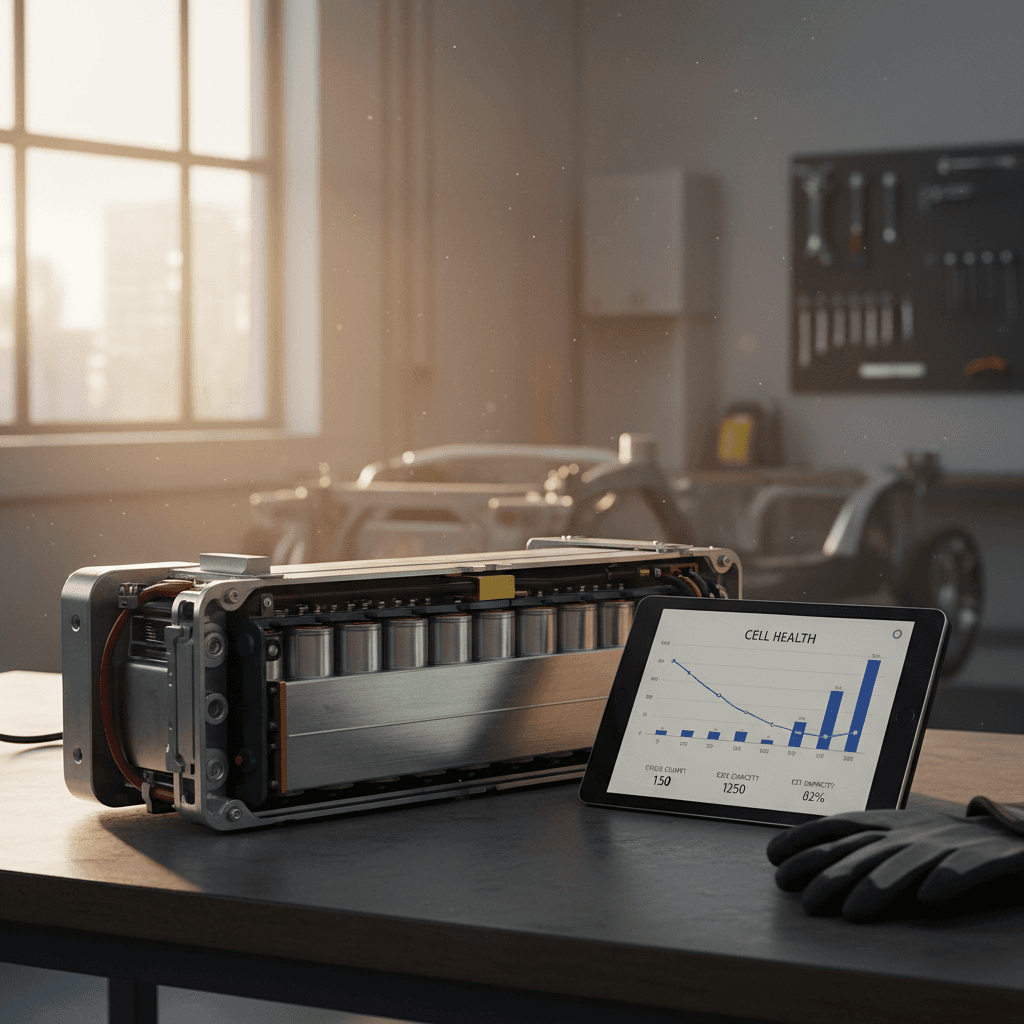
If you’re wondering how to tell if your EV battery is bad, you’re not alone. Range feels smaller, charging seems slower, or a warning light popped up, and now you’re trying to decide whether it’s normal wear, a temporary glitch, or a sign of real battery trouble. This guide breaks down what’s normal, what’s not, and how to check your battery health with confidence, especially if you own or are shopping for a used EV.
Quick reality check
Why it Matters if Your EV Battery Is Going Bad
The high‑voltage pack is the single most expensive component in an electric vehicle. A severely degraded or failing battery can mean shorter range, unreliable performance, and a big repair bill if it falls outside warranty. It also has a major impact on resale value, buyers (and lenders) care a lot more about battery health than about seat material or paint color.
What a Weak Battery Really Costs You
It’s not just about how far you can go on a charge
Range & convenience
A bad or highly degraded pack means more frequent charging stops, less flexibility for detours, and tighter planning in bad weather.
Repair exposure
Out-of-warranty pack replacement can run into the five-figure range on many models, depending on brand and parts availability.
Resale & financing
EVs with poor battery health are harder to sell, appraise lower, and may be tougher to finance at good terms.
Normal Degradation vs. a “Bad” EV Battery
Every lithium‑ion pack loses capacity over time. That’s built into the chemistry and is the reason most manufacturers guarantee something like 70% battery capacity after 8–10 years or 100,000–150,000 miles, depending on brand and state rules. Losing, say, 10–20% of range over many years is normal. What you’re looking for are changes that are faster, larger, or weirder than that.
Normal battery aging
- Range drops gradually over several years.
- Charging times remain predictable for a given charger and temperature.
- No high‑voltage warning lights.
- State of Health (SoH) numbers from diagnostics decline slowly.
Signs of abnormal battery trouble
- Range suddenly falls off a cliff over weeks, not years.
- Charging becomes dramatically slower than similar EVs or past behavior.
- Battery or high‑voltage warning lights stay on.
- Car shuts down, goes into limp/turtle mode, or refuses to charge despite plenty of indicated range.
Track your baseline early
Top Signs Your EV Battery Might Be Going Bad
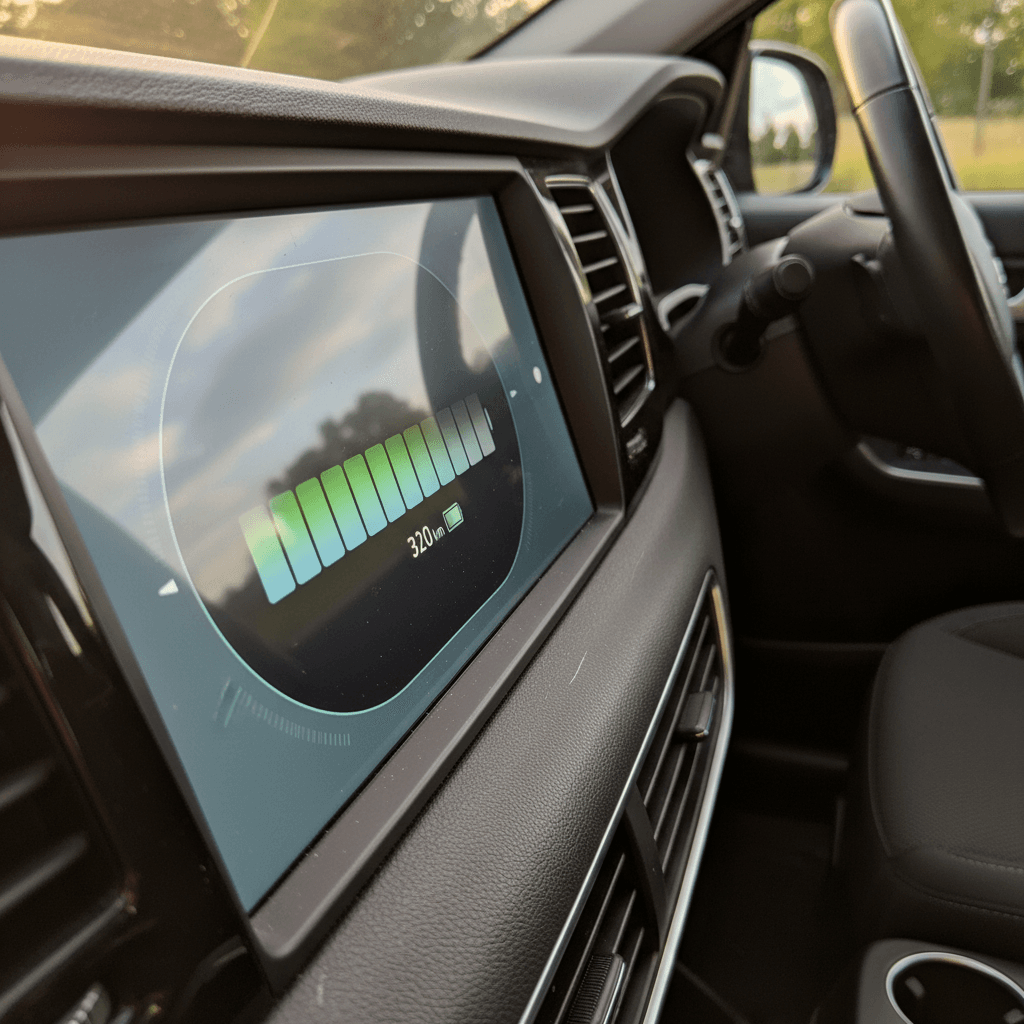
- Noticeable range loss in mild weather. If your car used to consistently show around 250 miles after a full charge and now tops out near 180–190 miles in the same conditions, that’s a sign of significant capacity loss, not just seasonal variation.
- Charging is much slower than it used to be. Home Level 2 or DC fast charging sessions that take far longer than they did a year or two ago, without a clear reason like cold weather, high state of charge, or a known slow charger, may signal a pack that can’t accept power as easily as before.
- EV feels weaker under acceleration. A healthy pack can deliver strong current quickly. If your car feels noticeably more sluggish, especially at higher states of charge, the battery or related high‑voltage components could be limiting power.
- Frequent turtle / reduced‑power mode. Hitting limp‑home mode (often shown with a turtle icon) now and then when you’re nearly empty is normal. Hitting it with plenty of indicated range or on modest hills is not.
- Car won’t charge, or charge stops unexpectedly. If multiple different chargers give you ‘unable to charge’ or stop charging early, and you’ve ruled out bad cables and stations, the pack or its thermal management may be at fault.
- Phantom drain that’s extreme. A percent or two of charge lost overnight is normal. Losing 5–10% while parked, especially in mild temperatures, can indicate a battery or high‑voltage system issue.
- Weird noises, heat, or smells around the battery area. Hissing, popping, strong chemical smells, or excessive heat near the pack during charging or driving are serious red flags. Stop driving, move somewhere safe, and call for professional help.
When to stop driving
Dashboard Warnings You Should Never Ignore
Modern EVs constantly monitor their batteries and high‑voltage systems. When something is off, they usually tell you, on the instrument cluster, center screen, or companion app. Learning the difference between “information” and “do not ignore this” is key.
Common EV Battery-Related Warnings
Exact icons and wording vary by brand, but these patterns are similar across many EVs.
| Warning | What it Usually Means | What to Do First |
|---|---|---|
| Low battery / range warning | State of charge is low but the battery itself is likely fine. | Reduce speed, navigate to a charger, and plug in soon. |
| Turtle / reduced power mode | Car is limiting power due to low charge or detected fault. | Drive gently to a safe place or charger; if it happens with plenty of charge, schedule service. |
| Red battery or high-voltage fault | Serious issue detected in the high‑voltage system. | Pull over safely, power the car off, and call roadside assistance or your dealer. |
| “Service high voltage system” message | The car’s diagnostics spotted abnormal readings or cooling issues. | Do not ignore. Schedule service as soon as possible and avoid long trips. |
| Unable to charge / charging fault | The car or charger detected a problem during charging. | Try a different charger and cable; if it persists, contact service. |
Always consult your owner’s manual or in‑car help menu for your model’s exact warning icon meanings.
Don’t confuse 12‑volt and traction battery issues
Quick DIY Checks for EV Battery Health
You don’t need a lab to get a first read on whether your EV battery is behaving normally. A few simple checks, ideally in mild weather and on familiar routes, can tell you a lot before you ever visit a shop.
Simple At‑Home Battery Health Checks
1. Compare range to when the car was newer
On a mild‑temperature day, charge to the same percentage you used when the car was newer (or when you bought it used). Compare today’s estimated range to your old notes or to the original EPA figure. A drop of 10–15% over many years is normal; sudden or much larger losses are not.
2. Log real‑world miles vs. range used
Reset your trip meter, drive your normal route, then compare miles driven to the percent of battery used. If you drove 40 miles but the car used the equivalent of 80–100 miles of range in mild conditions, something may be off beyond driving style.
3. Time a Level 2 charging session
At home or a known public Level 2, record how long it takes to go from, say, 20% to 80%. If that time has doubled compared with a year or two ago (and the charger is the same), the pack or onboard charger may be struggling.
4. Try a reputable DC fast charger
On a road trip or at a known‑good fast charger, watch the power level your car reports. If your EV is rated for 150 kW and you never see more than 40–60 kW at a low state of charge in mild weather, the pack may be limiting charge rate or the charger may be underperforming.
5. Check for extreme phantom drain
Park the car at around 60–70% in a garage or shade, lock it, and leave it overnight. A loss of 1–3% is common. Consistently losing much more without obvious software features running (like Sentry Mode or cabin overheat protection) can be a flag.
6. Use the car’s built‑in battery info
Some EVs offer a built‑in battery health readout or bar graph. Others show a long‑term energy screen. Familiarize yourself with these menus; if they show unusually low capacity or repeated ‘battery conditioning’ for mild conditions, note it before visiting a shop.
Use an app or OBD2 adapter (carefully)
How Dealers and Specialists Test EV Batteries
If your DIY checks raise concerns, or you’re evaluating a used EV, professional testing is worth it. Modern EVs store a huge amount of battery data that technicians can access with factory‑level tools.
What a Professional EV Battery Check Involves
The specifics vary by brand, but the building blocks are similar
Diagnostic scan
Technicians pull fault codes and live data from the battery management system (BMS), including State of Health (SoH), cell voltages, temperature readings, and charge history.
Capacity test
Some manufacturers require a controlled discharge/charge test to validate usable capacity. This is how they decide if the pack meets warranty thresholds.
Thermal & safety inspection
Shops check cooling loops, connectors, contactors, and high‑voltage safety components for damage, corrosion, or leaks that can mimic battery failure.
At Recharged, every vehicle we sell comes with a Recharged Score Report that includes verified battery health. We use specialist diagnostics and road‑testing to confirm that the pack is behaving as expected for its age and mileage, so you don’t have to guess how much life is left.
Extra Battery Checks When You’re Buying a Used EV
For used EVs, battery condition can easily be the difference between a great deal and an expensive headache. You may not know how the previous owner charged or stored the car, so you’re trying to read the tea leaves from what the car tells you today.
Used EV Battery Red Flags to Watch For
1. Range far below what similar cars show
If identical models and years typically show ~230 miles at 100% and the one you’re test‑driving only shows 160–170 miles in mild weather, treat it as a warning sign until a diagnostic proves otherwise.
2. Inconsistent range or state‑of‑charge drops
Big jumps in the range estimate (for example, losing 30–40 miles of estimated range after driving just a few miles) can point to BMS confusion or weak cells.
3. Persistent battery or high‑voltage warnings
Any red or amber high‑voltage/battery warning that stays on during a test drive is a problem to solve before you buy, not after.
4. Seller won’t share service or charging history
Gaps in service records, refusal to provide battery test results, or vague answers about frequent DC fast charging are all reasons to be cautious.
5. Very slow DC fast charging vs. spec
If the car is rated for 100–150 kW but never gets beyond 40–50 kW at a low state of charge in good conditions, you may be looking at a degraded or thermally limited pack.
6. Physical damage or signs of underbody impact
Scrapes, dents, or deformation around the battery tray underneath the car can be a serious long‑term risk. Walk away unless a specialist clears it.
How Recharged helps used‑EV shoppers
What EV Battery Warranties Actually Cover
In the U.S., federal rules require manufacturers to warranty EV batteries for at least 8 years or 100,000 miles. Some brands and CARB‑aligned states go further, up to 10 years and 150,000 miles, sometimes with minimum capacity retention requirements. But the fine print matters.
- Most warranties promise to repair or replace the pack if capacity falls below a threshold (often around 70% of original) before the time/mileage limit.
- They typically cover manufacturing defects and abnormal degradation, not damage from accidents, flooding, or unauthorized modifications.
- Some brands specify that software‑limited range or charging changes introduced for safety reasons may not trigger a battery replacement.
- In CARB states, future rules are pushing automakers toward longer‑lasting packs with tighter capacity guarantees over 10+ years.
Always read the actual warranty booklet
Bad Battery? Options to Repair, Replace, or Sell
If you confirm that your EV battery is genuinely in bad shape, you still have choices. The right move depends on whether the car is under warranty, how severe the degradation is, and how you actually use the vehicle day‑to‑day.
If the car is still under warranty
- Document symptoms: range, charging speed, warning lights, and conditions.
- Schedule a visit with a franchised dealer for your brand.
- Ask for a written battery health report and capacity figure.
- If the pack is below the warranty threshold, push for repair or replacement.
If the car is out of warranty
- Get quotes for pack repair vs. full replacement from EV specialists, not just general shops.
- Consider whether reduced range still works for a short‑commute lifestyle.
- Factor battery cost into the car’s current market value, sometimes selling makes more sense than rebuilding.
Where Recharged fits in
FAQ: Common Questions About Bad EV Batteries
Frequently Asked Questions
Key Takeaways
A truly “bad” EV battery is more than just a small range drop. It shows up as dramatic, persistent changes in range and charging behavior, warning lights that don’t go away, or outright failures to start or charge. The good news is that most issues give you plenty of warning if you know what to watch for, and tools from DIY checks to professional diagnostics make battery health much more transparent than it used to be.
Whether you’re keeping your current EV for the long haul or shopping the used market, treat battery health like the heart of the vehicle. Track how it behaves over time, don’t ignore red flags, and lean on specialists when something doesn’t add up. And if you’d rather skip the guesswork entirely, platforms like Recharged can connect you with used EVs that already come with verified battery health, fair pricing, financing options, and expert support from click to driveway.