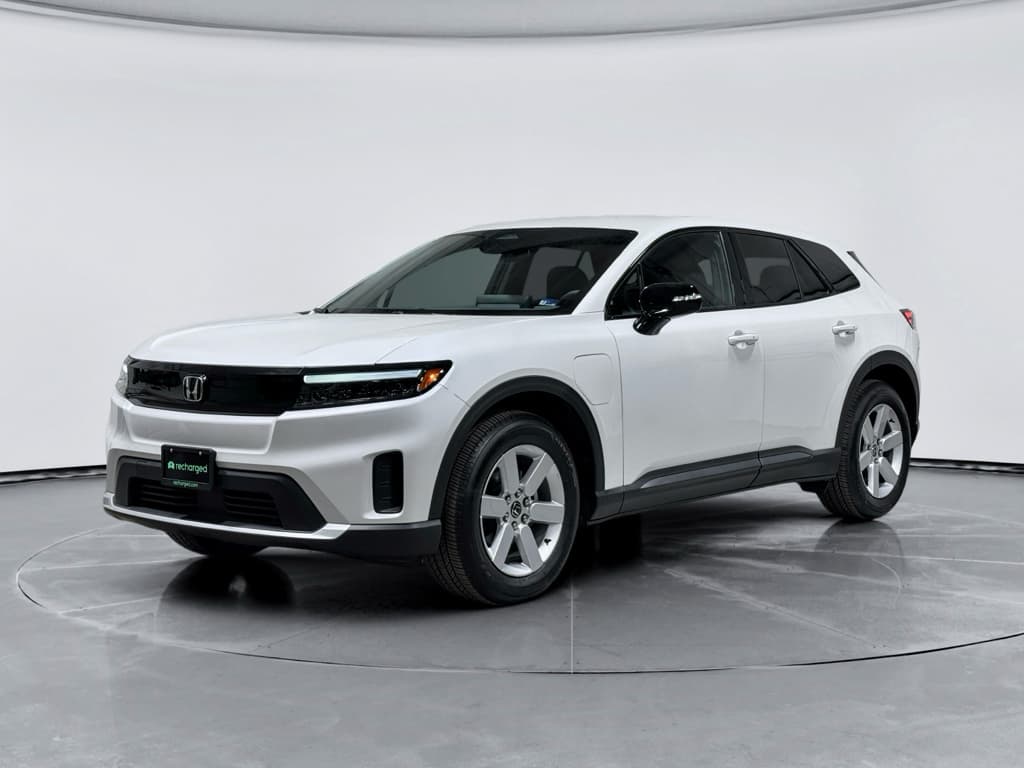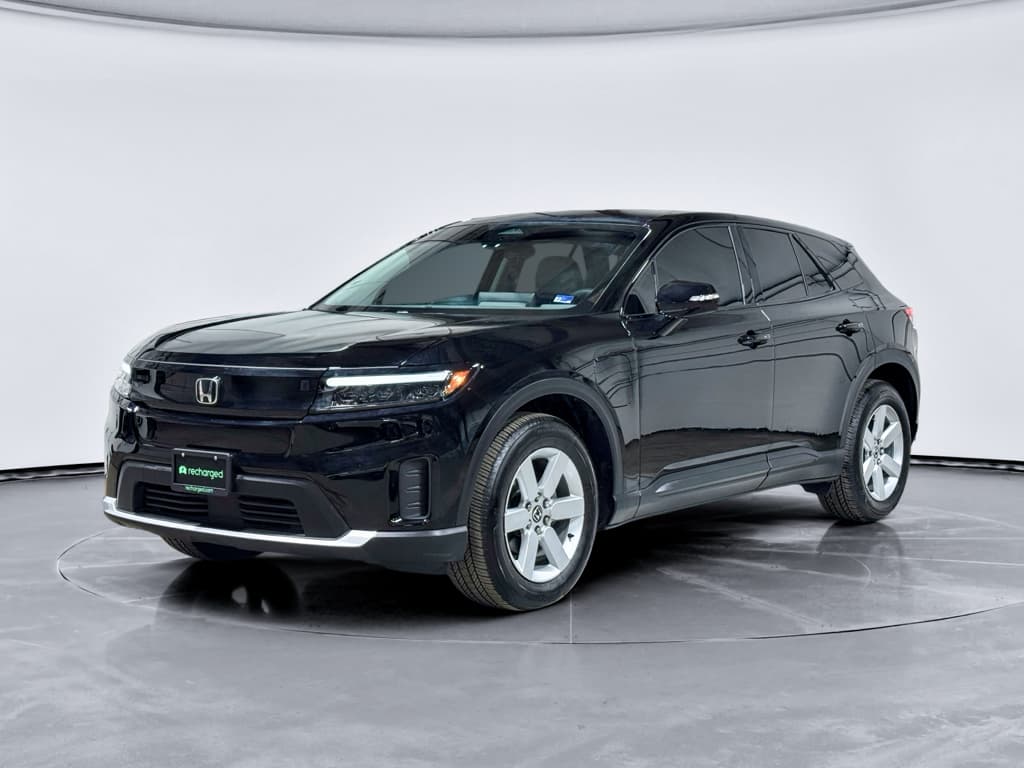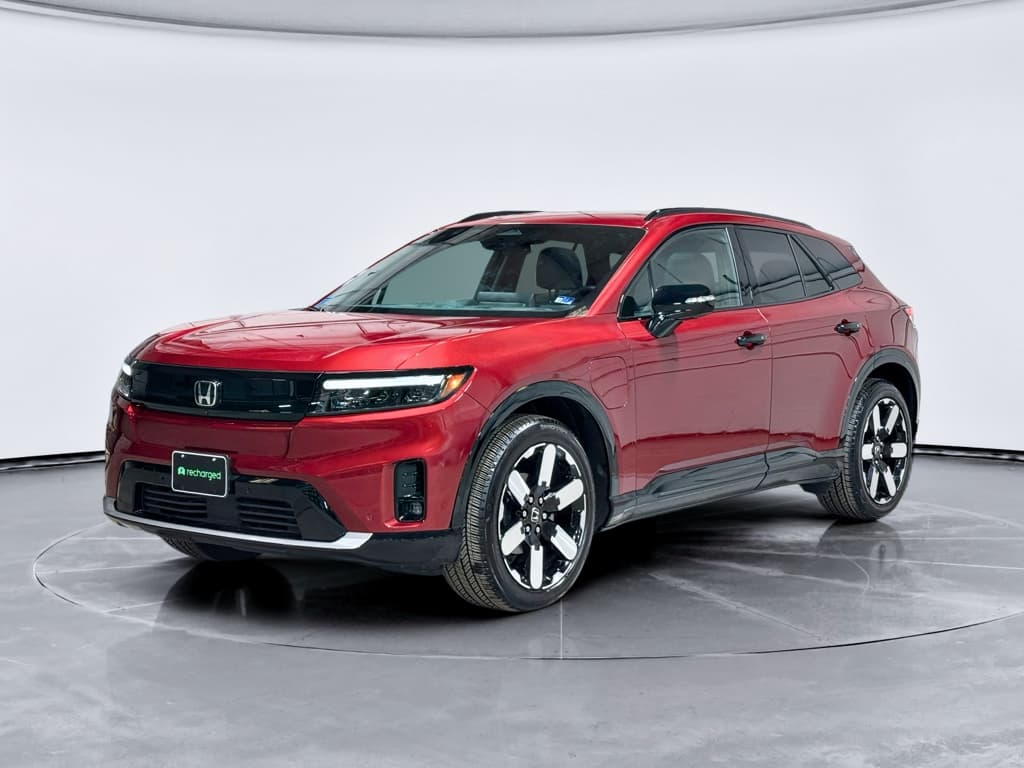
If you’re eyeing a Honda Prologue, or already have one in the driveway, resale value is a big part of the ownership story. The good news: early data suggests the Honda Prologue resale value forecast is better than many EVs, thanks to Honda’s brand reputation and practical SUV packaging. But incentives, battery tech, and a fast‑changing EV market mean you’ll want to go in with clear expectations.
At-a-glance outlook
Honda Prologue resale value: quick overview
Honda Prologue value forecast at a glance
Two sets of independent projections paint the early picture. One widely used depreciation model estimates a Prologue losing about 64% of its value after 5 years, implying a resale value a bit above $20,000 on a roughly $56,000 example, assuming typical miles and good condition. Another EV‑specific analysis of a Prologue Touring AWD projects about 48% depreciation after 3 years, roughly $28,000 on a $54,700 MSRP, leaving about 52% of the original value in year three. Both are more favorable than some early mass‑market EVs.
Forecasts are models, not promises
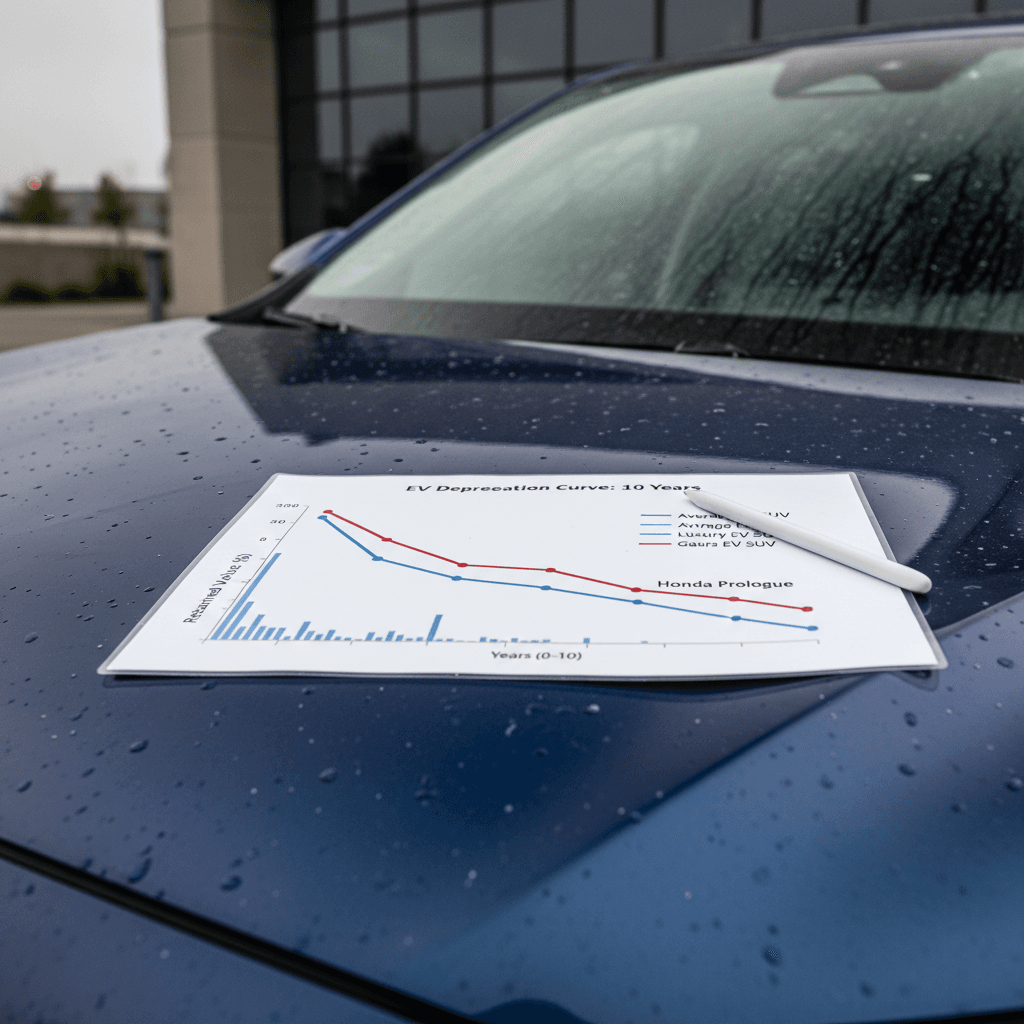
3–10 year Honda Prologue depreciation forecast
To make the Honda Prologue resale value forecast practical, it helps to translate the percentages into ballpark dollar figures. Below is a simplified example based on early projections for a well‑equipped Prologue with an original price around $55,000. Your numbers will vary by trim, transaction price, and how the EV market evolves, but the pattern, steep early drop, then a flatter curve, is typical.
Illustrative Honda Prologue depreciation curve
Approximate value retention for a Prologue originally priced around $55,000, assuming average miles and normal wear. These are estimates, not guaranteed trade or private‑party values.
| Vehicle age | Estimated value retention | Approx. resale value | What it typically looks like |
|---|---|---|---|
| 1 year | ~70–75% | $38,500–$41,000 | Lightly used, low miles, still feels new; often CPO‑eligible. |
| 3 years | ~50–55% | $27,500–$30,000 | Sweet spot for used buyers; warranty remaining, big savings vs. new. |
| 5 years | ~35–40% | $19,000–$22,000 | Out of basic warranty, battery still under coverage; condition matters more. |
| 7 years | ~25–30% | $13,500–$16,500 | Budget family hauler; battery age and range become key negotiation points. |
| 10 years | ~15–20% | $8,000–$11,000 | Older EV SUV; buyer interest hinges on battery health reports and charging tech. |
Expect the biggest hit in the first 3–4 years, then a slower, more predictable decline.
How this compares to gas SUVs
Why the Honda Prologue may hold value better than other EVs
Key strengths supporting Honda Prologue resale value
Brand trust, practical packaging, and a strong battery warranty all work in your favor.
Honda brand reputation
Honda has a long track record for reliability and low ownership costs. Used‑car shoppers recognize that, and it tends to support auction bids and retail prices, even when the product is brand‑new to a segment like EVs.
Right-sized family SUV
The Prologue is a midsize, two‑row SUV, the heart of the U.S. market. That body style is easier to sell used than small hatchbacks or compact sedans, especially for buyers cross‑shopping CR‑V or RAV4‑sized vehicles.
Modern range and charging
With an ~85 kWh battery and EPA range up to the mid‑290s miles on FWD trims, the Prologue offers competitive range and DC fast‑charging (up to 150 kW). That keeps it relevant on the used market longer.
Shared Ultium platform support
Under the skin, the Prologue rides on GM’s Ultium platform, shared with the Chevrolet Blazer EV and other GM models. That means a larger installed base of parts, shared battery tech, and broader service knowledge across brands. For a used‑car buyer, that can translate into more confidence that replacement parts and software support will be available.
Safety and tech expectations
Honda is targeting top crash scores and equips the Prologue with a full suite of active safety features plus large digital displays and Google built‑in. Five or six years from now, those items help a used Prologue feel less dated than EVs that launched with smaller screens or limited driver‑assist tech.
Bottom line on upside potential
Factors that could hurt Honda Prologue resale value
It’s not all upside. There are also real risks baked into any EV resale forecast, and the Prologue has a few specific vulnerabilities you should weigh before you buy or decide how long to keep it.
- Aggressive discounts and incentives on new Prologues. Reports of sizable lease and finance incentives, several thousand dollars off MSRP in some cases, effectively lower the real new‑car price. That compresses used values, especially for nearly‑new examples.
- Loss or changes to federal EV tax credits. When a model goes from qualifying to not qualifying for the $7,500 credit, the new‑car value proposition changes overnight. That can temporarily drag on used prices until the market resets.
- Rapid EV tech improvements. If competing SUVs suddenly offer 350+ miles of range, 250 kW charging, or dramatically better software, buyers may discount earlier models like the Prologue, even if they’re still perfectly usable.
- Charging standard transitions. The Prologue uses GM’s port and connector strategy for DC fast charging. As the North American Charging Standard (NACS) rolls out, adapters and network access will matter to used‑car shoppers.
- Market sentiment around EVs. Interest rates, electricity prices, and high‑profile EV headlines all influence what shoppers are willing to pay for a used electric SUV.
Watch for fire‑sale new‑car pricing
How tax credits and incentives affect Honda Prologue used prices
The Prologue has already lived through meaningful incentive changes. Early 2024–2025 models benefited from the full $7,500 federal EV tax credit when purchased by eligible buyers, and in some regions, state rebates stacked on top of that. In late 2025 and into 2026, changing battery‑sourcing rules and program updates reshaped that landscape, and manufacturers leaned harder on lease and finance incentives to keep payments attractive.
What incentives mean for your resale math
The sticker price isn’t the number that matters, your effective cost does.
If you buy with a tax credit
Suppose you purchase a Prologue EX at around $48,000 and qualify for the full $7,500 credit. Your effective cost is closer to $40,500 before local fees. If it’s worth ~$22,000 after 5 years, your “real” depreciation is about $18,500, not the $26,000 difference between MSRP and resale.
If incentives move to leasing
How to read used pricing correctly
Battery health, warranty, and their impact on resale
For any used EV, the high‑voltage battery is the single most important and expensive component. Honda covers the Prologue’s battery for 8 years or 100,000 miles, and if capacity drops below about 70–75% during that window, the pack may qualify for repair or replacement. That warranty gives second and even third owners more confidence, which supports resale pricing.
Battery factors that future buyers will care about
1. Documented fast‑charging habits
Frequent DC fast‑charging isn’t necessarily a deal‑breaker, but buyers will feel better if it’s clear the vehicle wasn’t charged at max rate every day. A mix of home Level 2 and road‑trip fast‑charging is ideal.
2. Climate and storage conditions
Long‑term exposure to extreme heat is hard on batteries. A Prologue that lived in a moderate climate and was often parked in a garage will usually be more appealing than one parked outside in very hot regions.
3. Remaining battery warranty
A 5‑year‑old Prologue with 3 years of battery warranty left is simply easier to sell than an 8‑year‑old one that’s just aged out of coverage. Expect a noticeable price step when that 8‑year mark passes.
4. Independent battery health report
For a buyer, a <strong>third‑party battery health report</strong> is gold. Services like the Recharged Score use specialized diagnostics to quantify usable capacity, giving both sides an objective view of the pack’s condition.
5. Software and recall history
Make sure software updates, recall fixes, and any battery‑related campaigns are documented. A clean service history reassures used buyers that the pack has been cared for properly.
How Recharged can help
Ready to find your next EV?
Browse VehiclesHonda Prologue resale vs. Model Y, Mach-E, and ID.4
The Prologue sits in the same neighborhood as the Tesla Model Y, Ford Mustang Mach‑E, and Volkswagen ID.4. Each nameplate has its own resale story, shaped by brand strength, incentives, and how many vehicles are on the road.
How Prologue resale stacks up against key rivals (directional)
This table summarizes directional expectations based on early forecasts and brand history. Actual numbers will vary by trim, options, and market conditions.
| Model | 3‑yr outlook | 5‑yr outlook | Resale drivers |
|---|---|---|---|
| Honda Prologue | Slightly above average EV | Near mainstream gas‑SUV levels | Honda brand, practical body style, solid range and warranty. |
| Tesla Model Y | Strong early, moderating | Still strong but more volatile | Huge supply, frequent price changes, massive brand pull. |
| Ford Mustang Mach‑E | Average to slightly below Prologue | Below Honda/Tesla | More discounting, model‑change uncertainty, mixed brand perception as EV. |
| VW ID.4 | Average | Average to slightly below | High incentives, fleet sales in some regions, brand not as resale‑strong as Honda/Tesla in U.S. |
Think of this as a compass, not a contract, use it to sense relative strength, not to predict exact dollar amounts.
Why relative resale matters more than exact dollars
How to protect your Honda Prologue’s resale value
You can’t control the entire EV market, but you can absolutely influence how your specific Prologue looks to a future buyer or appraiser. Think in terms of three buckets: condition, documentation, and market timing.
Owner habits that help your Prologue hold value
Keep miles reasonable
Depreciation models typically assume around 12,000–13,500 miles per year. If you can stay close to that, or below, you’ll keep your Prologue in the “normal use” bucket instead of high‑mileage territory.
Stay on top of maintenance
EVs need less routine service than gas cars, but they still need tire rotations, brake checks, software updates, and cabin filters. Maintain a <strong>complete service record</strong> at Honda dealers or reputable EV shops.
Protect the interior and exterior
Family SUVs live hard lives. Use floor liners, address paint chips early, and fix curb‑rashed wheels or cracked glass. Cosmetic issues are often what cause a buyer to walk or a dealer to lower an offer.
Be thoughtful with modifications
Aftermarket wheels, wraps, or suspension mods can narrow your buyer pool. If you personalize your Prologue, hang on to the stock parts so you can return it closer to original when it’s time to sell.
Charge smart for long battery life
Avoid leaving the battery at 100% or near 0% for long periods, especially in hot weather. Daily charging to around 80–90% and using fast charging mainly for trips can support long‑term battery health.
Think ahead about your exit
Best ways to sell or trade in a Honda Prologue
By the time you’re ready to move on from your Prologue, the used EV market will be more mature, but also more competitive. The selling channel you choose can easily swing your net proceeds by thousands of dollars.
1. Trading in to a dealer
Fast and convenient, especially if you’re moving into another Honda or a different EV. You typically give up some value versus a private sale, but you save time and may gain a sales‑tax advantage on your next purchase, depending on your state.
2. Selling privately
Often yields the highest price, but requires time for marketing, test‑drives, and paperwork. With an EV, be prepared to explain battery health, charging options, and remaining warranties to shoppers who may be new to electric.
3. Using an EV‑focused marketplace
Platforms like Recharged combine EV‑specific expertise, battery health reporting, and nationwide reach. You can get an instant offer, consign your Prologue for maximum return, or trade it toward another used EV through a fully digital process.
Where Recharged fits in
Honda Prologue resale value forecast: FAQ
Frequently asked questions about Honda Prologue resale
The Honda Prologue enters a used‑car market that’s still figuring out exactly how to price electric SUVs, but the early signs are encouraging. Strong brand equity, a practical midsize‑SUV footprint, and solid range and warranty coverage all point to resale performance that’s better than many early EVs and competitive with mainstream crossovers. If you buy wisely, keep good records, and pay attention to battery health, the Prologue can be not only an easy EV to live with day‑to‑day, but also a smart financial decision when it’s time for your next electric vehicle. And when you’re ready to make that move, Recharged is here to help you understand your Prologue’s true value and step confidently into your next used EV.