If you’re wondering how to sell a Chevrolet Bolt EV in 2026, you’re not alone. The Bolt’s story includes sky‑high early depreciation, a major battery recall, brand‑new replacement packs on many cars, and the end of first‑generation production. That mix can either scare buyers away or, if you handle it well, help you sell quickly at a strong price.
Who this guide is for
Why selling a Chevy Bolt EV in 2026 is unique
From depreciation victim to value play
When GM slashed new Bolt prices for 2023, used values fell hard. Then rising gas prices and the rush into affordable EVs pushed them back up. Today, a well‑maintained Bolt EV can be one of the best value used EVs on the market, if you present it correctly.
Recalls and replacement batteries
Every 2017–2022 Bolt EV and EUV was affected by the high‑voltage battery recall. Many cars received brand‑new packs with fresh warranty coverage, which is a major selling point. Others only received software updates. Buyers know this history, and they’ll ask. You want clear answers ready.
Chevy Bolt EV resale snapshot in 2026
Step 1: Know what your Bolt EV is worth
Before you accept any offer or create a listing, you need a realistic price range. Bolt values swing based on model year, trim, mileage, battery recall status, and local demand for affordable EVs.
How to ballpark your Bolt EV’s value
Use at least two of these approaches before you list
Check online value tools
Start with sites like Kelley Blue Book, Edmunds, or Black Book to see estimated trade‑in vs. private sale values. Make sure you plug in accurate mileage, options (DC fast charging, Premier trim, etc.), and your ZIP code.
Scan local listings
Search used Bolts within a few hundred miles on major classified sites and dealer listings. Look at asking prices vs. mileage, and note whether cars have had the battery replaced. That’s your real‑world competition.
Get instant offers
Request instant or cash offers from a few buyers, dealers, national car‑buying sites, and EV specialists like Recharged. Those give you a no‑hassle baseline, even if you end up selling privately for more.
Aim for a realistic asking price
Step 2: Get your recalls and paperwork in order
With the Bolt, paperwork isn’t just housekeeping, it’s a trust signal. The early battery‑fire recall and later software updates made headlines. Showing that your car is fully up to date can mean the difference between a quick, confident sale and endless lowball offers.
- Run your VIN on Chevrolet’s recall site and NHTSA’s database to confirm all open recalls are complete.
- If your Bolt received a battery pack replacement, find the service invoice. It’s gold in a buyer’s eyes.
- If it only received a software update, have documentation ready and be prepared to explain what it does (continuous battery monitoring, charge limits, etc.).
- Gather maintenance records, tire rotations, brake service, cabin filters, and any warranty work.
- Make sure you have your title (if paid off) or know your exact payoff amount if you still have a loan.
Don’t gloss over the recall
Step 3: Document and verify battery health
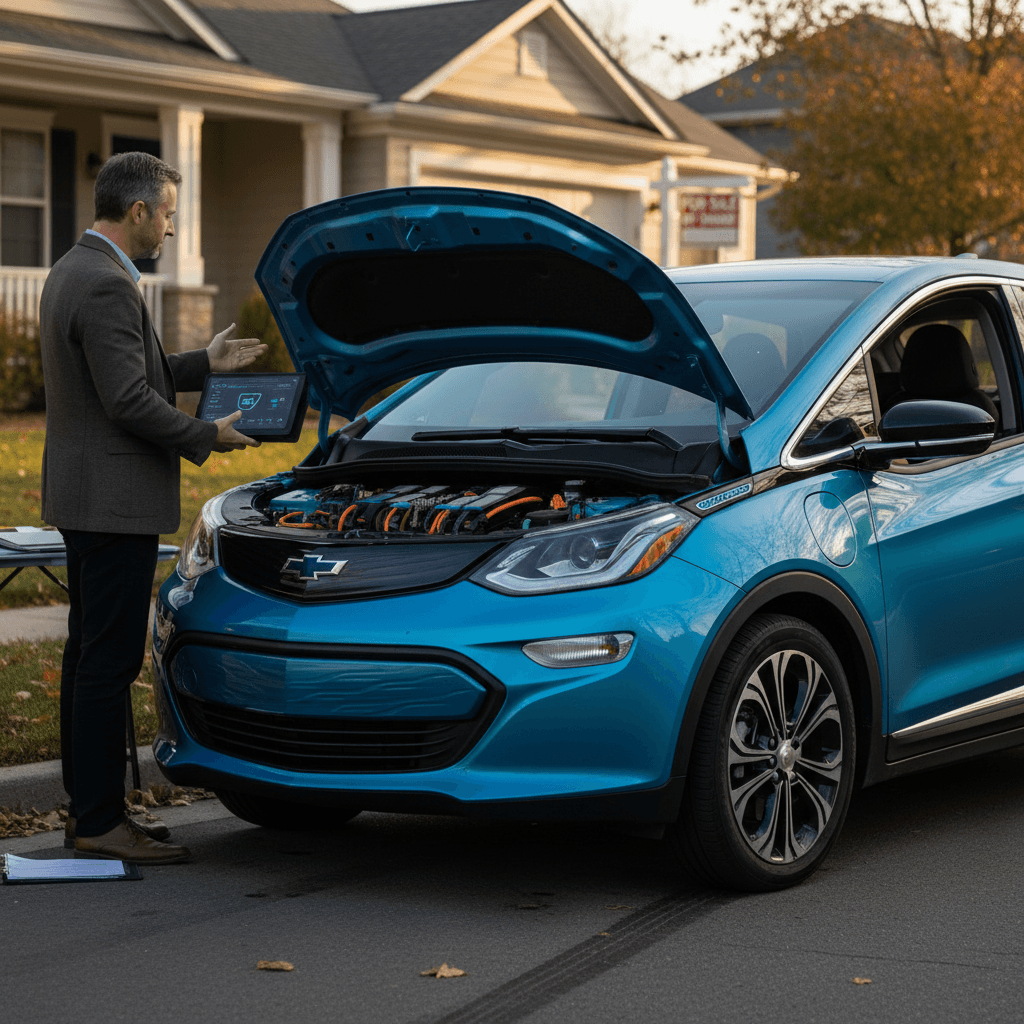
On any used EV, buyers are really buying a battery with a car wrapped around it. For a Chevrolet Bolt EV, clear, simple proof of battery health can justify your asking price and shorten time to sale.
Ways to show your Bolt’s battery is healthy
Mix objective data with real‑world experience
Range photos
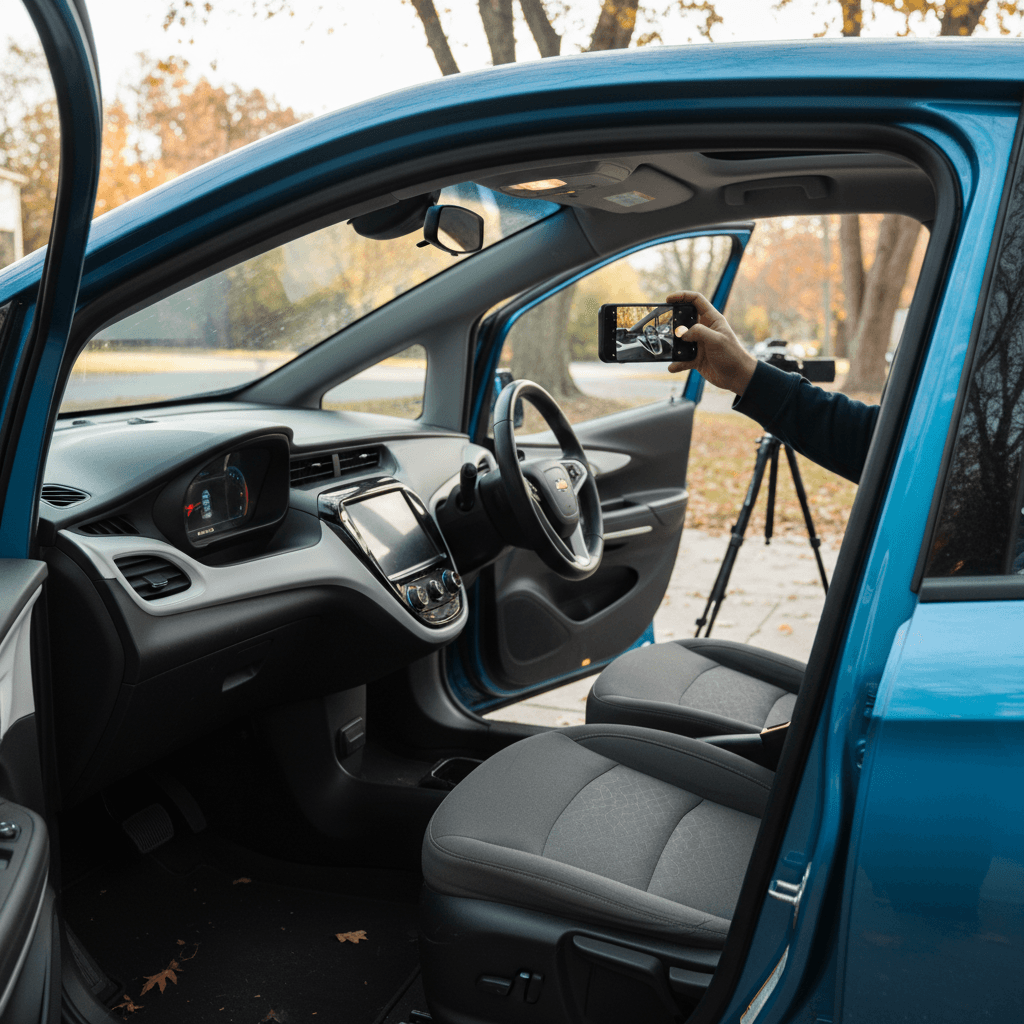
Charge to a specific percentage, say, 80%, on a mild‑temperature day and photograph the dash showing estimated range. Include odometer mileage in the shot. Repeat at 100% if you’re comfortable charging that high.
Service records & warranty
Highlight any battery warranty work or diagnostics in your service history. Know when the 8‑year/100,000‑mile battery warranty expires based on the original in‑service date.
Third‑party or Recharged report
Consider getting a professional battery health report. Every car sold through Recharged includes a Recharged Score Report with verified battery diagnostics, which removes a lot of guesswork for buyers.
How Recharged helps
Ready to find your next EV?
Browse VehiclesStep 4: Decide how to sell – trade-in, instant offer, Recharged, or private
There’s no single “right” way to sell a Chevrolet Bolt EV. The best option depends on your timeline, risk tolerance, and how much work you’re willing to do yourself.
Where to sell your Chevy Bolt EV
Compare convenience, pricing, and effort across selling channels.
| Option | Typical price | Time & effort | Best if you… |
|---|---|---|---|
| Dealer trade‑in | Lowest | Very low | Are buying another car and value a simple one‑stop transaction. |
| National instant‑offer sites | Low–medium | Low | Want to sell fast and avoid listing, test drives, and haggling. |
| Recharged used‑EV marketplace | Medium–high | Medium | Want strong pricing, EV‑savvy buyers, and expert support without doing everything yourself. |
| Private party sale | Highest (if done well) | High | Are willing to handle marketing, screening, and paperwork to maximize your sale price. |
Use this table to match your priorities, speed, price, or simplicity, to the best selling route.
What Recharged offers sellers
Step 5: Prep your Bolt EV to stand out
You don’t need a showroom detail to sell a Bolt EV well, but you do need a car that feels cared for. Buyers assume how you treat the cabin and tires is how you treated the battery.
Pre‑sale prep checklist for your Chevy Bolt EV
1. Deep clean inside and out
Wash, clay, and wax if you can; vacuum thoroughly; clean glass and wipe every touchpoint. Remove personal items and chargers that aren’t included in the sale.
2. Fix obvious, inexpensive issues
Replace burned‑out bulbs, wiper blades, and badly worn floor mats. A couple hundred dollars in fresh rubber and little fixes can easily add more than that to your perceived value.
3. Address tires and brakes honestly
If your tires or brake pads are near the end of their life, either replace them or factor that into your price and note it clearly. A Bolt that “needs tires now” will quickly get discounted.
4. Include charging gear
If you’re not keeping them for your next EV, include the OEM portable charger and any Level 2 wall unit you’re leaving behind. List these clearly, they’re worth real money to a buyer.
5. Clear warning lights
If your car has any warning lights illuminated, address them before listing. A persistent check‑engine or battery light will chase away serious EV buyers.
6. Take it for a final shakedown drive
Drive the car on your normal routes, listen for noises, and verify all features still work. You don’t want surprises appearing during a buyer’s test drive.
Think like a used‑car inspector
Step 6: Create a compelling listing
A strong listing for a Chevrolet Bolt EV doesn’t just say “low miles, great condition.” It answers the questions real EV shoppers have about charging, range, battery history, and ownership costs.
What to include in your Bolt EV listing
Specifics build confidence and reduce back‑and‑forth messages
Clear, honest photos
- Exterior from all corners, plus close‑ups of any flaws
- Interior front/rear, cargo area, seats, and infotainment
- Dash showing odometer and range at a known state of charge
- Photos of charging port and included chargers
Detailed description
Cover model year, trim, major options (DC fast charging, driver‑assist packages), current mileage, tire condition, recall/battery status, and whether you’re the original owner. If the battery was replaced, say it in the first paragraph.
Bolt‑specific selling points
- Real‑world range you typically get on your commute
- Average energy use (mi/kWh) if you track it
- Typical charging habits (home Level 2, DC fast, etc.)
- Any road trips you’ve taken without issues
Avoid vague or misleading language
Step 7: Meet buyers safely and negotiate like a pro
Once the listing is live, the real work begins: screening messages, setting up test drives, and getting to a number that feels fair on both sides.
Safe meetups and smart negotiation
1. Screen buyers with a few questions
Ask how they plan to use the car, where they’ll charge, and whether they have financing or cash lined up. Serious buyers will answer; flaky ones often disappear.
2. Meet in a public, well‑lit place
Choose a public parking lot, ideally near a charging station so the buyer can see how the Bolt plugs in and charges. Bring a friend if you can.
3. Set ground rules for test drives
Take a photo of the buyer’s driver’s license, ride along, and agree on a short route that includes city streets and a bit of highway. Explain EV quirks like regen braking before you roll.
4. Let the car speak for itself
Have your records and battery documentation in a folder or on your phone. Lay them out, answer questions directly, and avoid overselling. A quiet, smooth test drive does most of the convincing.
5. Know your floor price
Decide your minimum acceptable number before you meet. If a buyer comes in low, counter once or twice, but don’t be afraid to walk away politely if they’re far off.
6. Close the deal safely
For cash, meet at the buyer’s bank and verify funds. For a cashier’s check or loan payoff, complete the sale at your bank or credit union so they can confirm everything on the spot.
Title, payoff, and fraud cautions
Tax credits, payoffs, and money details to watch
Selling a used EV in the wake of tax‑credit changes and volatile prices can feel confusing. A few money details are easy to overlook, and expensive to fix after the fact.
- If you claimed a used EV tax credit when you bought the car, verify any minimum holding period rules before you sell, especially if you purchased it recently.
- Call your lender for an exact 10‑day payoff amount so you know how much you need from the sale to clear the loan.
- If you’re trading in or taking an instant offer, ask for a breakdown showing sale price vs. fees, so you can make an apples‑to‑apples comparison with private offers.
- Keep detailed records (bill of sale, odometer disclosure, title transfer) in case of questions later about when and how the sale occurred.
Using Recharged to simplify the money side
Common mistakes when selling a Chevy Bolt EV
- Ignoring the recall story. Pretending the battery recall never happened makes buyers nervous. Address it head‑on with documentation.
- Overestimating value based on gas‑car instincts. EV pricing moves differently, and local demand for affordable, long‑range EVs matters more than sticker price history.
- Under‑explaining charging. Many first‑time EV buyers will look at your Bolt. If you don’t clearly explain home charging and public options, they may walk away unsure.
- Poor photos. Dark, blurry, or wet‑weather photos signal that you’re hiding something, even if you’re not.
- Rushing the first low offer. The first offer is rarely the best. Unless you’re on a tight deadline, give your listing a bit of time to find the right buyer.
FAQ: Selling a Chevrolet Bolt EV
Frequently asked questions about selling a Chevy Bolt EV
Bottom line: How to sell your Chevy Bolt EV confidently
Selling a Chevrolet Bolt EV in 2026 is all about owning the story. This car has been through price swings and recalls, but it’s also one of the most practical, efficient used EVs you can buy. If you price it realistically, lead with transparent recall and battery information, and present a clean, well‑cared‑for car, you’ll stand out from the sea of so‑so listings.
Decide whether you want maximum money, minimum hassle, or something in between. A private sale can squeeze the most out of your Bolt if you’re comfortable playing marketer, salesperson, and title clerk. If you’d rather have EV specialists do the heavy lifting, battery diagnostics, fair‑market pricing, paperwork, and even nationwide delivery, consider getting an offer from Recharged or listing your car on their used‑EV marketplace. Either way, with the right prep and a clear plan, your Bolt EV can be one of the easiest cars you’ll ever sell.