If you’re trying to figure out how to save money buying an EV in West Virginia, you’re already swimming against the current. EV incentives here are thinner than in coastal states, electricity prices are creeping up, and Charleston isn’t exactly Palo Alto. But that doesn’t mean an electric car can’t make financial sense in the Mountain State, it just means you need a different playbook.
Key idea for WV shoppers
Why West Virginia EV buyers need a different playbook
National EV talking points, huge state rebates, free HOV lane access, dense fast‑charging networks, mostly skip West Virginia. EV adoption here has been among the lowest in the country, and the state has focused more on coal and natural gas than on driving EV demand. That changes how you save money: you’re not racing to grab a giant state check; you’re trying to buy an EV that beats a gas car on total cost of ownership over several years.
West Virginia’s EV math at a glance
About incentives and dates
Know what incentives you do, and don’t, have in West Virginia
Let’s rip off the bandage: as of early 2026, West Virginia does not offer its own EV purchase rebate or state tax credit. Your savings are mostly federal (if any are still available for your timing) plus local utility or dealer programs, and then long‑term fuel and maintenance savings.
- No West Virginia state EV rebate or income‑tax credit for buying an EV. If a dealer is advertising a “state EV credit,” read the fine print, chances are it’s a manufacturer or dealership promotion.
- Federal EV tax credits for new (up to $7,500) and used (up to $4,000) EVs were scheduled to be phased out around late 2025. If you purchased before the sunset date, you may still file for that credit on your 2025 return; if you’re buying now in 2026, don’t assume those credits still exist for new purchases.
- Some utilities and co‑ops occasionally offer home charger rebates or lower overnight “time‑of‑use” rates, but in West Virginia these are limited and vary by provider, always check your specific utility before you install hardware.
- West Virginia does offer a Motor Vehicle Property Tax Adjustment Credit that can effectively refund personal property tax paid on your vehicle through your state income tax return. That applies to gas and electric vehicles alike, but it still softens your annual cost of ownership.
How to quickly check what you qualify for
Win on price by buying used, not new
Because West Virginia doesn’t sweeten the pot on new EVs, buying brand‑new electric is often like buying a luxury car: more about want than strict dollars‑and‑cents. The smart‑money move here is usually a used EV that’s already taken the big depreciation hit but still has strong battery health.
Why used EVs make particular sense in West Virginia
You’re trading big upfront incentives for long‑term value.
Lower upfront price
Battery reality check
Less risk if policies change
What “used EV sweet spot” looks like
Use battery health data, not seller optimism
The big fear with used EVs is buying a car whose battery has quietly retired from the rat race. You want real numbers, not vibes. This is where Recharged’s Score Report comes in: every EV on Recharged comes with a verified battery‑health diagnostic, so you can see usable capacity and projected range before you agree to anything. That’s especially valuable in West Virginia, where you may be driving longer distances between towns and fast‑chargers.
Used EV savings checklist for West Virginia buyers
1. Decide on your minimum real‑world range
Look at your longest regular trip, say Huntington to Charleston and back plus errands, and add a buffer for winter and mountains. For many owners, <strong>150–200 real‑world miles</strong> is plenty if you can charge at home.
2. Target 3–6 years old
These cars have usually taken the steepest depreciation hit but still have modern safety tech and usable range. Early‑generation cars (2011–2016) can be great commuter specials, but only if you fully understand the limited range.
3. Demand a real battery report
Don’t accept “range seems fine” from a private seller. Use platforms like Recharged that include a <strong>third‑party grade on battery health</strong> and explain what that means in miles, not just percentages.
4. Compare price to a similar gas car
Ask: “What would a comparable gas Civic, Camry, or CR‑V cost me?” If the EV’s purchase price plus a few years of EV registration fees still beats that, especially when you factor in fuel, then you’re in the money.
5. Check for remaining warranties
Many EV batteries carry 8‑year/100,000‑mile warranties. A car with a few warranty years left is a built‑in hedge against a freak battery issue.
Watch the WV EV registration fee and other costs
Here’s the part few salespeople emphasize: West Virginia charges an extra annual registration fee for electric vehicles, on top of the standard plate and registration cost, to make up for lost gas‑tax revenue. Recent policy analysis puts that EV surcharge around $200 per year, with hybrids at roughly half that.
Key ownership costs for EVs vs gas in West Virginia
These are ballpark annual figures to help you think about order of magnitude, not personalized quotes.
| Cost item | Typical gas car | Battery‑electric EV in WV | How to tilt this in your favor |
|---|---|---|---|
| State registration fee (base) | Standard passenger rate | Standard passenger rate | Not much you can do here, shop for vehicles with lower assessed value to soften personal property tax. |
| EV surcharge | $0 | About $200/yr EV surcharge | Factor this into your budget up front; lower fuel and maintenance can still overpower it. |
| Fuel/energy | $2,000+/yr gas for many drivers | Often $600–$900/yr electricity at home | Charge off‑peak when you can and avoid expensive public DC fast charging. |
| Maintenance (wear only) | $800–$1,000/yr on older gas cars | Often $300–$600/yr on mature EVs | Used EVs with simple drivetrains and good tires are your friend; avoid exotic performance models if you’re on a tight budget. |
Exact amounts will vary based on your county, mileage, vehicle value, and future legislative changes.
Don’t ignore the EV surcharge in your math
Use West Virginia’s electric rates to your advantage
West Virginia’s electric rates have been climbing, thanks in part to aging infrastructure and data‑center demand, but they’re still generally in the mid‑teens of cents per kWh, competitive with or cheaper than many coastal states. That’s not as dirt‑cheap as it used to be, but per‑mile electricity cost is still usually lower than gasoline, especially if you mostly charge at home.
Charging at home (where you save the most)
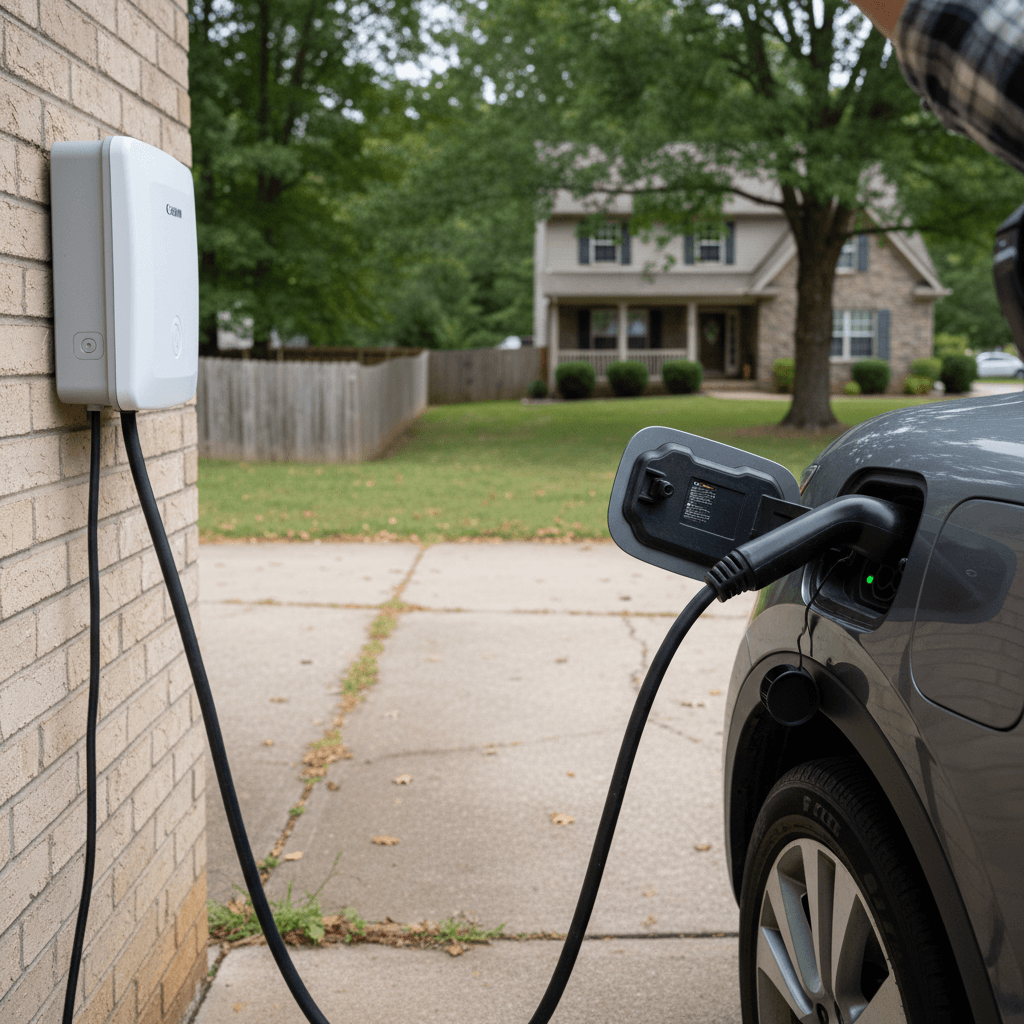
If you can park near an outlet, home is where the EV math really works in West Virginia.
- Level 1 (120V): Fine for short daily commutes; adds a few miles per hour.
- Level 2 (240V): The sweet spot, overnight charging, lower stress, and still relatively cheap per kWh.
- Solar + net metering: WV does allow net metering, so if you ever add rooftop solar, you can offset some or all of your charging costs.
For most buyers, investing a bit in a safe 240V setup and a solid Level 2 charger pays back in convenience and predictable costs.
Public fast charging (use it sparingly)
West Virginia’s DC fast‑charging network is improving but still patchy, especially off the interstates. It’s also more expensive per kWh than residential power and can add wear to your battery if used heavily.
- Treat fast charging as a road‑trip or emergency tool, not your daily plan.
- Compare apps to find the lowest‑cost networks along your usual routes.
- Consider cars with efficient highway range so you’re not paying top dollar for frequent fast‑charge stops.
If you’ll be relying on public fast charging a lot, tilt toward more efficient models with good highway range per kWh, not just big batteries.
Simple rule of thumb for WV EV energy costs
Shop smart: financing and trade-ins
Even if you ace the purchase price, you can quietly give a lot of it back through financing and a weak trade‑in. In a smaller market like West Virginia, dealers can be more aggressive on interest rates and less generous on older trades, especially if they don’t love EVs.
Money‑saving moves on financing and trade‑ins
These levers matter just as much as the sticker price.
Pre‑qualify before you shop
Compare total deal, not just payment
Get real numbers for your trade
Where Recharged fits in
Pick the right EV for West Virginia driving
You’re not threading the Santa Monica Freeway; you’re dealing with mountains, winters, and long distances between towns. The wrong EV can feel like a science project. The right one just feels like a quieter, cheaper car.
Match the EV to how you actually live in West Virginia
Different driving patterns demand different compromises.
Daily commuter (Huntington, Charleston, Morgantown)
Hollers and hills, gravel and snow
Frequent cross‑state trips
Range shrinks in Appalachian winter
Inspection and title details that can save you money
West Virginia has some quirks around inspections and titling that can quietly cost you money, especially if you’re bringing in a car from out of state or buying salvage or rebuilt titles to “save” upfront.
- Safety inspection: West Virginia generally requires a biennial safety inspection for passenger vehicles, including EVs. Factor the inspection fee and any required repairs into your budget, especially if you’re buying an older used EV with worn tires or brakes.
- Out‑of‑state purchases: If you buy across state lines, you’ll still owe West Virginia title and registration fees, and you’ll likely need a WV inspection. That low advertised price in Ohio or Pennsylvania can tighten up once you add transport, inspection, and paperwork.
- Salvage or rebuilt titles: These can look like screaming deals, but you may face higher insurance, lower resale, and limited financing options. In a small EV market like West Virginia, a clean‑title car with good documentation is usually worth the extra money.
Be very cautious with flood‑region EVs
How Recharged helps West Virginia shoppers save
West Virginia’s EV market is small, but you’re not limited to whatever happens to be on a local dealer’s back row. Recharged connects you to a nationwide inventory of used EVs, then helps you understand which ones actually make sense for your budget and your roads.
Ways Recharged can tilt the numbers in your favor
Less guesswork, more math you can live with.
Recharged Score battery report
Nationwide delivery to WV
EV‑specialist support
Ready to find your next EV?
Browse VehiclesYou can browse and complete the whole purchase digitally, or, if you’re up for a road trip, visit Recharged’s Experience Center in Richmond, VA, to test‑drive and talk through options with EV specialists before your car ever touches I‑64 westbound.
FAQ: Saving money buying an EV in West Virginia
Frequently asked questions for WV EV shoppers
Bottom line: how to save the most on an EV in WV
West Virginia isn’t handing out big checks for EV buyers, and electricity here isn’t as cheap as it once was. But if you focus on the things you can control, buying a well‑priced used EV with proven battery health, keeping your financing smart, charging mostly at home, and respecting the EV registration surcharge in your math, an electric car can still beat a comparable gas car on cost over time.
Think of it this way: every mile you drive on electrons instead of gasoline is a small, quiet protest against gas‑station pricing, and a win for your household budget. If you want help finding the right car for West Virginia’s hills and hollers, you can start browsing used EVs with a Recharged Score Report, get pre‑qualified online, and see exactly how the numbers pencil out before you ever hand over your keys.