If you’re trying to figure out how to save money buying an EV in Pennsylvania in 2026, you’re walking into a moving target: state rebates with new rules, a federal landscape that just changed, and a brand‑new annual Road User Charge for EVs. The good news is that if you stack the right programs and buy the right car, often a used one, you can knock thousands off the true cost of going electric.
Key takeaway for Pennsylvania buyers
Why Pennsylvania is a quietly good EV market
Pennsylvania is not California. You don’t get a stack of flashy tax credits and HOV lane passes stapled to your window sticker. What you do get is a solid state rebate program, some useful utility incentives, and a used‑EV market that’s finally big enough to find real bargains, especially on earlier Teslas, Bolts, Ioniqs, Leafs, and Mach‑Es.
Where Pennsylvania EV savings really come from
Why this matters for you
Step 1: Decide new vs. used if you care about saving
New EV in Pennsylvania (2026)
- No more federal new‑EV credit for cars bought after September 30, 2025, under the current rules.
- You may still qualify for the PA AFV Rebate if the price is under the program cap and you meet income rules.
- Higher purchase price, but full warranty and latest tech.
Used EV in Pennsylvania (2026)
- Still potentially eligible for up to a $4,000 federal used‑EV tax credit on the right car from a dealer.
- Can also qualify for the PA AFV Rebate if the car meets age, mileage, and price caps.
- Much lower upfront price, but battery health becomes critical.
If your goal is pure savings, a used EV usually wins in Pennsylvania. You’re buying after the steepest part of the depreciation curve, you can still tap a federal tax credit on eligible cars, and the state rebate doesn’t care whether the vehicle is new or pre‑owned as long as it hits the program rules.
Check that the federal rules still apply to your purchase year
Step 2: Claim the Pennsylvania EV rebate correctly
Pennsylvania’s Alternative Fuel Vehicle (AFV) Rebate Program is the state’s main lever for making EVs cheaper. The program tends to renew on a July–June cycle with a limited number of rebates each year, and the exact dollar amounts have changed over time. In recent program years, buyers have seen up to roughly $3,000 back on a qualifying battery‑electric vehicle, with smaller amounts for plug‑in hybrids and extra money for lower‑income households.
- You must be a Pennsylvania resident and register the vehicle in PA.
- The car can be new or pre‑owned, purchased or leased, as long as the final purchase price is under the program’s cap (historically around $45,000).
- Used vehicles have to meet age and odometer limits and must come from a licensed dealer, not a private seller.
- There’s an income ceiling based on a multiple of the federal poverty line; households above it don’t qualify.
- You apply for the rebate after purchase and must submit documents (bill of sale, registration, proof of income, etc.) within a defined window.
How to avoid missing out on the rebate
Pennsylvania AFV Rebate: What typically matters
Program details change, but these are the levers that usually decide whether you get money back.
| Factor | What PA usually looks for | Why it matters |
|---|---|---|
| Residency & registration | You live in PA and title/register the car here | Out‑of‑state registrations are usually not eligible. |
| Vehicle type | Battery EVs and plug‑in hybrids qualify; regular hybrids do not | Affects whether you get the higher or lower rebate tier. |
| Price cap | Final purchase price below a set dollar cap | Keeps the program focused on mass‑market cars, not luxury toys. |
| Age & mileage (used) | Maximum vehicle age and odometer limits | Prevents the state from subsidizing very old, high‑mileage EVs. |
| Income limit | Household income below a multiple of the poverty line | Shifts more money toward middle‑ and lower‑income buyers. |
| Application deadline | You must apply within a set time after purchase | Miss the window and the money is gone, no matter how qualified you were. |
Always confirm current rules on the official PA DEP AFV Rebate page before you buy.
PA’s new Road User Charge changes the math
Step 3: Use federal rules to your advantage on used EVs
The federal government no longer subsidizes new EV purchases made after September 30, 2025 under the old clean‑vehicle credit rules, but the used EV tax credit can still be a powerful tool for Pennsylvania buyers if you line it up correctly. It’s designed to make older EVs more affordable for regular households, not just high‑income early adopters.
Federal used‑EV credit: how PA buyers can qualify
1. Buy from a dealer, not a private seller
The used EV credit only applies when you buy from a licensed dealer. Craigslist meetups in a Sheetz parking lot may be charming, but they don’t qualify.
2. Stay under the federal price cap
The sale price has to be under the federal cap (historically $25,000 for used clean vehicles). Dealer “documentation” fees tacked on to dodge this limit don’t count as purchase price, but extended warranties and add‑ons can complicate things, read the fine print.
3. Mind the income limits
The credit is aimed at middle‑income households. Your modified adjusted gross income has to stay under the federal limit for your filing status in either the purchase year or the prior year. If your income is close to the line, talk to a tax pro before you buy.
4. Confirm the car itself qualifies
The vehicle has to meet federal clean‑vehicle rules for battery size, age, and prior use of the credit. A car can’t keep generating a new used‑EV credit every time it changes hands.
5. Use the credit where it helps most
You can either have the dealer apply the credit at the point of sale (as a price reduction) or claim it when you file your taxes, if that’s allowed under the current rules. Either way, make sure the paperwork is correct and you keep copies.
Stacking federal and state incentives in Pennsylvania
Step 4: Stack utility and charging incentives
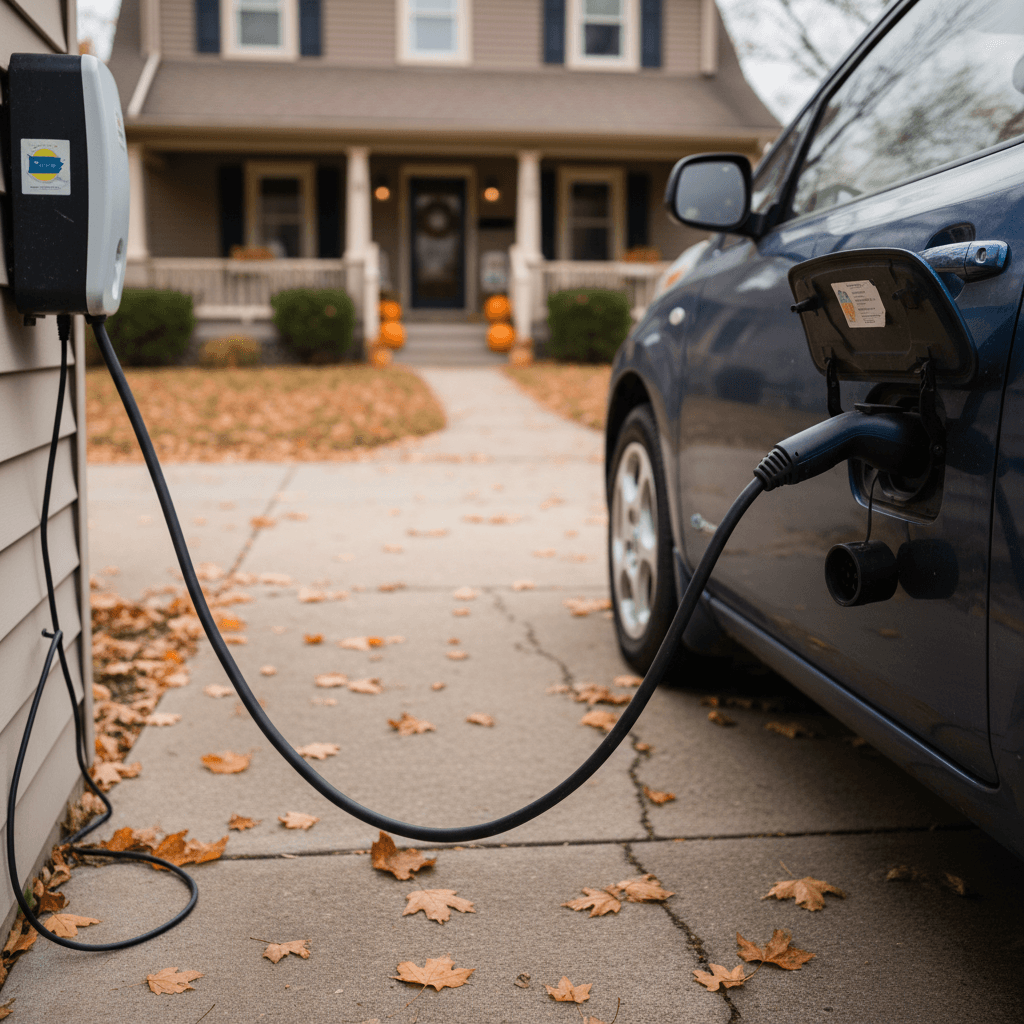
Once you’ve squeezed all the juice from federal and state programs, look closer to home. Several Pennsylvania utilities offer time‑of‑use rates, smart‑charging rewards, or charger rebates that can quietly turn a good EV deal into a great one over the years you own the car.
Common Pennsylvania utility incentives to look for
Check your specific utility, offers vary by territory and change over time.
Time‑of‑use (TOU) rates
Some utilities in PA offer cheaper overnight electricity rates if you enroll in an EV or TOU rate plan.
- Shift most charging to off‑peak hours.
- Can significantly cut your fuel cost per mile.
Smart‑charging rewards
Programs like Duquesne Light’s Smart Charging Rewards pay EV owners for allowing limited control of charging during summer peaks.
- You plug in as usual.
- The utility slows or pauses charging during grid events.
Home charger rebates
Some PA utilities have, at times, offered rebates or bill credits toward installing Level 2 home chargers.
- Covers part of hardware or installation cost.
- Especially valuable if your panel needs upgrades.
How to actually use these programs
Step 5: Shop smart so you don’t overpay for the car itself
All the incentives in the world won’t save you if you overpay for the car, especially a used EV with an unknown battery history. This is where buying from an EV‑focused marketplace like Recharged can quietly put money back in your pocket, because you’re reducing the risk of a bad battery and a bad deal.
Ways Pennsylvania buyers can save with a smarter used‑EV purchase
These aren’t coupons, they’re levers you can actually pull.
Verified battery health
On Recharged, every car comes with a Recharged Score Report that includes verified battery health diagnostics, so you’re not guessing about range or future degradation.
If a seller can’t show you objective battery data, price in that uncertainty, or walk away.
Fair market pricing
Recharged benchmarks each vehicle against the used‑EV market, including mileage, trim, and battery condition, to keep pricing in line with reality, not hype.
If you’re shopping elsewhere, always compare against a trusted marketplace before saying yes.
Financing that matches EVs
With EV‑friendly financing through Recharged, you can compare payment options without dealer pressure and see the full cost of ownership, including fuel savings, over time.
Look at the full monthly cost, not just the sticker.
Pennsylvania used‑EV buyer’s checklist
Confirm battery health in writing
Ask for a recent battery health report or diagnostics, not just a range guess. On Recharged, this is baked into the Recharged Score. Elsewhere, you may need an independent inspection or OEM battery report.
Cross‑check price against similar EVs
Search by model year, trim, mileage, and battery condition, and compare prices across multiple platforms. If a local dealer is thousands higher with no good reason, negotiate or walk.
Estimate your real electricity cost
Use your utility’s rate schedule and realistic annual mileage to estimate annual charging costs under any EV or TOU rate you plan to use.
Verify PA rebate and federal eligibility
Run through the current AFV Rebate rules and, if applicable, the used‑EV credit checklist before you sign. Don’t assume the dealer is right, they aren’t the ones losing money if you’re wrong.
Budget for insurance and maintenance
Get insurance quotes for specific VINs and factor in likely maintenance (tires, brakes, maybe a coolant service on older EVs). Compared with gas cars, EVs are gentler on maintenance, but not immune.
Plan your charging setup
If you rent or live in a rowhouse or condo, know exactly where and how you’ll charge before you buy. The cheapest EV is the one you can charge reliably without expensive heroics.
Step 6: Don’t let fees and road charges eat your savings
In Pennsylvania, the sticker price is just the opening bid. To know whether an EV really saves you money, you have to look at the total cost of ownership: financing, taxes, the state Road User Charge, insurance, maintenance, and energy. EVs usually win that race, but only if you manage the details.
One‑time costs to watch
- Doc fees and add‑ons: Dealers love to slide in paint protection, VIN etching, and other fluff. These don’t make your EV greener; they just make it pricier.
- Sales tax and registration: These are straightforward, but check whether your county adds anything odd.
- Home electrical upgrades: If you need a new panel or 240‑V circuit, get quotes before you buy the car.
Ongoing costs to plan for
- Road User Charge (RUC): Pennsylvania now bills EVs directly to replace lost gas‑tax revenue. Think of it as your EV’s share of the pothole fund.
- Insurance: Some EVs cost more to insure; shop multiple quotes.
- Tires and brakes: EVs are heavier and torquier; buy good tires and rotate them. Brake wear is often lower thanks to regen.
Run the numbers vs. your current car
Pennsylvania EV savings cheat sheet
Where a Pennsylvania buyer typically saves (or spends) with an EV
Think of this as a checklist you run through with a calculator in hand.
| Line item | EV vs. gas car in PA | What to do about it |
|---|---|---|
| Upfront price | Used EV often cheaper than comparable new gas car; new EV can be higher | Favor high‑quality used EVs with verified battery health. |
| State AFV Rebate | Can knock up to several thousand off qualifying EVs | Confirm program year, price caps, and income eligibility before you buy. |
| Federal used‑EV credit | Potential $4,000 off the right used EV | Stay under income and price caps; buy from a dealer. |
| Utility programs | Lower overnight charging rates and occasional rebates | Call your utility before buying; choose hardware that works with their programs. |
| Fuel costs | Often hundreds of dollars less per year than gas | Charge off‑peak whenever possible; avoid exclusive DC fast‑charging lifestyles. |
| Road User Charge | New annual cost for EVs, replacing some gas tax | Treat it as a line item in your budget, not a surprise later. |
| Maintenance | EVs usually win on brakes, oil, exhaust, and cooling system repairs | Bank some of those savings for tires and any out‑of‑warranty work. |
These are example ranges; your actual results depend on driving habits, electricity rates, vehicle choice, and up‑to‑date incentive rules.
FAQ: How to save money buying an EV in Pennsylvania
Frequently asked questions for Pennsylvania EV buyers
Bottom line: Make Pennsylvania’s incentives work for you
Saving money on an EV in Pennsylvania isn’t about finding one magic coupon; it’s about stacking small, smart advantages. Start by deciding whether a new or used EV fits your budget and risk tolerance. Line up the Pennsylvania AFV Rebate and, if you qualify, the federal used‑EV credit. Add in any utility programs that make home charging cheaper. Then, most importantly, buy the right car at the right price, with clear battery health and realistic ownership costs.
If you want help threading that needle, Recharged was built for exactly this moment. You can browse used EVs with verified battery reports, get EV‑friendly financing, trade in your current car, and have the vehicle delivered in a fully digital experience, plus in‑person support at our Experience Center in Richmond, VA. For Pennsylvania buyers, that combination of transparency and expertise may be the cleanest way to turn incentives and market reality into a deal that actually makes financial sense.