If you’re wondering how to save money buying an EV in Florida in 2026, you’re asking at the right time. Federal purchase tax credits for EVs ended for vehicles put in service after September 30, 2025, so Floridians now have to rely more on smart shopping, utility programs, and used EV bargains to keep costs down.
Quick reality check for 2026
Why saving on an EV in Florida looks different now
Where Florida EV savings really come from
Florida is different from, say, California or Colorado. The state doesn’t currently offer a broad, statewide **EV purchase tax credit**. Instead, your savings come from four main places: 1. Lower fuel and maintenance costs compared with a gas car, especially with off‑peak charging. 2. Utility incentives and programs from companies like FPL, Duke Energy Florida, Tampa Electric (TECO), and municipal utilities, often focused on home charging equipment or off‑peak charging credits. 3. Buying used instead of new, taking advantage of the steep depreciation many early EVs have already absorbed. 4. Financing smarter, so interest doesn’t quietly eat away at the savings you get from going electric.
Think like a business owner
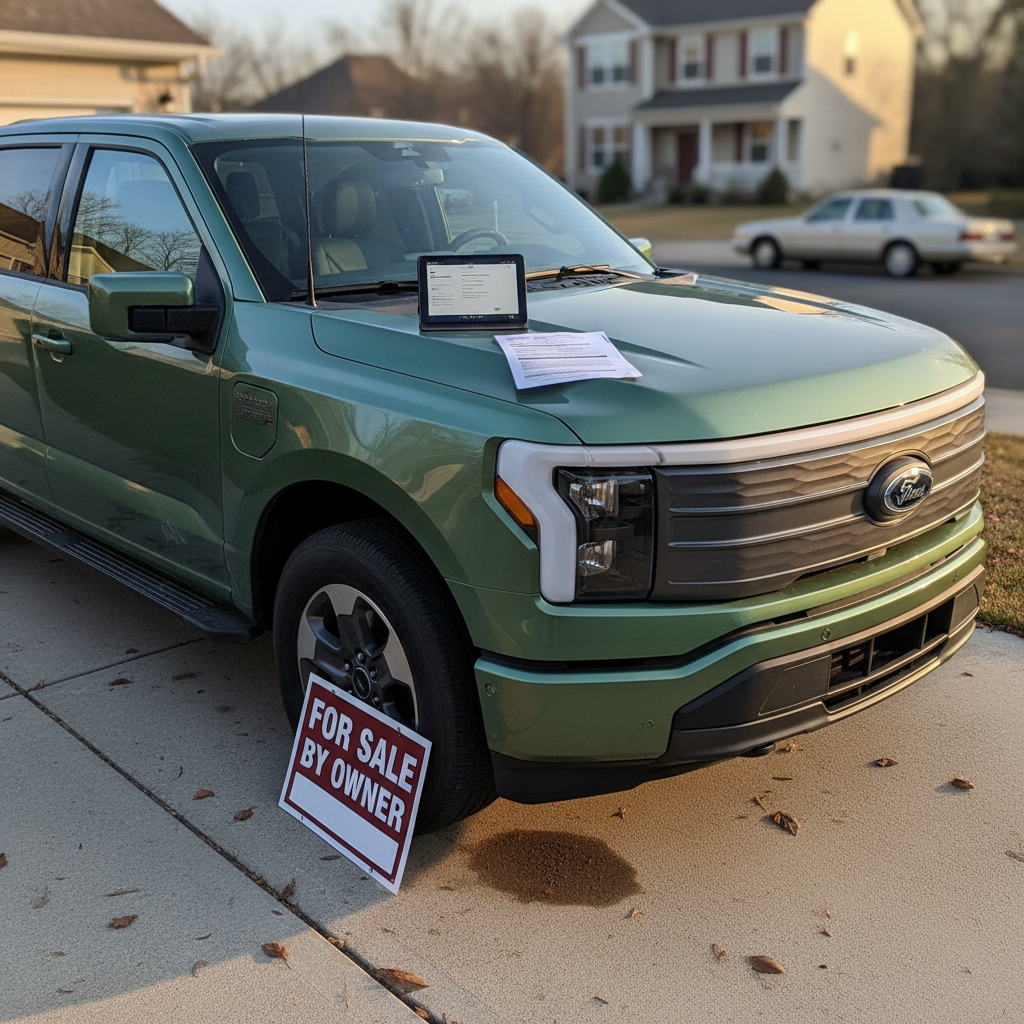
Step 1: Decide new vs. used now that federal credits are gone
New EV in Florida (2026)
- No federal purchase credit after Sept. 30, 2025.
- Highest upfront price; monthly payment can rival a luxury gas car.
- Latest batteries, range, and safety tech.
- Full factory warranty; often 8 years/100,000 miles on the battery.
Best if you: want the newest tech, plan to keep the car a long time, and can comfortably handle the payment.
Used EV in Florida (2026)
- No federal used EV credit anymore, but prices have fallen sharply.
- Biggest opportunity to save vs. new; early‑depreciation already paid by first owner.
- Range may be lower than new models, but still ample for most Florida commutes.
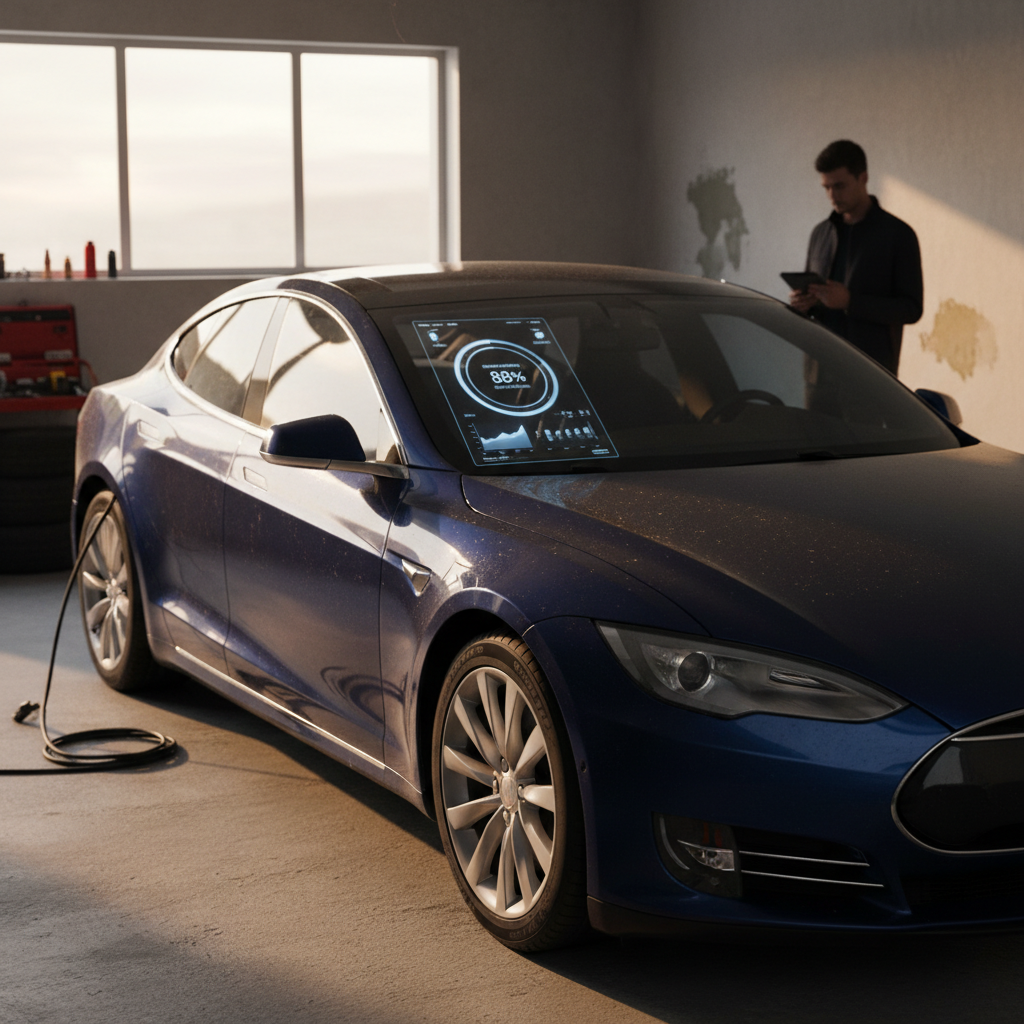
- Battery health becomes the single most important factor.
Best if you: want maximum value per dollar and don’t mind shopping carefully.
Watch the "cheap new" trap
For many Floridians focused on value, a late‑model used EV, especially something three to five years old with verified battery health, often delivers the best combination of price, range, and reliability. That’s exactly the slice of the market Recharged focuses on, pairing every car with a Recharged Score battery health report so you’re not guessing about the pack that powers the car.
Step 2: Use Florida utility programs to cut charging and installation costs
With federal purchase credits off the table, your biggest remaining “incentive” lever is often your local utility. In Florida, that typically means **Florida Power & Light (FPL)**, **Duke Energy Florida**, **Tampa Electric (TECO)**, or a municipal like Lakeland Electric or Kissimmee Utility Authority.
Major ways Florida utilities help you save
These programs change, so always verify current details before you sign up.
Home charger programs
Several Florida utilities offer:
- Utility‑provided Level 2 charger with no or low upfront cost.
- Subscription plans that roll hardware and maintenance into a monthly fee.
- Occasional rebates for customer‑purchased chargers.
Off‑peak charging credits
Programs like Duke Energy Florida’s EV off‑peak charging credit pay you to charge at night.
- Enroll your EV or home charger.
- Charge during specified off‑peak hours.
- Get a monthly bill credit or lower per‑kWh rate.
Public charging build‑outs
Utilities and cities are adding public Level 2 and DC fast chargers.
- Some offer low introductory rates.
- Look for workplace charging pilots.
- Pair with free or employer‑subsidized charging to cut your home bill.
Ask the three key questions
Even if your specific utility isn’t offering cash rebates right now, simply moving your charging into the late‑night window under a time‑of‑use or EV rate can knock a surprising amount off your monthly cost to drive. That makes a higher EV payment easier to live with.
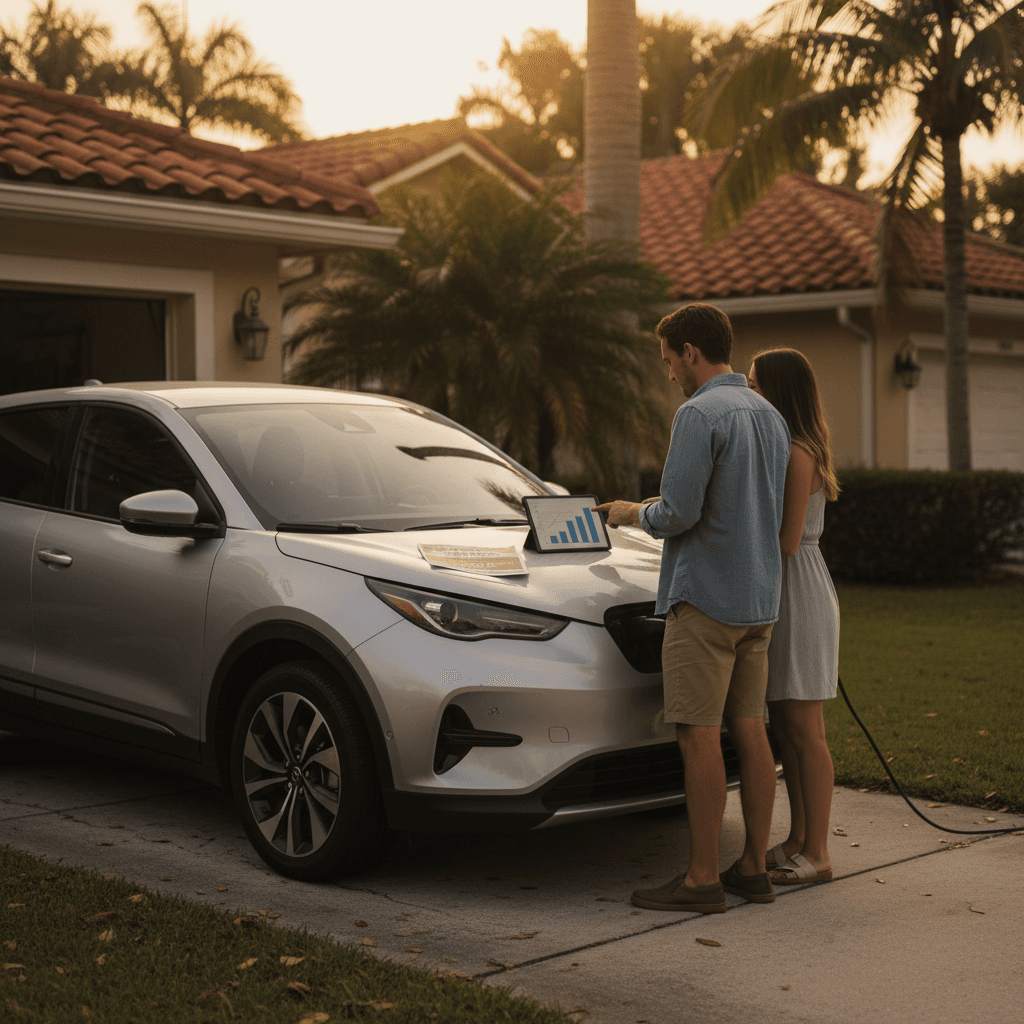
Step 3: Shop total cost of ownership not just the sticker price
Five‑year cost snapshot: Florida EV vs. gas sedan
Illustrative example assuming 12,000 miles per year, typical Florida electricity and fuel prices, and average maintenance. Your numbers will vary, but the pattern is what matters.
| Category | Gas Sedan | Electric Vehicle |
|---|---|---|
| Purchase price (used) | $24,000 | $26,000 |
| Fuel/energy per year | $1,800 | $700 |
| Maintenance per year | $900 | $500 |
| Five‑year fuel/energy | $9,000 | $3,500 |
| Five‑year maintenance | $4,500 | $2,500 |
| Approx. five‑year total (excluding financing) | $37,500 | $35,000 |
EVs often win over 5–10 years even when the purchase price is higher.
The gas car might be cheaper on day one, but in Florida’s stop‑and‑go traffic and year‑round A/C weather, you’ll burn through a lot of fuel over five or ten years. When you factor in: - Lower “fuel” cost per mile (especially if you charge off‑peak at home), - Fewer moving parts and lower routine maintenance, - No oil changes, fewer brake jobs thanks to regen, an EV that’s slightly more expensive upfront can still save you thousands over your ownership period.
Use this rule of thumb
Step 4: Get the financing right to keep monthly payments low
In today’s rate environment, **how you finance the car** can be as important as the price you pay. High interest can quietly erase the savings you’re counting on from low operating costs.
Smart EV financing moves for Florida buyers
1. Compare EV‑friendly lenders
Shop rates from your bank or credit union, online lenders, and EV‑focused retailers. Platforms like Recharged can connect you with financing tailored to used EVs, which many traditional lenders still misunderstand.
2. Keep the term reasonable
Stretching to 84 or 96 months lowers the payment but raises total interest and leaves you “upside‑down” longer. Aim for the shortest term with a comfortable payment, often 60–72 months for used EVs.
3. Avoid rolling negative equity
If you’re trading in a gas car with negative equity, try to make up the difference in cash. Rolling that balance into your EV loan means you’re paying interest on a car you no longer own.
4. Pre‑qualify before you shop
Getting pre‑qualified, ideally with no impact on your credit, lets you focus on the car’s value instead of being distracted by payment gymnastics in the F&I office.
5. Watch add‑ons and protection plans
Extended warranties, GAP, and protection packages can make sense, but they’re often marked up heavily. Compare stand‑alone quotes and make sure any add‑on doesn’t wipe out your fuel and maintenance savings.
Where Recharged fits in
Ready to find your next EV?
Browse VehiclesStep 5: Save with a smart used EV strategy
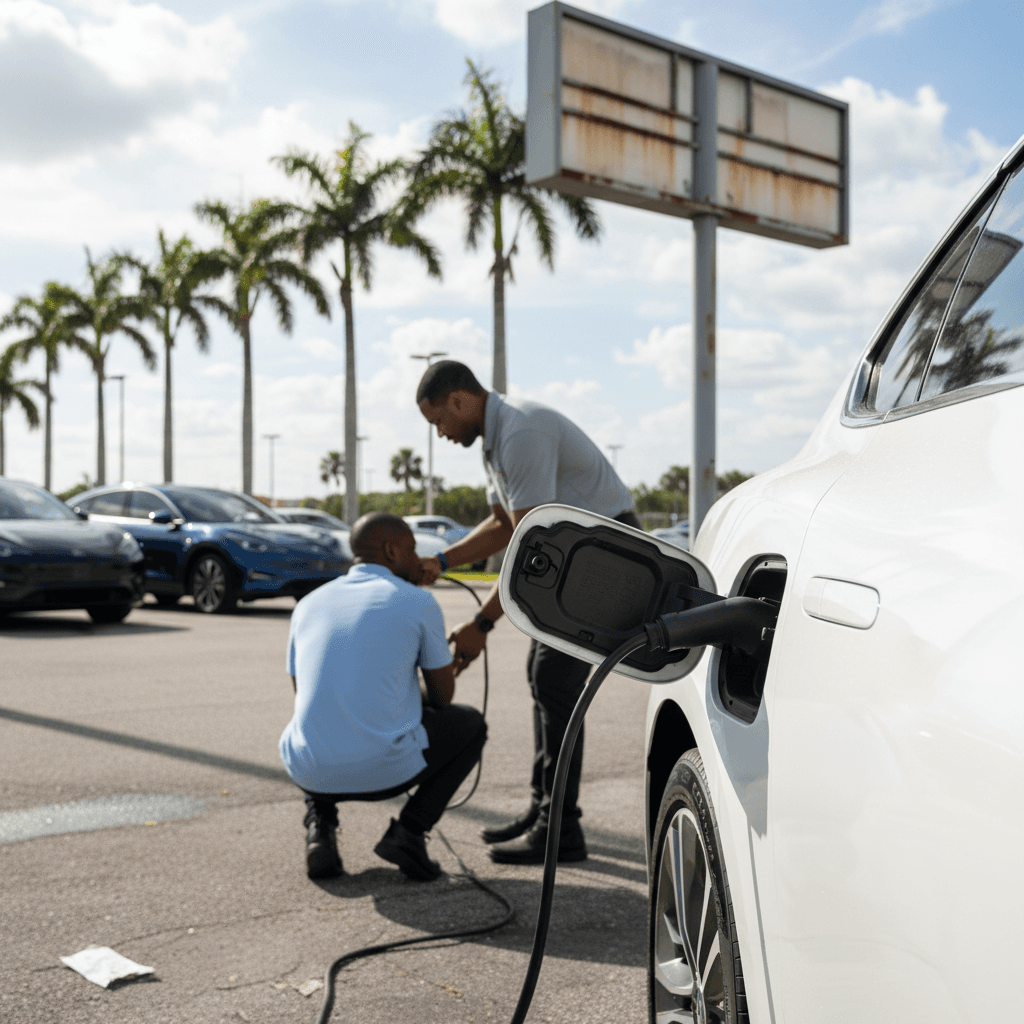
Because Florida doesn’t tax EV purchases differently than gas cars at the state level, your biggest opportunity is often in **choosing the right used EV at the right price**. Here’s how to squeeze the most value out of the used market.
- Target 3–6‑year‑old EVs: They’ve already taken the steepest depreciation hit but usually still have solid range and remaining battery warranty.
- Prioritize battery health over odometer: A well‑cared‑for 70,000‑mile EV with a strong battery can be a better buy than a 35,000‑mile car that’s been fast‑charged hard and often.
- Look for Florida‑friendly range: Daily commutes, kids’ activities, and weekend trips to the coast add up. Aim for real‑world range that comfortably covers your longest regular day with 30–40% buffer.
- Check charging flexibility: In an apartment or condo, onboard AC charging speed and DC fast‑charging capability matter more. In a single‑family home with Level 2, a slower‑charging EV can still work fine.
Use a trusted battery report
Step 6: Leverage Florida perks that don’t show on the window sticker
Florida doesn’t currently dangle big purchase rebates, but it does offer a few day‑to‑day advantages for EV owners that help your budget and your sanity, especially in the I‑95 and I‑4 corridors.
Don’t ignore insurance and fees
Florida EV savings checklist
One‑page checklist: How to save money buying an EV in Florida
Confirm your charging situation
Will you charge at home, at work, or mostly in public? Your answer determines how much you’ll save on fuel and which EVs make sense.
Call your utility before you buy
Ask about EV‑specific rates, off‑peak discounts, and charger rebates or subscription programs. Build their answers into your cost comparison.
Compare 2–3 used EVs to a comparable gas car
Use a simple five‑year cost estimate, including energy, maintenance, and insurance, to see where the EV really starts saving you money.
Get pre‑qualified for financing
Know your rate and max monthly payment in advance. Use a retailer like Recharged that lets you see your real payment, including fees, before you sign anything.
Insist on battery health data for any used EV
Avoid guessing. Look for a third‑party battery health report (like the Recharged Score) or, at minimum, a professional EV‑savvy inspection.
Time your purchase
If your current car is paid off and reliable, take the time to watch prices on your short list and strike when a well‑priced, well‑documented EV appears.
Florida EV buying FAQ
Frequently asked questions about saving on an EV in Florida
Bottom line: How to save the most buying an EV in Florida
With federal EV purchase tax credits now in the rear‑view mirror, saving money on an electric vehicle in Florida comes down to three smart moves: buy the right car, on the right terms, and plug it into the right electricity plan. For many shoppers, that means a carefully chosen used EV with verified battery health, financed sensibly, and paired with a utility program that rewards off‑peak charging.
If you’re ready to run the numbers, start by clarifying your driving pattern and home charging options, then compare a few used EVs side by side with the gas car you’d otherwise buy. And if you want a shortcut, browse used EVs on Recharged, every listing includes a Recharged Score Report, clear pricing, and the option to trade in and pre‑qualify online, so you can see exactly how an EV would fit into your Florida budget before you ever take delivery.