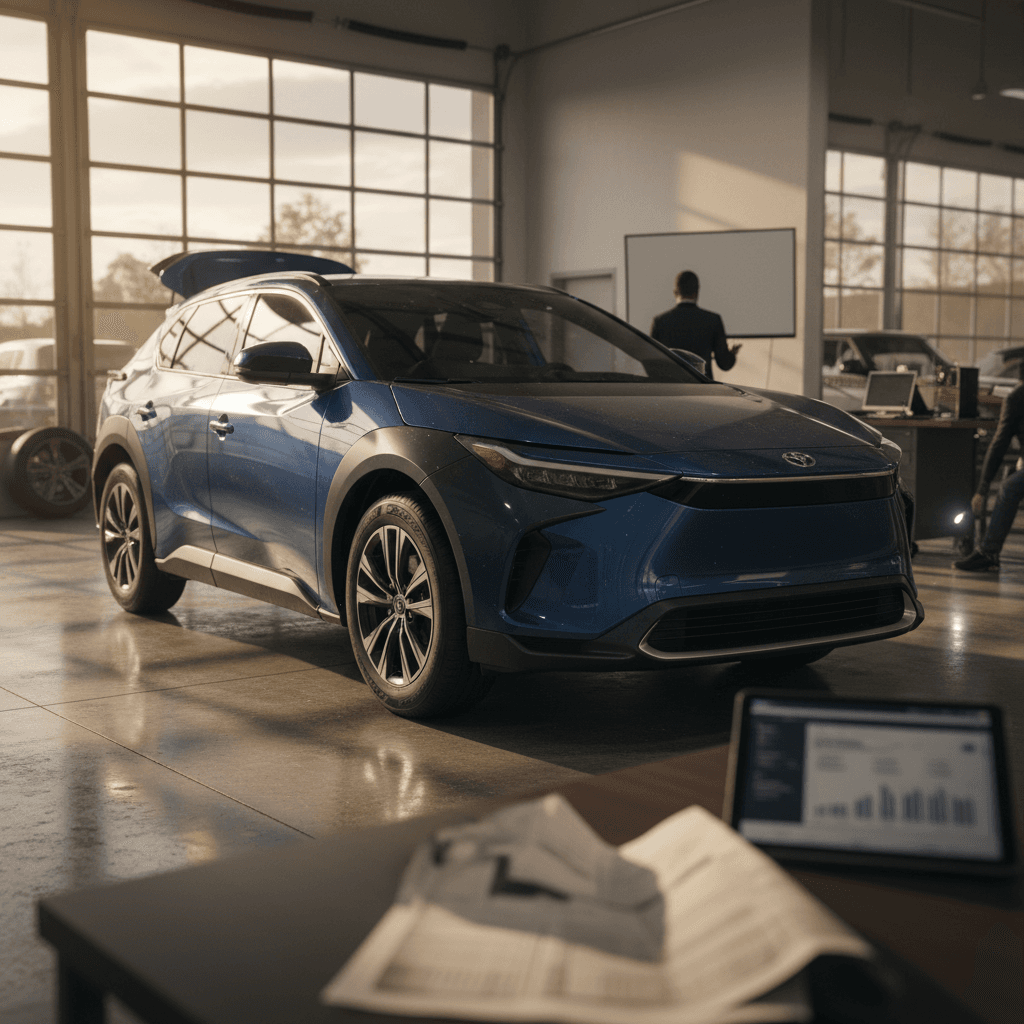
If you own a Toyota bZ4X and you’re looking at trading it in during 2026, you’ve probably seen some startling numbers. Listings all over the map, horror stories about depreciation, and dealers throwing out offers that feel suspiciously low. This guide breaks down what a realistic Toyota bZ4X trade in value in 2026 looks like, why the numbers are so strange compared with other Toyotas, and what you can do to walk away with more money in your pocket.
Quick 2026 snapshot
Why bZ4X trade‑in values look so weird in 2026
The bZ4X is an unusual Toyota story. Traditionally, Toyota SUVs are resale rock stars. The bZ4X launched into a very different EV market: fast‑moving technology, aggressive incentives, and some early stumbles. Heavy lease subsidies and discounts on new bZ4X models from 2023–2025 pushed transaction prices far below sticker, which dragged used values down faster than the usual Toyota curve.
Toyota bZ4X depreciation by the numbers
On top of that, Toyota cut pricing on newer bZ4X model years and introduced richer incentives to stay competitive with newer EVs and tax‑credit‑eligible rivals. When brand‑new inventory is advertised in the high‑$20,000s to low‑$30,000s before incentives, no dealer can justify a sky‑high trade‑in on your older bZ4X. That’s why you’ll see a loaded 2023 Limited with a sticker in the mid‑$40,000s appraising in the low‑$20,000s only a few years later.
Why “book value” can mislead you
Typical Toyota bZ4X trade‑in value ranges in 2026
Exact pricing will depend on your mileage, trim, condition, and battery health, but by spring 2026 in the U.S. you’ll usually see bZ4X trade‑in offers fall into these rough bands when you walk into a mainstream franchise dealer:
Approximate 2026 Toyota bZ4X trade‑in value ranges (U.S.)
These ballpark numbers assume clean history, normal wear, and no major accidents. High‑demand regions or outstanding condition can push you toward the top of the range.
| Model year & miles (typical) | Trim examples | Dealer trade‑in range | Private‑party sale range |
|---|---|---|---|
| 2022 bZ4X · 40k–60k mi | XLE FWD / XLE AWD | $16,000 – $20,000 | $18,000 – $23,000 |
| 2023 bZ4X · 25k–45k mi | XLE / Limited | $18,000 – $22,500 | $20,000 – $25,000 |
| 2024 bZ4X · 10k–30k mi | XLE / XLE Premium / Limited | $19,000 – $24,000 | $21,000 – $27,000 |
| 2025 bZ4X · under 20k mi | Nightshade / Limited AWD | $23,000 – $28,000 | $25,000 – $31,000 |
Remember: these are directional 2026 ranges, not quotes. Your VIN, market, and battery health matter.
If you leased your bZ4X, you may see a very different number: the residual value in your lease contract. Because Toyota and its finance partners set many of those residuals before the real‑world price drops became obvious, buy‑out prices on 2022–2024 leases can be higher than actual market value. That’s why many lessees walk away at lease‑end instead of buying their bZ4X.
Use multiple value sources, fast
Key factors that move your bZ4X trade‑in up or down
What determines your 2026 bZ4X trade‑in value?
Some levers you can’t change, others you absolutely can.
Age & mileage
The market still thinks in years and miles. A 2022 bZ4X with 55,000 miles is going to sit in a different pricing bucket than a 2024 with 18,000 miles, even if they look identical from 20 feet away.
Accidents & title status
Any accident history, structural damage, or branded title (salvage, rebuilt, lemon buyback) crushes offers. Clean Carfax/AutoCheck reports are money in the bank.
Battery health & fast‑charge history
Because range and longevity drive EV demand, a strong battery report can easily bump your value, while obvious degradation or abuse does the opposite.
Condition & maintenance
Fresh tires, current services, and a clean interior tell buyers your bZ4X was loved. Deep stains, curb‑rashed wheels, and overdue maintenance give dealers easy reasons to deduct.
Your local market
California, the Pacific Northwest, and parts of the Northeast often support higher EV prices than regions with little charging infrastructure. Even within a state, metro vs rural can matter.
New‑car incentives & pricing
When shoppers can see brand‑new bZ4X models heavily discounted or paired with generous lease cash, it puts a hard ceiling on what a dealer can safely offer for your trade.
With most gas Toyotas, you can lean on the badge and expect a predictable curve. With the bZ4X, battery health and new‑car incentives play an outsized role. That’s why two visually similar 2023 XLEs sitting side by side can be thousands of dollars apart once a buyer or dealer looks under the skin.
How battery health impacts bZ4X trade‑in value
For EVs, battery health is the new timing belt. A bZ4X that still delivers close to its original usable capacity and EPA range in 2026 is far easier to sell than one that’s obviously lost a chunk of range. Buyers are getting smarter; they’ll ask straight out: “How’s the battery?” Dealers are asking too.
- Strong battery health (little observed range loss) can add roughly $1,000–$3,000 in perceived value versus an otherwise similar bZ4X.
- Noticeable degradation, or a history of repeated DC fast‑charging with no home Level 2 charging, can push offers toward the bottom of the range.
- Documentation of battery‑related warranty work or software updates can reassure a cautious buyer or dealer.
- In states with long EV warranties, remaining battery warranty years and miles are a major selling point.
What a Recharged Score tells buyers
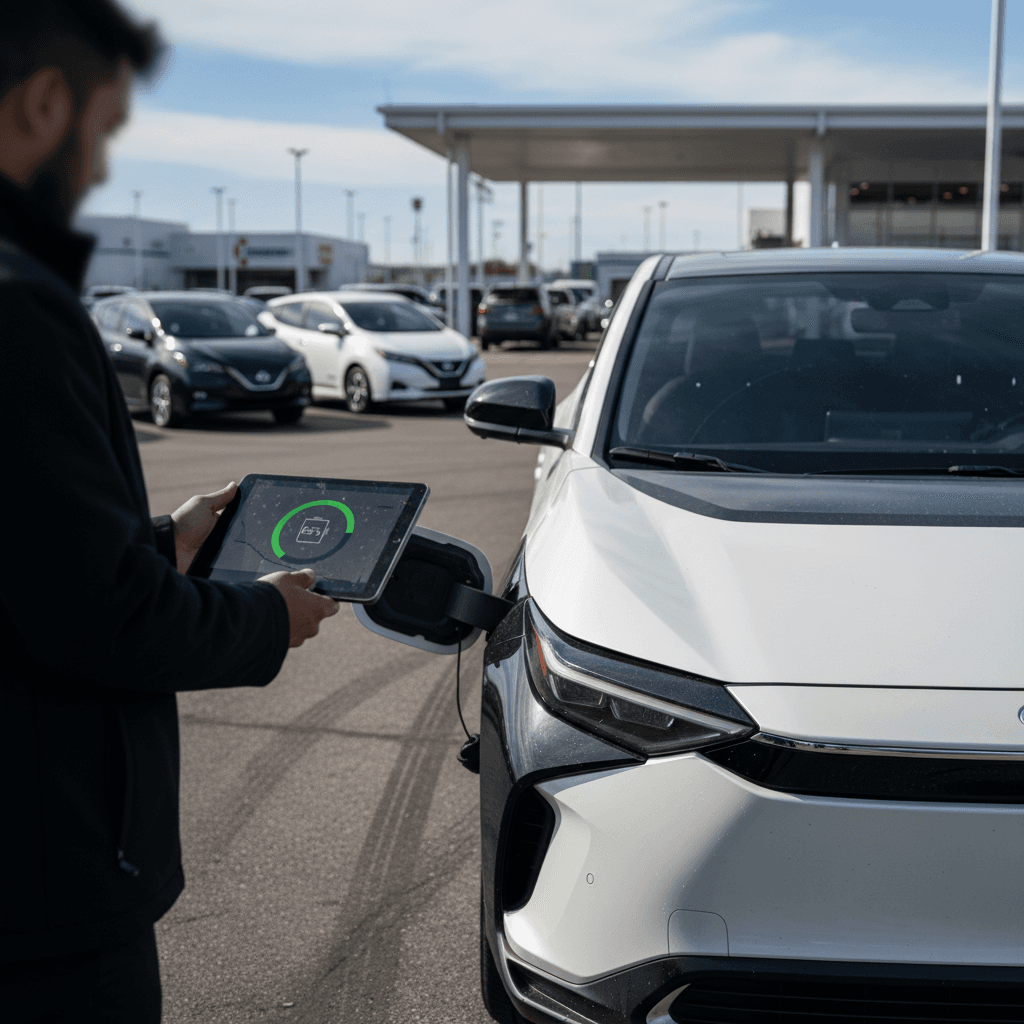
Trade in vs sell your Toyota bZ4X: which pays more?
Trading your bZ4X in to a dealer
- Pros: Fast, simple, and convenient, especially if you’re rolling equity (or negative equity) into your next car.
- Tax advantage: In many states, you only pay sales tax on the price difference between the new car and your trade.
- Cons: Dealers need margin and will usually be $1,000–$3,000 below what you might get selling privately.
- Best for you if: You value speed and simplicity, or you’re upside‑down and need help structuring the deal.
Selling your bZ4X yourself or via marketplace
- Pros: Highest potential sale price; you capture full retail value instead of wholesale.
- Cons: Requires photos, listings, test drives, paperwork, and dealing with strangers and financing.
- Middle ground: EV‑focused marketplaces like Recharged can handle marketing, buyer screening, and paperwork, often landing you more than a traditional trade while staying mostly hands‑off.
- Best for you if: You’re willing to spend some time to earn an extra few thousand dollars.
Where Recharged fits in
Steps to maximize your bZ4X trade‑in value in 2026
Pre‑trade checklist for your Toyota bZ4X
1. Get a realistic market baseline
Spend an hour looking at actual used bZ4X listings in your region, same year, similar miles, similar trim. Ask yourself what you’d pay as a buyer. That anchors your expectations better than any single book value.
2. Pull history and battery documentation
Print or download your Carfax/AutoCheck if you have it, plus any service records and EV‑specific checks. If you have a third‑party battery test or a Recharged Score Report, bring it to every appraisal.
3. Fix the cheap stuff first
Dealers will happily deduct several hundred dollars for curb‑rashed wheels, filthy cabins, or dead key‑fob batteries. A professional detail, touch‑up on wheels, and fresh cabin filter are low‑cost moves that improve first impressions.
4. Resolve warning lights and obvious issues
If your bZ4X is showing warnings or you have overdue recalls, handle them before you ask anyone for an offer. Unknown problems force appraisers to assume the worst.
5. Get multiple offers within the same week
EV pricing moves fast in 2026. Line up instant online offers, at least one franchise dealer appraisal, and, if you’re comfortable, a quote from an EV‑focused marketplace like Recharged, all within a few days.
6. Decide if tax savings offset a higher private price
Run the math on sales tax savings where you live. Sometimes a slightly lower trade‑in, plus tax savings on the new purchase, ends up about even with a higher private‑party sale price.
Don’t chase yesterday’s value
When is the best time in 2026 to sell your bZ4X?
Timing matters more with a fast‑depreciating EV than with a slow‑and‑steady gas Toyota. In fact, 2026–2027 is shaping up to be a pivotal window for early bZ4X owners. Newer Toyota EVs are on the way, with more range and updated tech, and they’ll put fresh pressure on used values once they’re on every lot.
- Early‑ to mid‑2026: A sweet spot if you bought early. Your bZ4X is still relatively modern, but the newest generation of Toyota EVs hasn’t flooded the used market yet.
- Late 2026 into 2027: Expect a wave of lease returns from 2023–2024 bZ4X leases. More supply tends to push auction and trade‑in prices down further.
- Seasonality: EV demand often bumps up in spring and early summer, especially in states with strong EV incentives. Dead‑of‑winter sales in cold climates can be slower, especially for buyers worried about winter range.
- Interest‑rate environment: If financing costs ease, more buyers qualify for used EV loans, which supports prices. High rates tend to soften demand at the margins.
If you’re on the fence
How Recharged values a used Toyota bZ4X
At Recharged, we’ve lived in the used‑EV trenches long enough to know that a bZ4X isn’t just a VIN and a mileage number. Two otherwise identical SUVs can deserve very different checks. Here’s how a bZ4X is evaluated when it comes through our system:
Inside a bZ4X valuation at Recharged
Why a data‑driven EV specialist may see more value than a generic auction lane.
1. Vehicle & market data
We pull VIN‑specific build info, recall status, option content, and current asking prices for comparable bZ4X listings in your region and nationally. We also consider broader EV trends and Toyota incentives on new models.
2. Battery & charging profile
Our Recharged Score includes a deep dive on pack health, usable capacity versus original spec, and how the car has been charged over time. Strong pack health directly supports a stronger offer.
3. Condition & history
We verify accident history, maintenance records, tire and brake life, and cosmetic condition. A clean, well‑documented bZ4X often deserves better money than an auction car with missing history.
4. Selling path: instant offer or consignment
For some bZ4X owners, an instant cash offer makes sense. Others do better consigning with Recharged, where we market the car nationally, handle the digital retail process, and aim for higher retail‑level pricing.
Ready to find your next EV?
Browse VehiclesBecause Recharged is built around used EVs, not as an afterthought, we’re often willing to pay more than a local dealer who just wants to move your bZ4X straight to auction. And if your goal is maximum value rather than fastest exit, our consignment and trade‑in options can thread that needle.
Frequently asked questions about Toyota bZ4X trade‑ins
Toyota bZ4X trade‑in value 2026: FAQ
Bottom line: getting a fair 2026 trade‑in value
The Toyota bZ4X hasn’t followed the classic Toyota script on resale value, and 2026 trade‑in numbers can feel harsh if you’re comparing them to what you paid new. But once you understand how incentives, battery health, and market timing shape offers, you can make clear‑eyed decisions. Clean up the car, document its history and battery health, collect several real offers in the same week, and decide whether extra effort beyond a simple trade‑in is worth the upside for you.
If you’d like a value grounded in how used EVs actually sell, not just what a generic book says, Recharged can help. Our specialists can walk you through your Toyota bZ4X trade in value in 2026, show you what similar cars are bringing on our marketplace, and help you trade, sell, or consign your EV in a way that fits your life and your numbers.