Your EV’s dashboard might promise 260 miles of range, but what you actually see on a brisk Tuesday commute or a summer road trip can tell a different story. The good news: there are clear, practical tips to maximize EV range that work across just about every model, without turning every drive into a hypermiling contest.
Range ratings vs. real life
Why EV range varies in the real world
Electric vehicles are brutally honest. Every watt the car uses, from accelerating hard to blasting the heater, comes straight out of the same battery that moves you down the road. That’s why your range estimate can swing dramatically day to day, even if your state of charge looks the same.
What really eats into EV range
Once you know what the big drains are, speed, climate control, terrain, and trip pattern, you can work with them instead of being surprised by them. The rest of this guide walks through concrete ways to get more miles from every kilowatt‑hour without sacrificing comfort or safety.
Quick-hit EV range tips you can use today
- Keep highway speeds reasonable; even dropping from 75 mph to 65 mph can save a surprising amount of range.
- Use seat and steering‑wheel heaters and lower the cabin temp a few degrees in winter.
- Precondition (heat or cool) the cabin while still plugged in, especially in very hot or cold weather.
- Check tire pressures monthly and set them to the door‑jamb spec, not just “looks fine.”
- Use Eco or Efficiency mode in day‑to‑day driving.
- Avoid fast‑charging from very low (near 0%) to 100% unless you truly need the full pack.
- Plan routes that avoid lots of stop‑and‑go or steep climbs when you’re tight on range.
The 80/20 of EV efficiency
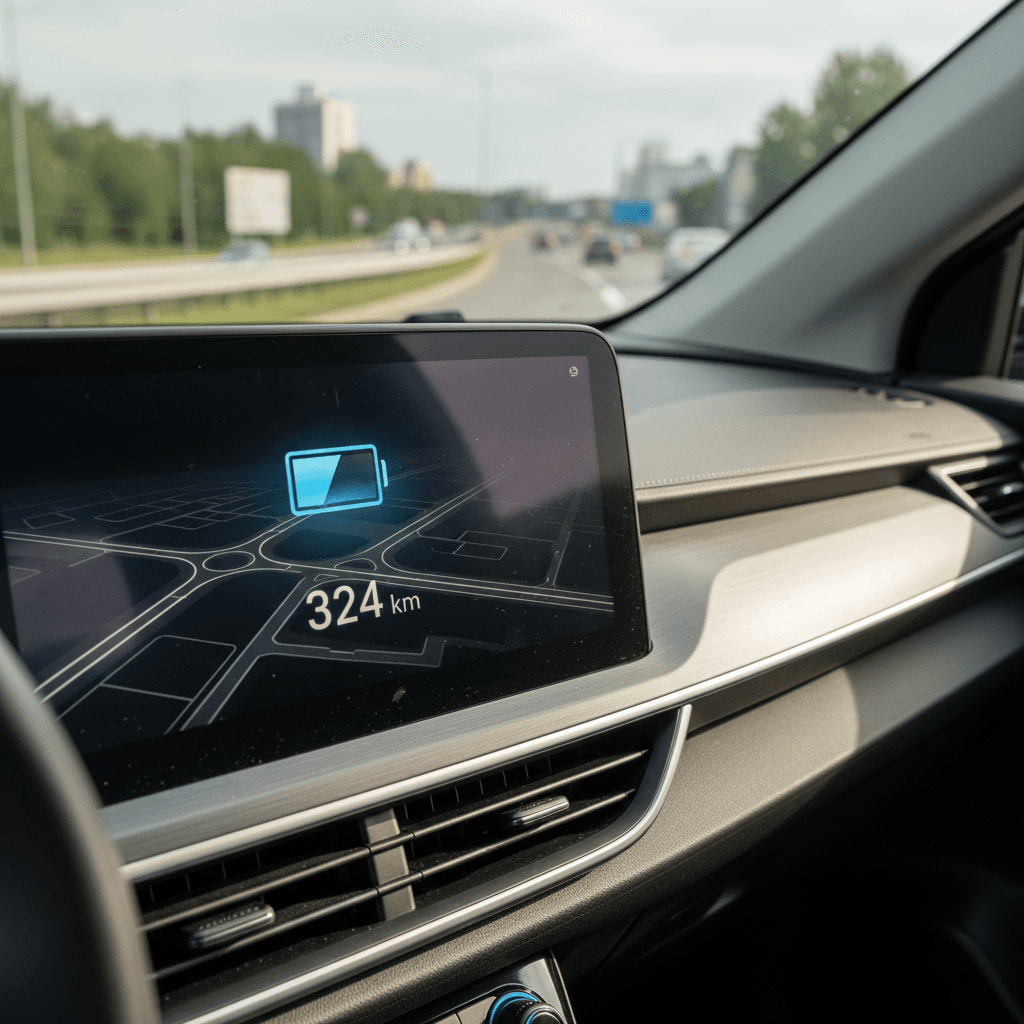
Drive smarter, not just slower
You don’t have to crawl in the right lane to get decent range. What matters more is how smooth and predictable your driving is. EVs are very efficient when they’re cruising steadily and using regenerative braking instead of friction brakes.
Driving habits that protect your range
You’re in control of the biggest range lever: your right foot.
1. Tame the top speed
Above about 60–65 mph, aerodynamic drag ramps up quickly. Running at 75–80 mph can easily cost 15–25% of your range compared with staying closer to the limit.
Try this: On trips where range matters, set cruise control a few mph below your usual speed and watch your projected arrival state of charge climb.
2. Smooth out inputs
Hard launches and late braking waste energy. Your EV’s instant torque makes it fun, but frequent full‑throttle sprints are range killers.
Look well ahead, roll into the accelerator, and let off early to let regen slow you instead of stabbing the brake pedal.
3. Maximize regenerative braking
Most EVs let you choose stronger or weaker regen. In stop‑and‑go or hilly areas, stronger regen can put useful energy back into the pack.
Leave enough following distance so the car can slow itself using regen instead of friction brakes whenever possible.
Don’t chase range at the expense of safety
Use climate control without crushing your range
In cold weather, your EV has two big jobs: keep the battery in its happy temperature window and keep you comfortable. Heating can be a major energy draw, especially at highway speeds or on repeated short trips. In summer, air conditioning also costs range, but usually less than winter heat.
Winter: Warm smart, not hard
- Preheat while plugged in. Use your app or scheduled departure so the cabin and battery are warmed using grid power, not stored energy.
- Rely on seat and wheel heaters. They sip power compared with heating the whole cabin. Many drivers find 66–68°F with heated seats feels fine.
- Avoid repeated short hops. If you can combine errands into one longer drive, the battery and cabin stay warm and more efficient.
Summer: Stay cool efficiently
- Pre‑cool in the shade. Starting a drive with a cooler cabin reduces how hard the A/C has to work.
- Use ‘Auto’ and moderate temps. Setting 70–72°F instead of 65°F keeps you comfortable while saving energy.
- Ventilate first. On very hot days, open doors or windows for a minute before cranking the A/C to dump trapped heat.
Heat pumps help, but technique still wins
Plan your charging and routes for efficiency
Some of the best range gains happen before you ever leave the driveway. Thoughtful route planning can keep you in your car’s efficiency sweet spot and avoid running the battery to the ragged edge on long drives.
Range‑friendly planning checklist
1. Know your comfortable buffer
Instead of planning to arrive at chargers with 1–2% remaining, aim for a buffer you’re comfortable with, often 10–20%. That leaves room for headwinds, detours, or a full station.
2. Favor 55–70 mph corridors
If you have two routes that take similar time, pick the one with lower typical speeds and fewer steep grades. Your efficiency will be noticeably better.
3. Use EV‑aware navigation
Most new EVs and many apps can plan around your car’s actual consumption and topography. Use them to preview arrival state of charge, not just distance and time.
4. Stack errands smartly
On days when range is tight, group errands into one loop instead of several cold starts. Long, continuous drives are easier on range than repeated short hops.
5. Pick chargers with amenities
On trips, choose stops that let you comfortably stretch, eat, or work. You’ll be more willing to stop a bit earlier, which keeps you out of the stressful near‑zero zone.
How Recharged helps with real‑world range
Ready to find your next EV?
Browse VehiclesOptimize your EV settings and tech
Buried in your menus are tools that can quietly add back miles every week. Spend a few minutes getting them dialed in once, and then let the car do the work.
High‑impact settings to review once
A few taps today, more range every day after.
Eco / Efficiency mode
Most EVs offer an Eco or Efficiency mode that softens throttle response and may limit peak power or climate output.
Use it as your default for commuting; save Sport mode for when you genuinely need the punch.
Speed‑based navigation
Some systems let you preview energy use by speed. If your car can overlay energy consumption on a route, use it to see whether a slightly slower road saves you a charging stop.
State of charge limits
Set your daily charge limit to around 70–80% if your car allows it. That’s healthier for the battery, and it nudges you into a driving pattern that doesn’t rely on the last few percent of charge.
Watch your efficiency gauge
How weather and seasons affect EV range
If you live where weather swings from shorts to parkas, your EV’s range will swing, too. Batteries prefer moderate temperatures. Very cold or very hot days force the car to spend extra energy just getting the pack and cabin into a livable zone.
What to expect from your EV’s range by season
These are ballpark expectations for many modern EVs in North America; your exact numbers will depend on your model and driving pattern.
| Season & conditions | Typical range impact | Main culprits | What helps most |
|---|---|---|---|
| Mild spring/fall (50–70°F) | Near rated range | Moderate speeds, light climate use | Steady driving, Eco mode, proper tire pressure |
| Summer heat (80–100°F) | ~5–15% less | A/C load, higher speeds on road trips | Pre‑cooling, shade parking, moderate cabin temps |
| Freezing winter (around 20–32°F) | ~15–30% less | Battery heating, cabin heat, short trips | Preheating while plugged in, seat heaters, combining trips |
| Severe cold (below 0°F) | 30%+ less (can be 40%+) | Continuous battery heating, heavy cabin heat, dense winter tires | Charging more often, slower speeds, indoor or covered parking if available |
Use this table as a planning tool, not a promise. Individual models vary widely, especially older EVs without heat pumps.
Rain, wind, and snow matter too
Battery health habits that protect your range
Over years, your EV’s maximum range depends less on today’s weather and more on how gently that battery has been treated. You can’t change how the previous owner drove, but you can start building good habits now, and, if you’re shopping used, lean on objective data like the Recharged Score.
Everyday habits that preserve long‑term range
Avoid living at 100% or near 0%
Charging to 100% for a trip is fine, but don’t leave the car sitting full for days. Likewise, try not to run regularly into the single digits before charging.
Prefer Level 2 over constant fast charging
DC fast charging is a fantastic tool for trips, but daily reliance on it generates more heat and stress. At home, a Level 2 charger is gentler for long‑term health.
Keep your EV at comfortable temperatures when parked
Garage parking or even a shaded spot can reduce thermal stress. In very hot or cold snaps, plugging in lets the car manage its pack more gently.
Service tires and alignment
Worn tires or a bad alignment don’t just hurt handling, they make the car work harder every mile, slowly eating into your effective range.
Use the manufacturer’s software updates
Many automakers refine thermal management and efficiency over time. Staying current can give you small but free range gains.
Buying used? Ask about battery health.
Extra-credit tips for road trips and towing
Daily commuting is one thing; asking an EV to carry the family, the dog, and a cargo box through the mountains is another. Load, aerodynamics, and speed all stack up. With a little planning, you can still travel confidently without a white‑knuckle stare at the remaining‑range gauge.
Long road trips
- Think in segments, not one huge leap. It’s often quicker and less stressful to make more frequent 15–30 minute fast‑charge stops than to stretch for one giant leg.
- Charge in the “fast” band. Many EVs charge fastest between roughly 10–60%. Arriving low and leaving around 60–70% can be time‑efficient.
- Use A/B testing. On a familiar trip, try one leg at your usual speed and another 5–10 mph slower. Compare arrival SOC and time; you may gain buffer with almost no overall delay.
Towing and roof boxes
- Expect a big hit. A trailer or tall roof box can cut range by 30–50%. Plan around the lower number from the start.
- Dial back speed further. Added frontal area makes high speeds especially costly; every 5 mph reduction helps.
- Pack for aerodynamics. Use sleek cargo carriers and load heavy items low, close to the car’s center.
Don’t cut charging stops too close when towing
FAQ: Maximizing EV range
Frequently asked questions about EV range
Bringing it all together
Range anxiety fades fast when you understand what your car is telling you and which levers actually matter. Keep speeds reasonable, treat climate control with a little respect, plan your routes with a bit of buffer, and give your battery a gentle life. You’ll spend more time driving and less time watching the remaining‑miles number like a stock ticker.
If you’re still shopping for an EV, or wondering whether a particular used model has the real‑world range your life demands, tools like the Recharged Score Report can take the guesswork out of it. Pair a battery‑health‑verified car with the range‑maximizing habits in this guide, and you’ll discover what longtime EV drivers already know: living with an electric car is a lot easier, and a lot more enjoyable, than the horror stories would have you believe.