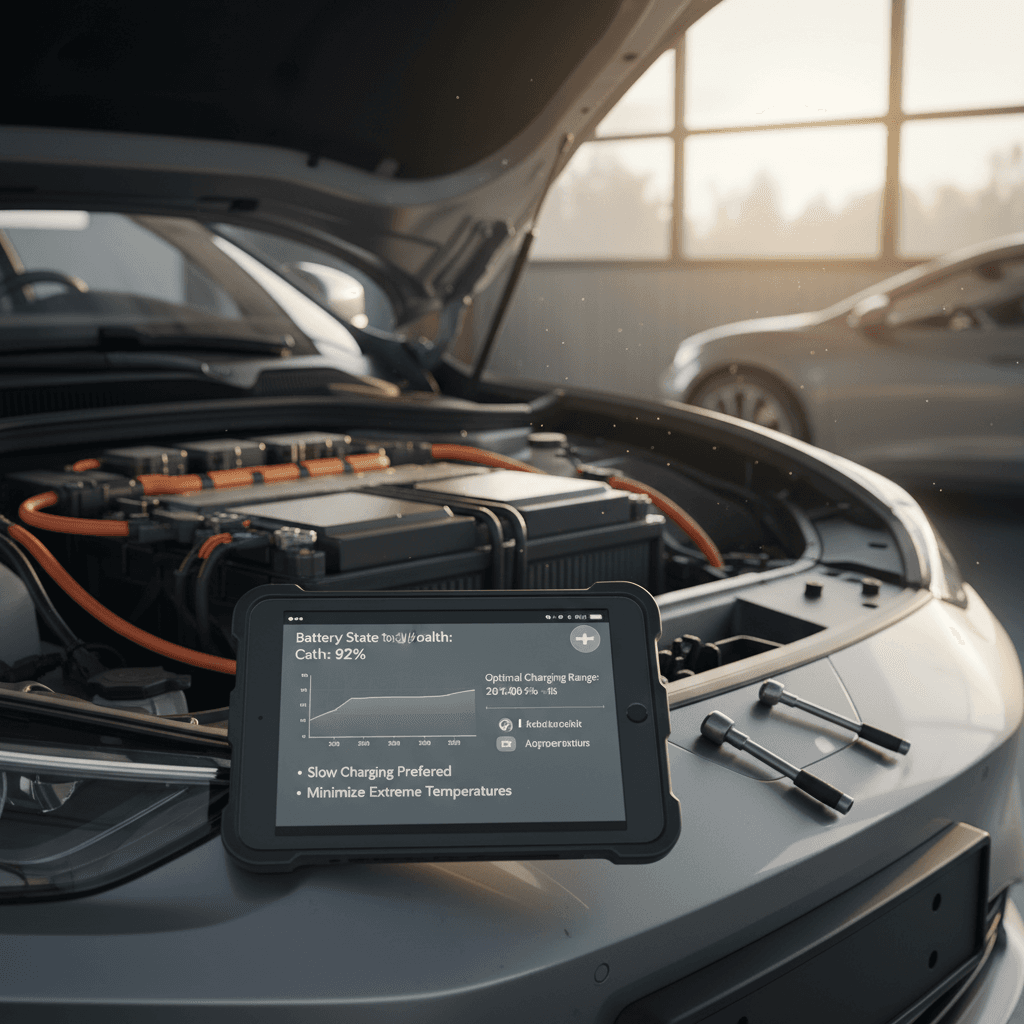
If you own an electric car, your battery is the most expensive component in the vehicle. The good news: modern EV packs are proving far more durable than early skeptics predicted, with many retaining around 80% of their original capacity even after 120,000–150,000 miles. The better news: by learning how to maximize EV battery life, you can slow degradation even further and protect both your range and resale value.
Battery life vs. battery warranty
Why EV battery life matters more than you think
Unlike a gas car, where you can replace a worn engine fairly routinely, replacing an EV battery pack is still a major event, think many thousands of dollars, not hundreds. Even if you never plan to keep the car that long, buyers of your future used EV will care deeply about battery health, and so will lenders deciding what that car is worth as collateral.
EV battery life in the real world
Think like a fleet operator
How EV batteries age: the basics in plain English
Almost every modern EV uses some flavor of lithium‑ion chemistry. You don’t need a PhD in electrochemistry to extend battery life, but it helps to understand the two big villains: time at high voltage and heat. High state of charge (SOC) means higher voltage inside the cells, which slowly damages the materials. Heat acts like a multiplier, accelerating those reactions.
- High SOC (90–100%) for long periods stresses the cathode and electrolyte.
- Very low SOC (near 0%) can increase internal resistance and, if left there, risk deep discharge damage.
- High temperatures, especially while the battery is full or fast‑charging, accelerate all the bad chemistry.
- Extremely aggressive fast‑charging adds current‑induced stress and heat on top of this.
Your goal is simple: keep the battery away from extremes as much as your lifestyle reasonably allows. You don’t need to baby it to the point that the car becomes unusable, but nudging your habits in the right direction can easily add years of useful life to the pack.
Daily charging habits that maximize EV battery life
If you change nothing else, changing how you charge will have the biggest impact. Nearly every independent study and OEM guidance today converges on the same principle: for day‑to‑day use, aim to keep your EV between roughly 20% and 80% state of charge and avoid letting it sit at either extreme for long.
Daily charging rules of thumb
Simple settings that quietly protect your battery
1. Set a daily limit
Use your car’s settings or app to cap daily charging at 70–80%. That keeps voltage in a gentler range for most lithium‑ion chemistries.
2. Top up, don’t deep-cycle
Instead of running down to 5% and then fast‑charging to 100%, plug in more often and keep the pack in the middle band, say 30–70% for commuters.
3. Time your charge finish
On days you need 100%, schedule charging so it hits full right before you leave, rather than sitting at 100% for hours overnight.
Beware of “set and forget” 100% habits
Checklist: set up home charging for battery longevity
Choose Level 2 for daily use
Level 1 and Level 2 AC charging are both gentle on the pack. If you have home charging, let your car sip overnight from AC instead of relying on DC fast charging as your primary source.
Use off-peak scheduling
Most EVs let you schedule charging to start or stop at certain times. Align with off‑peak utility rates and aim to finish shortly before your usual departure time.
Avoid frequent 0–100% cycles
Occasional full cycles are fine, but making 0–100% your daily pattern adds unnecessary stress. Limiting the working window to something like 10–90% or 20–80% can significantly extend life without sacrificing real‑world usability.
Let the car manage itself
Don’t worry about unplugging the instant it hits your target. Modern battery management systems maintain a buffer below the true chemical limits and regulate trickle charging.
Fast charging: how much is too much?
DC fast charging is one of the EV’s biggest selling points, and also one of the easiest ways to accelerate degradation if you lean on it constantly. Multiple fleet‑scale data sets show that vehicles that rely heavily on high‑power DC fast charging see noticeably faster capacity loss than those that mostly charge on Level 2 AC.
Use DC fast charging strategically
- Road trips and emergencies: Perfect use cases. Don’t hesitate to use high‑power DC when it means you make it home or keep a trip on schedule.
- Daily commuting: If you have home or workplace AC charging, treat DC as a backup, not your primary fuel pump.
- Stop at 60–80%: Charging from 10% to ~60–80% is both faster and easier on the pack than pushing to 100% at high power.
What if DC is your only option?
- Prefer moderate power: When possible, choose chargers in the 50–100 kW range over 250 kW monsters if your car doesn’t support ultra‑fast rates efficiently.
- Watch battery temperature: Many EVs show a battery temp indicator or warn when the pack is hot. If you’ve just driven hard, a short cool‑down before fast charging helps.
- Mix in slower sessions: Even one or two slower AC charges a week can reduce thermal stress over time.
Why your charge rate slows above ~60–80%
Temperature management: heat, cold, and battery health
Temperature is the silent killer of lithium‑ion batteries. Heat speeds up the chemical side reactions that slowly eat away at capacity, while deep cold temporarily slashes available range and, if combined with high‑power charging, can damage cells.
How heat and cold affect your EV battery
Both matter, but in different ways
Hot conditions
- Short term: Higher cabin A/C use and battery cooling reduce range.
- Long term: Parking at high SOC in 90°F+ heat accelerates permanent degradation.
- Best practice: Park in shade or a garage, avoid long sits at 90–100% SOC, and pre‑cool while still plugged in.
Cold conditions
- Short term: Range can drop by 30–40% in very cold weather as the pack and cabin heating consume extra energy.
- Long term: Cold alone is less harmful than heat, but fast‑charging a very cold pack is stressful.
- Best practice: Park indoors where possible, pre‑condition the battery and cabin while plugged in, and expect slower fast‑charge rates.
Let the car pre‑condition for you
Driving style and load: how your habits affect degradation
How you drive doesn’t just affect today’s range, it affects how quickly the battery ages. Repeatedly hammering the accelerator, towing at the limits in hot weather, or cruising at very high speeds all translate into more current and more heat in the pack. Over tens of thousands of miles, that additional thermal stress shows up as extra capacity loss.
- Drive smoothly and anticipate traffic so you’re using moderate acceleration and letting regenerative braking do the work.
- Use Eco or efficiency modes for day‑to‑day driving; save Sport modes for occasional fun rather than every commute.
- Keep your tires properly inflated and avoid unnecessary roof boxes, racks, or extra weight when you don’t need them.
- If you tow with your EV, favor cooler times of day and keep speeds reasonable to reduce sustained high load on the pack.
Efficiency is a battery health feature
Long-term storage and infrequent use
Ironically, the fastest way to ruin a perfectly good EV battery isn’t to drive it hard, it’s to let it sit for months at the wrong state of charge. Whether you’re snowbirding, deploying overseas, or just not driving much, how you park the car for weeks or months matters a lot.
How to store your EV for weeks or months
Aim for 40–60% SOC
Most experts consider this the sweet spot for long‑term storage. It keeps voltage moderate and leaves room for the battery’s slow self‑discharge and any background drain from vehicle electronics.
Avoid storing at 100% or near empty
Parking at full for months is one of the harshest conditions you can create chemically. Likewise, leaving the car at 0–5% risks deep discharge if background drain continues.
Enable storage or power‑save modes
Some EVs offer special storage or ‘deep sleep’ modes that reduce 12‑V and high‑voltage battery draw. Consult your owner’s manual before long absences.
Check in periodically
If possible, have someone check the SOC monthly. If it drifts below ~30%, a brief charge back to ~50% is cheap insurance against an unexpected deep discharge.
The expensive mistake to avoid
Special case: LFP and new chemistries
Not all EV batteries behave exactly the same. Lithium iron phosphate (LFP) packs, used widely in lower‑cost models and some Tesla variants, are more tolerant of high SOC and frequent 100% charges than traditional nickel‑rich chemistries. Newer sodium‑ion batteries arriving in 2026 and beyond promise even more cycle life and improved cold‑weather performance.
If your EV has an LFP battery
- Manufacturers often recommend regular 100% charges to keep the state‑of‑charge gauge accurately calibrated.
- LFP tolerates high SOC better, so charging to 100% for daily use is usually acceptable, but avoiding long periods parked hot and full is still wise.
- Cold‑weather performance can be weaker than nickel‑based packs, so pre‑conditioning is especially helpful.
If your EV uses nickel‑rich chemistries (NCA/NCM)
- Favor the 20–80% window for daily use when convenient.
- Reserve 100% charges for days you truly need maximum range, and time them to finish near departure.
- Be particularly cautious about combining high SOC with hot parking or repeated high‑power fast charging.
What about future chemistries?
Checking battery health on a used EV
If you’re shopping used, battery health is the difference between a great deal and an expensive regret. Odometer miles only tell part of the story; how previous owners charged and stored the car matters just as much. That’s why you want something more objective than a casual ‘the range seems fine’ test drive.
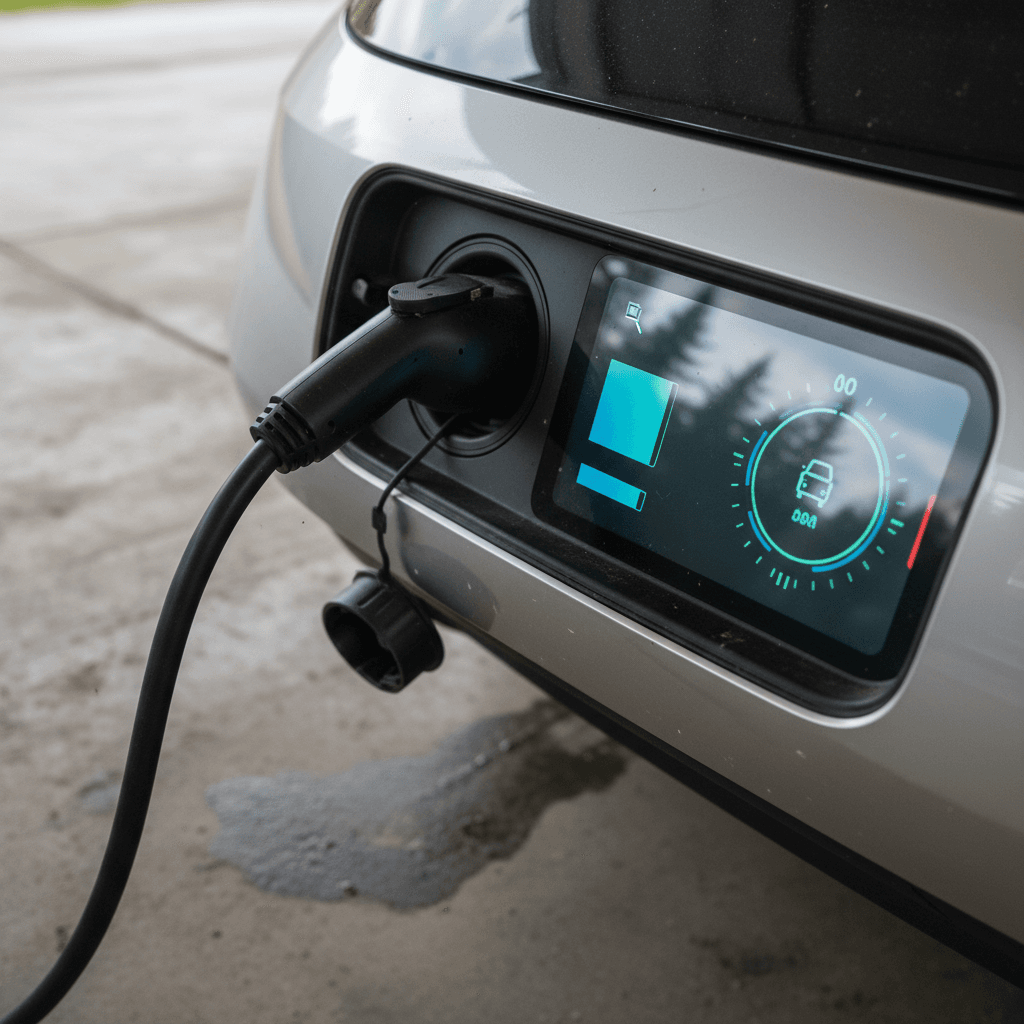
Quick comparison: ways to assess used EV battery health
What you can do yourself vs. where professional tools add value
| Method | What it tells you | Pros | Limitations |
|---|---|---|---|
| On‑screen range estimate at 100% | Rough sense of usable capacity vs. original EPA rating | Easy, no tools needed | Affected by temperature, software updates, and driving history |
| OBD/Bluetooth apps | More detailed State of Health (SoH) estimates | Useful for DIY‑minded shoppers | Data quality and interpretation vary by app and model |
| Service records & charging history | Hints about how the car was used (fast charging, storage) | Context for the numbers you see | Often incomplete or unavailable |
| Professional battery health report | Pack‑level diagnostics and objective SoH, often including cell balance | Most reliable basis for pricing and peace of mind | Requires specialized tools and expertise |
When in doubt, prioritize objective data over seller assurances.
How Recharged approaches used EV battery health
Ready to find your next EV?
Browse VehiclesEV battery life FAQ
Frequently asked questions about maximizing EV battery life
Key takeaways: how to make your battery last
- For daily charging, aim to keep your battery in a moderate range, roughly 20–80%, and avoid parking for long periods at 0% or 100%.
- Use Level 2 AC charging as your default and treat high‑power DC fast charging as an occasional tool for trips and tight schedules.
- Protect your pack from extreme temperatures by parking in shade or indoors, pre‑conditioning while plugged in, and being cautious about fast charging when the pack is very hot or very cold.
- Drive efficiently and avoid sustained high loads when you don’t need them; smoother driving keeps battery temperatures lower over the long term.
- If you store the car for weeks or months, leave it around 40–60% SOC, enable any storage modes, and check in periodically.
- When buying or selling a used EV, focus on transparent, objective battery health data, not just mileage or subjective impressions of range.
You don’t need to micromanage every percent of charge to get good results. If you build a few of these habits into your routine, sensible charge limits, temperature awareness, and smart use of fast charging, you’ll likely enjoy years of quiet, uneventful battery performance. And when it’s time to move on to your next EV, tools like the Recharged Score battery health report can make sure that careful ownership is rewarded with higher confidence and stronger resale value.