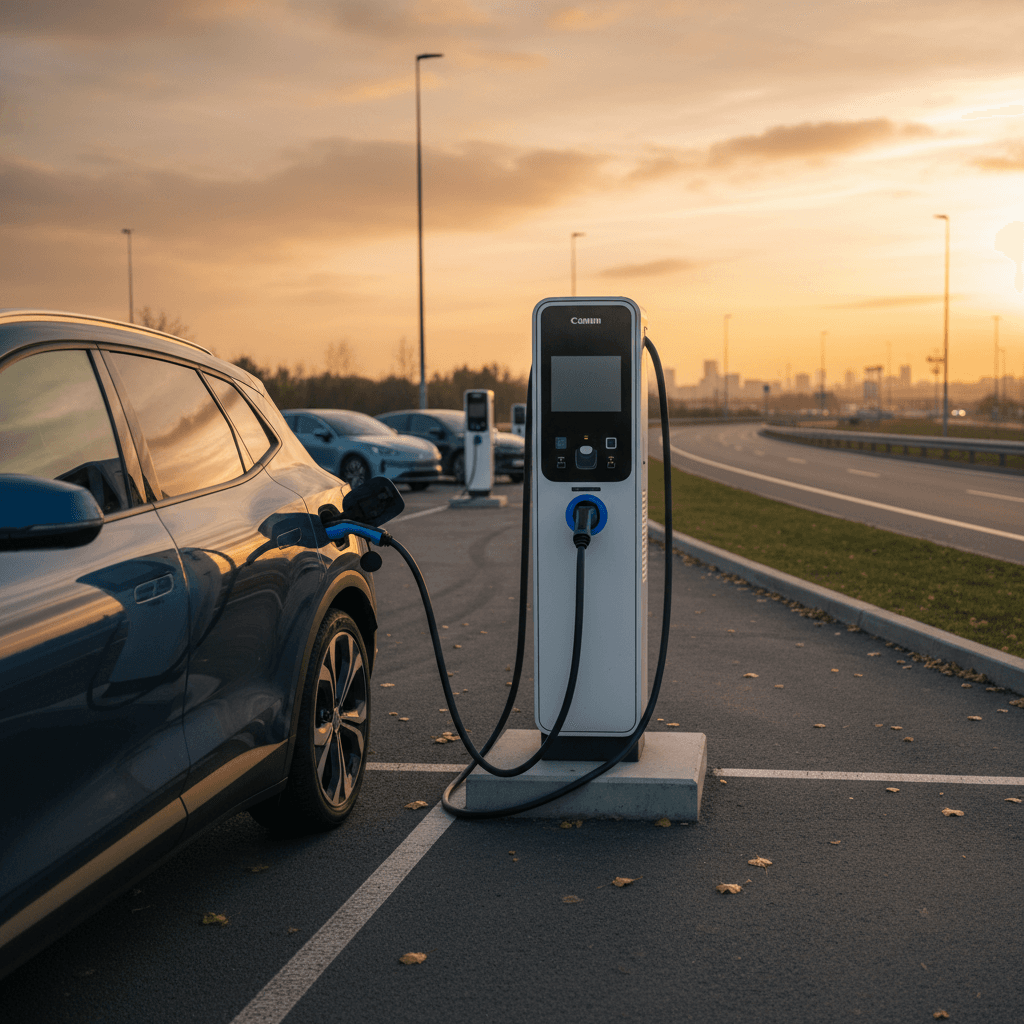
If you’re new to EVs, figuring out how to find electric charging stations can feel like the biggest barrier to ownership. The good news is that in 2025 there are hundreds of thousands of public charging ports across the U.S., and you have multiple tools, apps, in‑car navigation, and route planners, that make finding them almost as easy as finding a gas station.
Quick snapshot
Why finding chargers is easier than it looks
Public charging in the U.S. at a glance
Most EV charging happens at home or at work, but public stations fill in the gaps, errands across town, evenings out, and road trips. Instead of relying on a single brand’s network, you’re tapping into a patchwork of providers: Tesla, Electrify America, EVgo, ChargePoint, Shell Recharge, and many more. The trick is knowing which tools surface all of those options in one map and how to read what you’re seeing.
Mindset shift from gas to charging
5 main ways to find electric charging stations
The best tools to find EV charging stations
Mix and match these methods depending on where and how you drive
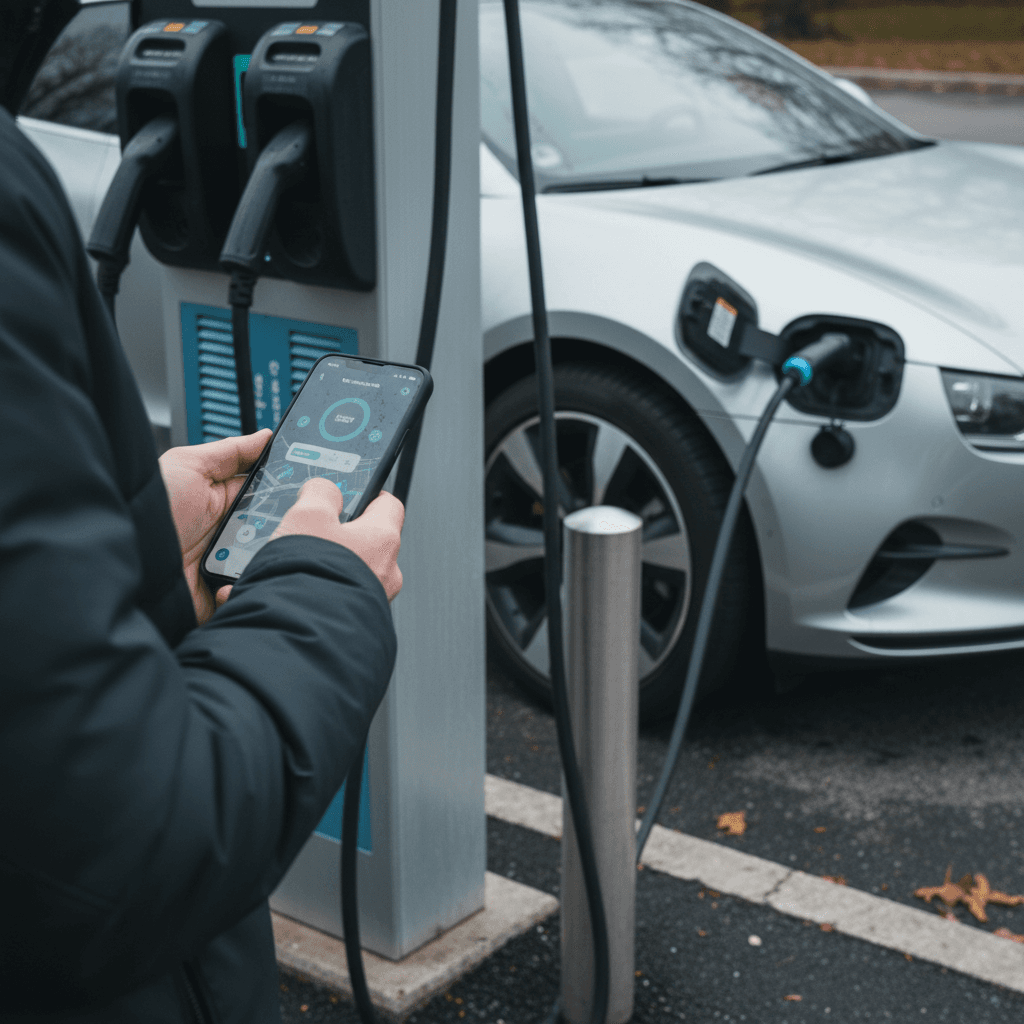
1. Dedicated EV charging apps
PlugShare, ChargePoint, EVgo, Electrify America and others crowd‑source charger locations, real‑time status, and user reviews.
- Filter by plug type, price, network, and power level.
- See photos of the site so you’re not hunting behind a building.
- Check recent check‑ins to avoid broken stations.
2. Google Maps & Apple Maps
Type “EV charging” or “charging stations near me” and most public chargers will appear.
- Tap a station to see power level and supported networks.
- Start navigation directly from your phone or in‑car system.
- Great for quick top‑ups in unfamiliar cities.
3. In‑car navigation
Your car’s built‑in nav often knows your state of charge and shows chargers within range.
- Route planning that accounts for hills, weather, and speed.
- Some EVs automatically suggest stops along the way.
- Ideal for road trips where range estimates matter.
4. Network‑specific apps
Use apps from Tesla, Electrify America, EVgo, Shell Recharge and others.
- See live stall availability and pricing.
- Start/stop sessions from your phone.
- Earn loyalty perks or discounted rates.
5. Charging at destinations
Hotels, parking garages, workplaces, shopping centers, and universities often provide Level 2 chargers.
- Filter for “lodging with EV charging” in travel sites.
- Call ahead to confirm availability and plug type.
- Great for overnight or long‑dwell charging.
Bonus: EV‑specific route planners
Web and app tools like A Better Routeplanner or some automaker apps design entire trips around charging.
- Input your EV model and target state of charge.
- Automatically pick optimal fast‑charging stops.
- Fine‑tune for your driving speed and weather.
Understanding charger types on the map
When you first pull up a map of stations, the icons and labels can feel cryptic. Understanding the basics, Level 1 vs. Level 2 vs. DC fast charging, and how they show up in apps will help you quickly decide which chargers are worth your time.
Level 2 chargers (AC)
- Best for: Home, work, hotels, shopping centers, parking garages.
- Speed: Roughly 15–35 miles of range per hour, depending on your car and amperage.
- Connectors: J1772 for most non‑Tesla EVs; Tesla plug (NACS) for Teslas and newer NACS‑equipped models.
- In apps: Often labeled “Level 2” or “AC” with power ratings like 7 kW, 11 kW, or 19 kW.
For daily life and overnight charging, these are your workhorses. If you’re staying somewhere for several hours, a Level 2 station is usually all you need.
DC fast chargers (DCFC)
- Best for: Road trips and quick top‑ups on long drives.
- Speed: Commonly 50–350 kW, enough to add dozens of miles in 10–20 minutes on many EVs.
- Connectors: CCS or NACS on most newer EVs; CHAdeMO only on a few older models.
- In apps: Labeled “DC fast” or “Level 3,” often with power like 150 kW or 350 kW.
These are the chargers you plan around when you’re crossing a state line, not just running errands.
Don’t ignore connector type
Step-by-step planning for daily driving
Daily routine: how to make charging almost invisible
1. Start with home or workplace charging
If you have access to a driveway, garage, or workplace charger, that will cover most of your miles. For many drivers, simply plugging in at night or at the office means almost never visiting public chargers around town.
2. Map the chargers along your weekly routes
Open your preferred app and search around your regular paths, home, work, school, gym, favorite stores. Mark a few dependable Level 2 and DC fast chargers as favorites so you’re not starting from scratch when you need one.
3. Learn which stations are reliably available
User reviews and check‑in history can tell you a lot. If people consistently report broken hardware or long lines at a location, favor alternatives in your favorites list.
4. Take advantage of dwell time
Whenever you know you’ll be parked for an hour or more, movies, dinner, shopping, look for a Level 2 charger nearby. You’ll add meaningful range without going out of your way.
5. Watch pricing and idle fees
Some networks charge by the kWh, others by the minute. Many tack on idle fees if you stay plugged in after charging finishes. Knowing those details ahead of time can save you money and prevent surprises.
6. Have a backup within a few miles
Even reliable stations are occasionally offline. For any important stop, identify a second option nearby so you can pivot quickly if your first choice is occupied or out of service.
How to plan a road trip with EV chargers
Planning a road trip in an EV is less about finding one charger and more about stringing together a series of dependable stops. With today’s networks and tools, cross‑country trips are entirely realistic, as long as you do a bit of prep before you set off.
Road trip tools for finding chargers
Use one or more of these options before you leave to build a charging plan that matches your route and your EV.
| Tool type | Examples | Best use case | What it does well |
|---|---|---|---|
| In‑car route planner | Built‑in nav from Tesla, Hyundai, Ford, GM and others | Primary guidance for your specific EV | Accounts for your battery size, efficiency, terrain, and weather when choosing stops. |
| Third‑party route planner | A Better Routeplanner, some automaker apps | Advanced planning with more fine‑tuning | Lets you adjust assumptions, stop durations, and preferred networks before you drive. |
| Charging‑network app | Tesla, Electrify America, EVgo, Shell Recharge | Confirming fast‑charger locations and status | Shows stall availability, pricing, and any ongoing issues at specific sites. |
| General map app | Google Maps, Apple Maps | Finding food, restrooms, and attractions near chargers | Helps you combine charging stops with things you’d already be doing, meals, coffee, or sightseeing. |
You don’t have to use every tool here, but combining at least two will give you redundancy if one app misses a station or goes down.
Aim for short, efficient sessions
Reliability, pricing, and what to check before you drive
Not every charger on a map is worth trusting blindly. Before you count on a station, especially a fast charger far from home, do a 60‑second sanity check. That quick review can be the difference between a smooth stop and unnecessary stress.
- Recent check‑ins or reviews: Look for comments from the last few days or weeks confirming that the station is working.
- Number of stalls: A site with 8–12 fast‑charging stalls is more forgiving than a lonely single charger in a parking lot.
- Backup options: Zoom out to see if there’s a second station within 10–15 miles in case your first choice is busy or down.
- Pricing structure: Note whether the station charges per kWh or per minute, and whether different power levels have different prices.
- Idle or parking fees: Many networks add fees if your car stays plugged in after it’s full, set an alarm so you can move promptly.
- Amenities on‑site: Restrooms, lighting, and nearby food make charging stops much more comfortable, especially at night.
Safety still comes first
Finding chargers when you don’t have a plan
Life doesn’t always follow your charging spreadsheet. Maybe plans changed, or you forgot to plug in overnight. When you need a charger right now, here’s how to quickly find a workable option and avoid getting stranded.
Emergency playbook: low battery, no plan
1. Use the “near me” search first
Open your favorite charging app or maps app and search for “EV charging” or “charging stations near me.” Sort by distance, then by power level so you’re not driving past fast chargers to reach slower ones.
2. Filter by your connector
Immediately filter for only the connectors your car can use. There’s no point in driving to a site that only has CHAdeMO if your EV is CCS or NACS‑only.
3. Check recent user activity
In PlugShare and similar apps, look for green check‑ins within the last week. If no one has successfully charged there in months, treat that site with caution.
4. Consider closer but slower options
If you’re very low (for example, under 10% state of charge), a closer Level 2 charger may be safer than trying to stretch to a distant fast charger and arriving with 0%.
5. Reduce energy use while you drive
Slow down a bit, turn off unnecessary climate and accessories, and switch to an Eco or efficiency mode. Those small tweaks can add just enough buffer to reach a charger comfortably.
6. Know when to stop and call for help
If the route to the nearest charger includes long hills, high‑speed segments, or bad weather, be conservative. Some roadside assistance providers now offer mobile EV charging or towing directly to a nearby station.
How charging availability is growing
Even in the past few years, the public charging landscape has changed dramatically. Public and workplace chargers in the U.S. roughly doubled between 2019 and 2024, and the total number of public ports is now in the hundreds of thousands. At the same time, a larger share of major highway corridors has DC fast charging spaced at regular intervals, making long‑distance EV travel far more practical than it once was.
Urban vs. rural reality
“The real test of EV infrastructure isn’t how many chargers exist on paper, it’s whether a driver can reliably find a working, compatible station that fits their life and budget.”
Where Recharged fits in
Ready to find your next EV?
Browse VehiclesFAQ: finding electric charging stations
Frequently asked questions about finding EV charging stations
Bringing it all together
Learning how to find electric charging stations is less about memorizing every network and more about building a simple routine: use a couple of trusted apps, understand which chargers your car can use, and always keep a backup option in mind. Once those habits are in place, charging stops quickly become just another part of your day, like choosing which side of the street to park on.
If you’re still deciding whether an EV fits your life, it can help to work backward from the chargers around you. Map out your home, workplace, and regular routes, then look at how far a full charge would get you in different models. At Recharged, our combination of verified battery health reports, fair pricing, and EV‑specialist guidance is designed to make that process straightforward, so you can choose a used EV that matches both your budget and the charging options you’ll actually use.