Financing a used electric car is much like financing any used vehicle, but the battery deserves a seat at the negotiating table. You’ll compare lenders, make a down payment if it improves the deal, and repay the balance over an agreed term. The sharper question is whether the vehicle’s condition, remaining battery capacity, insurance cost, and charging plan justify that debt.
How used-EV financing works
A used-EV loan finances the vehicle’s purchase price minus your down payment, trade-in credit, or other cash applied at signing. The lender then sets an annual percentage rate (APR) and repayment term based on its underwriting standards, your application, and the vehicle. Compare the amount financed, APR, loan term, monthly payment, total of payments, and any lender or retailer fees rather than judging the deal by one number.
Begin with how much electric car you can afford, then seek prequalification before becoming attached to a particular vehicle. Prequalification can show the terms you may receive, although it isn’t final approval; ask whether the credit review will affect your credit profile. Once you select the EV, the lender may request vehicle details before issuing final terms.
Compare financing options before choosing the car
The best financing source is the one offering the lowest reasonable total cost without terms that undermine your budget. Compare offers over the same loan amount and term so the differences are visible. A longer term can make the monthly figure look friendlier while keeping you in debt longer, so treat payment size as only one part of the decision.
Common ways to finance a used EV
Request comparable terms from more than one source before accepting an offer.
| Financing option | Best for | Main advantage | Check carefully |
|---|---|---|---|
| Recharged financing | Digital EV purchase | Integrated process | Full loan terms |
| Credit union | Existing members | Member-based option | Vehicle restrictions |
| Bank | Current customers | Familiar relationship | Used-EV eligibility |
| Online lender | Offer comparison | Remote application | Fees and support |
Availability and final loan terms depend on the applicant, lender, and vehicle.
A low monthly payment can be expensive camouflage. Compare the APR, term, amount financed, and total of payments, then make sure the vehicle itself has the battery evidence to support the purchase.
What Recharged data says about price and battery health
Recharged sales and inspection data shows why you should evaluate the loan and the battery together. Among 1,796 EVs sold by Recharged over the trailing 12 months, the median retail price buyers paid was $27,297, while the average was $29,901. Those figures describe completed retail purchases, not a promise of price, loan approval, or monthly payment, but they give you a useful benchmark for testing whether your budget is realistic.
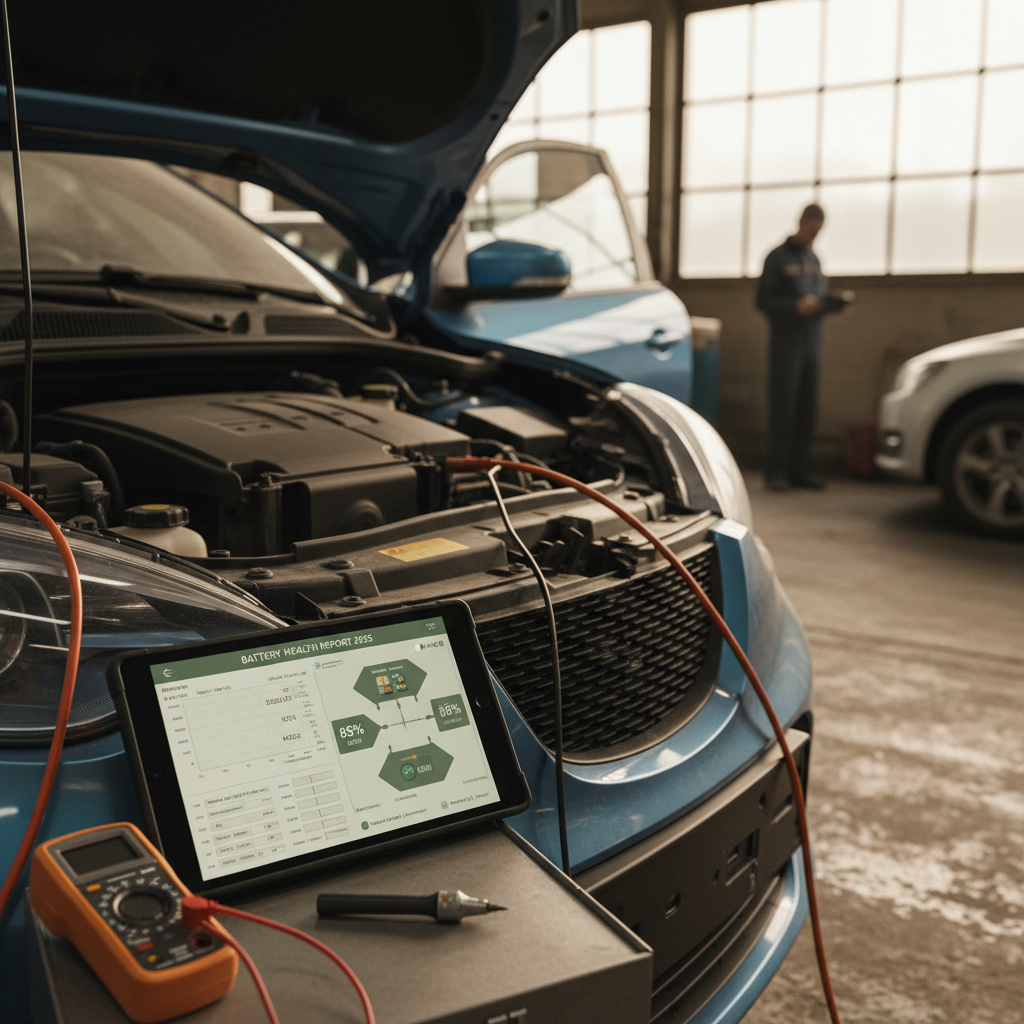
Battery condition can vary even when two cars look similar in a listing. Across 2,242 Recharged Score inspections, tested remaining battery capacity averaged 93.9% of original capacity, with a median of 94.9%; tested real-world range averaged 266 miles. That doesn’t mean every used EV will deliver those results, which is precisely why you should review the individual vehicle’s diagnostic report instead of financing an assumption.
Battery health is part of the financial decision
Recharged data
Used EV battery health
94%
avg remaining capacity
From Recharged battery inspections, not manufacturer estimates.
- Lowest
- 63%
- Median
- 95%
- Highest
- 100%
- Est. range
- 266 mi avg
- Cell balance pass
- 100%
- Quick charges
- 18 avg
- Slow charges
- 65 avg
Average cell imbalance: 7.3 mV
Based on vehicles Recharged tested
Recharged data
Recent EV sold prices
$27,297
median sold price
What buyers actually paid through Recharged, not list price.
- Lowest
- $500
- Average
- $29,901
- Highest
- $129,998
Monthly median sold price
Based on Recharged sales in the last 12 months
Every EV is battery-tested with a Recharged Score. Nationwide delivery.
Calculate what you can comfortably afford
Your affordable payment is what remains after accounting for the car’s other ownership costs, not the largest number a lender approves. Build a monthly estimate that includes the loan, insurance, home or public charging, registration, parking, tires, and a maintenance reserve. If you need electrical work or a Level 2 charging setup, a higher-powered home charging option, treat that as a separate upfront expense rather than quietly folding it into an already strained car budget.
Build the budget in this order
Set the total purchase ceiling
Decide the maximum vehicle price before discussing monthly payments.
Estimate cash at signing
Include your down payment, trade-in credit, registration, and applicable fees.
Compare equal loan scenarios
Use the same amount financed and term when comparing APR and payments.
Add ownership costs
Price insurance and identify where and how you’ll charge.
Keep a financial cushion
Don’t empty your savings merely to improve the down payment.
A larger down payment can reduce the amount you borrow, but it should not consume money you need for emergencies or initial ownership expenses. If you’re trading another vehicle, compare its value with the outstanding payoff before treating the trade as usable equity. When the payoff exceeds the trade value, rolling that difference into the new loan increases the amount financed without improving the EV you’re buying.
What should you prepare before applying?
You should prepare your identity, income, residence, insurance, and trade-in information before submitting a complete application. Exact requirements vary by lender, so ask for a document list and distinguish prequalification from final approval. Having accurate details ready reduces last-minute surprises and makes competing offers easier to compare.
- Government-issued identification and current contact details
- Income and employment information requested by the lender
- Residence information and any required supporting documents
- Insurance quote or proof of coverage for the selected EV
- Trade-in registration, payoff statement, and title information, if applicable
- Vehicle identification number, mileage, purchase price, and buyer’s order
- Written breakdown of APR, term, amount financed, fees, payment, and total of payments
Don’t budget around a federal EV tax credit
Avoid the monthly-payment trap
A monthly payment is affordable only if the price, rate, term, and ownership costs behind it also make sense. Extending the term may reduce the payment displayed today while increasing how long you carry the obligation. Ask for a complete, itemized buyer’s order and loan disclosure before signing, then verify that every product and fee is something you knowingly accepted.
Pay particular attention to optional service contracts, protection packages, guaranteed asset protection coverage, and accessories included in the amount financed. An optional product becomes more expensive when its price is added to the loan and repaid with interest. Also check for prepayment terms, late-payment consequences, and whether the vehicle’s age or mileage changes the offer.
Finally, don’t let financing urgency replace vehicle due diligence. Review the used-EV buying checklist, inspect charging compatibility, price insurance for the exact vehicle, and study its battery report. The loan can make the purchase possible; it cannot make the wrong car right.
Instant offer, trade-in, or consignment. Pickup available.
Used electric car financing FAQ
Make the loan serve the car, not the reverse
The sound approach is to set your budget first, compare like-for-like financing offers, and select a used EV whose battery condition and ownership costs support the obligation. Read the final documents against the offer you accepted, remove anything you didn’t request, and don’t sign until the numbers are clear. Recharged combines financing support with fair market pricing, verified Recharged Score battery diagnostics, nationwide delivery, and EV-specialist guidance so you can evaluate the machine and the money in one process.