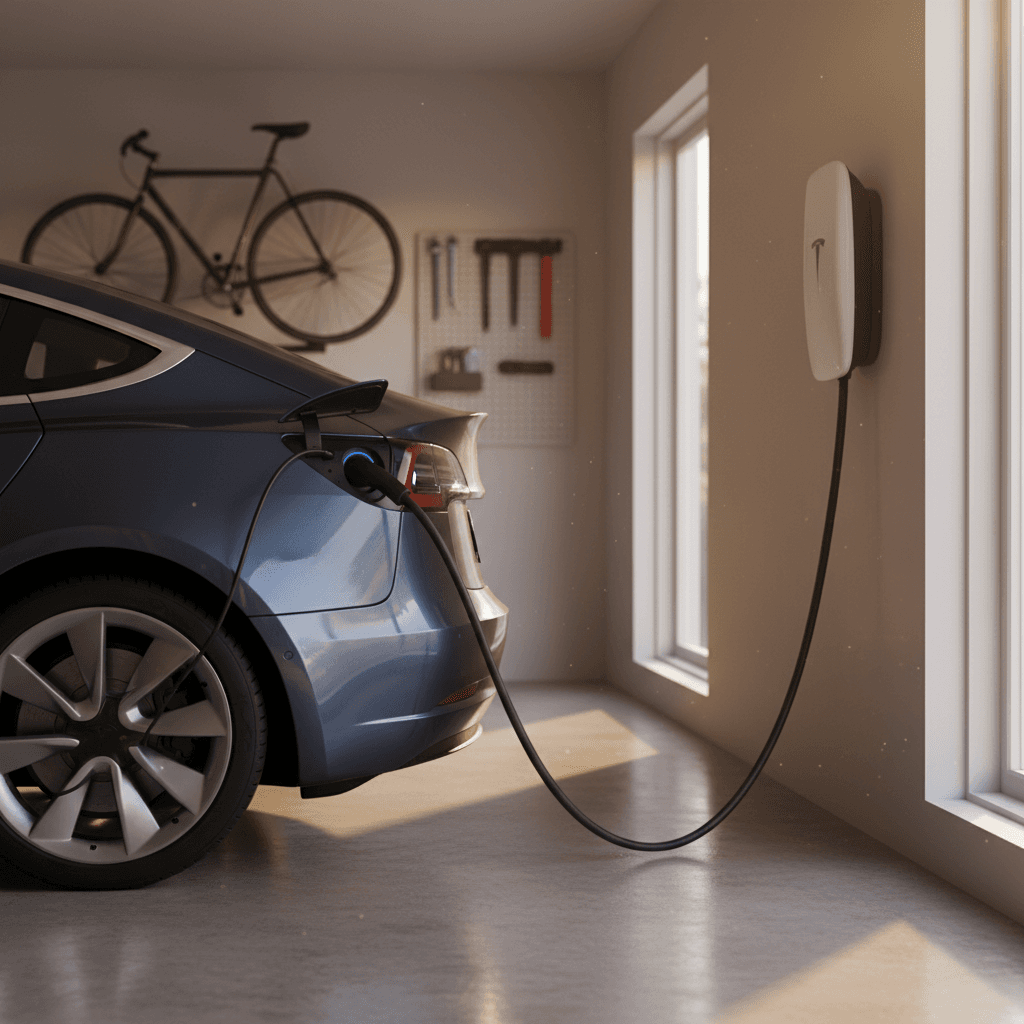
If you own or are shopping for a Tesla Model 3, learning how to charge a Tesla Model 3 at home is just as important as choosing the right trim. The good news: once you’re set up, home charging is simple, cheaper than gas, and usually as easy as plugging in your phone at night.
The core idea
Why home charging matters for your Model 3
Tesla’s own materials describe home as the “best place to recharge,” and once you live with a Model 3, it’s obvious why. Instead of planning fuel stops, you simply park, plug in, and let the car sip power overnight. A basic 240V setup can easily add 25–40 miles of range per hour of charging, enough to cover a typical American commute several times over in a single night.
Key benefits of Model 3 home charging
Why it’s worth getting your setup right early
Lower fueling costs
In many U.S. markets, home electricity translates to the equivalent of paying roughly $1–$1.75 per gallon of gas, depending on your utility rates and Model 3 efficiency.
Everyday convenience
You plug in at home, walk away, and wake up to the range you need. No detours to a public charger unless you’re road‑tripping.
Battery-friendly routine
Regular overnight Level 1 or Level 2 charging keeps the battery in a comfortable state of charge and reduces the temptation to fast‑charge all the time.
Tesla Model 3 home charging basics
Every Tesla, including the Model 3, charges using AC power at home. The car’s onboard charger converts AC from your house into DC to store in the battery. What determines how fast you charge at home is a combination of three things:
- The voltage of the circuit (120V vs 240V)
- The available amperage of that circuit (15A, 20A, 40A, 60A, etc.)
- Your charging hardware (Tesla Mobile Connector or Wall Connector) and how it’s configured
Recent Model 3 Rear‑Wheel Drive cars accept up to about 7.7 kW on AC (32A on a 240V circuit), while Long Range and Performance trims can take up to roughly 11.5 kW (48A on 240V). That’s the upper limit for home charging speed; anything more powerful on the wall won’t make the car charge faster.
Option 1: Charge from a standard 120V outlet (Level 1)
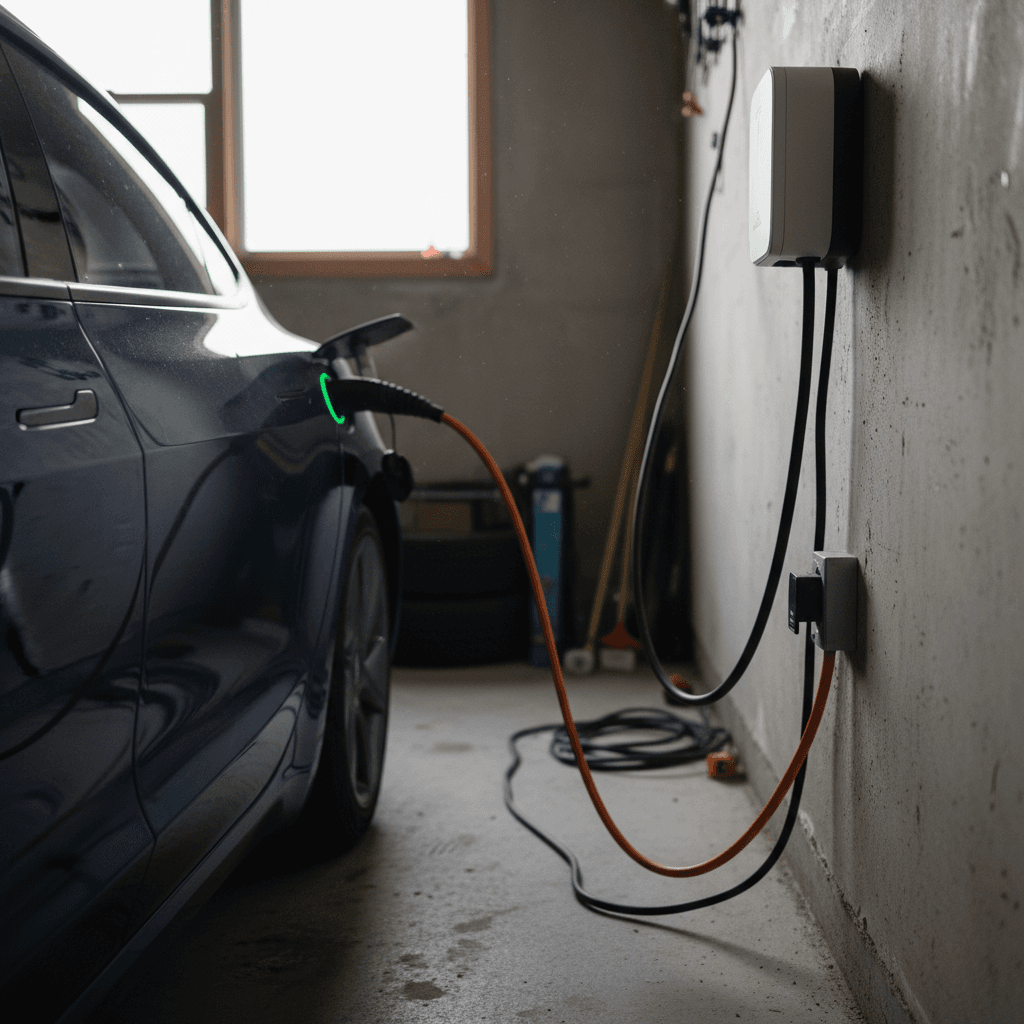
If you do nothing else, you can usually charge a Model 3 from a regular household outlet (120V) using Tesla’s Mobile Connector and the 5‑15 adapter. This is called Level 1 charging.
120V Level 1 charging: what to expect
Approximate numbers for U.S. households using a 15A, 120V circuit.
| Item | Typical value |
|---|---|
| Power draw | ~1.3–1.4 kW |
| Miles of range per hour | ~3–5 miles |
| Full charge from low state | 24–40+ hours depending on battery size |
| Best use case | Light commuting, work‑from‑home, backup option |
Level 1 charging is slow but can work if your daily driving is light and you have many hours to stay plugged in.
When Level 1 is enough
Safety check
Option 2: Upgrade to 240V Level 2 charging
For most Tesla Model 3 owners, a dedicated 240V Level 2 circuit is the sweet spot. This is similar to what you’d use for an electric dryer or oven and can deliver 6–10x the charging speed of a standard outlet.
What a 240V circuit does for a Model 3
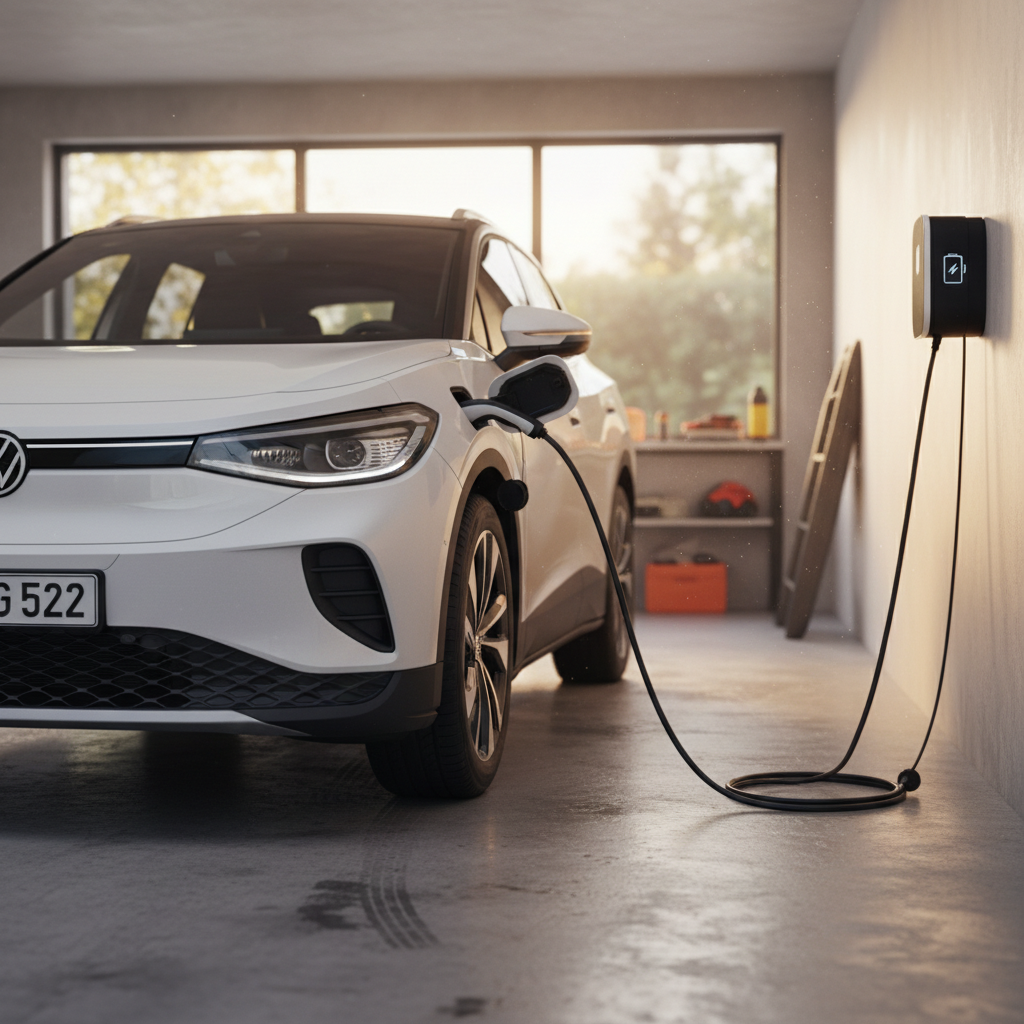
A 240V setup can be either a hard‑wired Tesla Wall Connector or a heavy‑duty receptacle such as NEMA 14‑50 (commonly used for RVs and ranges) that you plug the Mobile Connector into. In both cases, the electrician sizes the breaker and wiring so the circuit can safely deliver continuous power for hours at a time.
What installation usually involves
Tesla Wall Connector vs Mobile Connector at home
Tesla currently sells two main pieces of charging hardware for home: the Wall Connector (hard‑wired) and the Mobile Connector (portable). You can charge a Model 3 at home with either, as long as the underlying circuit is sized correctly.
Choosing between Wall Connector and Mobile Connector
Both work for home; which one fits your situation?
Tesla Wall Connector
- Hard‑wired to a 240V circuit, typically 60A for max output.
- Up to 11.5 kW (48A) for newer Long Range/Performance Model 3.
- Longer cable options (up to ~24 ft), clean look on the wall.
- Wi‑Fi for firmware updates and some smart features.
- Best if you own your home and plan to stay a while.
Tesla Mobile Connector
- Portable EVSE that plugs into different outlets with adapters.
- On 120V: slow Level 1 charging for backup or low‑mileage use.
- On 240V (e.g., NEMA 14‑50): similar charging speed to many Level 2 wall units for Model 3 RWD.
- Easy to toss in the trunk for trips, visiting friends, or backup.
- Great if you move often or charge in multiple locations.
Practical combo
How long does it take to charge a Model 3 at home?
Real‑world charging time depends on which Model 3 you own (battery size and onboard charger), how low you are when you plug in, and your circuit. But home charging is less about 0–100% time and more about how much range you add during the hours you’re parked.
Approximate Tesla Model 3 home charging speeds
Mileage estimates assume typical efficiency and may vary with weather, driving style, and wheel/tire choice.
| Setup | Example electrical circuit | Approx. power | Miles of range per hour | Use case |
|---|---|---|---|---|
| Standard outlet (Level 1) | 120V, 15A shared | ~1.3 kW | ~3–5 mi/hr | Backup, low daily miles |
| Stronger 120V circuit | 120V, 20A dedicated | ~1.9 kW | ~5–7 mi/hr | Light commute with lots of plug‑in time |
| Basic 240V Level 2 | 240V, 30A breaker (24A continuous) | ~5.7 kW | ~20–25 mi/hr | Typical nightly top‑offs |
| Typical Model 3 RWD setup | 240V, 40A breaker (32A continuous) | ~7.7 kW | ~25–30 mi/hr | Most owners, 6–8 hours to refill big chunks of range |
| Max AC speed for LR/Performance | 240V, 60A breaker (48A continuous) | ~11.5 kW | ~35–44 mi/hr | Heaviest drivers, multi‑EV homes |
Think in terms of miles added per hour of charging rather than full 0–100% sessions at home.
Why you rarely charge to 100% at home
How much does it cost to charge a Model 3 at home?
Home charging costs are simple math: your electricity rate (in cents per kWh) multiplied by the energy you add to the battery. A modern Model 3 battery is roughly 57–82 kWh depending on trim; you almost never use that full amount in normal daily use.
Ballpark cost per full charge
Let’s assume you add about 80% of a 60–75 kWh usable pack during a deeper charge at home:
- Energy added: ~48–60 kWh
- Electricity rate: $0.15/kWh (sample U.S. average)
Estimated cost: 48–60 kWh × $0.15 ≈ $7–$9 for a large chunk of range, often 200+ miles.
Cost per mile vs gas
If your Model 3 averages about 3.5–4.0 miles per kWh, then at $0.15/kWh:
- Charging cost per mile ≈ $0.037–$0.043
- Equivalent to paying about $1.30–$1.60/gal in a 30 mpg gas car.
In areas with cheaper overnight or EV‑specific rates, the spread versus gasoline can be even larger.
Use scheduled charging
Step-by-step: Setting up home charging
From new delivery to first plug‑in
1. Confirm your current charging gear
Check whether you have a Tesla Mobile Connector and which plug adapters you own. If you’re shopping used, confirm with the seller which charging cables are included, this can save you money later.
2. Test your nearest 120V outlet
If your car parks near a standard outlet, start with Level 1 overnight for a few days. Track how many miles of range you gain per hour and see if it keeps up with your daily driving.
3. Decide if you need Level 2
Look at your weekly mileage. If Level 1 doesn’t keep pace, or you want the flexibility to recover 100+ miles in a single evening, it’s time to plan a 240V circuit.
4. Talk to a licensed electrician
Have an electrician evaluate your panel capacity and preferred parking spot. Ask for quotes on a NEMA 14‑50 outlet versus a hard‑wired Wall Connector and clarify permits or local code requirements.
5. Order the right Tesla hardware
Once you know which circuit you’ll install, purchase a Tesla Wall Connector or, if you’re going the receptacle route, the correct Mobile Connector adapter for that outlet type.
6. Configure charging in the car and app
After installation, plug in, set your daily charge limit (for most drivers 70–90%), and create a charging schedule if you want to target cheaper overnight rates.
High‑voltage warning
Home charging tips to protect battery health
The Tesla Model 3 battery is designed to last many years, but how you charge at home can nudge things in the right direction. You don’t need to obsess over every kWh, but a few simple habits go a long way.
- Set a daily charge limit of around 70–90% instead of 100% unless you’re starting a road trip.
- Avoid letting the battery sit near 0% for long. If you arrive home low, plug in as soon as it’s convenient.
- Use Level 1 or Level 2 as your primary charging; save DC fast charging (Superchargers) for road trips or occasional quick top‑ups.
- In very hot or cold weather, keep the car plugged in so it can manage battery temperature using grid power rather than draining the pack.
- If your schedule is predictable, use Scheduled Departure so the car finishes charging and preconditions close to the time you actually leave.
Charging at home when you rent or can’t install 240V
Not every Model 3 owner has a private garage and a friendly breaker panel. If you rent, live in a condo, or park on the street, you still have options, it just takes a bit more planning.
Strategies when you don’t control the driveway
Mix and match based on what’s realistic for your situation
Work with your landlord or HOA
Many cities now encourage or require multi‑unit buildings to support EV charging. Share quotes and simple guides with your landlord or HOA and highlight that adding a few 240V circuits can be a property upgrade.
Use Level 1 consistently
If you have access to a regular outlet near your parking space, plug in every time you park. Level 1 is slow, but daily top‑offs can be enough for modest commutes.
Blend home and public charging
Combine occasional overnight Level 1 at home with regular stops at nearby Level 2 or DC fast chargers, especially if your grocery store, workplace, or gym already has stations.
Plan around your weekly rhythm
FAQ: Tesla Model 3 home charging
Common questions about charging a Tesla Model 3 at home
Bottom line on charging a Tesla Model 3 at home
Charging a Tesla Model 3 at home comes down to matching your daily miles with the right mix of outlet, circuit, and hardware. A basic 120V plug can work if you don’t drive far and have plenty of time, but a 240V Level 2 circuit, paired with either a Wall Connector or a Mobile Connector, is what makes EV ownership feel truly effortless.
If you’re still in the shopping phase, buying used through Recharged gives you an extra layer of clarity: every vehicle comes with a Recharged Score report covering battery health and charging performance, plus EV‑specialist guidance to help you choose a home charging plan that fits your panel, parking situation, and budget. Get the home setup right once, and your Model 3 will quietly refuel itself every night for years.