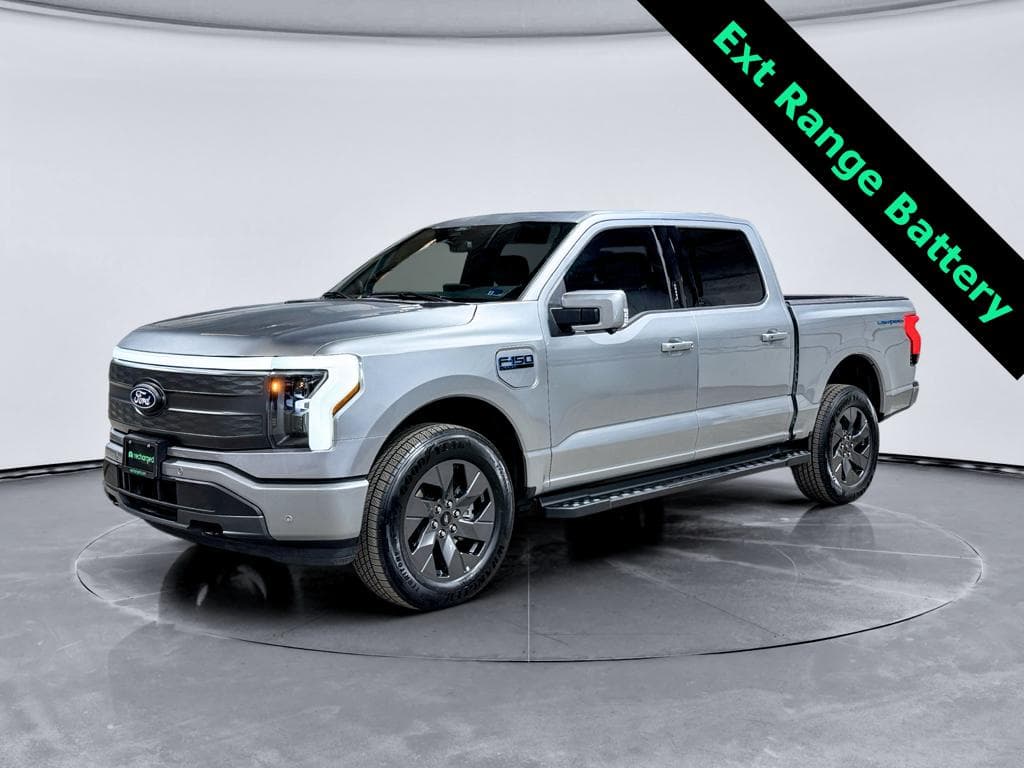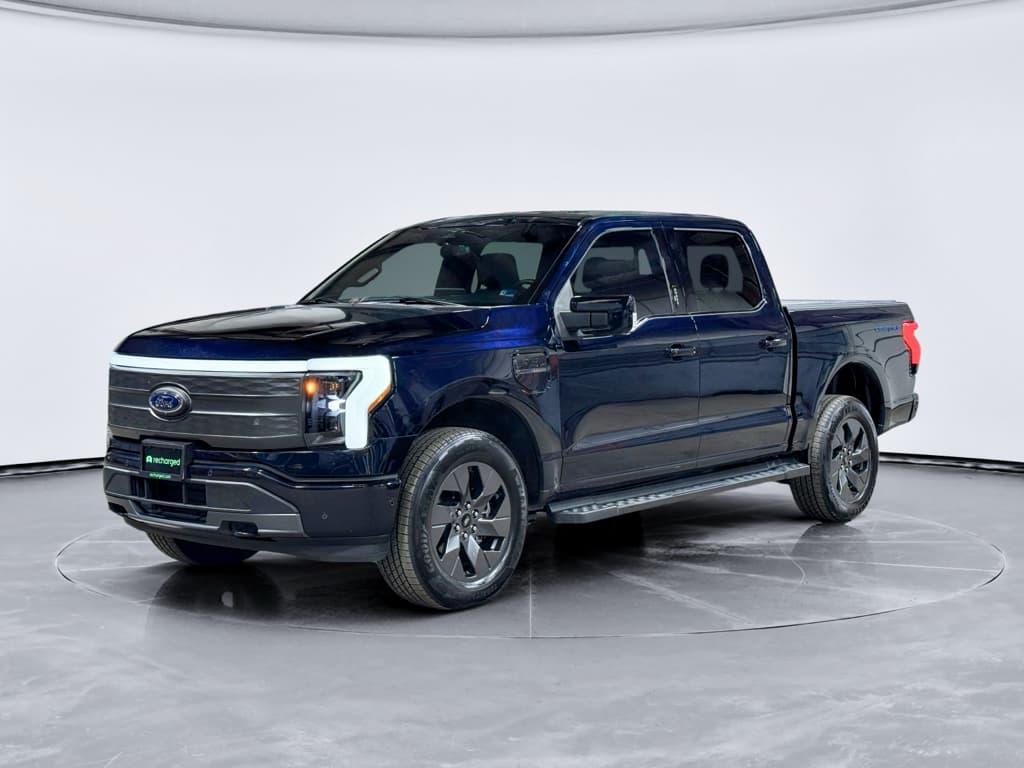
If you’re trying to figure out how to charge a Ford F‑150 Lightning at home, you’re not alone. This truck can fast‑charge on the road, but most owners do the bulk of their charging in a driveway or garage. Getting home charging right will determine how convenient your Lightning feels day to day, and how much you spend on electricity and hardware.
Quick answer
Why home charging matters for F‑150 Lightning owners
What good home charging unlocks for Lightning owners
Three big reasons to dial in your setup early
Daily usability
A predictable overnight charge means you start each morning with the range you need, even if your commute or job site is 40–80 miles away.
Lower fuel costs
Charging at home, especially overnight on off‑peak rates, usually beats public charging costs and crushes gas prices on a per‑mile basis.
Battery health & resale
Right‑sized home charging plus smart charge limits helps preserve battery health, which supports better long‑term performance and resale value.
The F‑150 Lightning is a large, heavy truck with a big battery. That’s good for range and towing, but it also means you’re moving a lot of energy in and out of the pack. A thoughtful home‑charging setup keeps that process safe, predictable, and cost‑effective.
F‑150 Lightning home charging basics: levels, power, and hardware
Before you decide how to charge your F‑150 Lightning at home, it helps to understand a few basics: charging “levels,” the truck’s onboard charger, and the hardware Ford includes.
Charging levels you’ll use at home
How common charging levels translate for a Ford F‑150 Lightning at home.
| Charging type | Voltage | Typical amps at home | Approx. power to truck | Approx. miles of range per hour* |
|---|---|---|---|---|
| Level 1 household outlet | 120V | 12A | ~1.2 kW | ~2–3 mi/hr |
| Basic Level 2 (dryer‑style outlet) | 240V | 24–32A | ~5–7.5 kW | ~10–15 mi/hr |
| Robust Level 2 wall box | 240V | 40–48A | ~9.6–11.5 kW | ~20–25 mi/hr |
| Charge Station Pro (early ER trucks) | 240V | 80A | Up to ~19.2 kW | ~35–40 mi/hr |
Exact miles added per hour vary with weather, driving style, and model year, but these ranges are realistic planning numbers for most owners.
Onboard charger basics
- Ford includes a Mobile Power Cord that can plug into 120V and, with the right adapter, 240V outlets.
- You can upgrade to a dedicated Level 2 wall box from Ford or a third‑party brand, typically 32–48 amps.
- Some Lightning trims (especially earlier Extended Range models) were bundled with the Ford Charge Station Pro, an 80A wall box that also supports home backup power when paired with extra hardware.
Option 1: Charging your F‑150 Lightning on a standard 120V outlet
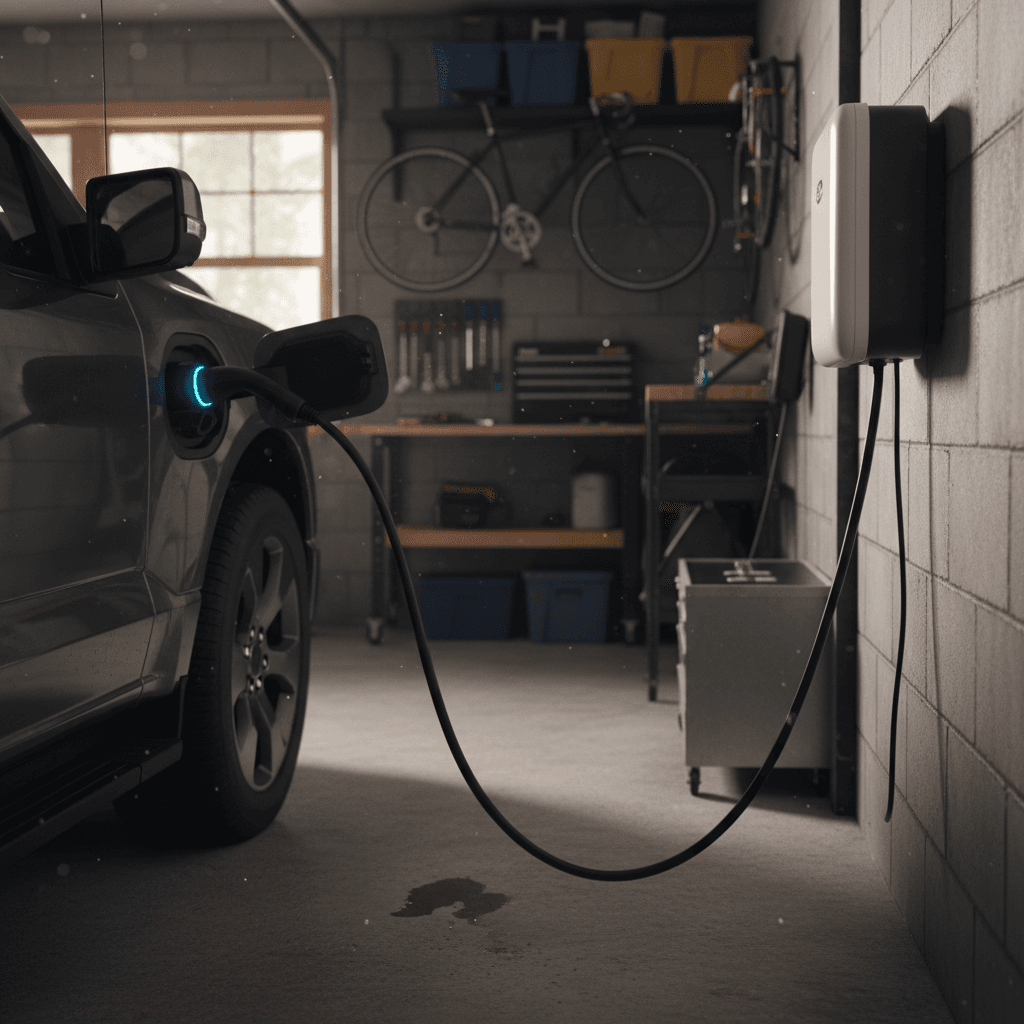
Every F‑150 Lightning can charge from a household 120V outlet using the Ford Mobile Power Cord. It’s the slowest way to charge but requires no new wiring if you already have a grounded, dedicated outlet available.
How to charge on 120V (Level 1)
1. Pick the right outlet
Use a modern, grounded 120V outlet on a dedicated circuit if possible, ideally in your garage or near your driveway. Avoid outlets that also run heavy loads like freezers or power tools.
2. Inspect the outlet and cord
Check the outlet for heat discoloration, loose fit, or damage. Inspect the Mobile Power Cord for cuts, kinks, or frayed insulation before every use.
3. Plug into the wall first
Insert the 120V plug firmly into the outlet before you connect to the truck. This lets the charger run self‑checks before energizing the vehicle side.
4. Plug into the truck’s charge port
Open the Lightning’s charge door on the driver’s side front fender and insert the connector until it clicks. The truck’s charge light ring should illuminate and begin pulsing.
5. Confirm charging status
Verify charging in the instrument cluster or FordPass app. Make sure the power level and estimated completion time align with your schedule.
6. Manage expectations
At roughly 2–3 miles of range per hour, you can add around 20–30 miles overnight. Level 1 works for light daily use, but most Lightning owners outgrow it quickly.
Watch the extension cords
Option 2: Level 2 home charging with 240V
For most F‑150 Lightning owners, 240V Level 2 charging is the sweet spot. It’s fast enough to refill even the big Extended Range battery overnight, without the complexity or cost of DC fast charging gear.
Two main paths to Level 2 at home
Both use 240V power, but the hardware looks a little different.
Mobile cord + 240V outlet
If you already have a NEMA 14‑50 or similar 240V outlet (often used for welders or RVs), you can pair it with the Ford Mobile Power Cord and a proper adapter.
- Lower upfront cost if wiring already exists
- Flexible, can unplug and take with you
- Typically limited to 24–32A (≈10–15 mi/hr)
Dedicated Level 2 wall box
A hard‑wired Level 2 station (Ford Connected Charge Station, Charge Station Pro, or a third‑party unit) lives on your wall and is always ready.
- Cleanest user experience
- Easier cable management
- Commonly 40–48A (≈20–25 mi/hr)
Key steps to set up Level 2 home charging
1. Assess your driving and charge needs
If you drive 30–50 miles per day, a 32‑amp Level 2 charger is usually enough. Heavy use, towing, or work‑truck duty may justify 40–48 amps.
2. Check your electrical panel capacity
Look at your panel’s main breaker rating (often 100–200A) and how many large loads you already have (HVAC, electric range, dryer). An electrician can perform a load calculation to recommend a safe circuit size.
3. Choose outlet vs wall box
If you already have a convenient 240V outlet and don’t need more than ~32 amps, an outlet + mobile cord can work well. If you’re starting from scratch, many owners go straight to a hard‑wired 40–48A wall box.
4. Hire a licensed electrician
Have a licensed electrician install any new 240V circuit, outlet, or wall box. They’ll handle permits, local code requirements, and GFCI rules for garages and exterior outlets.
5. Configure the amperage correctly
The circuit breaker, wiring, and charger settings must match. For example, a 60A breaker typically supports a 48A EVSE; many units have dip switches or app controls to set the max current.
6. Test and label the circuit
Once installed, test the charger with the Lightning, verify charging rate in the FordPass app, and label the breaker clearly in your panel for future reference.
When bigger isn’t better
Ford Charge Station Pro and home backup power
The Ford Charge Station Pro is an 80‑amp Level 2 charger designed specifically for Ford EVs, including the F‑150 Lightning. On early Extended Range trucks with dual onboard chargers, it can deliver up to about 19.2 kW of AC charging, more than enough to refill the pack overnight.
- It requires a 240V, 100A circuit and heavy‑gauge wiring, which can be expensive to install.
- Some F‑150 Lightning trims (especially early Extended Range models) included the Charge Station Pro at no extra charge; others require buying it separately.
- On 2024+ trucks, Ford has generally capped AC charging around 48 amps, so the full 80A potential is no longer used for regular charging even if the wall box supports it.
- When paired with Ford’s Home Integration System and software, the Lightning can provide home backup power, automatically disconnecting from the grid and supplying your home during outages.
Backup power vs. simple charging
What you’ll need at home: outlets, panels, and permits
1. A safe place to park
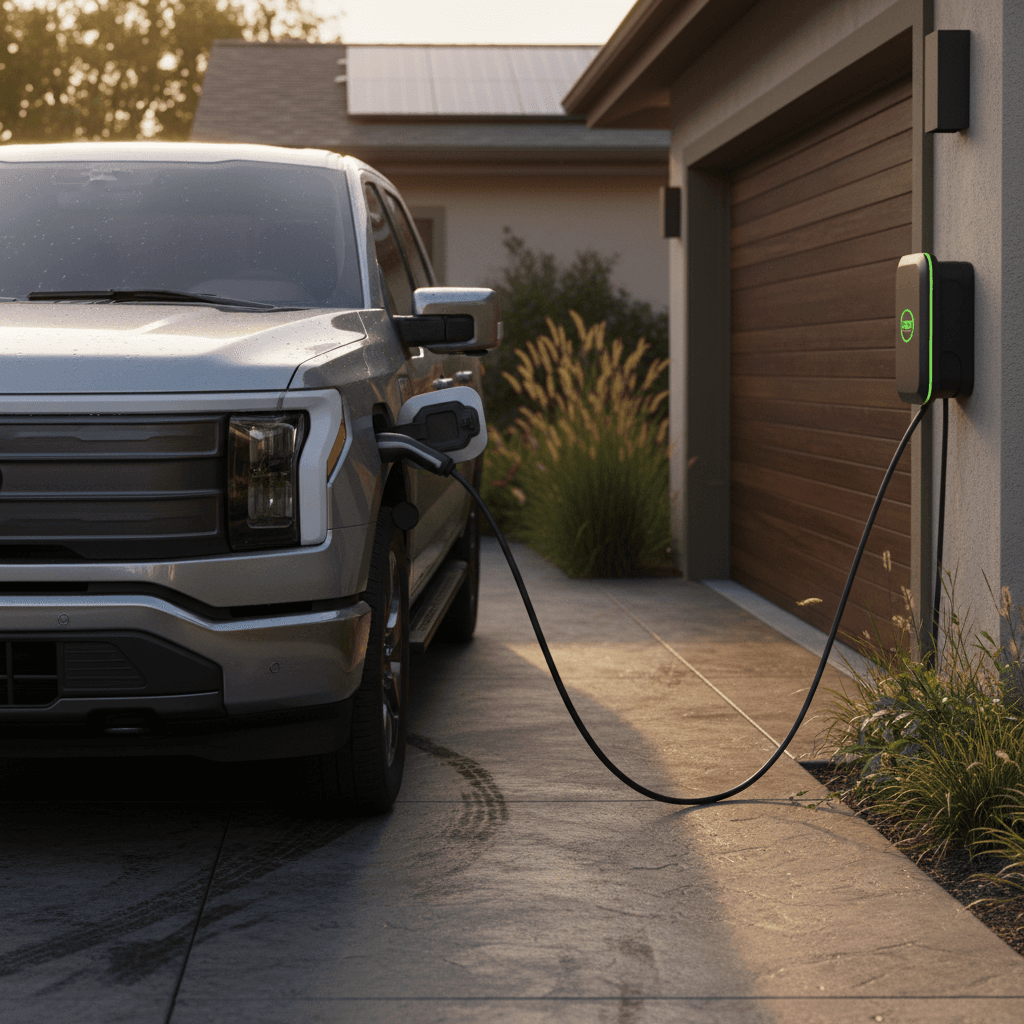
Ideally, you’ll charge your F‑150 Lightning in a garage or dedicated driveway spot where the cable can reach without being driven over or pinched in a door. Outdoor charging is fine if the hardware is rated for exterior use and installed to code.
2. A healthy electrical service
Modern homes with 200A service often have enough headroom for a 40–60A EV circuit. Older 100A panels may require compromises, like a 30–40A charger, or, in some cases, a service upgrade. An electrician’s load calculation is your best guide.
3. Permits and inspection
Many U.S. jurisdictions require a permit for a new 240V EV charging circuit. Your electrician or installer typically handles this, plus any final inspection. Don’t skip it; insurance companies increasingly expect work to be documented.
4. Cable management and safety
Plan where the cable will hang and route so it’s easy to plug in but not a trip hazard. Wall‑mounted holsters and hooks keep things tidy. Avoid running the cable under garage doors or across sidewalks where it can be damaged.
Don’t DIY high‑voltage work
How long does it take to charge an F‑150 Lightning at home?
Real‑world charge times depend on your battery size (Standard vs Extended Range), starting state of charge, weather, and how many amps your home setup can deliver. Still, you can plan around some solid ballpark numbers.
Approximate home charge times for common setups
In practice, you won’t often charge from 0% to 100% at home. Most owners arrive with 30–60% remaining, plug in overnight, and target 80–90% by morning. On a 40–48A Level 2 setup, that routine is easy even for heavier‑use drivers.
Smart charging settings to save money and protect your battery
Once your hardware is in place, how you actually use it matters. Ford gives you tools in the Lightning’s infotainment system and the FordPass app to control when and how far the battery charges.
Smart settings every F‑150 Lightning owner should use
A few minutes of setup can pay off for years.
Scheduled charging
Set your Lightning to start charging during off‑peak hours if your utility offers time‑of‑use rates. Late‑night charging can significantly cut your per‑kWh cost.
Max charge limit
For daily use, many owners set a target of 80–90%. You can still charge to 100% for road trips, but lower daily limits reduce battery stress over the long haul.
Location‑based preferences
Newer Ford EVs let you assign different charge settings by location (home, work, cabin). That way, you can optimize around each place’s outlet and rate structure.
Use the truck’s brains, not just the wall box
Common home charging mistakes to avoid
- Relying on a single 120V outlet long‑term when your mileage or climate really calls for Level 2.
- Installing a high‑amp wall box on a marginal electrical service without a proper load calculation.
- Using cheap, undersized extension cords, power strips, or adapters not rated for continuous EV loads.
- Running the charge cable where vehicles, garage doors, or lawn equipment can repeatedly pinch or cut it.
- Habitually fast‑charging to 100% on the road instead of letting a slower home charge handle most of your energy needs.
Red‑flag signs to stop and call a pro
Buying a used F‑150 Lightning? Home‑charging checklist
If you’re considering a used F‑150 Lightning, it pays to think about home charging before you sign the paperwork. The right questions up front can save you surprise costs later.
Used Lightning + home‑charging questions to ask
1. What charging gear comes with the truck?
Confirm whether the Ford Mobile Power Cord is included and, for certain trims, whether a Ford Charge Station Pro or other wall box is part of the sale.
2. How did the previous owner charge?
Ask if they primarily used <strong>home Level 2</strong>, Level 1, or mostly DC fast charging. Heavy fast‑charging use isn’t a deal‑breaker, but it’s useful context for battery wear.
3. Do you already have 240V near your parking spot?
If you have an existing 240V outlet in a garage or shop, you may be able to start charging quickly with minimal work. If not, budget for an electrician visit shortly after purchase.
4. Have you checked your panel and utility options?
Before buying the truck, glance at your main panel rating and talk to your utility about time‑of‑use or EV‑specific rates. Both affect the lifetime operating cost of the Lightning.
5. Will you use home backup power?
If you plan to use the Lightning for <strong>home backup</strong>, confirm compatibility of the specific model year with Ford’s Home Integration System and factor that hardware into your budget.
At Recharged, every used EV listing comes with a Recharged Score Report that includes verified battery health and a clear view of how the vehicle was used. That context, combined with a realistic home‑charging plan, makes it much easier to buy a used Lightning with confidence.
F‑150 Lightning home charging FAQ
Frequently asked questions
Bottom line on charging a F‑150 Lightning at home
If you own, or are considering, a Ford F‑150 Lightning, dialing in home charging is the difference between a truck that always feels ready and one that constantly needs attention. Start by deciding whether Level 1 can realistically support your mileage. If not, plan for a 240V Level 2 solution sized to your panel and driving habits, and use the Lightning’s smart settings to shift charging to off‑peak hours and cap daily charge levels. With the right setup, most owners plug in once per day, sleep, and wake up with the range they need, no gas station detours, no guesswork. And if you’re shopping used, pairing a solid home‑charging plan with a verified battery report, like the Recharged Score, turns the F‑150 Lightning into a far easier long‑term bet.