If you follow the headlines, you might think electric cars are constantly bursting into flames. The reality is very different. Modern electric car batteries are among the safest components on the vehicle, and on a per‑mile or per‑vehicle basis, EVs catch fire far less often than gasoline cars. But the risks they pose are different, and understanding those differences will help you be a smarter owner, or shopper for a used EV.
Short answer
Are electric car batteries safe overall?
How safe are electric car batteries, by the numbers?
Different studies land on slightly different figures, but the direction is consistent: EVs catch fire far less often than gasoline cars. Gasoline is an extremely flammable liquid, and most traditional vehicle fires are caused by fuel leaks, hot exhaust components, or aging wiring and hoses. Electric cars eliminate those fuel‑related risks.
At the same time, lithium‑ion batteries store a lot of energy in a small package. When they are damaged or badly manufactured, they can fail in a way called thermal runaway, a chain reaction inside one or more cells that can lead to intense heat, smoke, and fire. Automakers and regulators have spent the last decade building layer after layer of protection around that risk.
How to think about EV battery safety
EV fire risk vs. gas cars: the real numbers
EV vs. gasoline vehicle fire risk
Approximate fire risk comparison based on insurance, safety agency, and research analyses from recent years.
| Vehicle type | Estimated fires per 100,000 vehicles | Relative risk |
|---|---|---|
| Battery electric vehicle (EV) | ~20–30 | Baseline |
| Plug‑in hybrid (PHEV) | Higher than EVs, but still low | Higher than EVs |
| Conventional gasoline/diesel | ~1,500+ | Dozens of times higher than EVs |
Exact numbers vary by source and year, but the relationship, EVs catching fire far less often than gasoline cars, is consistent across studies.
Across U.S. and international data sets, EVs show a tiny fraction of the vehicle fires we see from gasoline and diesel cars. Some analyses put gas cars at 50–60 times more likely to catch fire than EVs on a per‑vehicle basis, and even higher on a per‑mile basis. The exact ratio depends on exactly which years and countries you look at, but the trend is clear.
Why the headlines look scarier than the data
How lithium-ion EV batteries are built for safety
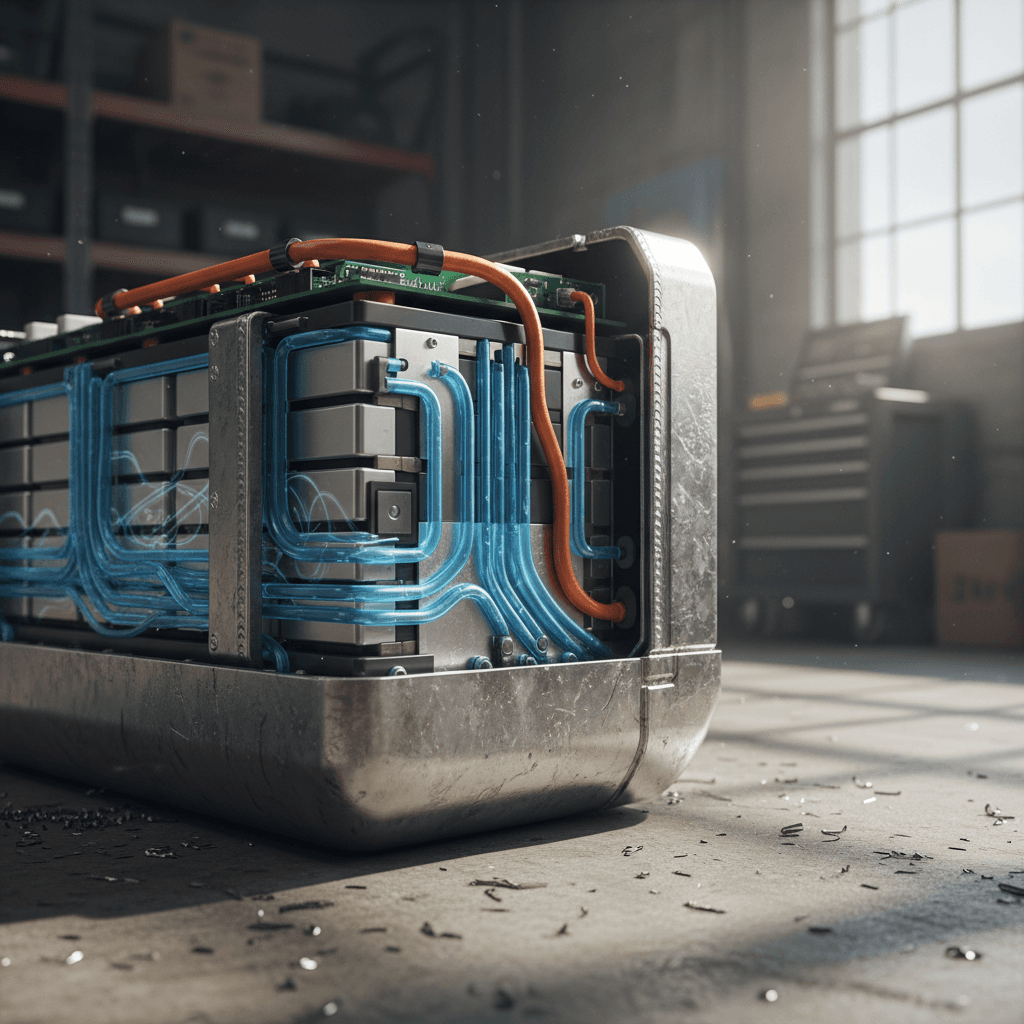
To understand how safe electric car batteries are, it helps to look at how they’re built. A modern EV battery pack is not just a giant “phone battery.” It’s a carefully engineered system with multiple levels of protection:
- Cell‑level safety: Individual cells use separators and additives that reduce the chance of internal short circuits and slow down thermal runaway if it starts.
- Modules and pack structure: Cells are grouped into modules with physical barriers, fire‑resistant materials, and crash structures to prevent a small problem from spreading.
- Battery Management System (BMS): An onboard computer constantly monitors voltage, temperature, and current at multiple points in the pack and can limit power, shut down the pack, or trigger warnings if anything looks abnormal.
- Liquid cooling (in most modern EVs): Coolant channels carry heat away from cells during fast driving or DC fast charging, keeping temperatures in a safe window.
- Crash protection: The pack is mounted in a reinforced section of the vehicle floor with crumple structures, shields, and strict federal crash‑safety requirements around electrical isolation and fire resistance.
Regulations behind the scenes
What can go wrong? Common EV battery risks
Even with strong engineering and regulations, no technology is risk‑free. When electric car batteries do cause safety problems, they usually fall into a handful of patterns.
Typical EV battery risk scenarios
These are the situations that show up most often in investigations and recalls, not everyday driving.
Severe crash damage
Manufacturing defects
Improper repairs or modifications
Charging behavior and equipment
Modern EVs are designed to charge safely in a wide range of conditions, but faulty wiring or non‑certified charging equipment can create hazards just like a bad clothes‑dryer outlet can.
- Undersized or improperly installed 240‑volt circuits can overheat.
- Damaged charge cables or connectors shouldn’t be used.
- Frequent DC fast charging is more of a degradation concern than an outright safety risk, but it does stress the pack more than slow charging.
Environmental and flood damage
Flooding, storm surge, or long‑term submersion can damage high‑voltage components. There have been documented cases of EVs catching fire days after hurricane flooding when the vehicles were moved or began to dry out.
Any EV that’s been heavily flooded or in a serious crash should be inspected and cleared by the manufacturer or a qualified EV specialist before it’s driven, charged, or parked in a structure.
What *not* to do with an EV battery
Battery chemistry and safety: LFP vs. NMC and others
Not all EV batteries are created equal. Automakers use several different lithium‑ion chemistries, each with its own blend of cost, energy density, and safety characteristics. That chemistry choice has a real impact on how safe an electric car battery is in extreme conditions.
Common EV battery chemistries and safety
Most modern EVs use some variant of NMC or LFP chemistry.
NMC / NCA (Nickel‑rich chemistries)
- Higher energy density, more range per pound.
- Used in many long‑range EVs and performance models.
- More sensitive to over‑charge and high temperatures, so they rely heavily on precise BMS control and cooling.
When problems do occur, thermal runaway can be more energetic than with LFP, which is why automakers pair these chemistries with robust thermal management.
LFP (Lithium iron phosphate)
- Extremely stable chemistry with high resistance to thermal runaway.
- Lower energy density, slightly less range for the same pack size.
- Increasingly popular in mass‑market models due to safety and longevity.
LFP packs have an excellent real‑world safety record to date, which is why you’ll see them in many newer standard‑range trims and in vehicles from high‑volume Chinese manufacturers.
A quiet safety trend: more LFP
Charging safely: home, public, and fast charging
Charging is when drivers tend to worry most about battery safety. The good news is that properly installed, certified charging equipment is designed to be very safe, whether you’re at home or on the road.
Practical charging safety checklist
1. Use certified equipment
Stick with chargers and adapters that are UL‑listed (or equivalent) and recommended by your vehicle manufacturer. Avoid no‑name imports that may not meet safety standards.
2. Get 240‑volt circuits professionally installed
A Level 2 home charger should be on a dedicated circuit sized correctly for the amperage. Have a licensed electrician install it and pull permits where required.
3. Don’t improvise with extension cords
Long or undersized extension cords can overheat under EV charging loads. If you must use one in a temporary situation, follow your manual’s guidance and use only properly rated cords.
4. Pay attention to heat and smells
It’s normal for a connector to be warm, but not hot to the touch. If you notice burning smells, discoloration, or repeated tripping of breakers, stop charging and have the system inspected.
5. Be thoughtful with fast charging
Occasional DC fast charging on trips is fine for a healthy pack. For long‑term battery health, rely on Level 2 charging for most day‑to‑day needs and reserve fast charging for travel.
6. After a crash or flood, get a check‑up
If your EV has been in a serious collision or significant flooding, don’t just plug it back in. Have the battery and high‑voltage system inspected by a dealer or EV specialist first.
Is it safe to charge in a garage?
Used EVs and battery safety: what to check
Buying a used EV adds a second layer of questions: not just “how safe are electric car batteries in general?” but “how safe is the battery in this specific car after years of use?” Here’s where you want to drill down into history and health rather than relying on averages.
Key battery safety questions for any used EV
These checks help you separate a solid car from one with hidden battery risk.
Accident and flood history
Battery health and degradation
Recalls and software updates
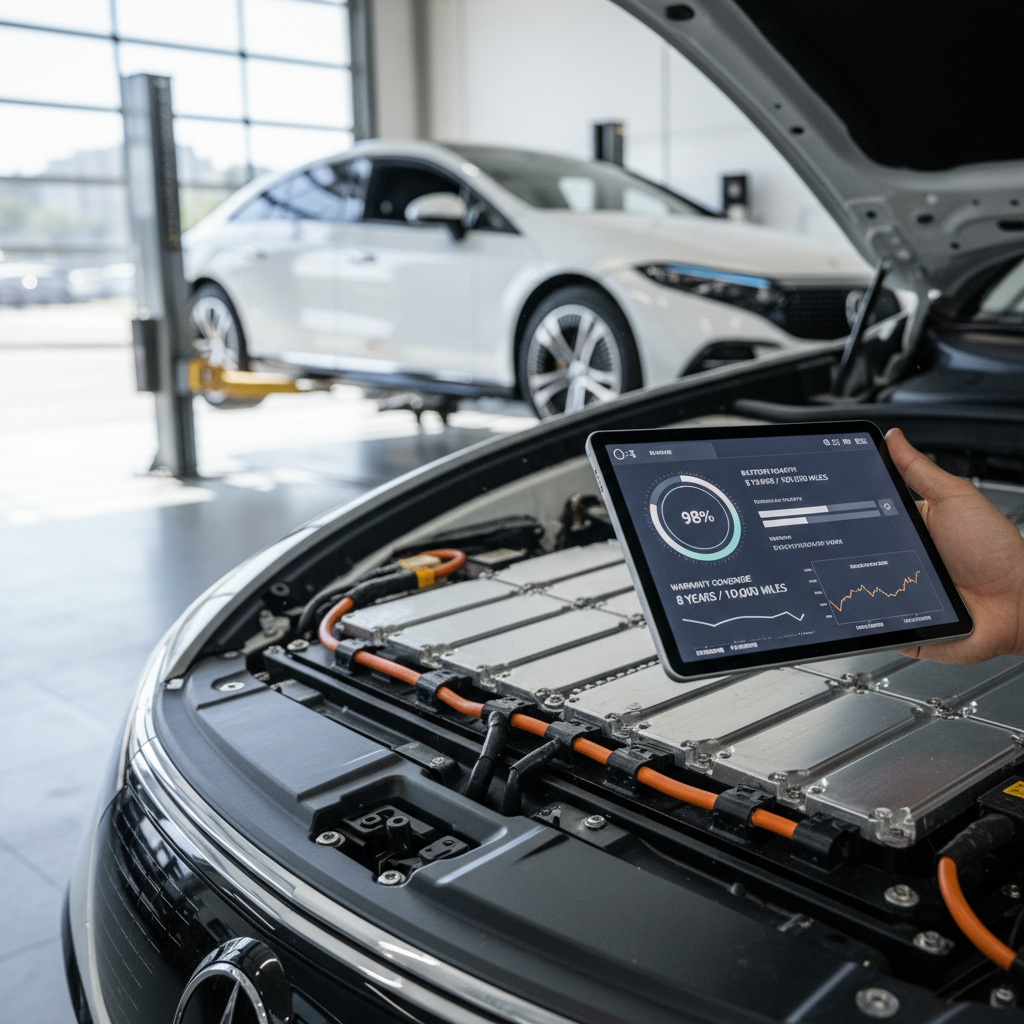
This is where Recharged’s focus on verified battery health is designed to give you an advantage. Every vehicle we list includes a Recharged Score Report built on professional diagnostics that look beyond a simple dashboard range estimate. That way you’re not guessing about how the previous owner treated the pack, or whether there are early warning signs of trouble.
How a battery report supports safety
Signs your EV battery might have a problem
Total battery failures and fires are rare, but smaller issues aren’t. As an owner, your job isn’t to diagnose the pack, it’s to pay attention when the car tries to tell you something is wrong.
- Warning lights or error messages about the high‑voltage system, battery, or charging, especially if they recur.
- Strong chemical or sweet odors near the battery area or while charging.
- Rapid, unexplained changes in range or state‑of‑charge readings, especially if one part of the pack appears to drain much faster.
- Unusual heat from the floor area, under‑seat region, or charge port during normal use or Level 2 charging.
- Repeated breaker trips or charging sessions that stop unexpectedly without a clear reason.
When to stop and call for help
FAQ: electric car battery safety
Frequently asked questions about EV battery safety
The bottom line on EV battery safety
When you strip away the headlines and look at the data, electric car batteries are remarkably safe. EVs experience far fewer fires than gasoline vehicles, and automakers have poured enormous engineering effort into keeping high‑voltage systems protected in crashes, in bad weather, and during everyday charging. The risks are real but focused, mostly around severe damage, improper repairs, or isolated manufacturing defects rather than routine driving.
If you’re shopping for a used EV, focus on the specific vehicle in front of you: its crash and flood history, battery health, and recall status. That’s exactly why Recharged bakes a detailed, diagnostic‑based Recharged Score Report into every car we list and backs it with EV‑specialist guidance from start to finish. Combine that kind of transparency with sensible charging habits, and you can enjoy the benefits of electric driving with confidence that your battery is doing what it’s supposed to do, quietly, safely, in the background.