If you’ve driven gas cars your whole life, you’re used to a rhythm of oil changes, tune-ups, and transmission services. Switch to an EV and that rhythm changes completely, which leaves a lot of people asking, “how often do I actually need to service an electric car?” This guide breaks it down in plain English, so you know what to do yearly, what can wait for years, and where you’ll really save money.
Key takeaway
Do electric cars need regular servicing?
Electric cars absolutely do need regular servicing, but much less of it than a gasoline vehicle. There’s no engine oil, no spark plugs, no exhaust, and far fewer moving parts. Most EV makers recommend something like a multi-point inspection every 7,500–15,000 miles or once a year, whichever comes first. In practice, many owners simply have the car looked over annually and stay on top of tires, brakes, and software updates.
Because there’s no engine to babysit, a big part of EV maintenance is about safety and longevity: catching tire wear early, making sure your brake fluid and coolant are healthy, and monitoring battery health over time. If you follow the schedule in your owner’s manual and pay attention to how the car feels, you’re unlikely to see surprise repair bills.
How EV servicing frequency really compares
Typical EV service intervals at a glance
Rule-of-thumb service rhythm for most EVs
Always confirm specifics in your owner’s manual, but this is a solid starting point.
Every month
- Check tire pressure and tread depth.
- Top off washer fluid.
- Quick look for damage or leaks.
Every 7,500–10,000 miles
- Rotate tires and check alignment.
- Inspect brakes and suspension.
- General safety inspection and software checks.
Every 1–5 years
- Replace cabin air filter (often every 1–2 years).
- Change brake fluid (often every 2–3 years).
- Service battery coolant and other fluids (often 5+ years).
Start with your manual
EV maintenance checklist by time and mileage
Suggested EV service schedule
Common time and mileage intervals for popular EVs. Your specific model may vary slightly, but this covers what most owners will see.
| Item | Interval (time) | Interval (miles) | Notes |
|---|---|---|---|
| Tire pressure check | Monthly | , | Do it more often in extreme hot or cold weather. |
| Tire rotation & balance | 6–12 months | 5,000–7,500 | Heavy EVs can wear tires faster; don’t skip this. |
| Wheel alignment | 12 months | 12,000–15,000 | Or after hitting a big pothole or curb. |
| Brake inspection | 12 months | 10,000–15,000 | Regen braking extends pad life, but hardware still needs checks. |
| Brake fluid replacement | 24–36 months | , | Fluid absorbs moisture over time, even if you don’t drive much. |
| Cabin air filter | 12–24 months | 15,000–25,000 | More often if you drive in dusty or urban areas. |
| Battery health check | 12–24 months | , | Often done at routine service; useful for resale and peace of mind. |
| Battery coolant service | 5–10 years | 60,000–100,000+ | Only some EVs use liquid cooling; intervals vary widely. |
| Wiper blades | 6–24 months | , | Replace when streaking or noisy. |
| High-voltage system inspection | As scheduled | , | Usually folded into manufacturer service visits. |
Use this as a planning tool, then confirm exact intervals with your owner’s manual or service advisor.
Quick DIY checks between services
Check tires once a month
Look for uneven wear, bulges, or damage, and keep pressures at the level on your door jamb, not just what’s printed on the sidewall. Correct pressure protects range and safety.
Watch your range and efficiency
If your usual commute suddenly uses much more battery, it can be an early sign of low tire pressure, alignment issues, or a battery or brake problem.
Listen for new noises
Clicks while turning, grinding when braking, or clunks over bumps are all reasons to schedule service sooner rather than later.
Install software updates
Many EVs get over‑the‑air updates that improve range, charging behavior, or fix bugs. Don’t put those off, they’re part of your car’s ongoing maintenance.
What actually gets serviced on an electric car?
Things your EV doesn’t need
- No engine oil or oil filter changes.
- No spark plugs, fuel filters, or timing belts.
- No exhaust system, muffler, or catalytic converter service.
- No transmission fluid changes for a multi‑gear automatic (most EVs use a simple reduction gear).
Less mechanical complexity is why EVs tend to spend less time and money in the shop over their lifetime.
What still needs attention
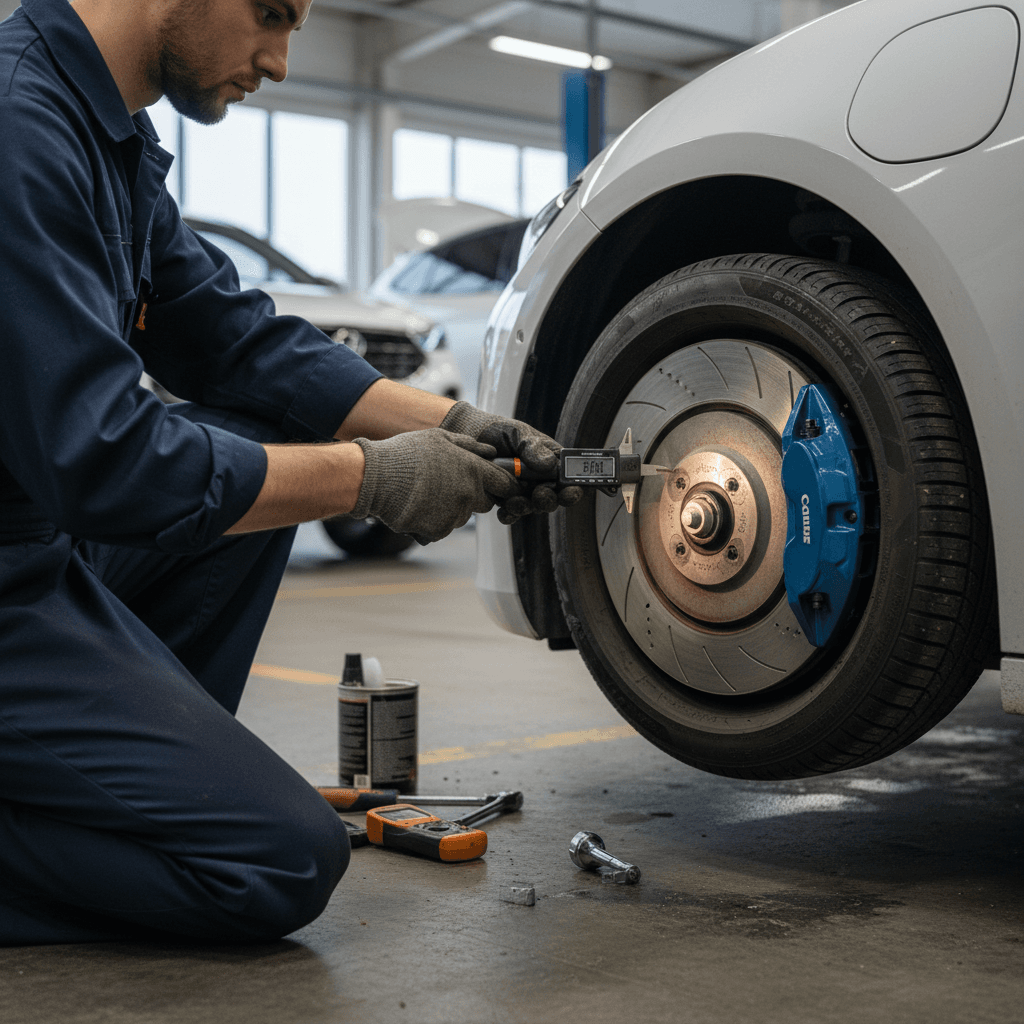
- Tires – EVs are heavier and have instant torque, so tires work hard.
- Brakes – Pads last longer thanks to regenerative braking, but fluid and hardware still age.
- Cabin filters – Keep the air clean and your HVAC system happy.
- Coolant – Many EVs use liquid cooling for the battery and power electronics.
- Suspension & steering – All that battery weight rides on shocks, bushings, and tie rods.
A good EV service visit is mostly about inspection and prevention rather than replacing a long list of wear items.
Good news for your budget
How EV servicing compares with gas cars
EV vs. gas car: maintenance frequency snapshot
This comparison looks at typical mainstream vehicles over the first 5 years of ownership.
| Service item | Typical gas car | Typical EV | What it means for you |
|---|---|---|---|
| Oil & filter changes | Every 5,000–7,500 mi | Never | A major recurring cost disappears with an EV. |
| Engine air filter | Every 15,000–30,000 mi | Not applicable | No combustion engine, no intake filter. |
| Spark plugs / ignition | 60,000–100,000 mi | Not applicable | One less wear system to worry about. |
| Tire rotation | 5,000–7,500 mi | 5,000–7,500 mi | Same schedule, but EVs are heavier so it’s even more important. |
| Brake pads | 30,000–60,000 mi | Often 80,000+ mi | Regenerative braking dramatically cuts wear in normal driving. |
| Brake fluid | 2–3 years | 2–3 years | Same physics, same interval, don’t skip this. |
| Coolant | 5–10 years | 5–10 years (if equipped) | Gas cars cool the engine; EVs often cool the battery and inverter. |
| Transmission service | 30,000–60,000 mi | Rarely or never | Most EVs use a sealed single‑speed gearbox. |
Exact numbers vary by model and driving style, but the pattern is consistent: fewer visits and fewer parts for EVs.
Don’t forget tires
Battery health checks and long-term care
You don’t "service" an EV battery every 10,000 miles the way you do an engine, but you should keep an eye on battery health over years, especially if you plan to keep the car long term or you’re buying it used.
- Have the battery and high‑voltage system checked at least every 1–2 years during routine service.
- Avoid leaving the car parked at 0% or 100% charge for days at a time when you can avoid it.
- Use DC fast charging strategically, great for road trips, but home Level 2 charging is gentler for daily use.
- If you live in a very hot or very cold climate, precondition the battery before fast charging when your car offers that feature.
How Recharged helps on the battery side
Signs your EV needs service sooner than scheduled
Even with a clear schedule, there are times you shouldn’t wait for the next annual visit. Call a service center if you notice any of the following between regular services:
- Sudden, unexplained drop in range or efficiency that isn’t tied to weather changes.
- New warning lights on the dash, especially anything related to the battery, brakes, or charging system.
- Grinding, squealing, or pulsing when you brake.
- Steering that feels loose, pulls to one side, or shakes at highway speed.
- Charging sessions that frequently fail, time out, or take much longer than usual.
- Unusual smells (burning, hot plastics) or visible leaks under the car.
When to stop driving
If you’re buying a used EV: how to reset the clock
Buying a used electric car adds one more wrinkle: you might not know what’s been done already. Before you assume you can wait a year for service, it pays to baseline the car so you know exactly where you stand.
Baseline service steps for a used EV
Get a comprehensive inspection
Ask a shop or EV specialist to inspect tires, brakes, suspension, and high‑voltage components. If you’re buying through Recharged, much of this work is already documented in the Recharged Score report.
Update all filters and fluids on time
If there’s no proof of recent service, treat it as due: rotate tires, replace the cabin filter, and flush brake fluid if it’s more than 2–3 years old or the history is unknown.
Check battery health and warranty
Review a recent battery health report and verify how much warranty coverage remains on the pack and drive unit.
Sync your service schedule
Once you know what’s been done, set reminders (or use the car’s built‑in reminders) for the next tire rotation, brake fluid change, and coolant or high‑voltage checks.
A well‑documented service history and verified battery health don’t just make ownership easier, they also help your EV hold its value when you decide it’s time to sell or trade it in.
FAQ: Electric car servicing
Frequently asked questions about EV service intervals
Bottom line: how often to service your EV
You don’t need to treat your electric car like a fragile gadget, and you don’t need to baby it with monthly shop visits either. For most drivers, an annual inspection with tire rotation, plus a few longer‑interval services every couple of years, is enough to keep an EV safe, efficient, and enjoyable for a very long time.
If you’re already driving an EV, use the schedule here as a cross‑check against your manual and set reminders so maintenance doesn’t sneak up on you. If you’re still shopping, especially in the used market, remember that lower maintenance is one of the big advantages of going electric. At Recharged, every used EV comes with a Recharged Score battery health report, transparent history, and expert support, so you know exactly what has been serviced, what’s due next, and what it will really cost to own.