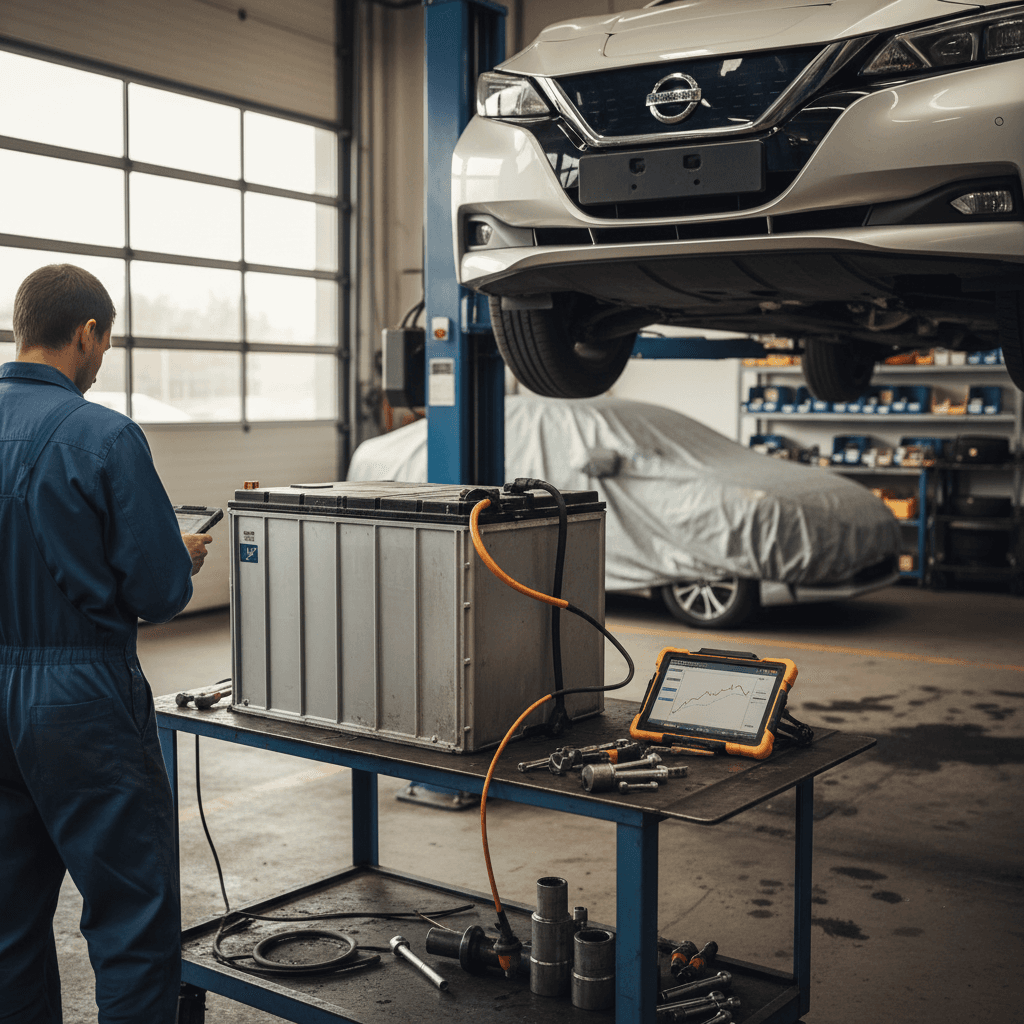
If you’ve ever heard about a $20,000 EV battery bill, it’s natural to wonder how much it would cost to replace an electric car battery on your own car. The good news: in 2025, full battery replacements are rare, heavily covered by warranty, and getting cheaper every year, even though the headline numbers can still look scary.
Key context for 2025
EV battery replacement cost in 2025: the short answer
What most drivers face in 2025
In 2025, most full EV battery replacements at dealers or specialist shops in the U.S. land somewhere between $5,000 and $20,000, all-in. Compact older EVs tend to sit at the lower end of that range, while large long‑range SUVs and pickups can go higher, especially if you’re paying main-dealer rates.
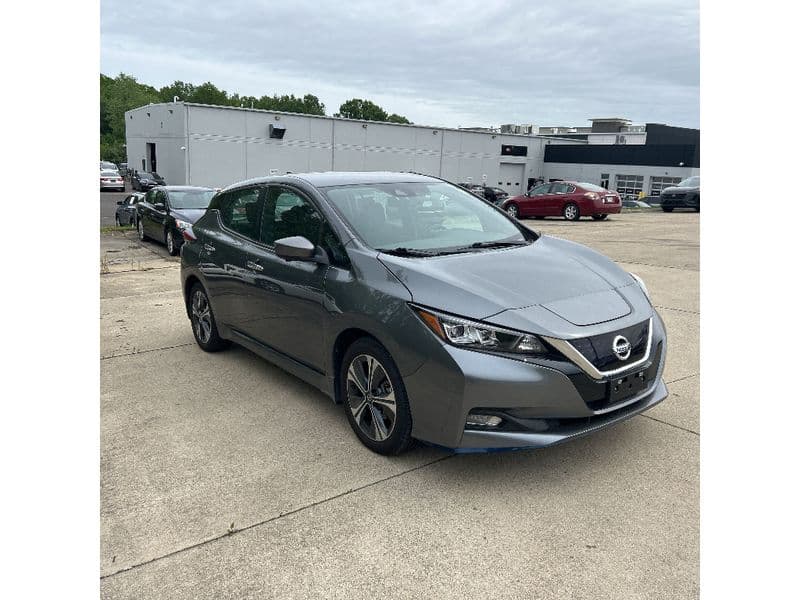
- Compact EVs (older Nissan Leaf, Mini SE, etc.): roughly $4,000–$8,000
- Mainstream sedans/SUVs (Tesla Model 3/Y, Hyundai Ioniq 5, VW ID.4): usually $8,000–$16,000
- Luxury and long‑range models (Tesla Model S/X, Lucid Air, big BMW/Audi SUVs): often $15,000–$25,000+
- Electric pickups (F‑150 Lightning, Rivian R1T): pack prices can reach the high teens to mid‑$20,000s in extreme cases
Sticker shock vs. actual risk
Average EV battery replacement cost by vehicle type
Typical 2025 EV battery replacement costs by segment
These are rough, out-of-warranty retail ranges for a full pack plus labor, not quotes for any specific VIN.
| Vehicle type | Typical battery size (kWh) | Approx. replacement cost (pack) | Typical labor & misc. | Estimated total |
|---|---|---|---|---|
| City/compact EV | 35–60 | $3,500–$7,000 | $1,000–$2,000 | $4,500–$9,000 |
| Mainstream sedan/SUV | 60–80 | $7,000–$12,000 | $1,500–$2,500 | $8,500–$14,500 |
| Luxury / long‑range | 90–120+ | $12,000–$18,000 | $2,000–$3,000+ | $14,000–$21,000+ |
| Electric pickup | 110–130+ | $15,000–$22,000 | $2,000–$4,000 | $17,000–$26,000+ |
Real quotes vary by dealer, region, and whether you choose OEM new, remanufactured, or refurbished packs.
How these numbers are built
Real-world examples: Tesla, Leaf, and more
It’s easier to reason about “how much to replace an electric car battery” when you can anchor it to specific nameplates. Here’s what owners and independent shops are seeing in 2024–2025 for some popular models, assuming you’re out of warranty and buying a full pack rather than repairing modules.
Sample 2025 battery replacement quotes
Approximate real-world ranges for full pack + labor in the U.S.
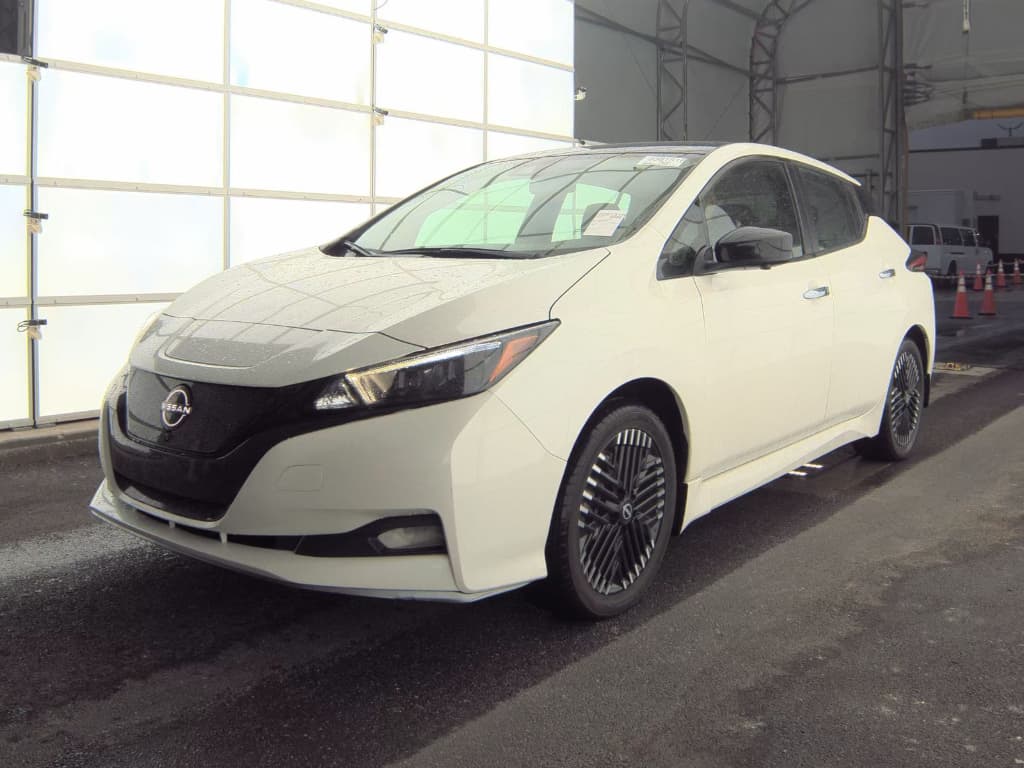
Nissan Leaf (24–40 kWh)
Older compact EVs like the Leaf tend to be on the low end:
- Typical full pack: $4,000–$8,000
- Refurbished/reconditioned packs can be cheaper, but with shorter warranties.
- Some owners opt for upgraded capacity packs for more range.
Tesla Model 3 / Y
Modern long‑range packs are bigger and pricier:
- Standard/Long Range packs: roughly $12,000–$16,000 including labor at Tesla-level pricing.
- Third‑party specialists can sometimes get that closer to the high single digits with refurbished packs.
Large SUVs & pickups
Vehicles like the F‑150 Lightning, Rivian R1T, or high‑end German SUVs carry huge packs:
- Full replacements can easily run $18,000–$25,000+.
- Because packs are so expensive, module‑level repairs are more common where possible.
Ask about pack vs. module repair
What actually drives EV battery replacement cost?
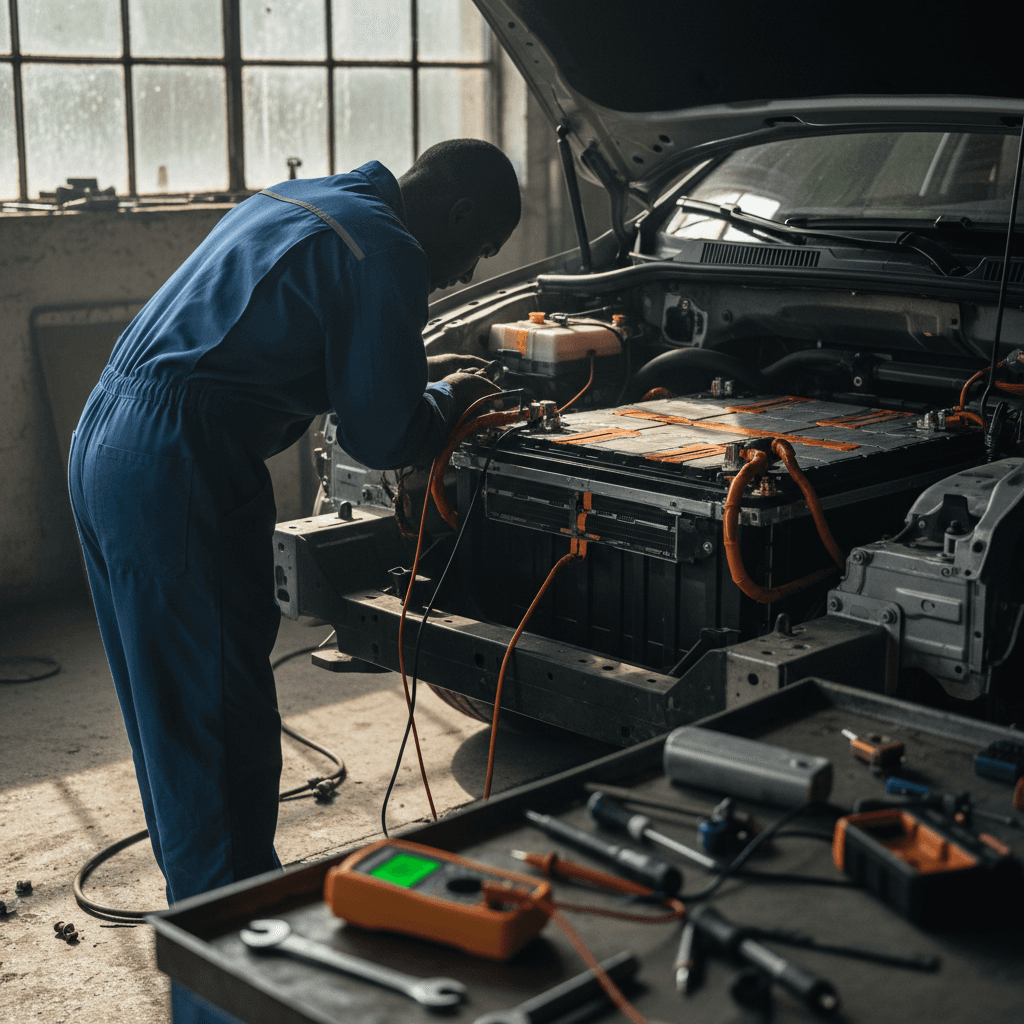
Why can one electric car battery cost $6,000 to replace while another can hit $20,000? Under the skin, a handful of variables determine how much you’ll pay.
Main factors that influence EV battery replacement cost
1. Battery capacity (kWh)
The bigger the battery, the more it costs. A 30–40 kWh city EV pack might be a third the cost of a 120 kWh luxury SUV pack. Roughly speaking, cost scales with kilowatt‑hours.
2. Chemistry and performance
High‑performance chemistries optimized for power or ultra‑fast charging generally cost more than simpler, lower‑energy chemistries like LFP (lithium iron phosphate), even at the same kWh.
3. OEM vs. refurbished
A brand‑new OEM pack from the automaker will be the most expensive. Remanufactured or refurbished packs from specialists often cost 20–40% less but may carry shorter warranties.
4. Labor complexity and shop rate
Dropping a pack in a simple compact EV is not the same job as replacing one in a tall pickup. Dealer labor rates in some metro areas can easily exceed $200/hour.
5. Shipping and logistics
Battery packs are heavy, hazardous goods. Specialized shipping, packaging, and core return policies can add hundreds or even thousands of dollars to the final invoice.
6. Software and diagnostics
After installation, shops have to reprogram control units, calibrate range estimates, and verify safety systems, time that shows up on your labor bill.
Think in $/kWh, not just big numbers
Industry analysts typically talk about pack cost per kWh. In 2024–2025, average pack prices around $110–$130 per kWh are common at the manufacturing level, and forecasts suggest we may see sub‑$100 per kWh packs around mid‑decade.
By the time you see a service quote, there’s dealer markup, shipping, and labor layered on top, but that underlying cost trend is headed down, not up.
What that means for your car
A 60 kWh pack might represent $7,000–$8,000 of parts before markup; a 100 kWh pack might represent $11,000–$13,000. As pack costs fall, future replacement quotes for today’s models should also get less painful over time, especially from independent shops.
EV battery warranties: when replacement is free (and when it isn’t)
Here’s the part many people miss when they google how much it costs to replace an electric car battery: for a large chunk of an EV’s life, that cost is the manufacturer’s problem, not yours.
- Most major automakers in the U.S. provide at least an 8‑year / 100,000‑mile battery warranty; some go longer or farther.
- These warranties usually cover defects and excessive degradation (for example, capacity dropping below 70% while in‑warranty).
- If your pack fails or drops below the specified capacity threshold during the warranty period, the automaker typically repairs or replaces it at no cost to you.
Used EVs and transferability
Where you start paying out of pocket is once the vehicle is past that battery warranty window, or if the damage isn’t covered, say, a collision or flood loss that the insurer deems your responsibility.
How often do EV batteries really need replacement?
Online, you see the dramatic stories: a pack destroyed by flood damage, or a high‑mile taxi that needs a battery at 300,000 miles. What you don’t see are the millions of EVs quietly aging without any battery drama.
Replacement is the exception, not the rule
- Modern liquid‑cooled packs are engineered for hundreds of thousands of miles of service.
- Real‑world studies show typical degradation on the order of 1–2% capacity loss per year for many models, depending on use and climate.
- Partial repairs (module replacement, contactor fixes, BMS work) are often enough to keep an aging pack on the road without a full pack swap.
“For most EV drivers, the battery will last longer than they’ll keep the car. Replacement is a design consideration, but it’s not a routine maintenance item.”
Should battery replacement cost scare you away from EVs?
The raw numbers can be intimidating. But you have to put them in context: the battery is essentially the EV equivalent of the engine and transmission combined. Replacing a modern gas engine and gearbox on a luxury SUV isn’t cheap either, it just doesn’t make headlines in the same way.
Lifetime cost, not just worst case
Over a 10–15‑year horizon, many EVs come out ahead on total cost of ownership thanks to lower fuel and routine maintenance costs, fewer oil changes, fewer moving parts, and less wear on brakes thanks to regen.
For most owners, those savings matter more than a low‑probability, high‑cost repair that may never happen, or that will be covered by warranty if it does.
Who should think about replacement risk?
You should give battery replacement cost more weight if:
- You plan to keep an EV well into its second decade of life.
- You live in an extreme climate and rely on fast charging heavily.
- You’re considering an older used EV that’s close to, or already out of, battery warranty.
Even then, the right data and pricing can make the risk manageable rather than scary.
Heat, fast charging, and degradation
Planning ahead, especially when you’re buying a used EV
If you already own a new EV, your playbook is simple: understand your warranty, use the car normally, and don’t abuse fast charging. Where battery replacement risk really matters is when you’re looking at a used electric vehicle, especially now that early EVs are hitting the market in big numbers.
Smart steps before you buy a used EV
Minimize the chance you’ll ever face a big battery bill.
1. Verify battery warranty
Ask the seller or dealer for documentation of original in‑service date and current mileage. That tells you exactly how much battery warranty remains.
2. Get a battery health report
Don’t rely on a simple dashboard range estimate. A proper battery health diagnostic can reveal usable capacity, fast‑charge history, and potential red flags.
3. Price in worst‑case risk
On older, out‑of‑warranty EVs, shop with your eyes open. A car that might be cheap enough to justify a future $6,000 battery bill is very different from one that isn’t.
How Recharged helps you de‑risk used EV batteries
Ready to find your next EV?
Browse VehiclesBecause Recharged operates as a digital EV retailer and marketplace, with financing, trade‑in options, and nationwide delivery, you can compare multiple used EVs side by side, all with transparent battery data. If you’re worried about replacement risk, our specialists can help you choose models and age/mileage bands where that risk is especially low.
FAQ: EV battery replacement costs
Frequently asked questions about EV battery replacement
Bottom line: What to expect and how to protect yourself
So, how much does it cost to replace an electric car battery? In today’s market, the realistic answer is that a full pack swap spans from “large repair bill” to “eye‑watering”, but that it’s also a low‑probability event, heavily buffered by strong warranties and falling battery costs.
- New EV owners should focus on understanding their battery warranty and charging reasonably, not obsessing over edge‑case horror stories.
- Used EV shoppers should insist on independent battery health data, confirm warranty status, and make sure the price reflects any degradation.
- If you do ever face an out‑of‑warranty replacement, shop around: independent EV specialists, remanufactured packs, and module‑level repairs can dramatically change the math.